
Pruning
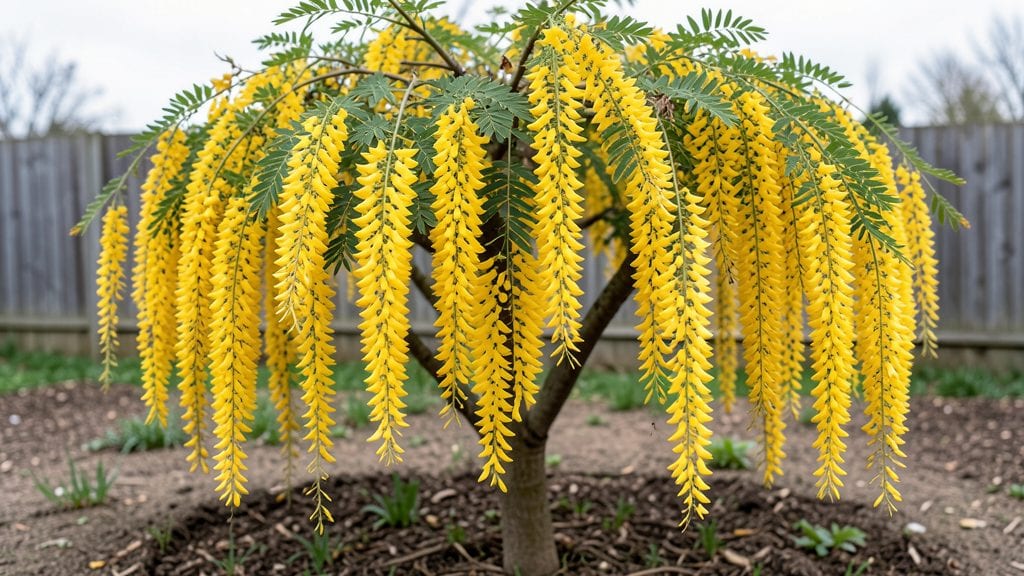
Transforming your yard into a hummingbird magnet starts with this stunning weeping golden chain tree. 🌿 Its cascading golden blooms aren't just beautiful—they're a year-round buffet for hummingbirds, but only if you prune it right.
I've learned the hard way that skipping this step means fewer flowers and more tangled branches.
The secret lies in strategic cuts that encourage new growth while maintaining that graceful weeping shape. You'll need sharp pruners, a ladder for higher branches, and about an hour in early spring before buds swell.
The payoff? A tree that bursts with fragrant blooms from late spring through summer, then provides winter structure with its distinctive foliage.
What you end up with is a showstopper that hummingbirds can't resist, while keeping the tree healthy for decades. The golden chains of flowers create a dazzling display, and the tree's compact size makes it perfect for smaller yards. Just remember—this isn't a tree you prune once and forget.
Whether you're working with a young sapling or an established specimen, the same principles apply. The key is timing: prune at the right season, and you'll get that perfect balance of flowers and form every year. Here's how to make it happen without turning your tree into a tangled mess.
📚 In This Guide
- What you need
- Instructions
- Tips and common mistakes
- Wrapping up and next steps
What you need
- ● Pruning shears: Bypass pruners (sharp, clean, and sterilized with rubbing alcohol). Choose 5-inch blades for medium branches.
- ● Loppers: 8- to 10-inch bypass loppers for thicker branches (up to 1.5 inches in diameter). Look for ratchet-style for extra leverage.
- ● Pruning saw: Curved-tooth handsaw or folding pruning saw for branches over 2 inches thick.
- ● Gloves: Heavy-duty gardening gloves (waterproof, with cut-resistant palms for safety).
- ● Disinfectant: 70% isopropyl alcohol or bleach solution (1 part bleach : 9 parts water) to sterilize tools between cuts.
- ○ Pruning sealant: Tree wound pruning paste (optional but helpful for large cuts to prevent disease).
- ● Ladder or step stool: Sturdy, extendable (if your tree is over 6 feet tall). Ensure it’s non-slip and rated for your weight.
- ● Trash bags: Heavy-duty contractor bags (2–3) for debris cleanup.
- ● Marking twine or flags: Colored twine or plant markers to tag branches for removal (if planning a structured prune).
- ● Safety gear: Safety glasses and earplugs (if using a chainsaw for very thick branches).
- ● Extension pole pruners: For high branches without a ladder (10–12 feet reach).
- ● Hose or bucket: For rinsing tools post-pruning and cleaning sap off branches.
- ● Notebook & pencil: To sketch your tree’s shape or track pruning notes for future reference.
- ● Hummingbird-friendly fertilizer: Low-nitrogen, high-phosphorus fertilizer (e.g., 5-10-10) to boost blooms after pruning.
Step-by-step instructions for pruning your weeping golden chain tree
Here's how to shape your tree for maximum beauty and hummingbird appeal—without stressing the plant.
✂️ Step 1: Time Your Pruning for Optimal Growth
Prune your weeping golden chain (Laburnum × watereri) in late winter or early spring, just as buds begin to swell but before new growth starts. This timing ensures you remove dead wood while the tree focuses energy on fresh spring foliage. Avoid pruning in fall—you'll encourage tender new growth that won't survive winter.
I like to mark my calendar for February or March in most climates. Watch for the first signs of bud swelling—those plump, slightly sticky buds signal it's time. If you miss this window, wait until after flowering to avoid cutting off next year's hummingbird-attracting blooms.
🌿 Step 2: Remove Dead or Damaged Branches First
Start by scanning your tree for branches that are dead, broken, or crossing. Dead branches snap easily when bent—if a limb breaks with a dry, hollow sound, it's time to remove it. Use clean, sharp pruners to make a 45-degree cut just outside the branch collar (the swollen area where the branch meets the trunk).
For crossing branches, remove the smaller of the two or the one growing inward. You'll see where branches compete for space—they often rub together, creating wounds that invite disease. Make your cuts at the branch collar to prevent unsightly stubs. I always step back after each cut to check the tree's natural shape—this helps me decide what to keep.
☀️ Step 3: Thin the Canopy for Better Airflow and Light
Weeping golden chain trees grow best with an open, airy structure. Focus on removing branches that grow straight up or inward—they block sunlight and airflow, which can lead to fungal issues. Aim to create a balanced, vase-like shape that lets sunlight reach all branches.
Start at the outer edges and work inward. Remove about 20-25% of the total branches to thin the canopy. Look for branches that are less than 1/3 the diameter of the main stem—these are easier to remove and won't disrupt the tree's balance. Step back frequently to visualize the tree's shape—you want to see light filtering through the branches.
⏰ Step 4: Shape the Weeping Habit Gently
The weeping golden chain's graceful form comes from its natural growth habit, so avoid heavy pruning to force a specific shape. Instead, focus on lightly guiding the branches downward. If a branch grows too upright, you can make a small cut just above a downward-growing lateral branch to encourage a more cascading form.
I never cut more than 1/4 of the branch length—this keeps the tree healthy while maintaining its elegant silhouette. For long, leggy branches, you can also make a heading cut (cutting back to an outward-facing bud) to encourage bushier growth. Always use clean tools and make cuts at a 45-degree angle to prevent water from pooling on the wound.
🌱 Step 5: Clean Up and Monitor for New Growth
After pruning, rake up all the debris and dispose of it in the trash—never leave clippings on the ground, as they can harbor disease. Wipe down your pruners with rubbing alcohol to prevent the spread of pathogens. Now, it's time to watch your tree respond—new growth should appear within 4-6 weeks.
If you see suckers or water sprouts (fast-growing, upright shoots) popping up, remove them as soon as possible. These compete with the main branches for nutrients and disrupt the tree's graceful form. Keep an eye out for signs of stress, like yellowing leaves or wilting—these can indicate over-pruning or disease. With proper care, your weeping golden chain will reward you with vibrant yellow blooms and a hummingbird magnet for years to come.
Tips & tricks for perfect weeping golden chain pruning
Here's what nobody tells you about pruning that'll make all the difference to your tree's health and beauty.
The Bud Swelling Test: Don't guess about timing—press your thumb gently against a bud. If it feels slightly resistant but still soft (like a grape), that's your cue to prune. I learned this the hard way after pruning too early and stressing the tree. Those plump, sticky buds in February or March are your golden window.
Branch Collar Respect: Never cut flush with the trunk! The branch collar is your secret weapon—it's that swollen area where the branch meets the trunk. Cutting just outside it prevents unsightly stubs and helps the wound heal faster. I've seen too many pruning jobs ruined by clean cuts that left ugly scars.
Visualization Trick: Before making any cuts, step back 10 feet and visualize your tree's final shape. You're not just removing branches—you're sculpting. I always imagine sunlight filtering through the canopy like a stained-glass window. This helps me decide which branches to keep for that elegant weeping habit.
Sucker Patrol: Those fast-growing upright shoots (water sprouts) are sneaky. Remove them as soon as they appear—even if it's just a tiny shoot. They're like weeds in your tree's crown, stealing nutrients from the branches you want to showcase. I make a habit of checking for them every time I water my tree.
Pro Tips for Weeping Golden Chain Tree
- Here's what nobody tells you about pruning that'll make all the difference to your tree's health and beauty.
- The Bud Swelling Test: Don't guess about timing—press your thumb gently against a bud.
- Branch Collar Respect: Never cut flush with the trunk!
Frequently asked questions
Got questions about keeping your Laburnum × watereri (weeping golden chain tree) thriving while attracting hummingbirds year-round? Here are some of the most common ones—and their answers!
When is the best time to prune my weeping golden chain tree?
Prune your golden chain tree right after flowering (late spring to early summer) to avoid cutting off next year’s blooms. Light shaping can also happen in late winter, but avoid heavy pruning then—it stresses the tree. Pro tip: Never prune during fall or winter when hummingbirds rely on seeds or buds!
How much can I trim back without harming the tree?
You can safely remove up to 1/3 of the tree’s canopy in one season, but avoid over-pruning. Focus on dead, diseased, or crossing branches first. For weeping varieties, prioritize opening the center to improve airflow and sunlight—hummingbirds love well-lit feeding spots!
Will pruning reduce hummingbird visits?
Not if done correctly! Prune to encourage dense, flowering branches (hummingbirds adore the nectar-rich blooms). Avoid shearing (cutting randomly)—instead, target overgrown or leggy growth to promote bushier, more vibrant foliage. Bonus: Leave some seed pods for winter food!
What if my tree isn’t flowering much?
Poor flowering often stems from over-fertilizing with high-nitrogen (which fuels leaves, not blooms) or pruning at the wrong time. Switch to a balanced 10-10-10 fertilizer in early spring, and prune after blooms fade. Sunlight matters too! Ensure it gets 6+ hours of direct sun daily.
Are there non-toxic alternatives if I have pets or kids?
Golden chain tree seeds and pods are highly toxic if ingested, so keep pets/kids away. Safer hummingbird-friendly alternatives include crape myrtle, butterfly bush, or trumpet vine. If you love the weeping look, try non-toxic options like weeping cherry or ornamental pear—just confirm with your local nursery!
Wrapping up and next steps
The weeping golden chain tree isn’t just a stunning addition to your garden—it’s a hummingbird magnet that brings life and color year-round! 🌿 With the right pruning techniques, you’ll keep its cascading blooms vibrant while ensuring a safe haven for these tiny visitors.
Remember, consistency is key, and a little effort goes a long way.
Ready to transform your outdoor space? Start small—pick one season to begin pruning and observe how your tree responds. Over time, you’ll create a thriving ecosystem that delights both you and the hummingbirds. Happy gardening! 🌸