
Pruning
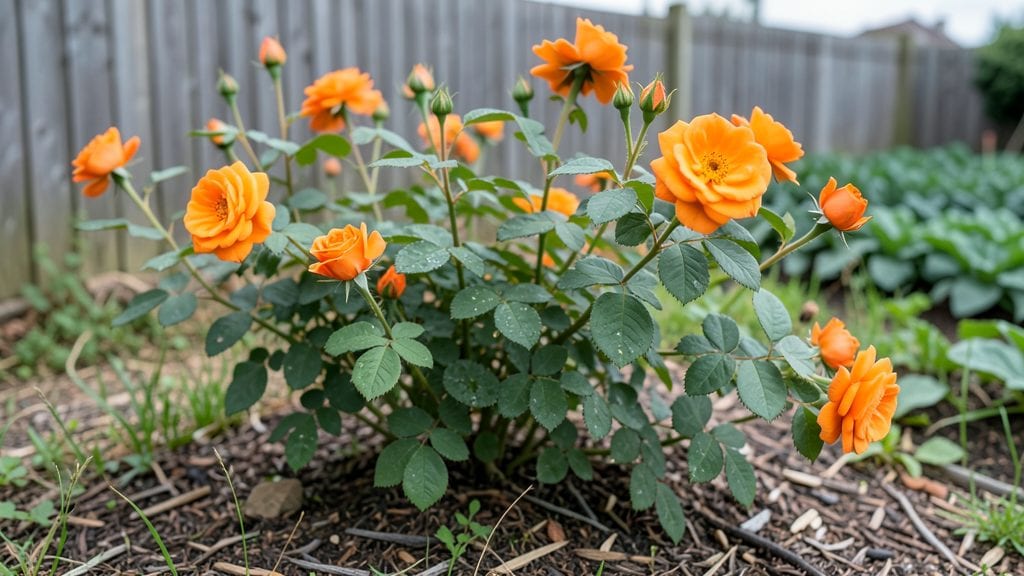
An orange rose tree thrives in the Pacific Northwest—when pruned right. 🌸 I’ve learned the hard way that cutting back too late or too aggressively ruins those fiery blooms, but this frost-resistant pruning blueprint keeps them vibrant year after year.
The key? Timing, sharp tools, and knowing which canes to keep for next season’s showstopper flowers.
You’ll need a pair of bypass pruners, rubbing alcohol for sterilization, and a clear day in late winter (after the worst frost but before buds swell). Orange roses like ‘Orange Triumph’ or ‘Orange Glow’ need 30-50% of their old wood removed—not the dramatic shearing you see online.
Think “open the center” to let sunlight and air circulate, which prevents fungal issues that plague damp PNW winters.
After pruning, you’ll see bold new growth by early spring, with blooms arriving 4-6 weeks later that stay brighter longer than store-bought roses. The secret’s in the cuts: 1/4-inch above an outward-facing bud at a 45-degree angle.
This isn’t just about shaping—it’s about setting up a tree that outlasts our chilly, rainy seasons.
Works for both container-grown and in-ground orange roses, and adapts to urban microclimates. Let’s get those canes trimmed the right way—your future bouquets depend on it.
📚 In This Guide
- What you need
- Instructions
- Tips and common mistakes
- Wrapping up and next steps
What you need
- ● Bypass pruners: High-quality, sharp pair (e.g., Felco #2 or equivalent) – 1 pair.
- ● Loppers: For thicker branches (1–2 inches) – 1 pair.
- ● Pruning saw: For stubborn, woody stems – 1 saw (handheld or folding).
- ● Rubbing alcohol (70%+) or bleach solution: 1 part bleach to 9 parts water – small bottle (for sterilizing tools).
- ● Garden gloves: Heavy-duty, cut-resistant – 1 pair (thorns are no joke!).
- ○ Disposable pruning bags: Optional but handy for collecting debris – 1–2 bags.
- ● Sharpie or marker: For labeling cuts if grafting/propagating – 1.
- ● Pruning sealant: For large cuts (e.g., Tanglefoot Tree Wound Pruning Seal) – small tube.
- ● Ladder or step stool: If your tree is taller than 6 feet – 1 (safety first!).
- ● Spray bottle with water: To keep cuts moist if propagating.
- ● Notebook & pen: To track pruning dates and notes on growth patterns.
- ● Compost bin or wheelbarrow: For hauling away clippings.
- ● ☑️ Weather check: Prune on a dry, calm day (avoid rain for 24 hours post-pruning).
- ● ☑️ Tool sharpening: Test your pruners on a scrap branch—they should cut cleanly, not crush.
- ● ☑️ Safety gear: Long sleeves/pants to protect from thorns and sun exposure.
- ● ☑️ Tree assessment: Scan for dead/diseased wood (brown, mushy, or oozing branches).
- ● ☑️ PNW-specific tip: Have a tarp or tarp-covered area ready—rose debris can harbor pests!
Step-by-Step instructions for pruning your frost-resistant orange rose
Here's my battle-tested method for keeping your Pacific Northwest orange rose healthy through winter and blooming strong next season.
✂️ Step 1: Time Your Pruning for Late Winter Dormancy
Prune your orange rose in late February to early March, just as buds begin to swell but before new growth starts. This timing ensures you remove last year's frost-damaged wood while allowing the plant to harden off for spring. I always check for brown, mushy canes—these are dead from winter freezes and need cutting.
Use sharp, clean pruners to make cuts at a 45-degree angle, about ¼ inch above an outward-facing bud. This encourages new growth to angle away from the center, improving airflow and reducing disease risk. Avoid cutting into old wood—you'll know it's too old when the center is hollow or the bark is thick and cracked.
🌿 Step 2: Remove Dead, Diseased, and Crossing Canes
Start by eliminating any canes that are completely brown or blackened from frost damage. Next, cut out branches that cross or rub against each other—these create wounds where pests and diseases can enter. I like to step back and visualize the plant as an open vase shape, with the strongest, healthiest canes forming the structure.
Look for thin, weak canes that never bloomed well—these sap robbers drain energy from the plant. Remove them entirely at the base. Leave only the thickest, most vigorous canes, aiming for about 5-7 main branches on a mature plant. This skeletal framework gives your rose the strength to support heavy blooms.
☀️ Step 3: Thin Out Overcrowded Foliage for Better Sun Penetration
Pacific Northwest winters mean less sunlight, so you'll want to maximize what light you get. Cut back one-third of the oldest leaves from the bottom of the plant, starting with the largest ones. This improves airflow and reduces fungal diseases like black spot, which thrive in damp foliage.
Pay special attention to the center of the plant—this is where air circulation is poorest. If you see matted, tangled growth here, thin it out ruthlessly. You'll know you've done enough when you can see through the center to the opposite side of the plant. This open structure lets sunlight reach all the canes, encouraging even blooming.
🪴 Step 4: Apply a Protective Seal and Mulch for Winter Hardiness
After pruning, apply a copper-based fungicide to all cuts to prevent infection. I use a 1% copper solution and let it dry completely before proceeding. Next, spread a 3-4 inch layer of organic mulch around the base, keeping it 6 inches away from the trunk to prevent rot.
For extra frost protection in our region, I wrap the entire plant with burlap or frost cloth after the first hard freeze. Secure it loosely—you want to protect without suffocating. Remove the wrap on mild days in late winter to prevent heat buildup, which can encourage early bud break before last frosts.
⏰ Step 5: Monitor and Adjust Through Early Spring
Check your rose every 7-10 days in early spring for signs of new growth. If you see tiny green buds but still have frost warnings, cover the plant again for 24 hours to protect tender new shoots. This is where many gardeners make mistakes—removing winter protection too soon can kill off promising new growth.
Once all danger of frost has passed (typically after April 15 in most of the PNW), remove all protective coverings. Increase watering gradually, aiming for 1 inch per week, and begin a balanced fertilizer program to support the flush of new growth. Your orange rose will reward you with vibrant blooms if you've given it this strong foundation.
Tips & tricks for pruning your frost-resistant orange rose
These pro tips will help you transform your Pacific Northwest orange rose into a thriving, frost-resistant beauty that blooms beautifully every season.
Timing is Everything: In Step 1, check for those first tiny buds swelling in late February—this is your cue to prune. I've seen gardeners wait too long and accidentally cut off promising new growth. The goal is to remove last winter's frost damage while preserving the plant's energy reserves for spring. Don't rush—wait until you see those first signs of life.
The 45-Degree Angle Secret: When making cuts in Step 1, that 45-degree angle isn't just decorative—it's crucial for directing water away from the cut. I've made the mistake of cutting straight across, which pools water and invites rot. Always cut just above an outward-facing bud to encourage new growth that angles away from the center, creating that perfect open vase shape we're aiming for in Step 2.
Visual Pruning Check: In Step 3, when thinning foliage, stand back and visualize sunlight penetrating the center. If you can't see through to the opposite side, keep thinning. I've learned this the hard way—overcrowded centers breed fungal diseases like black spot, especially in our damp PNW climate. That one-third leaf reduction might seem drastic, but it's what transforms a struggling rose into a sunbathing powerhouse.
Copper Solution Safety: For Step 4, that 1% copper solution is your best defense against infection, but handle it carefully. I recommend wearing gloves and applying it on a calm day when rain isn't forecasted. The copper needs time to dry completely before adding mulch—wet copper can actually burn tender new growth. Think of it as armor for your rose's fresh cuts.
Pro Tips for Orange Rose Tree
- These pro tips will help you transform your Pacific Northwest orange rose into a thriving, frost-resistant beauty that blooms beautifully every season.
- Timing is Everything: In Step 1, check for those first tiny buds swelling in late February—this is your cue to prune.
- The 45-Degree Angle Secret: When making cuts in Step 1, that 45-degree angle isn't just decorative—it's crucial for directing water away from the cut.
Frequently asked questions
Got questions about growing and pruning your orange rose tree in the Pacific Northwest? You’re not alone! Here are answers to the most common concerns—from frost resilience to pruning hacks—so you can keep your blooms vibrant year after year.
How cold can an orange rose tree handle in the PNW?
Most Rosa ‘Orange Triumph’ varieties are hardy down to 15–20°F (-9 to -7°C), making them ideal for the PNW’s frosty winters. However, young plants or newly planted trees may need mulch or frost cloth during extreme dips. Established trees with proper pruning bounce back beautifully after frost!
When’s the best time to prune my orange rose tree?
For the PNW climate, late winter or early spring (February–March) is prime time—after the worst frost but before new growth starts. Avoid pruning in fall, as it can stimulate tender growth vulnerable to winter cold. Deadheading spent blooms in summer keeps your tree tidy and encourages more flowers!
Can I grow an orange rose tree from a cutting?
Take 4–6 inch cuttings in early summer from healthy, non-flowering stems. Dip the cut end in rooting hormone, plant in moist perlite/sand mix, and keep in bright, indirect light with humidity (a plastic bag works!). Roots should form in 4–8 weeks. Patience pays off—your new tree will reward you with bold orange blooms!
Why aren’t my orange rose blooms opening?
Several culprits could be at play: over-pruning (leave 3–5 strong canes), nutrient deficiency (feed with rose-specific fertilizer in spring), or pests like aphids (blast off with water or use neem oil). Check for black spot fungus too—remove infected leaves and space plants for airflow. A little troubleshooting goes a long way!
What’s a good alternative if I can’t find an orange rose?
If orange roses are scarce, try these PNW-friendly alternatives with similar vibrancy:
- ‘Knock Out® Orange’ shrub rose – Disease-resistant, low-maintenance, and blooms nonstop!
- ‘Sunset Boulevard’ rose – Deep orange-yellow hybrid tea with fragrant blooms.
- ‘The Fairy’ rose – Compact, orange-pink blooms perfect for small spaces.
- ‘Orangeade’ spirea – Not a rose, but a drought-tolerant shrub with fiery orange flowers.
Each offers stunning color with less fuss than traditional roses.
Wrapping up and next steps
Growing a stunning orange rose tree in the Pacific Northwest is absolutely doable—even with frost! By following this pruning blueprint, you’ve got all the tools to keep your rose tree healthy, vibrant, and resilient.
Remember, the key lies in timing, technique, and a little patience. Your efforts will soon be rewarded with bold blooms that steal the show.
Ready to take the next step? Grab your pruners and schedule your first pruning session—whether it’s for late winter cleanup or summer shaping. And don’t forget to celebrate every bloom along the way! 🌸✨