
Pruning
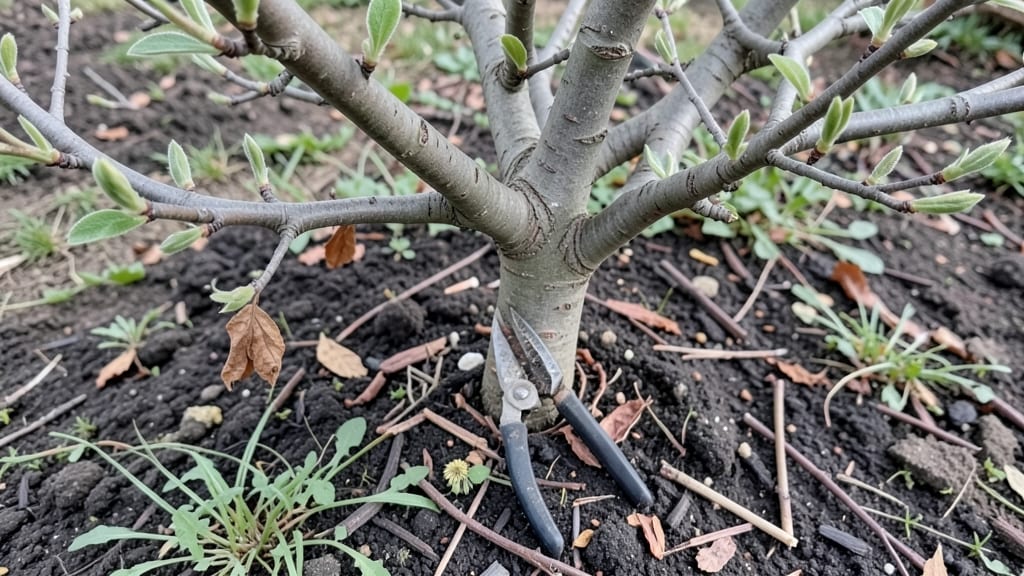
Trimming peach trees might sound complicated, but those four strategic cuts in the right spots will transform your tree from scraggly to showstopping. 🌱 I learned the hard way—my first attempt left the tree looking like a bird’s nest, but now I prune with confidence every year.
The key is timing: dormant season cuts heal faster, while summer pruning keeps shape and airflow.
You only need three tools: sharp bypass pruners, loppers for thicker branches, and a saw for the biggest limbs. Focus on four cuts: removing dead wood, opening the center for sunlight, thinning crowded branches, and shaping the canopy to avoid overgrowth.
Most mistakes happen when people cut too much at once—stick to removing no more than 25% of the canopy per year.
After trimming, you’ll see stronger growth, fewer fruitless branches, and a tree that produces sweeter, more abundant peaches. The first year, you’ll notice thicker limbs and fewer disease spots. By year three, your tree will look like it belongs in a peach orchard, not just your backyard.
This method works year-round, but winter’s the best time to start. If you’ve been avoiding pruning because it seemed overwhelming, these four cuts make it simple—even for beginners. Let’s get those branches in shape!
📚 In This Guide
- What you need
- Instructions
- Tips and common mistakes
- Wrapping up and next steps
What you need
- ● Pruning shears: Bypass pruners (for clean cuts on small branches, 5–7 inches long, sharp and sturdy).
- ● Loppers: Long-handled (for thicker branches, 8–12 inches, with a bypass blade).
- ● Pruning saw: Curved-tooth (for branches too thick for loppers, 12–18 inches).
- ● Disinfectant: 70% isopropyl alcohol or bleach solution (1 part bleach to 9 parts water) to sterilize tools between cuts.
- ● Gloves: Heavy-duty, cut-resistant (to protect hands from thorns and sap).
- ○ Tree wound sealant (optional): Pruning paste (only if your tree is prone to disease; otherwise, let cuts heal naturally).
- ● Weather: Trim on a dry, cloudy day (avoid wet or windy conditions). Ideal temps: 50–75°F (10–24°C).
- ● Safety gear: Safety glasses (to shield eyes from debris) and long sleeves/pants (for thorn protection).
- ● Cleanup supplies: Garden bag or bucket (for collecting pruned branches) and twine or zip ties (to bundle large branches).
- ● Tree knowledge: Know your peach tree’s age and variety—young trees need different cuts than mature ones!
Instructions for trimming peach trees
Here's the straightforward approach I use every year to keep my peach trees productive and healthy.
✂️ Step 1: Prune Out Dead or Diseased Wood First
Start by scanning the entire tree for branches that are completely dead (no green leaves) or showing signs of disease like oozing sap, fungal growth, or unusual spots. These branches won't recover, and leaving them invites pests and disease to spread. Grab your pruning shears and cut these branches back to a healthy bud or branch junction—you'll know it's healthy if the bark looks smooth and the wood feels firm.
Make your cuts at a 45-degree angle about ¼ inch above the bud, slanting away from the bud so water runs off. This prevents water from pooling and rotting the bud. If you're dealing with larger branches, use your pruning saw instead of shears to avoid tearing the bark. I always clean my tools with rubbing alcohol between cuts on diseased wood to prevent spreading pathogens.
✂️ Step 2: Thin the Canopy for Better Airflow
Next, focus on improving airflow throughout the tree. Peach trees need good circulation to prevent fungal diseases like brown rot. Look for branches that are crossing or rubbing against each other—these will eventually create wounds where disease can enter. Remove the weaker of the two branches by cutting it back to a healthy bud or branch collar. You'll know you're doing this right when you can see light filtering through the canopy after you're done.
Also remove any branches growing straight upward (called "water sprouts") or those growing inward toward the center of the tree. These branches compete for sunlight and nutrients, weakening the tree. Aim to thin the canopy so you can see through it easily—about 20-30% of the branches should be removed in this step. This might seem drastic, but trust me, the tree will reward you with better fruit production.
✂️ Step 3: Shape the Tree for Optimal Fruit Production
Now it's time to shape the tree to encourage strong growth and fruit production. Peach trees grow best with an open-center shape, where the main branches spread outward like a vase. Start by identifying the 4-6 strongest scaffold branches—these are the main branches that form the tree's structure. These should be spaced 12-18 inches apart along the trunk and grow at a 45-60 degree angle from the trunk.
If you have branches growing too close together, remove the weaker one. For branches that are too low on the trunk (below 2-3 feet from the ground), cut them back to a higher bud. This encourages new growth higher up, making the tree easier to harvest and reducing the risk of disease from low-hanging branches touching the ground. Step back every few minutes to visualize the tree's shape—you want a balanced, open structure that lets sunlight reach all parts of the canopy.
✂️ Step 4: Lightly Prune for Fruit Development
Finally, focus on the smaller branches that will bear fruit. Peach trees produce fruit on one-year-old wood, so you want to encourage new growth while still maintaining the tree's structure. Look for clusters of branches that are too dense—these can shade the center of the tree and reduce fruit quality. Thin these clusters by removing some of the smaller branches, leaving the strongest ones to grow.
Also, cut back any branches that are longer than 18-24 inches by about ¼ to ⅓ of their length. This encourages the tree to produce more fruit buds along the remaining branches. Avoid over-pruning—you don't want to remove more than 25% of the tree's foliage in total. The goal is to stimulate new growth without stressing the tree. After pruning, the tree should look balanced and full of potential for next year's harvest.
Tips & tricks for perfect peach tree trimming
A few simple tricks will help you trim your peach trees like a pro—without stressing the tree or yourself.
Tool Prep is Everything: Before you start cutting, sharpen your pruning shears and clean them with rubbing alcohol—especially after cutting diseased branches. Dull tools tear bark, creating wounds that invite infection. I also keep a small spray bottle of 70% isopropyl alcohol handy to disinfect tools between cuts on infected wood. This simple step prevents spreading pathogens throughout your entire tree.
Visualize the Final Shape: Step back every 5-10 minutes to check your progress. You should be able to see light filtering through the canopy after Step 2. For Step 3, imagine your tree as a vase—main branches should spread outward at 45-60 degrees. This open structure prevents branches from rubbing together and creates an ideal environment for fruit production. Trust your eyes over the measurements when making final adjustments.
Timing Matters for New Growth: The best time to prune is late winter or early spring, just before buds begin to swell. This timing gives the tree time to heal before the growing season. If you must prune in summer, do it after harvest to avoid stressing the tree when it's already fruiting. For young trees, you can prune lightly throughout the season to shape growth, but avoid heavy pruning when new growth is already underway.
Don't Fear the Pruning Saw: Many gardeners avoid pruning saws because they're intimidating, but they're essential for branches thicker than ½ inch. Make your cuts just outside the branch collar—the swollen area where the branch meets the trunk. This ensures proper healing. I've ruined several cuts by sawing too close to the trunk, so always measure twice before making the final cut with your saw.
Pro Tips for Trimming Peach Trees
- A few simple tricks will help you trim your peach trees like a pro—without stressing the tree or yourself.
- Tool Prep is Everything: Before you start cutting, sharpen your pruning shears and clean them with rubbing alcohol—especially after cutting diseased branches.
- Visualize the Final Shape: Step back every 5-10 minutes to check your progress.
Frequently asked questions
Got questions about trimming peach trees? You’re not alone!
Whether you're a first-time pruner or a seasoned gardener, these answers will help you keep your peach tree thriving with confidence.
When is the best time to trim a peach tree?
The ideal window is late winter or early spring (before buds swell), but summer trimming is also key to remove dead or diseased branches. Avoid heavy pruning in fall—it can leave wounds vulnerable to pests. For young trees, focus on shaping in late winter, while mature trees benefit from light summer maintenance.
What if I cut too much off my peach tree?
Over-pruning (removing more than 25-30% of the canopy) can stress your tree, reducing fruit production and inviting disease. If you’ve already trimmed too much, don’t panic! Water deeply, avoid fertilizing, and monitor for new growth. Next year, prune less aggressively—focus on selective cuts to restore balance.
Can I trim a peach tree in summer?
Yes! Summer pruning (after harvest) is critical for peach trees. Remove suckers (shoots growing from the base), water sprouts (vertical shoots), and any branches rubbing together. Thin out crowded fruit clusters too—this improves air circulation and fruit size. Just avoid heavy cuts; stick to shaping and cleanup.
How do I know if I’m pruning for health or fruit production?
Health-focused pruning removes:
- Dead, diseased, or crossing branches
- Shoots growing inward
- Damaged limbs
- Opening the canopy for sunlight
- Thinning branches to reduce competition
- Encouraging outward growth
What tools should I use to trim peach trees safely?
Use sharp, clean tools to prevent tearing:
- Bypass pruners for small branches (up to ½ inch)
- Loppers for medium branches (½–1½ inches)
- Pruning saw for thick limbs (over 1½ inches)
Wrapping up and next steps
Trimming your peach tree doesn’t have to be intimidating—just a few strategic cuts can keep it thriving year-round!
By removing dead wood, thinning crowded branches, and shaping for airflow, you’ll encourage healthier growth, better fruit production, and fewer pests. Your efforts now will pay off with luscious peaches and a stunning tree for seasons to come.
Ready to take action? Grab your pruners and schedule your first trim—whether it’s winter cleanup or summer shaping. Check out our step-by-step guide for confidence and clarity. You’ve got this! 🌿✂️