Trees
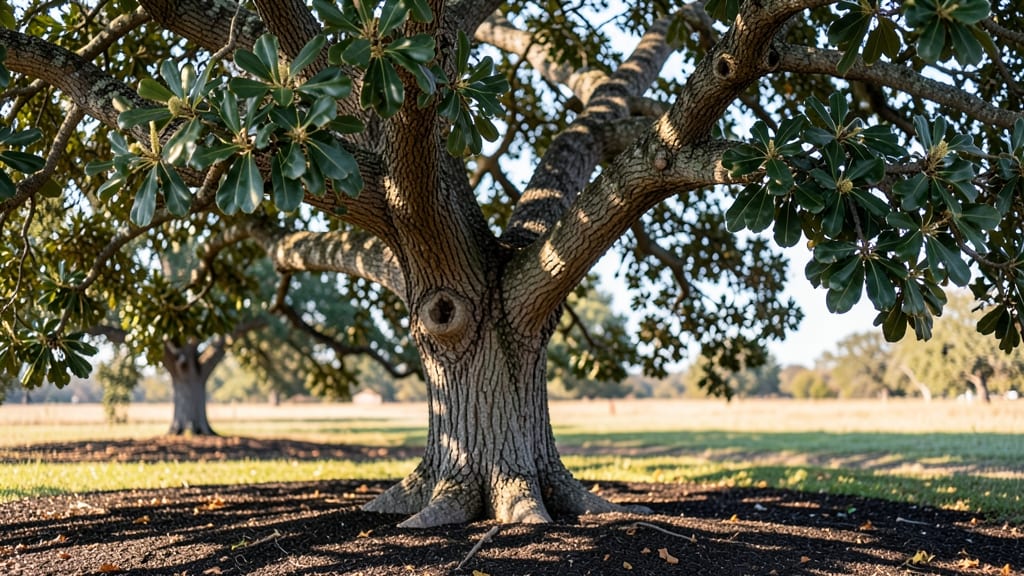
Dallas summers demand trees that thrive in 100-degree heat without wilting—yet still deliver year-round beauty. 🌳 The right species turns your yard into a lush oasis with minimal fuss, whether you want shade, privacy, or wildlife-friendly foliage.
My front yard's Chinese pistache now provides brilliant red fall color while barely needing water once established.
Native options like Eastern redbud or Texas red oak handle our alkaline soil and occasional drought like pros. For instant shade, Live oak is the gold standard—just give it space to spread. Smaller yards? Dwarf yaupon holly delivers evergreen structure and berries for birds, all in a tidy 6-foot package.
You’ll end up with a landscape that stays vibrant through scorching summers and mild winters, with less watering and pruning than you’d expect. The Chinese pistache’s leaves turn fiery red in fall, while the Eastern redbud’s pink spring blooms attract pollinators for weeks.
Even the soil stays healthier with deep-rooted trees.
Works for urban backyards, suburban lots, or even large containers. The key is matching tree size to your space and prioritizing drought-tolerant species. Let’s pick the perfect one for your yard’s needs!
📚 In This Guide
- What you need
- Instructions
- Tips and common mistakes
- Wrapping up and next steps
What you need
- ● Tree(s): Choose from Dallas-friendly options like: Texas Red Oak (fast-growing, drought-tolerant)
- ● Mexican Sycamore (vibrant foliage, minimal care)
- ● Eastern Redbud (spring blooms, compact size)
- ● Shovel: 1 medium-sized digging shovel (24–30" length)
- ● Garden Gloves: 1 pair (heavy-duty, water-resistant)
- ● Mulch: 2–3 bags (3–4 cubic feet each) of organic mulch (pine bark or shredded hardwood)
- ● Compost: 1–2 bags (40-lb each) for nutrient-rich soil amendment
- ● Watering Can or Hose: With adjustable nozzle for gentle watering
- ○ Tree Stake (optional): 1–2 stakes (if planting in windy areas)
- ● Pruning Shears: Bypass pruners (for small branches)
- ● Loppers: 1 pair (for thicker branches, 16–24" reach)
- ● Safety Gear: Goggles (to protect from debris)
- ● Earplugs (if using a chainsaw for large limbs)
- ○ Tree Fertilizer (optional): Slow-release granular fertilizer (e.g., Espoma Tree-Tone)
- ● Location: Pick a spot with 6+ hours of sunlight (check your tree’s needs!)
- ● Soil Test: Dallas’ clay-heavy soil? Test pH (aim for 6.0–7.5) via blank">Texas A&M Extension.
- ● Permits: Check with blank">Dallas City for tree planting rules (especially near sidewalks).
- ● Season: Best time to plant: Fall (Oct–Nov) or early spring (Feb–March) to avoid extreme heat.
Step-by-step guide to selecting and planting low-maintenance trees for Dallas' climate
Dallas' unique heat, soil, and seasonal shifts demand smart tree choices. Here's how to pick and plant trees that thrive with minimal fuss.
🌱 Step 1: Choose Trees That Thrive in Dallas' Conditions
Focus on native or adapted species that handle 90°F+ summers, clay-heavy soil, and occasional drought. My top picks for year-round interest include Eastern Redbud (Cercis canadensis) for spring blooms, Texas Red Oak (Quercus buckleyi) for fall color, and Mexican Sycamore (Platanus mexicana) for dramatic texture. Avoid fast-growing trees like willows—they demand constant water and maintenance.
Check mature height and spread before planting. A 20-foot tree planted too close to a house will outgrow its space in 10 years. I always measure the area and visualize the tree's canopy at maturity using the 30-degree rule: the trunk should be 1/3 the distance from the house as the tree's mature height.
☀️ Step 2: Plant at the Right Time for Dallas' Climate
Fall is ideal—between November and early December—when soil stays warm but air cools. This gives roots time to establish before summer heat arrives. Spring planting works too, but avoid extreme heat (95°F+) or cold (below 50°F) periods. I've seen trees planted in summer struggle with transplant shock and heat stress.
Dig a hole twice as wide as the root ball but no deeper. The top of the root ball should sit 1-2 inches above ground level to prevent water pooling. Amend the native clay soil with 2-3 inches of compost mixed into the bottom and sides of the hole—this improves drainage without overwhelming the tree.
💧 Step 3: Water Deeply and Establish a Mulch Ring
Water immediately after planting—10-15 gallons for small trees, 20+ gallons for large ones. Soak the root ball thoroughly until water runs out the bottom of the hole. Over the next 2 weeks, water 2-3 times weekly until the soil is 12 inches deep and uniformly moist. You'll know it's right when the top inch feels damp but not soggy.
Apply 2-3 inches of mulch (wood chips or pine straw) in a 3-foot diameter ring around the tree, keeping mulch 6 inches away from the trunk. This conserves moisture, regulates soil temperature, and suppresses weeds. Replenish mulch annually—it breaks down faster in Dallas' heat than in cooler climates.
✂️ Step 4: Prune Strategically for Dallas' Growing Season
Prune only when the tree is dormant in late winter (February-March) to avoid inviting pests or diseases during summer heat. Remove dead, crossing, or diseased branches first, then thin the canopy to improve airflow. I never remove more than 25% of the foliage in one season—Dallas' intense sun can stress trees that lose too much leaf cover.
Watch for signs of stress: yellowing leaves often indicate overwatering, while brown leaf edges signal underwatering. Adjust your schedule based on what you see—Dallas' erratic rainfall makes consistency key. A deep watering every 10-14 days during summer maintains roots without drowning them.
🪴 Step 5: Monitor and Adjust for Long-Term Success
Inspect trees monthly for pests like oak wilt or aphids, common in Dallas. Early intervention with horticultural oil or neem spray prevents outbreaks. I also check for girdling roots—where roots circle the trunk—which can strangle the tree over time. If you spot them, gently loosen with a knife during dormant seasons.
Fertilize only if needed—Dallas' clay soil often has enough nutrients. Apply a balanced 10-10-10 fertilizer in early spring if growth is slow, but skip it if the tree looks healthy. Over-fertilizing leads to weak growth and attracts pests. The goal is steady, not rapid, establishment.
Tips & tricks for perfect trees in Dallas' climate
These practical tips will help you avoid common pitfalls and ensure your low-maintenance trees thrive year-round in Dallas' challenging conditions.
Species Selection Strategy: When choosing between Eastern Redbud, Texas Red Oak, or Mexican Sycamore, consider your specific needs. The Redbud offers stunning spring blooms but only reaches 20-30 feet tall, making it perfect for small yards. Texas Red Oak provides year-round interest with its acorns and fall color, but its mature height of 40-60 feet requires more space. Mexican Sycamore's dramatic bark and size (50-70 feet) make it ideal for large landscapes. I always sketch the mature canopy size on paper before planting to visualize the long-term impact.
Planting Time Precision: The fall planting window between November and early December is critical because Dallas' soil stays warm enough to encourage root growth while cooler air reduces transplant shock. I've found that planting in early November gives roots a full 3-month establishment period before summer heat arrives. If you must plant in spring, aim for February-March when soil temperatures stabilize above 50°F—avoid the extreme heat of April and May at all costs.
Watering Technique: The initial 10-15 gallons of water for small trees might seem like a lot, but it's essential to fully saturate the root ball and surrounding soil. I use a hose with a gentle spray nozzle to avoid displacing soil while ensuring water penetrates to 12 inches deep. During the critical 2-week establishment period, I set a timer to water every 48 hours rather than relying on memory—consistency is more important than exact timing in Dallas' unpredictable weather patterns.
Mulch Application: The 2-3 inches of mulch should be applied carefully to avoid creating a "mulch volcano" against the trunk. I use a flat-edged shovel to create a slight depression around the trunk before adding mulch, then spread it outward in a 3-foot diameter ring. This technique prevents moisture buildup at the base while still providing excellent insulation. Remember to replenish mulch annually—Dallas' heat causes it to break down faster than in cooler climates, leaving your tree vulnerable to temperature fluctuations.
Pro Tips for Trees In Dallas Tx
- These practical tips will help you avoid common pitfalls and ensure your low-maintenance trees thrive year-round in Dallas' challenging conditions.
- Species Selection Strategy: When choosing between Eastern Redbud, Texas Red Oak, or Mexican Sycamore, consider your specific needs.
- Planting Time Precision: The fall planting window between November and early December is critical because Dallas' soil stays warm enough to encourage root growth while cooler air reduces transplant shock.
Frequently asked questions
Got questions about keeping your Dallas trees thriving with minimal fuss? Here are some of the most common ones—and their easy answers!
What are the best low-maintenance trees for Dallas’s hot summers and occasional freezes?
Dallas’s Zone 8a climate means you’ll want trees that handle heat, drought, and mild freezes. Top picks include Chinese Pistache (vibrant fall color + pest-resistant), Live Oak (iconic shade + longevity), and Texas Mountain Laurel (fragrant purple blooms + drought-tolerant). Avoid fussy species like weeping willows—they demand too much water and maintenance!
When is the best time to plant a tree in Dallas to ensure it survives?
Plant in late fall (November) or early spring (February–March) when temperatures are mild and rain is frequent. Avoid summer (intense heat) and winter (freeze risk). Pro tip: Water deeply 2–3 times weekly for the first year—Dallas’s clay soil can dry out fast!
How much does it cost to plant and maintain a mature tree in Dallas?
| Service | Estimated Cost (USD) |
|---|---|
| Professional planting (50+ ft tree) | $500–$1,500 |
| Annual pruning (small tree) | $100–$300 |
| Drip irrigation system (DIY) | $50–$200 |
Save money by planting smaller trees (e.g., Crapemyrtle) and mulching yearly. City of Dallas offers free tree giveaways for residents—check their website!
Why is my Dallas tree’s leaves turning yellow/brown, even with regular watering?
Common culprits in Dallas:
- Overwatering: Clay soil holds too much moisture—check drainage!
- Root rot: Fungal infection from soggy roots (reduce watering immediately).
- Nutrient deficiency: Amend soil with compost or use slow-release fertilizer.
- Pests (e.g., spider mites): Spray with neem oil or contact a local arborist.
Test your soil’s pH (ideal: 6.0–7.0 for most trees)—Dallas’s alkaline soil often needs acid-loving amendments like pine bark.
Can I grow fruit/nut trees in Dallas, and which are the easiest?
Try these low-fuss options:
- Fig trees: Thrive in heat, drought-tolerant, and produce year-round.
- Pecan trees: Native to Texas—just needs space (20+ ft) and occasional pruning.
- Persimmon (American): Cold-hardy, pest-resistant, and sweet fruit in fall.
Avoid citrus—Dallas’s freezes will kill them unless you’re in a microclimate (e.g., near Trinity River).
Wrapping up and next steps
From vibrant oaks to low-maintenance crepe myrtles, Dallas’s diverse climate and soil make it a haven for stunning trees that thrive with minimal care—no green thumb required! 🌳 Whether you’re drawn to year-round color, shade, or drought-resistant species, there’s a perfect tree waiting to transform your space.
The key? Choosing the right match for your yard’s conditions and your lifestyle.
Ready to get growing? Start by sketching your yard’s layout, jotting down sunlight spots, and visiting a local nursery to test soil drainage. Plant one tree this season—your future shade (and curb appeal) will thank you!