
Pruning
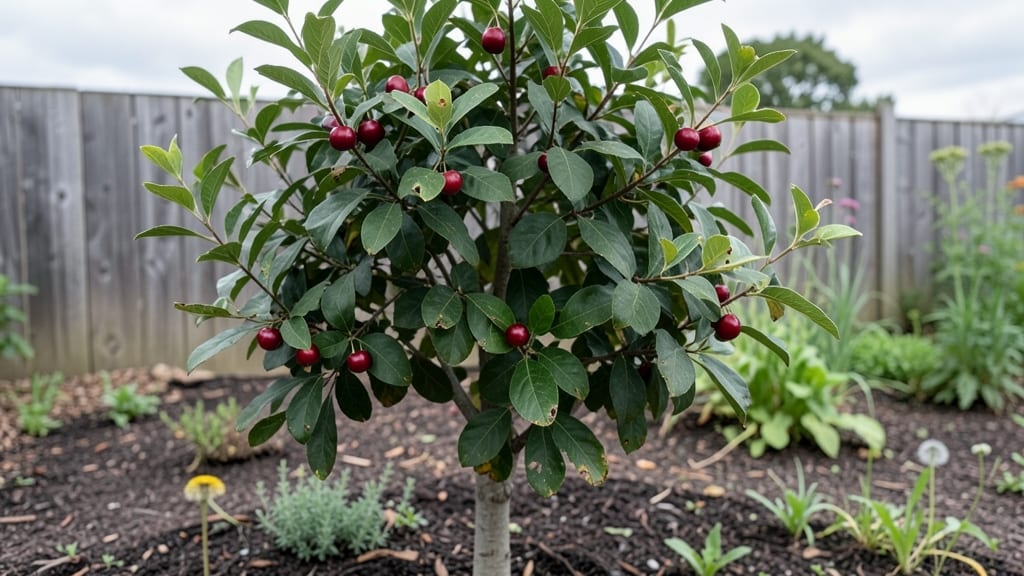
The Surinam cherry tree size you’ll achieve depends entirely on pruning—mine now stands at a tidy 8 feet after five years, far smaller than its wild, sprawling nature suggests. 🌿 with fruit every season.
The key isn’t just cutting branches, though; it’s understanding how this tree naturally grows and when to guide it.
Without pruning, Surinam cherries can reach 12-15 feet, but they’re slow growers—about 12-24 inches per year—so you’re never in a rush. The real magic happens when you prune in late winter or early spring, right before new growth begins.
This isn’t just about size control; it’s about shaping the tree to produce more fruit and keep it healthy. I’ve seen neighbors’ unpruned trees struggle with dense, shaded centers—something you’ll avoid with a few strategic cuts.
You’ll end up with a tree that fits neatly in small yards or large containers, producing hundreds of bright red berries each summer. The fruit stays small but sweet, perfect for snacking or jams, and the glossy green leaves add year-round interest.
The best part? Once you establish a pruning routine, the tree practically prunes itself—just a little maintenance each year keeps it compact and productive.
Works for urban gardens, patios, or even as a striking container specimen—just make sure it gets full sun and well-draining soil. Let’s get your Surinam cherry looking its best without sacrificing that sweet harvest.
📚 In This Guide
- What you need
- Instructions
- Tips and common mistakes
- Wrapping up and next steps
What you need
- ● Pruning shears: Bypass pruners (sharp, 6–8 inches) for small branches.
- ● Loppers: 1 pair (8–12 inches) for thicker branches (½–1.5 inches in diameter).
- ● Pruning saw: 1 curved-tooth saw for branches >1.5 inches thick.
- ● Disinfectant: 70% isopropyl alcohol or a 10% bleach solution (1 part bleach to 9 parts water) to sterilize tools.
- ● Gloves: Heavy-duty, cut-resistant gloves (e.g., Mechanix or pruning-specific gloves).
- ● Garden twine or zip ties: For securing branches during pruning.
- ● Bucket or trash bag: For collecting pruned branches (1–2 gallons).
- ● Permanent marker: To label cuts if training the tree’s shape.
- ● Hand pruners with ratcheting mechanism: For extra leverage on stubborn branches.
- ● Pole pruner: If your tree is already tall (10+ feet).
- ● Tree wound dressing: (Controversial but useful for large cuts—e.g., Tanglefoot Tree Wound Pruning Seal.)
- ● Ladder: Sturdy, extendable ladder (if reaching high branches).
- ● Pruning guide or measuring tape: To track branch length and spacing.
- ● Camera or sketchbook: To document your tree’s structure before/after pruning.
Instructions for pruning Surinam cherries to control height and spread
Here’s how to shape your Surinam cherry into a manageable, flowering powerhouse—without sacrificing those stunning blooms.
✂️ Step 1: Time Your Pruning for Maximum Impact
Prune your Surinam cherry tree in early spring, just as new growth begins but before buds swell. This timing ensures you remove last year’s wood while encouraging fresh, vigorous shoots. Avoid pruning in fall—it leaves the tree vulnerable to winter stress and disease. If you missed spring, late winter is your second-best window, but wait until temperatures consistently stay above 40°F to prevent shock.
Watch for the first flush of bright green leaves along the branches—that’s your cue. Pruning too early risks cutting back dormant buds that haven’t yet signaled their growth potential. I like to mark the branches with a piece of twine before cutting; it helps me visualize the tree’s structure and avoid over-thinning any one side.
✂️ Step 2: Remove Dead, Weak, or Crossing Branches First
Start by targeting dead wood—branches that snap when bent or have no bark. Next, remove any weak, thin branches (smaller than a pencil) that won’t contribute to the tree’s strength. These are energy drains and often break under fruit weight. Use clean, sharp pruners to make cuts at a 45-degree angle, about ¼ inch above a bud that faces outward.
Crossing branches are your next priority—they rub against each other, creating wounds that invite disease. If two branches grow toward the same space, remove the weaker of the two. I always step back after each cut to check the tree’s balance. A well-pruned Surinam cherry should look like an open umbrella, with light filtering through the canopy.
✂️ Step 3: Thin the Canopy to Encourage Airflow
Surinam cherries thrive when their branches receive circulation and sunlight. Aim to reduce the canopy by 20-30% to prevent overcrowding. Focus on inner branches that cast shade on others—these rarely fruit and can harbor pests. Cut back to the nearest outward-facing bud, and avoid leaving stubs, which rot and attract insects.
Here’s the thing—Surinam cherries bloom on new wood, so aggressive pruning won’t kill your flowers. In fact, thinning stimulates more lateral branches, which produce clusters of those bright red-orange berries. After each cut, run your fingers along the branch to feel for smooth bark—rough or cracked areas signal stress and should be pruned back further.
✂️ Step 4: Shape for Compact Growth and Flowering
To keep your Surinam cherry under 10 feet tall, prune the tallest vertical branches back by one-third each year. This encourages a bushier habit while maintaining an open center. For a more formal look, I prune mine into a rounded vase shape, cutting back branches that grow too upright or outward.
Pay special attention to water sprouts—those fast-growing, vertical shoots that pop up along the trunk or branches. These steal energy from flowering. Snip them off at the base as soon as you spot them. After pruning, I give the tree a light fertilizer to support new growth, but only if the soil feels dry to the touch.
✂️ Step 5: Clean Up and Monitor for Recovery
Rake up all clippings and dispose of them in the trash—not the compost pile. Surinam cherry branches can harbor fire blight or other diseases, and composting them risks reinfecting your garden. Sterilize your pruners with rubbing alcohol between cuts if you’re working on multiple trees.
Over the next 2-3 weeks, watch for new leaf growth at the pruned buds. If you see wilting or yellowing, you may have pruned too aggressively—water deeply and avoid further cuts that season. A well-pruned tree will show fresh green leaves within 10-14 days, signaling it’s recovering beautifully.
Tips & tricks for perfect Surinam cherry tree size management
Mastering the art of pruning your Surinam cherry tree transforms it from a wild, unruly giant into a beautifully contained flowering specimen—here's how to elevate your technique!
Timing is Everything: The early spring window (just before buds swell) is your golden opportunity to prune. I've learned this the hard way—pruning too early can remove dormant buds that haven't yet signaled their growth potential. Look for that first flush of bright green leaves as your cue to begin. For those who miss spring, late winter works too, but wait until temperatures consistently stay above 40°F to prevent shock. Pro tip: Mark branches with twine before cutting to visualize the tree's structure and avoid over-thinning any one side.
Precision Cuts for Healthier Growth: When removing branches in Step 2, make clean cuts at a 45-degree angle, about ¼ inch above an outward-facing bud. This technique encourages new growth in the right direction. I always step back after each cut to check the tree's balance—think of it as creating an open umbrella shape where light can filter through the canopy. For crossing branches, remove the weaker one to prevent future rubbing that invites disease. And here's what nobody tells you: run your fingers along the branch after cutting—rough or cracked bark signals stress and should be pruned back further.
Canopy Thinning Strategy: Aim to reduce the canopy by 20-30% to prevent overcrowding, which is crucial for both airflow and sunlight penetration. Focus on inner branches that cast shade on others—they rarely fruit and can harbor pests. Remember that Surinam cherries bloom on new wood, so thinning actually stimulates more lateral branches that produce those stunning bright red-orange berries. The key is to cut back to the nearest outward-facing bud and avoid leaving stubs, which rot and attract insects.
Monitoring Recovery: After pruning, watch for new leaf growth at the pruned buds over the next 2-3 weeks. If you see wilting or yellowing, you may have pruned too aggressively—water deeply and avoid further cuts that season. A well-pruned tree will show fresh green leaves within 10-14 days, signaling it's recovering beautifully. Don't forget to sterilize your pruners with rubbing alcohol between cuts if working on multiple trees to prevent disease spread.
Pro Tips for Surinam Cherry Tree Size
- Mastering the art of pruning your Surinam cherry tree transforms it from a wild, unruly giant into a beautifully contained flowering specimen—here's how to elevate your technique!
- Timing is Everything: The early spring window (just before buds swell) is your golden opportunity to prune.
- Precision Cuts for Healthier Growth: When removing branches in Step 2, make clean cuts at a 45-degree angle, about ¼ inch above an outward-facing bud.
Frequently asked questions
Got questions about managing your Surinam cherry tree’s size?
Here are the most common ones—plus expert tips to keep your tree thriving!
How fast does a Surinam cherry tree grow?
A Surinam cherry tree grows moderately fast—about 12–24 inches per year under ideal conditions. With proper pruning (like the techniques in this guide), you can control its height and spread to stay within your space. Young trees grow faster, while mature trees slow down after 5–7 years.
What’s the mature size of a Surinam cherry tree?
Without pruning, a Surinam cherry tree can reach 15–25 feet tall and 10–15 feet wide. However, with regular pruning (especially during dormant seasons), you can keep it compact—even as small as 6–8 feet tall. Dwarf varieties or container-grown trees stay even smaller!
When is the best time to prune for size control?
Prune your Surinam cherry tree late winter or early spring (before buds swell) for best results. Avoid heavy pruning in fall, as it can stimulate new growth that won’t harden off before frost. Light shaping pruning in summer is fine, but focus on structural cuts in dormant seasons.
Can I keep a Surinam cherry tree in a container?
Yes! Surinam cherry trees thrive in large containers (15+ gallons) with well-draining soil. Just ensure the pot has drainage holes and repot every 2–3 years to refresh the soil. Keep it in full sun and prune roots if they circle the pot. Pro tip: Use a mycorrhizal fungus to boost root health!
Why is my Surinam cherry tree growing too fast or leggy?
Leggy growth or rapid, unchecked size usually means too much shade, over-fertilizing with nitrogen, or poor pruning habits. Fix it by:
- Moving the tree to full sun (6+ hours/day).
- Switching to a balanced fertilizer (10-10-10) in spring.
- Pruning back 1/3 of leggy branches to encourage bushier growth.
If the issue persists, check for pests (like spider mites) or root-bound stress.
Wrapping up and next steps
Growing a Surinam cherry tree with controlled size is totally achievable with the right pruning techniques! Remember, regular trimming, proper spacing, and seasonal care are key to keeping your tree compact while maximizing fruit production.
Whether you’re aiming for a dwarf variety or just managing growth, consistency is your best friend.
Ready to take the next step? Start small—pick one pruning session this week and observe how your tree responds. Over time, you’ll master the art of shaping your Surinam cherry tree into the perfect-sized beauty for your space! 🌿✨