Pruning
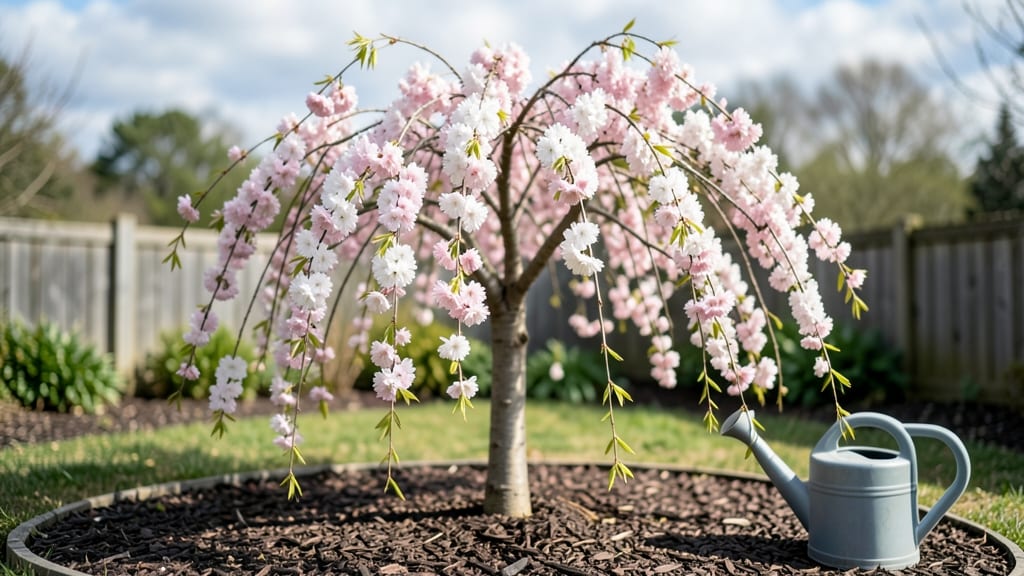
Mastering snow fountain weeping cherry tree care in the Pacific Northwest begins with pruning for frost resistance to shape its delicate branches.
I’ve learned the hard way that aggressive cuts in winter can shock these delicate branches, but the right timing and technique ensures your tree thrives through our wet, chilly seasons. The key?
Pruning in late winter or early spring, just as buds begin to swell, while avoiding the harshest frosts that linger in our region.
This tree isn’t just about stunning white blooms—it’s about patience and precision. You’ll need sharp bypass pruners, a ladder for higher branches, and a clear day to work. The goal is to shape the weeping habit while encouraging strong growth from the center.
Start by removing any dead or crossing branches first, then thin out about 20-30% of the oldest growth to keep the tree open and airy. That’s how you prevent disease and let sunlight reach the lower branches.
What you’ll end up with is a graceful, snow-dusted canopy that blooms reliably year after year. The flowers arrive in late spring, just as the rain lets up, and the scent lingers in the air for weeks.
Even better, the tree’s natural weeping shape creates a focal point that works in both formal and cottage-style gardens. With proper care, your Snow Fountain will outlive you—and become the talk of the neighborhood.
For those of us in the Pacific Northwest, winter care is just as critical as pruning. Wrapping the trunk with burlap during the coldest months protects it from frost cracks, and mulching keeps the roots insulated.
The tree’s native resilience means it handles our climate better than many ornamentals, but a little extra attention in the off-season makes all the difference. Ready to get started?
📚 In This Guide
- What you need
- Instructions
- Tips and common mistakes
- Wrapping up and next steps
What you need
- ● Pruning shears: Bypass pruners (sharp, 6–8" blades) for clean cuts—sterilize with rubbing alcohol before and after use.
- ● Loppers: 1 pair (10–12" blades) for thicker branches (½"–2" diameter).
- ● Pruning saw: 1 curved-tooth saw (for branches >2" thick).
- ● Gloves: Heavy-duty, cut-resistant gloves (e.g., Mechanix or pruning-specific).
- ○ Tree wound dressing: 1 small tub (optional but helpful for large cuts in frost-prone zones).
- ● Disinfectant: 70% isopropyl alcohol or 10% bleach solution (1 part bleach : 9 parts water).
- ● Measuring tape: 1 (16' tape) for assessing branch length and spacing.
- ● Ladder: Sturdy, extendable ladder (if tree exceeds 12' tall).
- ● Watering can or hose: With a gentle spray nozzle for post-pruning hydration.
- ● Pruning sealant: For large cuts (e.g., Tanglefoot Tree Wound Pruning Seal).
- ● Extension pole: For hard-to-reach branches (attach shears/loppers).
- ● Notebook & pen: To sketch your pruning plan or track growth.
- ● Frost cloth: Lightweight (for protecting new cuts in late frosts).
- ● Mulch: 2–3 inches of wood chips or bark (for root insulation post-pruning).
Instructions for pruning and caring for snow fountain weeping cherry trees
This Pacific Northwest-friendly approach keeps your tree thriving through frost and rain.
Prune in Late Winter Before Bud Break
Timing is everything with weeping cherries. Wait until late February or early March when temperatures are consistently above 32°F but before buds swell. This prevents frost damage to fresh cuts and gives your tree time to heal before spring growth. I always prune on a dry, sunny day—wet branches are harder to handle and can spread disease.
Start by removing dead, diseased, or crossing branches first. These are easy to spot—they’re brown, brittle, or rubbing against other branches. Use clean, sharp pruning shears to make cuts just outside the branch collar (the swollen area where the branch meets the trunk). This ensures proper healing and prevents water from pooling in the wound.
Thin the Canopy for Airflow and Light
Weeping cherries grow best with open, airy branches to prevent fungal issues like powdery mildew. Focus on thinning the outer canopy first, removing branches that grow inward or downward. Aim to keep the tree’s shape natural—avoid aggressive shaping, as these trees rely on their graceful, cascading form. I like to step back every few cuts to visualize the tree’s balance.
Remove no more than 25% of the tree’s foliage in one season. Over-pruning stresses the tree, especially in the Pacific Northwest’s damp climate. Look for branches that are thinner than a pencil—these can be cut back to a strong lateral branch. Larger branches should be removed in stages over 2-3 years to avoid shocking the tree.
Shape for Frost Resistance and Wind Protection
The Snow Fountain’s weeping habit makes it vulnerable to heavy snow and wind in the PNW. To strengthen its structure, prune to encourage strong lateral branches that can support the weight of snow. Focus on raising the center of the tree slightly to prevent snow buildup in the middle, which can break branches.
Use your hand as a guide—if you can’t fit it between branches, the canopy is too dense. Prune to allow sunlight to reach the inner branches, which helps prevent mold and encourages even flowering. Avoid cutting back flowering spurs (the small buds where blossoms form), as these are crucial for next year’s blooms.
Post-Pruning Care for Healthy Growth
After pruning, water deeply to help the tree recover, especially if the winter was dry. Apply a 2-3 inch layer of mulch around the base (but not touching the trunk) to retain moisture and regulate soil temperature. I always use organic mulch like wood chips or bark, which breaks down slowly and adds nutrients to the soil.
Monitor the tree for new growth in early spring. Healthy branches will show bright green leaves and vigorous shoots. If you notice yellowing leaves, wilting, or oozing sap at pruning cuts, the tree may be stressed or infected. In that case, treat with a fungicide (like neem oil) and avoid pruning until the issue resolves. Regularly inspect the tree for aphids or scale insects, common pests in weeping cherries.
Annual Maintenance for Long-Term Health
Schedule a light pruning session in late summer (August) to remove any suckers or water sprouts that appear after the main growing season. These fast-growing shoots drain energy from the tree. Keep cuts small and precise—this is more about tidying up than reshaping.
Every 3-5 years, reassess the tree’s structure. Older branches may need thinning or removal to maintain airflow and prevent disease. In the Pacific Northwest, where wet, mild winters are common, pruning in late winter ensures your Snow Fountain stays healthy, frost-resistant, and ready to burst into bloom each spring.
Tips & tricks for perfect snow fountain weeping cherry tree care
These practical tips will help you maintain your Snow Fountain weeping cherry tree's health and beauty through the Pacific Northwest's challenging climate.
Timing is Critical: The late February to early March window for pruning is non-negotiable for PNW weeping cherries. I've learned this the hard way—pruning too early risks frost damage to fresh cuts, while waiting too long stresses the tree before spring growth. Check local forecasts for consistent temperatures above 32°F before starting. If you miss this window, wait until buds begin to swell, but be prepared for slower healing times.
Tool Preparation Matters: Always disinfect your pruning shears with rubbing alcohol between cuts to prevent spreading disease. I keep a small bottle of 70% isopropyl alcohol in my tool bag specifically for this purpose. Sharp tools make cleaner cuts that heal faster, so take a few minutes to sharpen your shears before starting. For larger branches, consider using a pruning saw with a disinfectant wipe—this two-step process gives you the best of both worlds.
Visual Cues for Proper Pruning: When thinning the canopy in Step 2, imagine looking at your tree from all sides. You should be able to see light filtering through the outer branches. For branches thinner than a pencil, look for the first strong lateral branch (side branch) and make your cut just above it. This creates a natural growth point while removing weak growth. I find it helpful to sketch a rough outline of my ideal shape before starting—this keeps me focused on the tree's natural form.
Post-Pruning Recovery: After your pruning session, give your tree a thorough watering to help it recover, especially if winter was dry. The 2-3 inch layer of organic mulch is crucial—it shouldn't touch the trunk but should extend out to the tree's drip line. In the PNW's damp climate, this helps regulate soil temperature and prevents fungal issues. I always add a slow-release fertilizer at this time to give the tree nutrients for new growth, but only if your soil test shows it's needed.
Pro Tips for Snow Fountain Weeping Cherry Tree Care
- These practical tips will help you maintain your Snow Fountain weeping cherry tree's health and beauty through the Pacific Northwest's challenging climate.
- Timing is Critical: The late February to early March window for pruning is non-negotiable for PNW weeping cherries.
- Tool Preparation Matters: Always disinfect your pruning shears with rubbing alcohol between cuts to prevent spreading disease.
Frequently asked questions
about your Snow Fountain weeping cherry tree—because even frost-resistant beauty needs a little TLC! Here are the answers to common questions to keep your tree thriving in the Pacific Northwest’s chilly climate.When is the best time to prune a weeping cherry tree in winter?
Prune your Snow Fountain in late winter (February–March) before buds swell but after severe frost passes. This timing minimizes stress and disease risk. Avoid pruning in fall—it can encourage late-season growth vulnerable to cold snaps. Pro tip: Wait until temps stay above 40°F (4°C) for a few days to prevent shock!
How do I encourage more blooms on my weeping cherry?
Blooms thrive with open-center pruning—remove up to 25% of old wood annually to improve airflow and sunlight. Focus on cutting back last year’s growth (not current season’s) to stimulate new flowering branches. Over-fertilizing with nitrogen reduces blooms, so use a balanced 10-10-10 formula in early spring.
Can Snow Fountain weeping cherries survive heavy snow or ice?
Yes! This variety is frost-hardy (USDA Zones 5–8), but heavy snow can bend branches. Gently shake off snow (don’t brush forcefully) and support weak limbs with stakes if needed. Avoid pruning in winter—wait until spring to assess ice damage. Bonus: Their weeping habit naturally sheds snow!
What’s the difference between pruning for shape vs. blooms?
For shape, remove crossing branches or those growing inward to maintain the tree’s graceful form. For blooms, prioritize cutting back older wood (3–5 years old) to rejuvenate flowering. Key rule: Never remove more than 25% of the canopy in one year—gradual pruning keeps your tree healthy!
Why are my weeping cherry leaves turning brown or yellow?
Brown/yellow leaves often signal fungal issues (like powdery mildew) or nutrient deficiencies (e.g., iron chlorosis). Improve drainage, mulch properly, and apply iron supplements if soil pH is too high. Preventative tip: Space trees 10–15 ft apart for airflow and prune to reduce humidity in the canopy.
Are there frost-resistant alternatives to Snow Fountain?
Yes! Consider ‘Kanzan’ cherry (Zone 5) for upright blooms or ‘Hokusai’ (Zone 5) for double pink flowers. For weeping styles, ‘Shirofugen’ (white blooms, Zone 5) is another cold-tolerant pick. All thrive in PNW winters with similar care!
Wrapping up and next steps
Caring for your snow fountain weeping cherry tree in the Pacific Northwest is all about patience, precision, and a little love for frost-resistant beauty! 🌸 By mastering the right pruning techniques—like thinning cuts, structural shaping, and seasonal timing—you’ll keep your tree thriving for decades.
Remember, healthy growth starts with sharp tools and a clear plan, so don’t hesitate to revisit your pruning blueprint each season.
Now that you’re armed with expert tips, roll up those sleeves and give your tree the care it deserves! Ready to take the next step? Schedule a pruning session or join a local gardening group to share your progress—and maybe even swap tips with fellow PNW gardeners.
Your tree’s future blooms depend on it! ✂️🌿