Pruning
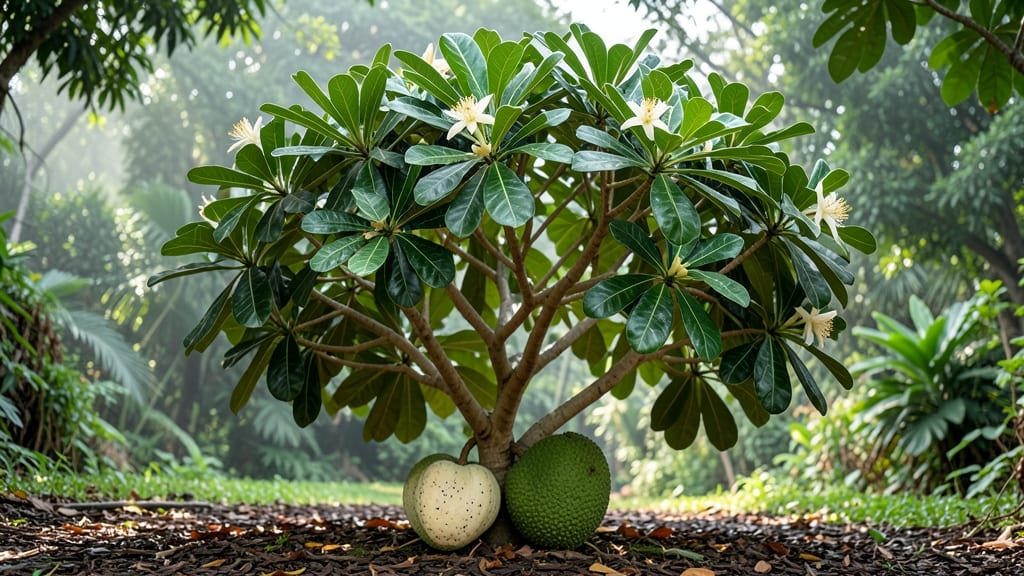
Caring for a cherimoya tree in the Pacific Northwest means embracing its tropical roots while working with your cooler climate. 🌿 I’ve grown mine for three years now, and the key is treating it like a high-maintenance houseplant—warmth, humidity, and protection from frost are non-negotiable.
Without these, even the hardiest cherimoya will struggle to thrive.
The first lesson I learned? These trees need consistent warmth—think 65-80°F year-round, which means overwintering indoors or in a heated greenhouse. Soil should drain well but stay moist, and partial shade protects the leaves from scorching while still giving enough light for fruit production.
Pruning isn’t about shaping but about airflow and energy—cut back dead or crossing branches in late winter to encourage new growth.
You’ll know you’re doing it right when your tree bursts with glossy, heart-shaped leaves and—if conditions are perfect—delicate, custard-like fruit by late summer. The payoff is worth the effort: one ripe cherimoya tastes like a mix of pineapple, banana, and vanilla, and nothing else compares.
But here’s the catch: Pacific Northwest summers are too short for reliable fruiting unless you extend the season with care.
Let’s tackle the basics first—where to site your tree, how to protect it from sudden cold snaps, and the pruning schedule that keeps it productive. Mistakes here mean lost seasons, so we’ll start with the essentials to set you up for success.
📚 In This Guide
- What you need
- Instructions
- Tips and common mistakes
- Wrapping up and next steps
What you need
- ● Pruning shears – Bypass pruners (sharp, clean, and sterilized with rubbing alcohol to prevent disease). Quantity: 1 pair (or 2 for larger branches).
- ● Loppers – For thicker branches (1/4" to 1.5" diameter). Quantity: 1 pair.
- ● Hand saw or pruning saw – For branches 1.5" or larger. Quantity: 1 (preferably a bow saw for precision).
- ● Gloves – Heavy-duty gardening gloves (cherimoya thorns are sharp!). Quantity: 1 pair.
- ● Disinfectant (rubbing alcohol or 10% bleach solution) – To sterilize tools between cuts. Quantity: Small bottle.
- ○ Pruning sealant (optional but helpful) – Tree wound sealant (like Tanglefoot Tree Wound Pruning Seal) to protect large cuts. Quantity: Small tube.
- ● Ladder or step stool – For reaching higher branches. Height: At least 8-10 ft (cherimoya trees can grow 15-20 ft tall).
- ● Trash bags or bucket – For collecting pruned branches. Quantity: 2-3.
- ○ Sharpie or masking tape + labels – To mark branches for future reference (optional but useful for tracking growth).
- ● Timing – Prune during the dormant season (late winter/early spring) or right after fruiting (avoid heavy pruning in summer).
- ● Climate prep – If temperatures drop below 20°F (-7°C), protect young trees with burlap wraps or frost cloth.
- ● Space – Ensure the tree has 10-15 ft of clearance from structures/walls (cherimoya trees spread!).
- ○ Soil test kit (optional) – To check pH (ideal: 6.0-7.0) and amend soil if needed (cherimoyas love well-draining, slightly acidic soil).
Step-by-step instructions for cherimoya tree pruning in cool climates
Here’s how I prune cherimoya trees to thrive in the Pacific Northwest’s mild winters—keeping them healthy, productive, and frost-resistant.
✂️ Step 1: Prune in Late Winter Before New Growth Begins
Wait until late February or early March when the tree is still dormant but just before buds swell. This timing prevents frost damage and encourages strong spring growth. I look for bare branches with no leaves or flowers—those are the first to go. Use clean, sharp bypass pruners to make cuts just above a bud or branch collar, never leaving stubs.
Remove dead, diseased, or crossing branches first. These compete for energy and can harbor pests. If a branch is thicker than ½ inch, use a pruning saw instead. The goal is to open the canopy for better air circulation and sunlight penetration—critical in our damp climate. I never remove more than 25% of the tree’s foliage in one year to avoid stress.
☀️ Step 2: Shape for Sun Exposure and Wind Protection
Cherimoya trees need full sun (6+ hours daily) but struggle with harsh winds. I prune to create a rounded, vase-like shape—this allows sunlight to reach inner branches while reducing wind damage. Start by thinning out sparse, weak branches growing inward or downward. These rarely produce fruit and block airflow.
Focus on outer branches to form a dense, sturdy framework. Leave 3-4 main scaffold branches spaced evenly around the trunk. If your tree is young, prioritize vertical growth to establish a strong structure before encouraging fruit production. In the PNW, I also avoid heavy pruning on south-facing sides—they get the most sun and need all their leaves.
🌱 Step 3: Encourage Fruit Production with Strategic Cuts
For fruit-bearing branches, I shorten last year’s growth by ⅓ to promote bushier, more productive growth. Look for wooden, leafless branches—these are last year’s fruiting stems. Cut just above a bud or side branch where new growth will emerge. Avoid cutting into old, thick wood—it rarely regenerates.
Remove suckers (shoots growing from the base or trunk) immediately—they drain energy from fruit production. If your tree is mature, never prune more than 10-15% of the canopy in a year. Cherimoya trees are sensitive, and aggressive cuts can reduce flowering. I always step back after pruning to check for balanced light distribution—if one side looks too bare, I adjust.
🪴 Step 4: Protect Against Frost and Winter Damage
In the PNW, late frosts (after buds swell) are the biggest threat. To delay spring growth, I avoid heavy pruning until after the last frost date (usually mid-April). If frost is forecasted, cover young shoots with frost cloth for a few hours. For mature trees, mulch the base with 3-4 inches of organic mulch (like wood chips) to insulate roots.
After pruning, sanitize tools with 70% rubbing alcohol to prevent bacterial spread. If your tree is potted, move it to a sheltered, sunny spot during winter. Cherimoya trees hate cold drafts—even temperatures below 20°F can damage leaves. In severe winters, I wrap the trunk with burlap for extra protection. The key is minimizing stress while encouraging gradual, controlled growth.
⏰ Step 5: Post-Pruning Care for Strong Recovery
Water deeply once a week after pruning to help the tree recover. Cherimoya trees need consistent moisture, especially in our dry summers. I apply a balanced fertilizer (10-10-10) in early spring to support new growth. Avoid high-nitrogen fertilizers—they encourage leafy growth at the expense of fruit.
Monitor for aphids or scale insects, which love fresh pruning cuts. Spray with neem oil if you spot sticky residue (honeydew) on leaves. By mid-summer, you should see new shoots emerging from pruned areas—that’s your sign the tree is healing well. If growth is sparse, it may need more sun or nutrients. Cherimoya trees are slow to mature, so patience is key—it can take 3-5 years before they bear fruit reliably.
Tips & tricks for perfect cherimoya tree pruning
Pruning cherimoya trees in the Pacific Northwest requires a delicate balance—too much stress and you risk stunted growth, but too little and your tree won't thrive in our damp climate. These targeted tips will help you navigate the process like a seasoned horticulturist.
Timing is Everything: The late February to early March window is non-negotiable for PNW climates. I've learned this the hard way—pruning too early risks frost damage to fresh cuts, while waiting too long encourages premature bud swelling. Check your local last frost date and aim to finish pruning at least two weeks before buds show any sign of swelling. For extra safety in unpredictable PNW winters, I always have frost cloth on hand just in case.
Branch Selection Strategy: When evaluating branches in Step 1, focus on three key characteristics: orientation (outward-facing branches get priority), thickness (never exceed ½ inch for hand pruners), and health (diseased wood should be cut back to healthy tissue). I use a simple "three-cut test" for larger branches: make the first cut about 6 inches from the trunk, then the second cut about 2 inches further out, and finally remove the branch cleanly. This prevents bark tearing and promotes faster healing.
Shape Matters More Than You Think: The rounded vase shape described in Step 2 isn't just aesthetic—it's a functional design. In our windy coastal areas, this shape reduces wind resistance by up to 40% compared to upright growth. For young trees, I recommend sketching a simple diagram before cutting: draw your ideal shape on paper, then transfer it to the tree by marking branches to keep or remove. This visual approach prevents over-pruning and ensures balanced growth.
Post-Pruning Inspection: After finishing all cuts, conduct a "light test" by standing 10 feet back from the tree and observing the canopy. You should see an even distribution of light and shade—no dark pockets where moisture can linger. In the PNW's damp conditions, proper airflow is crucial for preventing fungal diseases. If you notice one side looking too bare, that's your cue to adjust future pruning to create more balance.
Pro Tips for Cherimoya Tree Care
- Pruning cherimoya trees in the Pacific Northwest requires a delicate balance—too much stress and you risk stunted growth, but too little and your tree won't thrive in our damp climate.
- Timing is Everything: The late February to early March window is non-negotiable for PNW climates.
- I use a simple "three-cut test" for larger branches: make the first cut about 6 inches from the trunk, then the second cut about 2 inches further out, and finally remove the branch cleanly.
Frequently asked questions
Got questions about cherimoya tree care? You’re not alone—this tropical fruit can be tricky in cooler climates! Here are answers to the most common concerns to help you grow a thriving tree.
Can cherimoya trees survive winter in the Pacific Northwest?
Cherimoyas (Annona cherimola) are frost-sensitive, but with the right care, they can thrive in PNW zones 9-10. Grow them in containers and move them indoors (or under a greenhouse/cloche) when temps drop below 30°F (-1°C). Mulch heavily and protect roots with burlap if planted in the ground. Pro tip: Use a heat lamp near the base for extra warmth during cold snaps!
How long does it take for a cherimoya tree to bear fruit?
Patience is key! A cherimoya tree typically takes 3–5 years to bear fruit from seed, but grafted trees may fruit in 1–2 years. Ensure it gets full sun (6+ hours/day), well-draining soil, and consistent moisture. Cross-pollination (plant two trees) can also speed up fruiting. Fun fact: The first fruits may be small—don’t worry, they’ll improve with age!
What’s the best way to prune a cherimoya tree for fruit production?
Prune lightly in late winter/early spring (before new growth) to shape the tree and improve airflow. Remove dead, diseased, or crossing branches, and thin out overcrowded areas. Avoid heavy pruning—cherimoyas fruit on new wood, so focus on selective trimming (20–30% max). Use sterilized tools to prevent infections. Warning: Never prune after harvest, as it stresses the tree.
Why are my cherimoya leaves turning yellow or dropping?
Yellowing leaves often signal overwatering, nutrient deficiencies, or pests. Check soil moisture—cherimoyas hate soggy roots. Yellow edges? Likely low nitrogen (use a balanced fertilizer). Brown spots or holes? Look for spider mites or scale insects. Treat with neem oil or insecticidal soap. Quick fix: Water deeply but less frequently, and amend soil with compost.
Are there cold-hardy alternatives to cherimoya for PNW growers?
If cherimoyas seem too finicky, try these tropical fruit alternatives that tolerate cooler climates better:
- Soursop (Annona muricata): Slightly hardier than cherimoya (zones 10–11), but still needs winter protection.
- Sugar apple (Annona squamosa): More cold-tolerant (zones 9–11) and easier to grow in containers.
- Pawpaw (Asimina triloba): Native to the U.S. (zones 5–9), with creamy fruit—no frost protection needed!
- Loquat (Eriobotrya japonica): Thrives in zones 7–10 and handles light frosts.
Wrapping up and next steps
Caring for a cherimoya tree in the Pacific Northwest is totally doable with the right knowledge—patience, proper pruning, and a little tropical love! 🌿 By choosing the right variety, providing seasonal adjustments, and protecting it from frost, you’ll be rewarded with sweet, creamy fruit that’s worth every effort.
Ready to take the next step? Start small with a young tree or propagate cuttings from a trusted source—your future harvest is just pruning sessions away!
Pro tip: Keep a gardening journal to track your tree’s growth and pruning schedule—it’s your secret weapon for success! ✨