Blooming
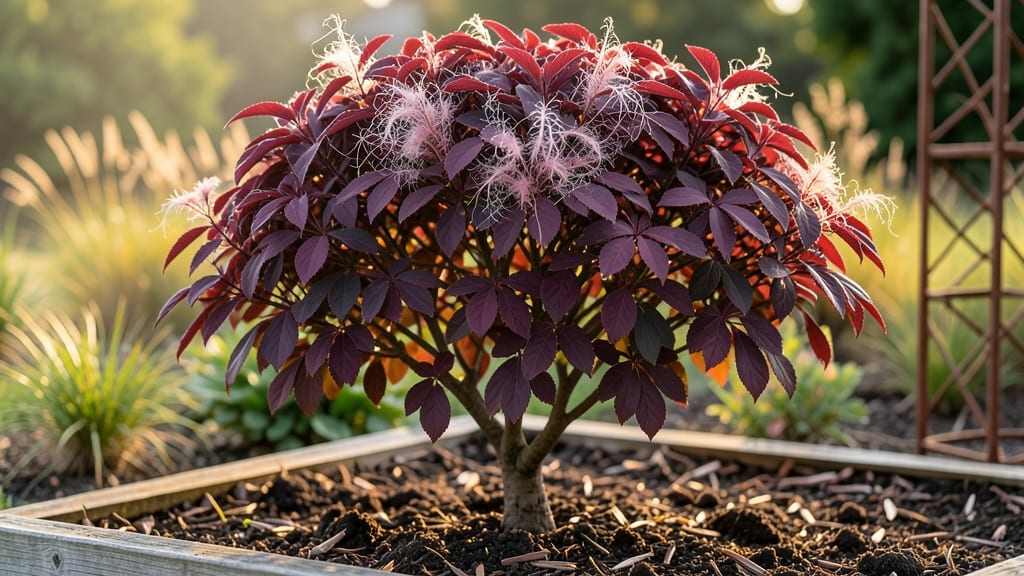
When smoke tree in bloom transforms your garden into a Pacific Northwest masterpiece, hummingbirds won’t be the only ones mesmerized. 🌿 That wispy, smoke-like foliage—shades of purple, pink, or chartreuse—creates a dreamy, almost ethereal backdrop, while the tiny flowers become a magnet for pollinators.
It’s the kind of plant that makes neighbors pause and ask, “What is that?”
The magic happens year-round: spring’s delicate blooms, summer’s lush plumes, and autumn’s fiery foliage shifts. I’ve used mine as a bold focal point near patios, where the cascading branches frame seating areas, and as a mixed-border stunner alongside ornamental grasses and hydrangeas.
Even in small gardens, it steals the show without overwhelming the space.
Imagine this: a late afternoon when sunlight filters through those misty plumes, casting an otherworldly glow. Hummingbirds dart in and out, their wings a blur, while you sip tea on your porch.
The smoke tree doesn’t just fill space—it creates a scene. Pair it with lavender for contrast or silver foliage to make the colors pop even more.
Best of all, it thrives in the PNW’s mild, damp climate, needing little fuss beyond occasional pruning to shape its graceful form. Whether you’re designing a cottage garden or a modern minimalist space, this tree turns “ordinary” into “unforgettable.” Let’s make your garden the talk of the neighborhood.
📚 In This Guide
- What you need
- Instructions
- Tips and common mistakes
- Wrapping up and next steps
What you need
- ● Smoke Tree (Cotinus spp.) Seedling or Bare-Root Plant: 1 mature plant (3–5 years old for faster blooms) or 3–5 young seedlings (for a fuller effect).
- ● Recommended varieties: Cotinus obovatus (American smoke tree) or Cotinus coggygria (European smoke tree).
- ● Well-Draining Soil: 50% native soil + 50% organic matter (compost, aged manure, or leaf mold).
- ● pH Level: 6.0–7.5 (neutral to slightly alkaline).
- ● Mulch: 3–4 inches of wood chips, straw, or pine bark (to retain moisture and suppress weeds).
- ● Fertilizer: Balanced, slow-release fertilizer (10-10-10 or 20-20-20) at planting time.
- ○ Optional: Organic options like fish emulsion or compost tea for established plants.
- ● Garden trowel or spade (for digging).
- ● Gloves (to protect your hands from thorns or rough bark).
- ● Watering can or hose with a gentle spray nozzle.
- ● Pruning shears (for shaping and maintenance).
- ○ Optional but Helpful: Soil pH test kit (to ensure optimal growing conditions).
- ● Mulching fabric (to reduce weed competition).
- ● Stakes or plant supports (for young, top-heavy seedlings).
- ● Sunlight: Full sun (6+ hours/day) for optimal blooms and foliage color.
- ● Climate: Hardy in USDA Zones 5–9 (ideal for the Pacific Northwest!).
- ● Watering Plan: Deep watering 2–3 times per week (more in drought conditions).
- ● Hummingbird-Friendly Additions: Nearby nectar sources (e.g., bee balm, columbine, or a hummingbird feeder).
- ● Perches (like a small branch or lattice) within 3–5 feet of the tree.
How to cultivate a smoke tree for year-round hummingbird visits
Here's the straightforward approach to growing a smoke tree that keeps hummingbirds buzzing through every season.
🌱 Step 1: Choose the Perfect Planting Spot
Smoke trees thrive in full sun to partial shade, making them ideal for Pacific Northwest gardens. Pick a location with at least 6 hours of direct sunlight daily—morning sun with afternoon shade works best in hotter microclimates. The tree's feathery plumes will spread beautifully when given room to grow, so ensure 10-15 feet of clearance from structures or other plants.
Well-draining soil is critical—smoke trees hate soggy roots. If your garden soil is heavy clay, amend with compost or sand to improve drainage. Test the spot by digging a small hole: if water pools instead of draining within 15 minutes, choose another location or raise the planting area with a mound of soil.
☀️ Step 2: Plant at the Right Time and Depth
Spring or early fall are the best times to plant your smoke tree. Avoid late fall planting—you don't want tender roots exposed to winter's chill. Dig a hole twice as wide as the root ball but no deeper. The top of the root ball should sit 1-2 inches above ground level—this prevents water from pooling around the stem.
Gently remove the tree from its container and loosen any circling roots with your fingers. Place it in the hole, backfill with native soil, and water deeply to settle everything. Mulch around the base with 2-3 inches of organic mulch, keeping it 6 inches away from the trunk to prevent rot. This mulch layer helps retain moisture while protecting roots from temperature swings.
💧 Step 3: Water Strategically for Strong Establishment
Water your smoke tree deeply once a week during the first growing season, providing 1-2 gallons per watering depending on pot size. You'll know it's getting enough when water drains out the bottom of the pot or the top inch of soil feels moist to the touch. Overwatering is the fastest way to kill these drought-tolerant trees—let the soil dry slightly between waterings.
After the first year, smoke trees become remarkably drought-resistant. You'll notice new growth in spring and summer, but once established, they thrive on natural rainfall. The key is to water deeply but infrequently—this encourages deep root growth that makes the tree resilient against Pacific Northwest's unpredictable weather patterns.
✂️ Step 4: Prune for Shape and Bloom Encouragement
Prune your smoke tree in late winter or early spring before new growth begins. Remove any dead, diseased, or crossing branches first—these compete with healthy growth. Then shape the tree by cutting back overgrown branches to maintain an open, airy form. You can reduce branch length by up to one-third without harming the plant.
Here's the thing—smoke trees bloom on new wood, so regular pruning actually encourages more abundant flowering. After pruning, apply a balanced fertilizer (10-10-10 ratio) around the base to support new growth. The feathery plumes will appear in late spring to early summer, but with proper care, you'll get secondary blooms in fall that keep hummingbirds visiting well into autumn.
🪴 Step 5: Protect and Maintain for Long-Term Beauty
Smoke trees are remarkably low-maintenance once established, but they do need protection from harsh winter winds. In exposed locations, consider wrapping the trunk with burlap or installing a windbreak during winter months. The Pacific Northwest's wet winters can also promote fungal issues, so avoid overhead watering and keep mulch clear of the trunk.
Watch for signs of stress like yellowing leaves or leaf drop—these usually indicate either overwatering or nutrient deficiency. A light application of compost or slow-release fertilizer in early spring will keep your tree thriving. With proper care, your smoke tree will grow into a stunning focal point that provides year-round interest and attracts hummingbirds from spring through fall.
Tips & tricks for perfect smoke tree cultivation
Here's what I've learned from years of growing smoke trees that hummingbirds can't resist—these little details make all the difference.
Sunlight Strategy: That 6 hours of direct sunlight is non-negotiable, but here's the thing—morning sun with afternoon shade works best in hotter microclimates. If your yard gets intense afternoon sun, consider planting near a north-facing wall or under deciduous trees that provide shade during summer months. The Pacific Northwest's coastal areas can actually benefit from more sun exposure, while inland spots may need that afternoon relief.
Soil Test Hack: Before planting, do this quick test: dig a small hole and fill it with water. If it drains completely within 15 minutes, you're good to go. If not, you'll need to amend with compost or create a raised bed. I've seen smoke trees struggle in heavy clay soil even after amending—sometimes a mound of soil works better than mixing amendments into the ground.
Watering Wisdom: The once-weekly deep watering is perfect, but timing matters. Water in the early morning so the foliage has time to dry before evening. This prevents fungal issues that are common in our damp climate. For container-grown smoke trees, check the soil moisture by sticking your finger an inch deep—if it's dry, it's time to water. Overwatering is the #1 killer of these drought-tolerant beauties.
Pruning Pro Tip: When you're shaping your smoke tree in Step 4, focus on creating an open center that allows sunlight to reach all branches. This encourages more abundant flowering throughout the tree. I like to prune just after the first flush of blooms in summer—this gives the tree time to establish new growth before winter. Use clean, sharp pruners to make cuts at a 45-degree angle just above a leaf node.
Pro Tips for Smoke Tree In Bloom
- Here's what I've learned from years of growing smoke trees that hummingbirds can't resist—these little details make all the difference.
- Sunlight Strategy: That 6 hours of direct sunlight is non-negotiable, but here's the thing—morning sun with afternoon shade works best in hotter microclimates.
- Soil Test Hack: Before planting, do this quick test: dig a small hole and fill it with water.
Frequently asked questions
When does a smoke tree typically bloom?
The smoke tree (Cotinus spp.) usually bursts into bloom in late spring to early summer (May–June), with its fluffy, smoke-like plumes peaking in late summer (July–August). Some varieties, like Cotinus 'Royal Purple', may produce a second, lighter bloom in fall. In the Pacific Northwest’s mild climate, you might even spot lingering flowers into early autumn!
Why do hummingbirds love smoke trees so much?
Hummingbirds adore smoke trees because their tiny, nectar-rich flowers are packed with sugar—just like their favorite feeders! The tree’s long blooming season (often 3–4 months) provides a reliable food source, while its dense foliage offers shelter. Plus, the insects drawn to the tree add extra protein to their diet. It’s a hummingbird buffet!
Will a smoke tree survive the PNW’s rainy winters?
Smoke trees are hardy (USDA Zones 5–9) and thrive in the Pacific Northwest’s wet winters. Just plant it in well-draining soil to avoid root rot, and mulch around the base to protect roots. Some varieties, like Cotinus 'Grace', even keep their purple foliage year-round for winter interest.
Can I grow a smoke tree from seed, or should I buy a nursery plant?
While you can grow smoke trees from seed, it’s much faster and easier to buy a nursery-grown plant (1–3 years old). Seeds may take 2–3 years to mature, and the resulting tree might not have the same vibrant colors or compact growth habit as cultivars. Pro tip: Look for container-grown plants in early spring for the best start!
Why isn’t my smoke tree blooming like it should?
If your smoke tree is skipping flowers, check these common culprits:
- Age: Young trees (under 3 years) may not bloom yet.
- Sunlight: Smoke trees need full sun (6+ hours/day)—shady spots reduce flowering.
- Pruning: Over-pruning in late winter can cut off next year’s blooms. Prune right after flowering instead.
- Fertilizer: Too much nitrogen = lush leaves, fewer flowers. Use a balanced 10-10-10 fertilizer in early spring.
Give it time, and adjust care—your hummingbird haven will be back in bloom!
What are some great alternatives if I can’t grow a smoke tree?
If space or climate is a concern, these hummingbird magnets are great PNW substitutes:
- Salvia (e.g., Salvia 'May Night') – Long blooms, drought-tolerant.
- Penstemon (e.g., Penstemon 'Husker Red') – Native, bee-friendly, and colorful.
- Red columbine (Aquilegia formosa) – Native perennial with tubular flowers.
- Butterfly bush (Buddleia davidii) – Fast-growing but invasive; opt for sterile cultivars.
Pair any of these with a hummingbird feeder for extra appeal!
Wrapping up and next steps
The smoke tree in bloom isn’t just a Pacific Northwest treasure—it’s a year-round magnet for hummingbirds, offering beauty, sustainability, and joy. Whether you’re a gardener, a wildlife enthusiast, or simply someone who loves nature’s vibrant displays, this hardy plant is your ticket to a thriving, hummingbird-friendly landscape. 🌿✨
Ready to transform your garden? Start by planting your smoke tree this season—then sit back and enjoy the show as these tiny, dazzling visitors become your regular guests! Don’t forget to share your progress or blooms with fellow gardeners for extra inspiration.