
Pruning
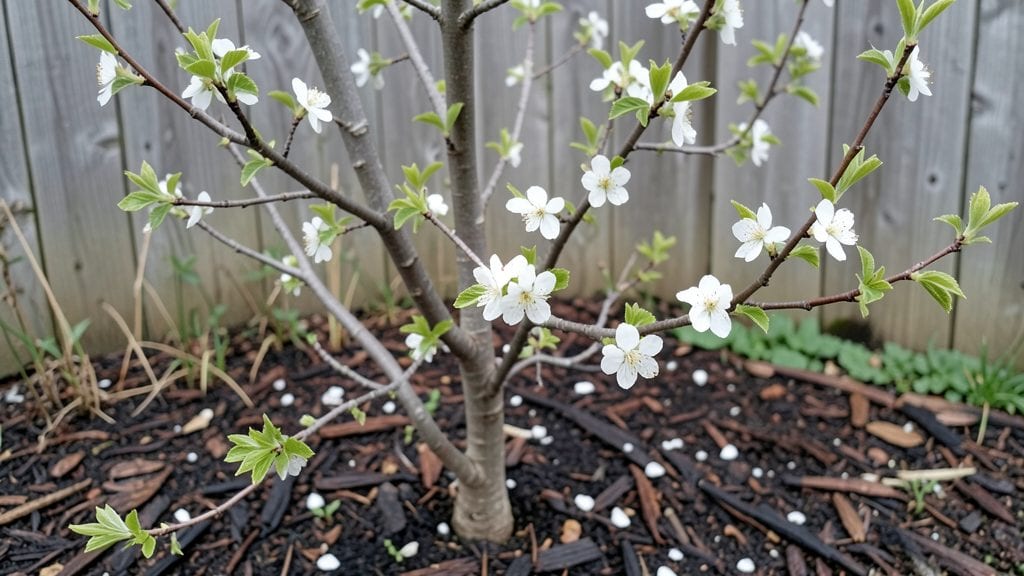
This ornamental serviceberry tree instantly elevates any garden, dazzling with its ethereal spring blooms, lush summer foliage, and blazing fall hues—no wonder I fell for it the first time I saw one in full, snowy-white glory. across branches like snow, followed by edible berries that birds adore.
It’s not just a tree; it’s a living sculpture that evolves with the seasons.
This low-maintenance beauty thrives in full sun to partial shade and handles tough conditions—drought, urban pollution, even rocky soil. Plant it as a standalone focal point or nestle it into mixed borders where its layered branches create depth.
Pair it with hostas for shade-loving companions or coneflowers for a pollinator-friendly display.
You’ll love how it stays compact yet striking, reaching 15–25 feet tall with a graceful, rounded shape that fits both small yards and large landscapes. The berries attract birds and wildlife, turning your garden into a bustling ecosystem. Even in winter, its exfoliating bark adds texture and interest.
Perfect for eco-conscious gardeners, wildlife lovers, and those who crave effortless beauty. Let’s explore how to place yours for maximum impact—season after season.
📚 In This Guide
- What you need
- Instructions
- Tips and common mistakes
- Wrapping up and next steps
What you need
- ● Pruning shears: Bypass pruners (for small branches, ¼”–¾” thick)
- ● Loppers: 6”–8” bypass loppers (for branches ¾”–2” thick)
- ● Pruning saw: Curved-tooth saw (for branches 2”+ thick)
- ● Gloves: Heavy-duty gardening gloves (cut-resistant, leather or synthetic)
- ● Disinfectant: 70% isopropyl alcohol or bleach solution (1 part bleach to 9 parts water)
- ● Cleaning cloth or paper towels
- ○ Pruning sealant (optional): For large cuts (>1” diameter)
- ● Ladder or step stool: Sturdy, non-slip (if tree is over 6 ft tall)
- ● Timing: Prune in late winter or early spring (before buds swell) or summer (after fruiting).
- ● Weather: Choose a dry, overcast day (avoid pruning when wet or freezing).
- ○ Safety gear: Safety glasses (optional, for debris protection).
- ● Tree health check: Inspect for diseased or dead branches before starting.
How to plant and care for a serviceberry ornamental tree
This stunning native tree delivers four seasons of interest with minimal effort—here’s how to set it up for long-term success.
🌱 Step 1: Choose the Right Planting Location
Serviceberries thrive in full sun to partial shade, with at least 6 hours of direct sunlight daily for optimal flowering and fruiting. I always scout the site first—look for areas with well-draining soil and shelter from strong winds, which can stress young trees. Avoid low spots where water pools after rain, as soggy roots lead to root rot.
Test the soil by digging a 12-inch deep hole—if water lingers beyond 30 minutes, amend the area with 2-3 inches of compost mixed into the top 6 inches of native soil. The tree’s natural range spans USDA Hardiness Zones 3-8, so check your zone before purchasing. I’ve found nursery-grown 3-5 gallon container plants establish fastest, as they’re already hardened off and have developed root systems.
🪴 Step 2: Prepare the Planting Site and Install the Tree
Dig a hole twice as wide as the root ball but no deeper—serviceberries dislike having roots buried too deeply, which can suffocate them. Loosen the sides of the hole with a shovel to encourage root spread. Remove the tree from its container and gently tease apart any circling roots with your fingers. This prevents girdling as the tree matures.
Place the tree in the center of the hole so the top of the root ball sits level with the surrounding soil—never mound soil against the trunk. Backfill with the native soil you removed, tamping lightly every 2-3 inches to eliminate air pockets. Create a 4-inch wide watering basin around the base by piling soil higher at the edges. Water deeply to settle the soil, then add 2-3 inches of mulch (wood chips or shredded bark), keeping it 3 inches away from the trunk to prevent moisture buildup.
☀️ Step 3: Water and Fertilize for the First Growing Season
Water the tree deeply once a week during the first year, providing 1-2 gallons depending on rainfall. Check moisture by sticking your finger 2 inches into the soil—if it feels dry, water again. Overwatering is the biggest mistake here; serviceberries are drought-tolerant once established but need consistent moisture to root in. I use a soaker hose for even distribution, keeping water away from the trunk to prevent fungal diseases.
Skip fertilizer entirely the first year—serviceberries grow slowly and don’t need extra nutrients in well-amended soil. In spring of the second year, apply a slow-release, balanced fertilizer (10-10-10) at half the recommended rate spread over the root zone. Avoid high-nitrogen fertilizers, which promote leafy growth at the expense of fruit production. The tree’s natural growth habit is 12-18 inches per year, so pruning isn’t needed unless you’re shaping it for a specific space.
✂️ Step 4: Prune for Structure and Health
Prune in late winter or early spring before new growth begins, removing dead, diseased, or crossing branches first. Serviceberries have a naturally attractive form, so I focus on opening the center to improve airflow and sunlight penetration. Use clean, sharp pruners to make cuts just outside the branch collar—the swollen area where the branch meets the trunk—to promote faster healing.
Thin out too-dense branches to reduce competition, aiming for a vase-like shape that showcases the tree’s horizontal layers. Avoid heavy pruning—never remove more than 25% of the canopy in one season. The tree’s white spring flowers and edible berries are its standout features, so I never prune flowering wood unless absolutely necessary. After pruning, apply a copper fungicide to cuts larger than ½ inch to prevent infection.
🌿 Step 5: Maintain for Year-Round Interest
Serviceberries deliver four seasons of beauty: spring blooms, summer foliage, fall color, and winter interest from exfoliating bark. Mulch annually in early spring to retain moisture and suppress weeds, replenishing the 2-3 inch layer as it decomposes. The tree’s fall foliage ranges from yellow to deep red, depending on the cultivar—plant near a patio or window to enjoy the show.
Wildlife will find your tree irresistible—birds, butterflies, and small mammals all rely on its berries and flowers. To encourage wildlife, avoid pesticides and let the berries stay on the tree until they’re eaten or naturally drop. In late winter, rake up any fallen leaves or debris to prevent fungal diseases from overwintering. With proper care, a serviceberry will provide decades of low-maintenance beauty and ecological benefits.
Tips & tricks for perfect serviceberry ornamental tree planting and care
A few simple tricks will help your serviceberry thrive for decades with minimal effort—here's what I've learned from years of growing these stunning native trees.
Soil Test Matters: Before planting, I always do a quick soil test by digging that 12-inch hole mentioned in Step 1. If water lingers beyond 30 minutes, mix in 2-3 inches of compost with the top 6 inches of native soil—this mimics the tree's natural well-draining conditions. For clay-heavy soils, consider adding a 50/50 mix of compost and coarse sand to improve drainage. This small step prevents root rot, which is the #1 killer of young serviceberries.
Root Ball Preparation: When removing your 3-5 gallon container plant from its pot, gently tease apart those circling roots in Step 2—this prevents girdling as the tree matures. I use my fingers to carefully separate the roots, focusing on the outer edges where they tend to spiral. For container-grown trees, you can also make 2-3 vertical cuts around the root ball with a sharp knife to encourage outward root growth. This simple step gives your tree a head start in establishing itself.
Watering Wisdom: That weekly deep watering in Step 3 is crucial, but timing matters too. Always water in the morning so the foliage has time to dry before evening—a wet canopy overnight invites fungal diseases. I use a soaker hose to deliver 1-2 gallons directly to the root zone, keeping water 3 inches away from the trunk. For the first year, I set a reminder on my phone to check soil moisture at the 2-inch depth mentioned in the instructions—consistency is key for root development.
Pruning Precision: When pruning in late winter as described in Step 4, I focus on creating that vase-like shape by thinning out dense branches rather than just cutting back. Use clean, sharp pruners to make cuts just outside the branch collar—this promotes faster healing and prevents disease entry points. For cuts larger than ½ inch, I apply copper fungicide immediately to protect against infection. Remember, serviceberries reward patience—never remove more than 25% of the canopy in one season to maintain their natural beauty and fruit production.
Pro Tips for Serviceberry Ornamental Tree
- A few simple tricks will help your serviceberry thrive for decades with minimal effort—here's what I've learned from years of growing these stunning native trees.
- Soil Test Matters: Before planting, I always do a quick soil test by digging that 12-inch hole mentioned in Step 1.
- Root Ball Preparation: When removing your 3-5 gallon container plant from its pot, gently tease apart those circling roots in Step 2—this prevents girdling as the tree matures.
Frequently asked questions
Got questions about growing and caring for your serviceberry ornamental tree?
Here are some of the most common ones—plus expert answers to help you keep your tree thriving with minimal effort.
How fast does a serviceberry tree grow, and when will it bear fruit?
A serviceberry grows at a moderate pace, adding about 12–24 inches per year under ideal conditions. Young trees may take 3–5 years to produce fruit, but patience pays off—once established, they’re a reliable producer for decades. Pro tip: Plant in full sun for faster growth and earlier fruiting!
When and how should I prune my serviceberry tree for best results?
Prune in late winter or early spring (before buds swell) to shape the tree and remove dead wood. Use clean, sharp pruners to make cuts just above a bud or branch collar. Avoid heavy pruning—serviceberries thrive with minimal intervention. Focus on opening the canopy for sunlight and air flow.
Is a serviceberry tree good for attracting wildlife, and what animals benefit most?
Serviceberries are a wildlife magnet, especially for birds (like robins and thrushes), bees, butterflies, and small mammals. The spring blooms feed pollinators, while the berries provide food for birds and squirrels. Planting one supports local ecosystems with minimal effort.
Can serviceberry trees handle cold winters, and are they drought-tolerant?
Yes! Serviceberries are hardy in USDA zones 3–8 and tolerate light drought once established. However, they prefer moist, well-drained soil. In hot climates, mulch around the base to retain moisture. Young trees may need occasional watering during dry spells. Pro tip: Avoid soggy soil—they hate "wet feet!"
What are some alternatives to serviceberry if I want a similar low-maintenance tree?
If you love serviceberries but need options, consider:
- Eastern Redbud – Fast-growing, spring blooms, but shorter lifespan.
- American Hornbeam – Drought-tolerant, great for shade, but slower growth.
- Serviceberry lookalikes: Juneberry (Saskatoon berry) or Amelanchier hybrids for similar fruit and foliage.
All offer year-round interest with less fuss!
Wrapping up and next steps
The serviceberry ornamental tree is a standout choice for gardeners seeking beauty, resilience, and ecological benefits with minimal fuss. Its stunning spring blooms, edible berries, and vibrant fall foliage make it a year-round star, while its adaptability and wildlife-friendly traits add extra value.
Whether you're a busy homeowner or a nature enthusiast, this tree delivers effortless elegance and purpose.
Ready to transform your landscape? Start by assessing your space, gathering the right tools, and planning your first pruning session—your future shade (and happy birds!) will thank you. 🌿✨