
Trees
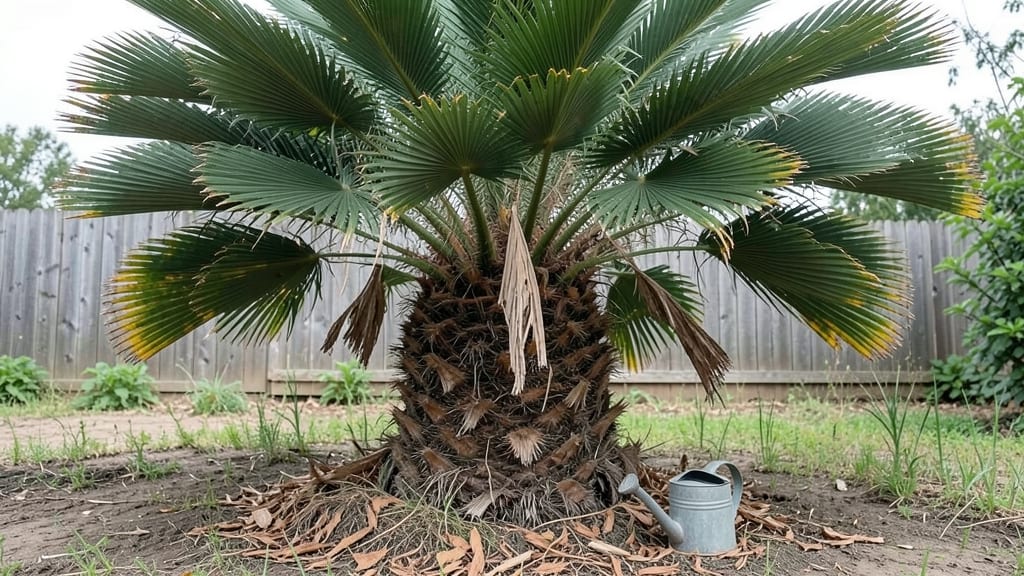
A frost-resistant palm tree base isn’t just about aesthetics—it’s the difference between a thriving tropical stunner and a sad, rotting stump in our damp Pacific Northwest winters. 🌿 I’ve seen too many palms collapse from hidden rot or termite damage, so I developed a system that protects the trunk while letting the fronds shine.
The secret lies in a two-part defense: a gravel-filled base to improve drainage and a thick layer of mulch to insulate roots from freezing temps. Most people skip this step, but it’s what keeps palms standing strong through our rainy seasons and occasional frosts.
You’ll need coarse gravel, landscape fabric, and 4-6 inches of mulch—simple supplies that make all the difference.
What you’ll end up with is a palm that stays upright, disease-free, and lush for years. No more blackened bases or wobbly trunks—just a sturdy foundation that lets the tree focus on growing upward.
The best part? This method works for Mexican fan palms, windmill palms, and even dwarf varieties in our climate.
Once you’ve built the base, check it every spring and fall for signs of pests or moisture buildup. A little maintenance now means decades of trouble-free growth—and no more palm funerals. Let’s get started on that solid foundation!
📚 In This Guide
- What you need
- Instructions
- Tips and common mistakes
- Wrapping up and next steps
What you need
- ● Palm tree sapling: Choose a Trachycarpus fortunei (Windmill Palm) or Chamaerops humilis (Mediterranean Dwarf Palm)—both thrive in cooler climates. Size: 3–5 ft tall (container-grown for easier transplanting).
- ● High-quality potting mix: 2–3 cubic yards of well-draining blend (50% peat moss, 30% perlite, 20% sand). Avoid garden soil—it compacts and holds too much moisture.
- ● Container or in-ground planting area: For containers: 15–20 gallon pot with drainage holes (or a 3 ft diameter raised bed).
- ● For in-ground: Dig a hole twice as wide as the root ball but only as deep. Amend soil with 1–2 lbs of compost per sq ft.
- ● Mulch: 2–3 inches of pine bark fines or wood chips (retains moisture, insulates roots). Avoid dyed mulch—it can harm roots.
- ● Frost cloth: 1–2 rolls of frost protection fabric (30–50% shade cloth density) for winter wrap.
- ● Basic tools: Garden trowel
- ● Shovel or spade
- ● Pruning shears (sterilized)
- ● Measuring tape
- ● Gloves (heavy-duty for handling soil)
- ○ Optional (but helpful): Soil moisture meter (to check drainage)
- ● Root stimulator (like Mycorrhizal fungi for better root growth)
- ● Slow-release fertilizer (e.g., Osmocote 14-14-14, 3–4 lbs per tree)
- ● Staking kit (for young palms in windy areas)
- ● Prerequisites: Full-sun location (6+ hours of light daily).
- ● Well-draining soil (test pH: ideal range is 6.0–7.5).
- ● Local frost dates (plant after last frost or use containers for mobility).
Step-by-step guide to creating a frost-resistant palm tree base
Here's how to establish a sturdy foundation that keeps your palms thriving through Pacific Northwest winters.
🪴 Step 1: Select the Right Container and Drainage System
Choose a large, heavy container (at least 18-24 inches deep) with multiple drainage holes—palm roots need excellent airflow to prevent rot. I prefer unglazed ceramic or fiberglass pots because they insulate roots better than plastic during cold snaps. If using a decorative planter, place it inside a waterproof cache pot with drainage holes drilled into the bottom.
Line the cache pot with landscape fabric to prevent soil from washing out while still allowing water to drain freely. This dual-pot system gives you the aesthetic you want while protecting the roots from winter's chill. Fill the cache pot with 3-4 inches of gravel at the bottom to elevate the root ball and improve drainage further.
🌱 Step 2: Prepare the Frost-Protective Soil Mix
Use a well-draining potting mix blended with 20% perlite or pumice to prevent compaction and improve insulation. I add 1 part coconut coir to 1 part peat moss and 1 part coarse sand for structure. This mix stays loose enough to buffer temperature swings while retaining enough moisture for palm roots.
Incorporate slow-release organic fertilizer (like osmocote) at planting time to give your palm a nutrient boost as it establishes. Avoid high-nitrogen mixes—palms prefer a balanced 6-6-6 or 8-3-9 ratio to encourage strong root development over leafy growth. Mix everything thoroughly so the texture is uniform and fluffy.
☀️ Step 3: Plant and Position for Winter Survival
Dig a hole in the prepared mix that's twice as wide as the root ball but only slightly deeper—palms hate having their crown buried too deep, which can cause rot. Gently remove the palm from its nursery pot and loosen any circling roots with your fingers. Place it in the hole so the top of the root ball sits just below the container rim—this ensures proper water drainage while keeping the trunk dry.
Backfill with the soil mix, pressing lightly around the edges to eliminate air pockets. Water thoroughly until it drains from the bottom holes, then let it sit for 10-15 minutes before adding a 2-inch layer of mulch (like pine bark fines) on top. This mulch layer acts as insulation, protecting roots from sudden temperature drops and retaining moisture during dry spells.
⏰ Step 4: Winterize with Protective Measures
When nighttime temperatures drop below 35°F, move your palm to a sheltered location like a garage, covered patio, or against a south-facing wall. If you must leave it outside, wrap the container and root ball with burlap or frost cloth, securing it tightly with twine. Never wrap the fronds—they need airflow to prevent fungal issues.
Reduce watering significantly in winter—palms in dormancy need only enough to keep the soil lightly moist. Overwatering in cold weather suffocates roots and leads to rot. Check soil moisture by sticking your finger 1-2 inches deep; if it feels dry, water lightly. Resume normal care when daytime temperatures consistently stay above 50°F.
🌿 Step 5: Spring Transition and Long-Term Care
In early spring, unwrap the container and inspect the roots for any damage. Trim away any blackened or mushy roots with sterilized pruners, then repot if the root ball has become root-bound. Gradually reintroduce the palm to outdoor conditions by moving it outside for 2-3 hours daily, increasing exposure over 7-10 days to avoid shock.
Fertilize lightly with a half-strength liquid palm fertilizer once new growth appears, usually in late spring or early summer. Prune any brown or damaged fronds at the base with clean, sharp shears—never leave stubs, as they attract pests. With this foundation, your palm will develop a strong, frost-resistant root system over time, making it resilient to Pacific Northwest winters.
Tips & tricks for perfect palm tree foundation
Building a frost-resistant palm tree base takes thoughtful planning—here are the key details that make all the difference in Pacific Northwest winters.
Container Insulation: Unglazed ceramic or fiberglass pots are your best bet for root insulation, but if you prefer decorative planters, pair them with a cache pot system. The 3-4 inches of gravel at the bottom isn't just for drainage—it creates an air gap that acts as insulation against temperature swings. For extra protection in extreme cold, add a layer of polystyrene board around the outside of the cache pot before planting.
Soil Mix Precision: The 20% perlite or pumice in your soil mix isn't just about drainage—it creates tiny air pockets that act as insulation. When mixing, sift the perlite first to avoid clumping, then fold it gently into the other components. I've found that adding 1/4 cup of worm castings to the mix gives palms an extra boost of beneficial microbes without overloading them with nutrients.
Winter Watering Strategy: That 10-15 minute drainage period after watering is crucial—it prevents waterlogging that can freeze in cold nights. I use a moisture meter to check soil moisture at 1-2 inches deep; if it reads below 30%, that's when I water lightly. In winter, I reduce watering to every 10-14 days instead of weekly, letting the palm enter a natural dormancy state.
Spring Transition Timing: The gradual 2-3 hour daily outdoor exposure in spring is about more than just sunlight—it's about acclimating the palm to temperature fluctuations. Start with morning sun only, then gradually add afternoon exposure over 7-10 days. I watch for new fronds to unfurl as a sign the palm is ready for full sun exposure.
Pro Tips for Palm Tree Base
- Building a frost-resistant palm tree base takes thoughtful planning—here are the key details that make all the difference in Pacific Northwest winters.
- Container Insulation: Unglazed ceramic or fiberglass pots are your best bet for root insulation, but if you prefer decorative planters, pair them with a cache pot system.
- Soil Mix Precision: The 20% perlite or pumice in your soil mix isn't just about drainage—it creates tiny air pockets that act as insulation.
Frequently asked questions
Got questions about creating a frost-resistant palm tree base in the Pacific Northwest?
You’re not alone—gardeners in our region face unique challenges when it comes to protecting tropical plants from winter. Here are some of the most common questions (and answers!) to help you get it right.
Can palm trees survive winter in the Pacific Northwest without extra protection?
Most palm trees are tropical or subtropical, so they can’t survive PNW winters without protection. Even hardy varieties like Windmill Palm (Trachycarpus fortunei) benefit from a well-built base to shield roots from cold, wet soil. A sturdy palm tree base with insulation (like burlap or straw) and mulch can make the difference between thriving and struggling.
How early should I prepare the palm tree base before the first frost?
Start prepping your palm tree base at least 4–6 weeks before the first expected frost. This gives you time to:
- Install the base structure (if not already in place).
- Add insulation materials (like foam or burlap wraps).
- Mulch heavily around the root zone.
- Test drainage to prevent waterlogged roots.
What’s the best mulch to use for a palm tree base in cold climates?
The ideal mulch for PNW palm bases is organic, insulating, and moisture-retentive. Top choices:
- Straw or hay (great for trapping heat and insulating roots).
- Pine needles or wood chips (acidic, mimics natural forest floors).
- Leaf mold (breaks down slowly, improves soil structure).
My palm tree’s trunk is splitting at the base—did I build the support wrong?
Trunk splits often happen when the base restricts natural expansion/contraction or lacks proper airflow. Check these fixes:
- Ensure the base isn’t too tight—leave 1–2 inches of space around the trunk.
- Use flexible materials (like burlap or landscape fabric) to allow movement.
- Add circular supports (like a wire cage) if the trunk is weak.
- Prune dead fronds to reduce weight stress.
Are there frost-resistant palm alternatives that don’t need a base?
While no palm is completely base-free in the PNW, some hardier varieties tolerate milder winters with minimal protection:
- Needle Palm (Rhapidophyllum hystrix)—survives down to 5°F with mulch.
- Chinese Windmill Palm (Trachycarpus fortunei)—handles 10–15°F with a simple wrap.
- Dwarf Palmetto (Sabal minor)—needs some insulation but less than tropical palms.
Wrapping up and next steps
Creating a palm tree base with a frost-resistant foundation is totally doable—even in the Pacific Northwest’s cooler climates! 🌿 By choosing the right materials, like windbreaks, mulch, and cold-hardy palms, you’re giving your tropical oasis the best shot at thriving year-round.
Remember, patience and proper care are key to long-term success.
Ready to take the next step? Start small—plant one palm this season and monitor its progress. If you’re feeling ambitious, sketch out a full garden plan with multiple palms, companion plants, and protective structures. Your future frost-resistant paradise awaits! 🌴✨