
Pruning
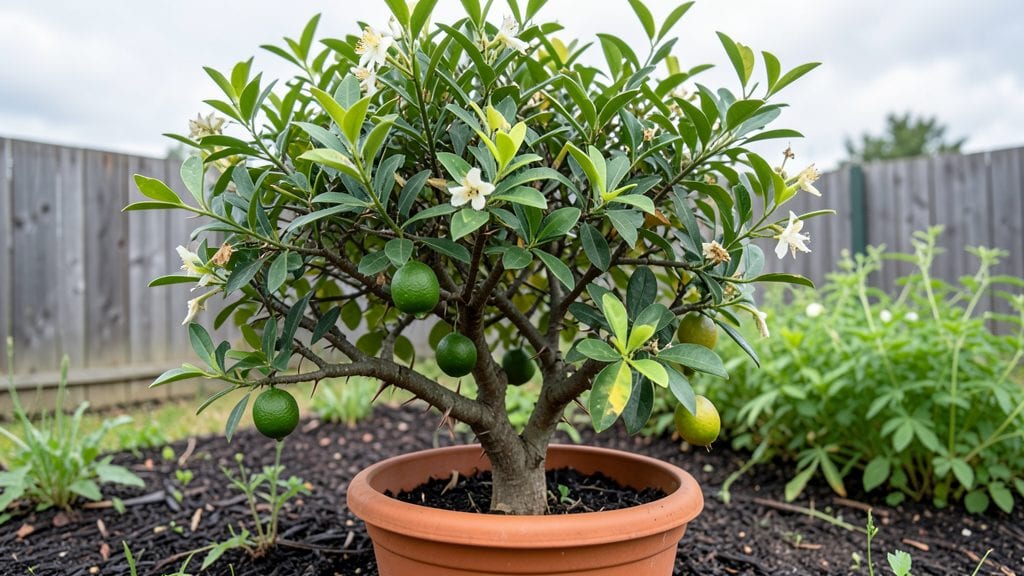
Planting a lime tree with thorns in the Pacific Northwest means choosing the right cold-resistant variety—like the Mexican lime (Citrus aurantifolia)—that can handle your region’s chillier winters without losing its tropical charm.
I’ve learned the hard way that regular citrus won’t survive our frosts, but these tougher varieties thrive with the right care. The thorns might seem intimidating, but they’re actually a sign of a healthy, vigorous tree once you get past the prickly first impression.
Your lime tree needs full sun (at least 6-8 hours daily) and well-draining soil—think sandy loam mixed with compost to prevent soggy roots. Watering is key: keep the soil consistently moist but never waterlogged, especially in summer when the tree is pushing new growth.
Mulch around the base helps retain moisture and protects roots from temperature swings, which is critical for cold-hardy varieties.
Pruning isn’t just about shaping—it’s about survival. In late winter or early spring, trim back any dead or crossing branches, and thin out dense growth to improve airflow. The thorns make this tricky, so wear gloves and long sleeves.
With proper pruning, your tree will reward you with bright green foliage and fragrant white flowers by late spring, followed by tart, juicy limes by fall.
Container growing is possible if you choose a dwarf variety, but outdoor planting gives the tree room to establish strong roots and better withstand winter chills.
Just be patient—it takes 2-3 years for a young tree to mature enough to handle frost, but once it does, you’ll have a productive, thorny lime tree that’s uniquely suited to your climate.
📚 In This Guide
- What you need
- Instructions
- Tips and common mistakes
- Wrapping up and next steps
What you need
- ● Pruning shears: Bypass pruners (for clean cuts on small branches) – 1 pair (look for sharp, stainless-steel blades, 6-8" long).
- ● Loppers: Bypass or anvil type (for medium branches, 18-24" long) – 1 pair (pivoting handle for leverage).
- ● Pruning saw: Curved-tooth (for thick branches >1.5" diameter) – 1 saw (avoid straight teeth to prevent splintering).
- ● Heavy-duty gloves: Leather or thorn-proof (PNW lime thorns are sharp!) – 2 pairs (one for cutting, one for handling).
- ● Disinfectant: 70% isopropyl alcohol or 10% bleach solution (to sterilize tools between cuts) – 1 small spray bottle.
- ● Rubbing alcohol or hand sanitizer – 1 bottle (for quick hand cleaning after thorn pricks!).
- ● First-aid kit: (include tweezers, antiseptic wipes, and bandages) – 1 compact kit.
- ● Ladder or step stool: (if tree exceeds 6-8 ft tall) – 1 sturdy unit (non-slip base recommended).
- ● Trash bags or bucket: (for collecting pruned branches) – 2-3 large bags.
- ● Sharpie marker or tape: (to mark branches for removal) – 1 pack.
- ● Pole saw: (for high branches without a ladder) – 1 extendable model.
- ● Tree wound sealant: (controversial but some swear by it for large cuts) – 1 small tube.
- ● Pruning paint: (to protect exposed wood) – 1 bottle.
- ● Safety glasses: (to shield eyes from debris) – 1 pair.
- ● Work apron: (to protect clothing from thorns/sap) – 1 lightweight apron.
Instructions for pruning cold-resistant lime trees in the Pacific Northwest
Here’s how to shape your Pacific Northwest lime tree for winter hardiness while keeping it productive.
Time Your Pruning for Winter Prep
Prune your lime tree in late winter or early spring, just before new growth begins—typically February to March in the PNW. This timing lets the tree heal before summer heat arrives. Avoid pruning in fall, as new growth won’t harden off before winter cold sets in.
Look for dormant buds along branches; these signal the tree is ready. If you see soft, swollen buds, wait a few more weeks. Cold snaps can stress fresh cuts, so check the 10-day forecast for stable temperatures above 30°F before pruning.
Remove Dead, Diseased, or Weak Wood
Start by cutting out any dead, diseased, or crossing branches—these compete with healthy growth and invite pests. Use clean, sharp pruners to make 45-degree cuts just above a bud or branch collar. Never leave stubs; they trap moisture and rot.
If a branch is larger than ½ inch in diameter, use a pruning saw for a clean cut. Look for discolored wood or peeling bark; these are red flags. Remove any branches rubbing against others—they’ll create wounds that weaken the tree over time.
Thin the Canopy for Airflow and Light
Open the tree’s center by removing 20-30% of the densest branches, starting from the innermost growth. This improves airflow, reducing humidity-related diseases like powdery mildew. Focus on branches growing inward or downward—they block light and crowd the tree.
Step back often to visualize the shape. Aim for an open vase form with a strong central leader (main upward branch). If your tree has multiple leaders, prune all but the strongest to avoid a weak structure. Leave 3-4 main branches spaced evenly around the trunk.
Shape for Cold Hardiness and Fruit Production
Encourage horizontal branching by cutting back overly vertical shoots by ⅓ of their length. Horizontal branches produce more fruit and are less susceptible to winter dieback. Avoid heavy pruning on young trees—focus on light shaping to establish a strong framework.
If your lime tree is mature, prune no more than 25% of the canopy in one season. Over-pruning stresses the tree, especially in the PNW’s damp winters. Seal larger cuts (over ½ inch) with pruning sealant to protect against fungal entry, though smaller cuts don’t need it.
Clean Up and Monitor for Recovery
Rake up all pruned debris and dispose of it in the trash—don’t compost diseased wood. Sterilize your tools with rubbing alcohol between cuts to prevent spreading pathogens. Water the tree deeply after pruning to help it recover, especially if the soil feels dry.
Watch for new growth within 4-6 weeks. Healthy shoots should be bright green and firm. If you see yellowing leaves or wilting, the tree may be stressed—reduce pruning next year. In the PNW, lime trees benefit from a light mulch layer (2-3 inches) around the base to insulate roots during winter.
Tips & tricks for pruning cold-resistant lime trees
These practical tips will help you prune your Pacific Northwest lime tree like a pro while keeping it healthy and productive.
Timing is Everything: I can't stress enough how critical the February-March window is for PNW lime trees. The dormancy period ensures the tree has time to heal before summer's heat stress. If you're unsure about the exact timing, look for those dormant buds—they're nature's clock telling you when it's safe to prune. Real talk: I've made the mistake of pruning too early, and the tree struggled with new growth during cold snaps.
Tool Preparation Matters: Your pruners and saw need to be sharper than your gardening skills. Dull tools crush branches instead of making clean cuts, which creates larger wounds that take longer to heal. I sterilize my tools between cuts with rubbing alcohol—it's a small effort that prevents spreading diseases between branches. For branches over ½ inch, invest in a good pruning saw; it makes the job so much easier and cleaner.
Visualizing the Shape: Step back often during Step 3 to visualize your tree's final shape. I like to imagine an open vase form with that strong central leader. The 20-30% canopy thinning isn't just about aesthetics—it's about creating that crucial airflow that prevents fungal diseases. Pro tip: Use a string or garden twine to temporarily outline your desired shape before making cuts. It helps me see the big picture and avoid over-pruning.
Seasonal Considerations for PNW: The Pacific Northwest's damp winters mean we need to be extra careful about moisture management. After pruning, I always check for any cuts that might collect water—these are prime spots for fungal infections. For larger cuts over ½ inch, that pruning sealant becomes your best friend, especially in our wet climate. And remember, that 2-3 inch mulch layer isn't just decoration—it's insulation for those roots during our cold winters.
Pro Tips for Lime Tree With Thorns
- These practical tips will help you prune your Pacific Northwest lime tree like a pro while keeping it healthy and productive.
- Timing is Everything: I can't stress enough how critical the February-March window is for PNW lime trees.
- Tool Preparation Matters: Your pruners and saw need to be sharper than your gardening skills.
Frequently asked questions
Got questions about pruning your lime tree with thorns in the Pacific Northwest? You’re not alone! Here are some of the most common concerns—and their straightforward answers—to help you keep your tree thriving in cooler climates.
What’s the best time of year to prune a lime tree with thorns in the PNW?
Prune your lime tree in late winter or early spring (February–March) before new growth starts. This timing helps avoid frost damage and encourages healthy blooms. Pro tip: If you must prune in summer, do it before harvest to minimize stress on the tree.
Can lime trees with thorns survive PNW winters without extra protection?
Most cold-hardy lime varieties (like ‘Meyer’ or ‘Bearss’) tolerate temps down to 15–20°F, but young trees or tender varieties may need winter wraps or mulch. Prune lightly in fall to reduce frost damage risks—avoid heavy cuts that expose vulnerable wood.
How do I prune thorny branches without getting hurt?
Wear thick gloves and long sleeves (leather or chainmail works best!). Use long-handled pruners for high branches, and cut just above a bud or lateral branch. For stubborn thorns, lubricate pruners with oil to reduce sticking. Safety first!
What should I do if my lime tree’s branches die after pruning?
Dead branches often signal over-pruning, disease, or frost damage. If it’s minor, the tree may recover—just avoid pruning further. For widespread dieback, check for root rot or fungal issues (like citrus canker) and treat with copper fungicide. When in doubt, consult a local arborist!
Are there thornless lime tree alternatives for the PNW?
Yes! While most lime trees have thorns, ‘Improved Meyer’ has fewer, and lemon trees (Citrus × limon) are nearly thornless. For true limes, ‘Tahiti’ is a low-thorn option—but expect some spines. Always check local nurseries for cold-hardy varieties.
Wrapping up and next steps
Pruning your lime tree with thorns in the Pacific Northwest doesn’t have to be intimidating—it’s all about timing, technique, and a little patience! 🌿 With the right tools, knowledge of cold-resistant varieties, and a structured approach, you’ll keep your tree thriving year after year.
Remember, healthy growth starts with confident cuts, so don’t hesitate to roll up your sleeves and get hands-on.
Ready to take the next step? Mark your calendar for your next pruning session, and consider investing in a high-quality pair of gloves and pruners to make the job easier. Your lime tree—and your future harvests—will thank you! 🍋✨