
Trees
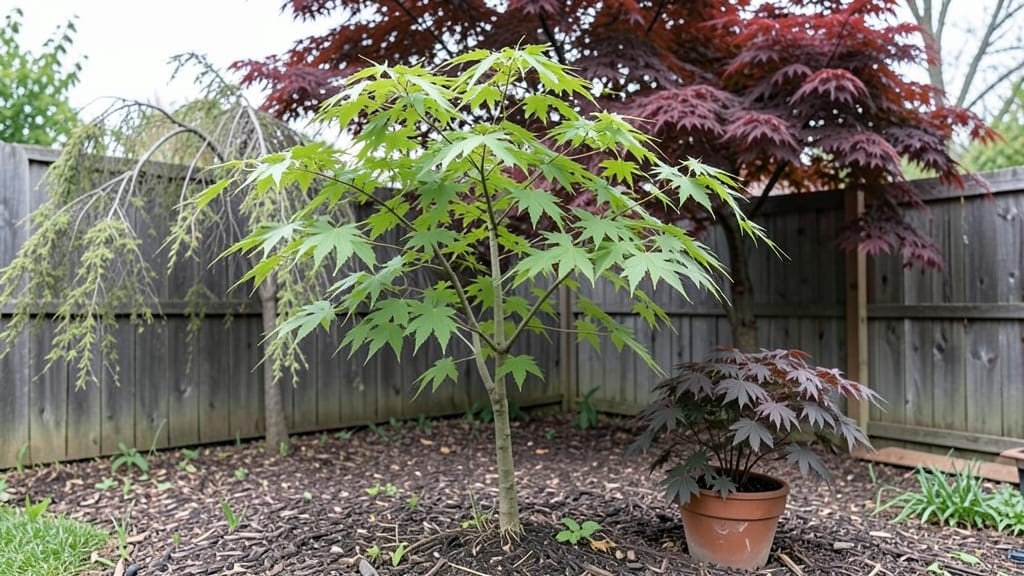
Small Japanese trees bring the serenity of a misty forest to your Pacific Northwest garden—without the space-hogging roots or towering branches. 🌿 These frost-hardy beauties thrive where winters chill and summers stay mild, offering delicate foliage and graceful forms that transform even tight spaces into tranquil retreats.
Think of them as living art pieces: dwarf Japanese maples with fiery autumn leaves, Japanese snowbell with fragrant spring blooms, or the elegant Japanese pieris that stays lush year-round.
They’re perfect for framing doorways, anchoring borders, or creating intimate privacy in courtyards—no pruning required. Plant one near a seating area, and you’ve instantly created a peaceful nook.
You’ll love how they age gracefully, their trunks thickening and canopies filling out over time while staying compact enough for small yards. Pair them with hostas for shade or lavender for contrast, and you’ve got a low-maintenance garden that feels like a Japanese tea house.
These trees don’t just survive—they thrive.
Whether you’re designing a Zen-inspired courtyard or just want a standout focal point, small Japanese trees deliver quiet elegance with minimal effort. Let’s find the perfect one for your space—your garden’s new centerpiece awaits.
📚 In This Guide
- What you need
- Instructions
- Tips and common mistakes
- Wrapping up and next steps
What you need
- ● Japanese Small Trees (1–5 plants): Choose from frost-hardy varieties like Sasa veitchii (bamboo-like grass), Pieris japonica (evergreen shrub), or Kerria japonica (bright yellow flowers). Ensure they’re labeled as USDA Zone 5–8 hardy.
- ● High-Quality Potting Soil (5–10 gallons): A mix of peat moss, perlite, and compost (or pre-mixed "acidic" soil for Ericaceous plants like Pieris).
- ● Organic Mulch (2–3 cubic feet): Pine bark or shredded cedar to retain moisture and insulate roots from frost.
- ● Slow-Release Fertilizer (1–2 lbs): Look for a balanced 10-10-10 or acidic fertilizer (e.g., for azaleas/rhododendrons).
- ● Garden Trowel or Spade (for digging holes 2–3x wider than the root ball).
- ● Garden Gloves (to protect hands from thorns or rough bark).
- ● Watering Can or Hose (with gentle spray nozzle) (small trees need 1–2 gallons of water weekly in dry PNW summers).
- ● Measuring Tape (to ensure proper spacing: 3–6 feet apart for privacy screens).
- ● Pruning Shears (for shaping and removing dead branches).
- ● Tree Guards or Burlap Wraps (to protect young trunks from frost or wildlife).
- ● Soil pH Test Kit (Japanese trees often prefer acidic soil (pH 4.5–6.0)).
- ● Decorative Stones or Gravel (for a polished, Zen-inspired look around the base).
- ● Frost Cloth (for extra protection during unexpected late frosts in early spring).
Step-by-Step guide to planting frost-resistant Japanese small trees
Here's how to establish four stunning, hardy Japanese trees that thrive in the Pacific Northwest's chill.
🪴 Step 1: Select and Prepare Planting Sites
Japanese small trees like Dwarf Japanese Maple or Japanese Snowbell need well-draining soil and partial shade to full sun, depending on the variety. I always test soil drainage first by digging a 12-inch deep hole—if water pools after 30 minutes, amend with 2-3 inches of compost mixed into the top 6 inches of soil.
Choose locations where mature trees will reach their full height (typically 8-12 feet for small varieties). Space them 6-10 feet apart to allow airflow and prevent disease. Mark each spot with a stake to avoid confusion during planting, especially if you're working with multiple varieties.
☀️ Step 2: Dig Holes and Amend Soil
Dig planting holes twice as wide as the root ball but no deeper. This encourages roots to spread outward rather than circle the hole. If your soil is heavy clay, mix in 1 part peat moss or coconut coir with 2 parts native soil to improve drainage and aeration.
For each hole, create a mound of amended soil in the center. This prevents root suffocation when backfilling. Gently loosen the root ball of your tree if it's tightly packed—roots need room to expand immediately. You'll see the difference in growth vigor within a few weeks.
🌱 Step 3: Plant and Stake for Stability
Place the tree on the mound so the top of the root ball sits 1 inch above ground level. This prevents water from pooling at the base and causing rot. Spread roots outward and fill the hole with your amended soil mixture, tamping down gently to remove air pockets.
Water deeply to settle the soil, then add 2-3 inches of mulch around the base (keep it 6 inches away from the trunk to prevent moisture buildup). Install two stakes on opposite sides of the tree and loosely tie the trunk with flexible plant ties. You want just enough support to prevent swaying—too tight will girdle the trunk as it grows.
💧 Step 4: Water and Monitor Early Growth
Water each tree with 1-2 gallons immediately after planting, then 1 gallon every 2-3 days until new growth appears. You'll know you're doing it right when the soil feels damp 2 inches below the surface but not soggy. Overwatering at this stage is the fastest way to kill young trees.
Check stakes monthly—they should remain loose as the tree grows. If the trunk rubs against the ties, loosen them immediately. Japanese trees are slow to recover from girdling damage. After 6-8 weeks, you'll see new leaves emerge—that's your signal the roots have established.
✂️ Step 5: Prune and Maintain Through First Season
Wait until spring to prune—never cut in fall or winter when trees are dormant. Remove any broken branches or suckers at the base immediately, but avoid heavy pruning. Japanese trees respond poorly to aggressive cuts. Instead, focus on shaping by trimming back 1/3 of the new growth to encourage bushier growth.
Apply a 2-inch layer of mulch in early spring to retain moisture and suppress weeds. This is especially important during the first growing season when roots are still shallow. Watch for signs of stress like yellowing leaves—this usually means either too much shade or inconsistent watering. Adjust accordingly.
Tips & tricks for perfectly planting Japanese small trees
Here's what I've learned from years of planting these beautiful trees—tricks that'll help your Japanese small trees thrive in the Pacific Northwest's challenging climate.
Soil Test First: That 30-minute drainage test in Step 1 is non-negotiable. I've seen too many trees fail because people skipped this step. If water pools after 30 minutes, you absolutely need to amend with compost—don't just plant and hope for the best. The top 6 inches of soil are where roots will establish first, so make them count. For heavy clay soil, I've had great success with coconut coir instead of peat moss—it's more sustainable and works just as well.
Root Ball Prep: When you're loosening that root ball in Step 2, don't just give it a quick tug. Gently separate the roots with your fingers—this encourages them to spread outward immediately. I've seen trees grow twice as vigorously when I took this extra 5 minutes. Also, if your tree comes in a container, soak the root ball for 10 minutes before planting to rehydrate any dried edges.
Staking Secrets: Those flexible plant ties in Step 3 are crucial for preventing girdling damage. I use old t-shirts cut into strips—they're breathable and won't cut into the trunk as it grows. Check them monthly, and if you see any rubbing, loosen immediately. Pro tip: Install stakes before planting—you'll have an easier time getting them in place when the hole is still open.
Watering Wisdom: The 2-inch soil moisture check in Step 4 is your best friend. Use a screwdriver to test—it should go in easily but not with resistance. Morning watering is ideal because it gives roots time to absorb moisture before evening. I've found that adding a handful of worm castings to the planting hole helps retain moisture and provides nutrients—just mix it into the bottom of the hole before planting.
Pro Tips for Japanese Trees Small
- Here's what I've learned from years of planting these beautiful trees—tricks that'll help your Japanese small trees thrive in the Pacific Northwest's challenging climate.
- Soil Test First: That 30-minute drainage test in Step 1 is non-negotiable.
- Root Ball Prep: When you're loosening that root ball in Step 2, don't just give it a quick tug.
Frequently asked questions
about small Japanese trees perfect for the Pacific Northwest’s chilly climate.What are the best small Japanese trees for frost-prone areas?
Look for varieties like Japanese Maple (Acer palmatum) (e.g., 'Bloodgood' or 'Emperor I'), Dwarf Japanese Garden Juniper (Juniperus procumbens 'Nana'), or Dwarf Japanese Black Pine (Pinus thunbergii 'Thunderhead'). These thrive in zones 5-8 and handle light frost well.
How cold can small Japanese trees tolerate?
Most small Japanese trees endure temps down to 10–15°F (-12 to -9°C). For extra safety, choose Japanese Yew (Taxus cuspidata 'Standishii') or Dwarf Japanese Zelkova (Zelkova serrata 'Ville de Jules'), which handle 0°F (-18°C) with proper mulching.
How close can I plant small Japanese trees to my home?
Keep mature size in mind! Dwarf varieties (3–6 ft tall) can be planted 3–5 feet from walls. Larger small trees (6–10 ft) need 6–8 feet clearance. Check root spread too—some, like junipers, have wide-spreading roots.
Are there low-maintenance small Japanese trees?
Yes! Dwarf Japanese Garden Juniper and Japanese Holly (Ilex crenata 'Green Lustre') require minimal pruning. For color, Japanese Snowbell (Styrax japonicus) is low-maintenance but prefers partial shade. Mulch annually to reduce upkeep.
Can I grow small Japanese trees in containers?
Dwarf varieties like 'Dwarf Japanese Garden Juniper' or 'Emperor I' Japanese Maple thrive in 15–20 gallon containers. Use well-draining soil, repot every 2–3 years, and move indoors during harsh winters (below 10°F).
Wrapping up and next steps
Incorporating small Japanese trees into your Pacific Northwest landscape isn’t just about aesthetics—it’s about creating a resilient, low-maintenance privacy screen that thrives in frost and wind. From the elegant Japanese maple to the hardy dwarf hinoki cypress, these trees offer year-round beauty while standing up to harsh climates.
Whether you’re a gardening novice or a seasoned pro, their adaptability makes them a smart choice for any yard.
Ready to transform your space? Start small—literally! Pick one of these frost-resistant beauties, gather your tools, and plant with confidence. Your future self (and your neighbors) will thank you! 🌿✨