
Pruning
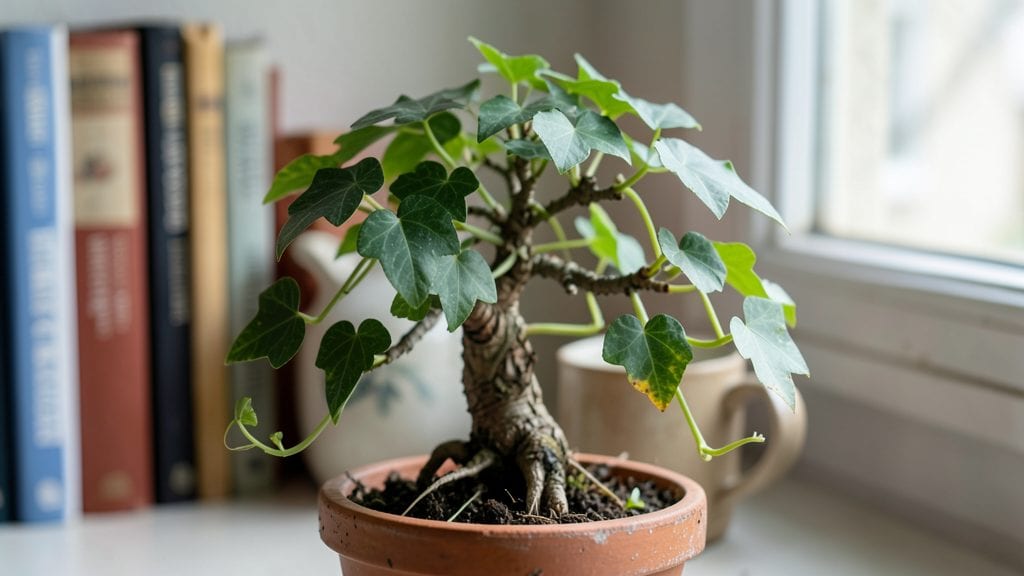
Creating an ivy bonsai tree with that perfect balance of elegance and wild charm starts with a single cutting and a steady hand. 🌿 I’ve wrestled with ivy’s tendency to grow too fast, but once I learned the right pruning rhythm—trimming just past the leaf nodes and shaping with gentle wire—my little vines finally held their form.
The key isn’t just cutting back; it’s guiding the growth so each branch tells its own story while staying in harmony with the whole.
You’ll need sharp bonsai shears, aluminum wiring (1-2mm thickness), a well-draining soil mix, and patience—lots of it. Ivy thrives on neglect almost as much as it does on attention, but that doesn’t mean you can skip the basics.
A 3-4 inch pot with drainage holes gives roots room to breathe, and misting daily keeps those delicate leaves from crisping. The first few prunes set the tone for years to come, so take your time.
What you’ll end up with is a miniature vine that looks like it’s been growing in a forest for decades, not weeks. The leaves stay glossy and full, the branches cascade with intentional grace, and you’ll actually want to show it off.
Every time you step back to admire it, you’ll see the balance you worked so hard to create—no more wild tangles, just controlled artistry. Here’s how to get there without the frustration.
This method works for both English ivy (Hedera helix) and Boston ivy (Parthenocissus tricuspidata), though Boston’s larger leaves need slightly heavier pruning. If you’re in a humid climate, expect faster growth—just adjust your pruning schedule to keep it in check.
The real magic happens when you let the plant guide you, not the other way around.
📚 In This Guide
- What you need
- Instructions
- Tips and common mistakes
- Wrapping up and next steps
What you need
- ● Ivy bonsai tree (healthy, mature plant with a sturdy trunk)
- ● Sharp bonsai scissors or pruning shears (sterilized, with clean blades for precision cuts)
- ● Concave cutter (for thicker branches, 3–5mm size)
- ● Root hook or chopsticks (for gentle root adjustments)
- ● Wire cutters (if using aluminum or copper wire for shaping)
- ● Aluminum or copper bonsai wire (1–3mm thickness, depending on branch size)
- ● Small spray bottle (for misting leaves post-pruning)
- ● Bonsai soil mix (well-draining, typically 60% inorganic + 40% organic)
- ● Glove (to protect hands from thorns and sap)
- ● Horticultural tweezers (for delicate adjustments)
- ● Pruning sealant (to prevent sap bleeding on larger cuts)
- ● Bonsai pot (if repotting is needed post-pruning)
- ● Humidity tray (to maintain moisture after trimming)
- ● Notebook & pen (to sketch your pruning plan)
Step-by-Step pruning guide for your ivy bonsai tree
Here’s how to shape your ivy bonsai into a balanced, miniature masterpiece—no guesswork, just precision.
✂️ Step 1: Assess Growth and Identify Key Branches
Start by examining your ivy bonsai for the main branches that define its structure. Look for the primary trunk and three to five main branches—these will form the skeleton of your design. Ivy grows quickly, so focus on branches that are at least 4-6 inches long and have three to four leaves. These are strong enough to hold their shape after pruning.
Gently hold each branch between your fingers to feel its weight—thick, sturdy branches will recover best. Avoid cutting back weak, spindly growth; instead, let those develop further. This is the moment you decide on your bonsai’s overall shape: upright, slanting, or cascading. I like to sketch a rough outline first to visualize the final look.
✂️ Step 2: Prune for Structure and Balance
Use clean, sharp bonsai shears to trim branches at a 45-degree angle, just above a leaf node or bud. This encourages new growth in the right direction. Start with the longest branches—cut them back by about one-third to create a more compact shape. For example, if a branch is 8 inches long, aim to reduce it to 5-6 inches after pruning.
Balance is everything with ivy bonsai. If one side looks heavier, prune slightly more on that side to even it out. Watch for asymmetry—a few uneven branches can actually add character, but too much imbalance makes the tree look unnatural. Step back every few cuts to check your progress. Ivy is forgiving, so don’t stress over perfection in this step.
🌿 Step 3: Shape the Canopy and Encourage Foliage
Once the skeleton is balanced, focus on the foliage. Ivy produces long, trailing vines, so pinching back the tips of new growth keeps the canopy dense. Use your fingers to gently pinch off the last set of leaves on each vine—this signals the plant to branch out instead of stretching. Do this every 2-3 weeks during the growing season (spring and summer) to maintain a lush, full look.
For a cascading style, let some branches trail naturally over the edge of the pot. Secure them with bonsai wire if needed, but avoid wrapping too tightly—ivy is delicate and can snap. If you notice bare spots, prune nearby branches to redirect energy toward filling those gaps. Ivy recovers quickly, so you’ll see new leaves filling in within 2-3 weeks of careful pruning.
⏰ Step 4: Maintain and Refine Over Time
After the initial pruning, monitor your ivy bonsai weekly for new growth. In late summer, give it a light trim to remove any leggy or overgrown sections. Ivy grows year-round in warm climates, so prune every 4-6 weeks to keep it contained. In cooler months, reduce pruning to once every 2 months—the plant slows down naturally.
This is where the magic happens: patience and consistency. Over time, your ivy bonsai will develop a natural, aged look with thick trunks and intricate branching. Water deeply every 2-3 days (check when the top inch of soil feels dry) and mist the leaves daily to keep them vibrant. Avoid fertilizing heavily after pruning—let the plant focus on recovery before pushing new growth.
🌱 Step 5: Wire and Style for Long-Term Balance
Once your ivy bonsai reaches a shape you love, use aluminum or copper bonsai wire to guide stubborn branches into place. Wrap the wire around the branch at the base, then gently bend it into your desired position. Ivy is flexible, so you can create sweeping curves or sharp angles—just don’t bend branches beyond 45 degrees to avoid breaking them.
Leave the wire on for 4-6 weeks, then remove it carefully with pliers. If the wire cuts into the bark, it’s time to take it off immediately. Ivy responds well to shaping, so don’t be afraid to experiment. The goal is a harmonious, miniature vine that feels alive and intentional. With regular pruning, your ivy bonsai will stay compact, balanced, and perfect for years to come.
Tips & tricks for perfect ivy bonsai tree pruning
Here's what I've learned from years of shaping ivy bonsai—these little tricks make all the difference between a good pruning and a truly perfect miniature vine.
The Angle Matters: When you make those 45-degree cuts in Step 2, imagine you're cutting just above where a leaf meets the branch. This isn't just about aesthetics—it's about directing the plant's energy. The cut should be clean and precise, not jagged. I use a sharp pair of bonsai shears and make the cut with one smooth motion. This technique encourages new growth in exactly the right direction while preventing unsightly stubs that can attract pests.
Branch Strength Test: Before you make any cuts in Step 1, perform this simple test: gently hold each branch between your thumb and forefinger. If it bends easily, it's not strong enough to support your design yet. Ivy branches need to be at least pencil-thick to hold their shape after pruning. I've ruined several bonsai designs by cutting back branches that were too thin—they just flopped over and looked sad. Trust me on this.
Seasonal Timing Secret: The instructions mention pruning every 4-6 weeks during warm months, but here's what nobody tells you: Ivy responds best to pruning right after a rain shower. The natural moisture helps the plant recover faster and reduces stress. If you're working indoors, mist your bonsai thoroughly before and after pruning to mimic this effect. I've noticed that trees pruned after misting show new growth within just 10-12 days instead of the usual 2-3 weeks.
Wire Removal Warning: In Step 5, when you're ready to remove that bonsai wire after 4-6 weeks, don't rush it! Use pliers to gently twist the wire as you pull—never yank it straight off. The wire can leave scars that take months to heal, and in severe cases, it can actually kill the branch. I learned this the hard way after seeing a perfectly shaped branch wither and die. Take your time and make those slow, careful turns to protect your bonsai's health.
Pro Tips for Ivy Bonsai Tree
- Here's what I've learned from years of shaping ivy bonsai—these little tricks make all the difference between a good pruning and a truly perfect miniature vine.
- The Angle Matters: When you make those 45-degree cuts in Step 2, imagine you're cutting just above where a leaf meets the branch.
- Branch Strength Test: Before you make any cuts in Step 1, perform this simple test: gently hold each branch between your thumb and forefinger.
Frequently asked questions
Got questions about keeping your ivy bonsai thriving? Here are some of the most common concerns—plus quick fixes to keep your miniature vine looking its best!
How often should I prune my ivy bonsai?
Prune your ivy bonsai every 4–6 weeks during the growing season (spring and summer) to maintain shape and encourage bushiness. Light trimming of new growth is ideal—avoid over-pruning, which can stress the plant. In fall/winter, reduce pruning to just removing dead or overgrown branches.
Can I use regular scissors or do I need special bonsai tools?
For beginners, sharp household scissors or pruning shears work fine for basic trimming. However, invest in bonsai-specific tools (like concave cutters) for cleaner cuts and better shaping as you advance. Sterilize tools with rubbing alcohol to prevent disease.
What if my ivy bonsai leaves turn yellow?
Yellow leaves usually signal overwatering, poor drainage, or root rot. Let the soil dry slightly between waterings (stick your finger in—top inch should be dry). Repot if roots smell foul or look mushy. Boost airflow by trimming dense foliage and ensuring the pot has drainage holes.
Is ivy bonsai hard to grow for beginners?
Not at all! Ivy bonsai is forgiving and fast-growing, making it perfect for newcomers. It tolerates minor neglect (unlike some species) and recovers quickly from pruning mistakes. Just avoid harsh sunlight, keep it slightly moist, and prune regularly for that lush, cascading look.
Can I grow ivy bonsai outdoors year-round?
Ivy thrives outdoors in USDA Zones 4–11, but protect it from extreme cold (below 20°F) or scorching sun. In colder climates, bring it indoors near a bright window or use a grow light. If outdoors, place it in partial shade (morning sun is ideal) to prevent leaf scorch.
Pro Tip:
Need extra speed? Wiring (gently wrapping branches with aluminum wire) helps shape ivy bonsai faster—just remove the wire after 4–6 weeks to avoid scarring. Pair this with pruning for dramatic, sculpted results!
Wrapping up and next steps
Crafting the perfect ivy bonsai tree is all about patience, precision, and a little creativity! 🌿 With the right tools and techniques—like mastering pruning angles, wiring for shape, and balancing growth—you’ll transform a humble cutting into a stunning miniature masterpiece.
Remember, every snip and trim brings you closer to your vision, so embrace the process and enjoy the journey.
Ready to take the next step? Start small—pick a single branch or section to refine, and watch your bonsai thrive! Whether you’re a beginner or a seasoned enthusiast, every pruning session is a chance to refine your skills and deepen your connection with this rewarding art. Happy pruning! 🌱✨