
Tools
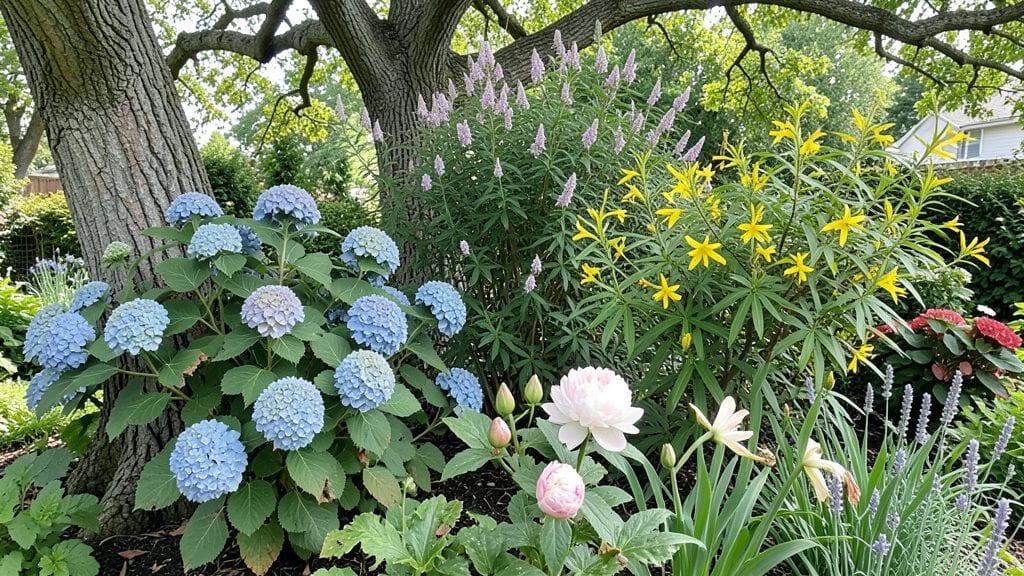
Creating a flower garden around tree in the Pacific Northwest transforms your yard into a hummingbird magnet that stays stunning from winter to summer. I learned this the hard way—my first attempt crowded out the tree’s roots and left flowers struggling in soggy soil.
Now, I design these spaces with layers: shade-tolerant perennials near the trunk, sun-loving annuals at the edges, and evergreens to frame the tree year-round.
The secret lies in matching plants to light and moisture. Ferns like sword ferns thrive in the damp shade of a Douglas fir, while Pacific coast iris and salal add texture and winter interest.
For sun patches, columbine and penstemon bloom from spring to fall, and red twig dogwood keeps stems vibrant even when leaves are gone. Mulch heavily with cedar chips to protect roots and retain moisture—critical in our rainy winters.
By summer, you’ll have a buzzing, colorful understory where hummingbirds sip from salmonberry and harebell, while bees pollinate sage and yarrow. The key is spacing: give mature plants room to breathe (3–6 feet apart), and avoid planting too close to the tree’s drip line.
With this approach, your garden becomes a four-season showpiece that works with nature, not against it.
This design works for any mature tree—evergreen, deciduous, or fruit-bearing—as long as you choose plants that respect its needs. Start small with a few focal plants, then expand as you see what thrives.
The first year is about testing, but by year two, you’ll have a self-sustaining ecosystem that feels like a secret garden.
📚 In This Guide
- What you need
- Instructions
- Tips and common mistakes
- Wrapping up and next steps
What you need
- ● Native flowering plants (4–6 per season): Spring: Pacific Dogwood (Cornus nuttallii), Western Red Columbine (Aquilegia formosa)
- ● Summer: Salal (Gaultheria shallon), Oregon Grape (Mahonia aquifolium)
- ● Fall: Vine Maple (Acer circinatum), Sword Fern (Polystichum munitum)
- ● Winter: Evergreen Huckleberry (Solanum umbelliferum), Winter Aconite (Eranthis hyemalis)
- ● Mulch (3–4 inches): Cedar chips or pine bark (to retain moisture and suppress weeds).
- ● Compost (1–2 bags): For enriching soil and promoting root growth.
- ● Hummingbird feeders (2–3): Red-colored, 1:4 sugar-water ratio (4 parts water to 1 part sugar).
- ○ Drip irrigation system (optional but recommended): 50–100 ft. tubing with emitters for consistent watering.
- ● Garden trowel or spade
- ● Pruning shears (for shaping plants)
- ● Wheelbarrow or bucket (for transporting soil/mulch)
- ● Garden hose with adjustable nozzle
- ● Measuring tape (for spacing plants evenly)
- ● Gloves (to protect your hands)
- ● Knee pads (for comfort during planting)
- ● Sunlight assessment: Partial shade to full sun (depending on tree type).
- ● Soil test: Slightly acidic to neutral (pH 6.0–7.0)—amend with compost if needed.
- ● Tree root zone clearance: Keep plants 3–6 feet from the trunk to avoid root competition.
- ● Local regulations check: Ensure no protected species are used.
How to design a Pacific Northwest flower garden around a tree
Here’s how to create a layered, four-season display that thrives in our region’s climate while keeping hummingbirds visiting year-round.
Assess the Tree’s Needs and Light Conditions
The first move is understanding your tree’s canopy and how it affects the space below. Measure the tree’s drip line—the outer edge where branches cast shade—and note whether it’s full sun (6+ hours), partial shade (3-6 hours), or deep shade (less than 3 hours). Pacific Northwest trees like bigleaf maples and Douglas firs often create partial shade, so focus on shade-tolerant perennials like heuchera or ferns closer to the trunk, while sun-loving annuals like salvia or penstemon can thrive at the garden’s edge.
Dig a 12-inch-deep trench around the tree’s drip line to check root competition. If roots are shallow, avoid planting directly above them—instead, create a raised bed or use containers to keep flowers from competing for water and nutrients. I’ve seen too many gardens fail because the tree won’t share its resources. A 3-inch layer of mulch (like cedar chips) will help retain moisture and suppress weeds without smothering roots.
Layer Plants for Seasonal Interest and Hummingbird Appeal
Start with evergreen shrubs like Oregon grape (Mahonia aquifolium) or red twig dogwood (Cornus sericea) as your base layer—they provide winter structure and early spring color. Next, add mid-height perennials such as bee balm (Monarda) for summer blooms and columbine (Aquilegia) for spring interest. Top it off with tall, late-blooming plants like cardinal flower (Lobelia cardinalis) to attract hummingbirds from July through frost.
For year-round appeal, include winter-blooming hellebores and spring-blooming bleeding hearts (Dicentra). Hummingbirds rely on red, tubular flowers—so penstemon, salvia, and fuchsia are non-negotiable. I always plant in odd-numbered clusters (3, 5, or 7) to create natural-looking drifts that attract pollinators. Space them 12-18 inches apart for airflow and to prevent fungal diseases common in our damp climate.
Prepare the Soil and Plant with Care
Test your soil’s pH—Pacific Northwest gardens often lean acidic, so amend with compost and lime if needed to hit a 6.0-7.0 range for most flowers. Dig in 2-3 inches of compost mixed with the top 6 inches of native soil to improve drainage and fertility. Avoid tilling too deep near the tree’s roots, as it can damage them. Instead, use a broadfork to loosen the soil without disturbing the root structure.
Water deeply before planting to settle the soil, then dig holes twice as wide as the root ball but only as deep as the container. Place each plant at the same depth it was growing in its pot—burying the stem too deep causes rot, while planting too shallow leaves roots exposed. Backfill with native soil, tamp gently, and water again to eliminate air pockets. Mulch with 3 inches of cedar chips, keeping it 3 inches away from the tree trunk to prevent rot.
Maintain for Long-Term Health and Hummingbird Visits
Water deeply once a week (or more in summer) to encourage deep root growth, but avoid wetting the tree trunk. Pacific Northwest summers can be dry, so drip irrigation is ideal—it delivers moisture directly to the roots without overhead waste. Fertilize lightly in early spring with a balanced, slow-release formula (10-10-10) to support blooms without overfeeding, which can harm the tree.
Deadhead spent blooms regularly to prolong flowering and attract hummingbirds, who return to reliable food sources. Prune leggy growth in late winter to maintain shape and airflow. I also add native wildflowers like yarrow (Achillea) and goldenrod (Solidago) to the edges—they’re drought-tolerant and hummingbird magnets. By fall, the garden should still offer color with sedum or Russian sage (Perovskia), ensuring hummingbirds have a reason to stick around until frost.
Tips & tricks for perfect Pacific Northwest flower gardens around trees
Creating a thriving flower garden around a tree in our region's climate takes a few strategic moves that make all the difference between a mediocre display and a hummingbird magnet.
Layering for Light Conditions: In Step 1, when assessing your tree's drip line, remember that Pacific Northwest trees often create partial shade (3-6 hours of sunlight). For the shade-tolerant perennials like heuchera or ferns near the trunk, consider adding variegated foliage plants such as Astilbe or Japanese painted fern—they'll provide texture contrast while thriving in lower light. For sun-loving annuals at the garden's edge, group them in odd-numbered clusters (3, 5, or 7) to create natural drifts that attract pollinators more effectively than straight rows.
Root Competition Prevention: The 12-inch-deep trench you dig around the tree's drip line is crucial for checking root competition. If you find shallow roots, don't just avoid planting directly above them—consider creating a raised bed with a minimum 6-inch depth. This not only prevents competition but also improves drainage, which is especially important in our region's damp climate. I've found that using a mix of native soil and compost (2-3 inches) in the raised bed helps establish roots more quickly.
Soil Preparation Secrets: When preparing the soil in Step 3, test for pH first—our Pacific Northwest gardens often lean acidic. If you need to amend, use a combination of compost and lime to hit that 6.0-7.0 range. Here's a pro move: mix the compost only with the top 6 inches of native soil, leaving the deeper layers undisturbed. This preserves beneficial soil organisms while improving the surface layer where most roots will grow. A broadfork is perfect for this—it loosens soil without damaging roots.
Seasonal Planting Strategy: For year-round appeal, incorporate winter-blooming hellebores and spring-blooming bleeding hearts as mentioned in Step 2. But here's what nobody tells you—plant hellebores in clusters of 5 or 7, spaced 12-18 inches apart. Their evergreen foliage provides winter interest, and the early spring flowers give hummingbirds their first nectar source. I've noticed that planting them slightly deeper than their container depth (about 1 inch) helps establish them more quickly in our cool, wet springs.
Pro Tips for Flower Garden Around Tree
- Creating a thriving flower garden around a tree in our region's climate takes a few strategic moves that make all the difference between a mediocre display and a hummingbird magnet.
- Layering for Light Conditions: In Step 1, when assessing your tree's drip line, remember that Pacific Northwest trees often create partial shade (3-6 hours of sunlight).
- Root Competition Prevention: The 12-inch-deep trench you dig around the tree's drip line is crucial for checking root competition.
Frequently asked questions
Got questions about creating a stunning flower garden around your tree? We’ve got answers to help you design with confidence—whether you’re a beginner or a seasoned gardener!
What’s the best time of year to plant flowers around a tree?
The ideal time is early spring or fall when soil is workable but not frozen. In the Pacific Northwest’s mild climate, avoid planting during summer heat or winter frost, as roots need time to establish. Spring (March–May) is especially great for perennials, while fall (September–October) gives bulbs a head start.
How close can I plant flowers to the tree trunk?
Keep flowers at least 2–3 feet away from the trunk to avoid competing with the tree’s roots for water and nutrients. For smaller trees or shrubs, 1–2 feet may work, but always check the maturity size of your plants. Pro tip: Use mulch (3–4 inches deep) to protect roots and retain moisture without smothering the base.
Which flowers thrive year-round in the Pacific Northwest?
For four-season interest, mix evergreens (like heather or sword ferns), spring bloomers (e.g., bleeding heart), summer stars (e.g., black-eyed Susans), and fall/winter highlights (e.g., camellias or winter jasmine). Hummingbird favorites like penstemon or salvia add extra charm!
How do I prevent flowers from being shaded out by a mature tree?
Choose shade-tolerant plants like hostas, foamflower, or heuchera for dappled sunlight. If your tree casts dense shade, opt for ground covers (e.g., sweet woodruff) or bulbs (e.g., glory-of-the-snow). Pro tip: Prune lower branches to open the canopy gradually—just avoid over-pruning, which stresses the tree!
What’s the easiest way to keep weeds from taking over my garden?
Start with a thick layer of mulch (4–6 inches) to block weeds and retain moisture. Use organic mulch like wood chips or shredded bark, and reapply annually. Bonus: Apply pre-emergent herbicide in early spring (if needed), but avoid chemical sprays near edible plants or pollinators. Hand-pulling weeds weekly keeps them manageable!
Can I use containers instead of planting directly in the ground?
Containers
work well for small trees or if your soil is poor. Choose large pots (15+ gallons) with drainage holes, and use a lightweight potting mix. Opt for compact varieties like dwarf azaleas or miniature roses. Tip: Move containers to sunnier spots in winter to extend blooms!
Wrapping up and next steps
Creating a flower garden around a tree in the Pacific Northwest isn’t just about beauty—it’s about crafting a year-round hummingbird haven that thrives in every season! 🌸 By blending native perennials, strategic mulching, and seasonal blooms, you’ve designed a space that supports wildlife, enhances curb appeal, and brings joy all year long.
Whether you’re a beginner or a seasoned gardener, your efforts will pay off in vibrant colors, buzzing pollinators, and a serene outdoor retreat.
Ready to take the next step? Start small! Pick one corner of your garden to expand this year, or share your progress with fellow PNW gardeners for inspiration. Your tree—and the hummingbirds—will thank you! 🐦⬛✨