
Trees
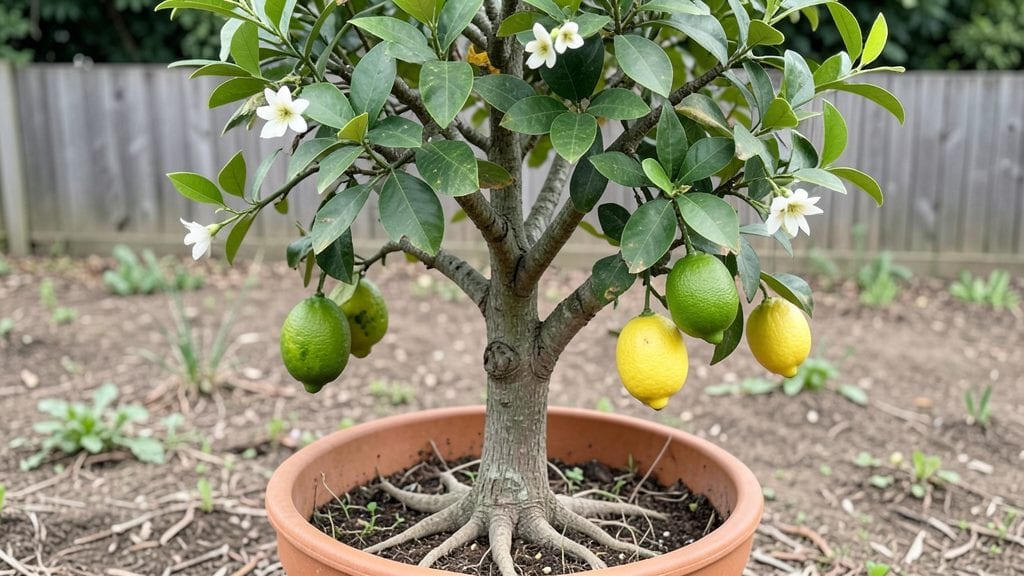
The lemon tree root system isn’t just about what you see above ground—it’s the hidden foundation that determines how strong, productive, and drought-resistant your tree will be. 🌱 I’ve watched struggling lemon trees transform after learning how their roots actually work, and the difference is night and day.
That first deep taproot isn’t just for show; it’s what anchors your tree against summer winds and pulls up moisture from deep below.
Most gardeners focus on the canopy, but healthy roots mean everything—especially in containers or poor soil. A mature lemon tree’s roots can spread 3-5 feet wide and dive 3-4 feet deep, which is why shallow pots or compacted soil turn your tree into a thirsty, weakling.
The key? Loose, well-draining soil with organic matter, and never letting that root ball dry out completely. Even a small container needs drainage holes and regular watering to keep those roots happy.
📚 In This Guide
- What you need
- Instructions
- Tips and common mistakes
- Wrapping up and next steps
What you need
- ● Lemon tree sapling or bare-root plant: Choose a disease-resistant variety (e.g., Meyer or Eureka) from a reputable nursery. Pro tip: Opt for a 1-3 year old tree for better establishment.
- ● Well-draining soil mix: 60% native soil + 30% compost + 10% perlite or coarse sand (pH 6.0–7.0). 💡 Avoid clay-heavy soil—roots hate waterlogging!
- ● Organic mulch: 2–3 inches of wood chips, straw, or pine bark to retain moisture and regulate temperature.
- ● Slow-release fertilizer: 10-10-10 or citrus-specific blend (follow label rates for young trees).
- ● Drip irrigation system or soaker hose: Ensures deep, consistent watering (critical for root development!).
- ● Trowel or spade (for digging)
- ● Garden gloves (to protect your hands from thorns and soil)
- ● Measuring tape (to space trees 10–15 ft apart)
- ○ pH test kit (optional but helpful for soil adjustments)
- ● Root stimulator (e.g., mycorrhizal fungi or seaweed extract—boosts root growth!)
- ● Sunny location: 6+ hours of direct sunlight daily (lemon trees are sun-worshippers!).
- ● Frost-free zone: Plant in USDA zones 9–11 (or use containers for colder climates).
- ● Drainage solution: If your yard has poor drainage, amend soil or plant in a raised bed.
How to cultivate a lemon tree root system for maximum stability
Here's the method I rely on to ensure lemon trees grow deep, strong roots that support heavy fruit loads.
🌱 Step 1: Prepare the Planting Hole for Optimal Root Spread
Dig a hole twice as wide as the root ball but only 12-18 inches deep. Lemon trees develop a taproot that grows vertically, so we want to encourage downward growth rather than shallow spreading. Loosen the soil at the bottom with a garden fork to create air pockets that roots will naturally fill.
This is where most gardeners go wrong—they dig too deep and bury the graft union. The top of the root ball should sit 1-2 inches above ground level after planting. If your soil is heavy clay, mix in 1-2 inches of coarse sand at the bottom to improve drainage.
💧 Step 2: Amend Soil for Deep Root Development
Lemon trees thrive in soil with 6.0-7.0 pH and excellent drainage. Before planting, blend 3-4 inches of compost into the native soil at the hole's base. This creates a nutrient-rich zone that encourages roots to grow downward in search of food.
For container-grown trees, gently loosen the root ball and tease out any circling roots before planting. I like to add a handful of mycorrhizal fungi to the bottom of the hole—this beneficial soil organism helps roots absorb water and nutrients more efficiently. Water the amended soil until it's evenly moist but not saturated.
☀️ Step 3: Plant and Water for Initial Root Establishment
Lower the tree into the hole and backfill with native soil, pressing gently to eliminate air pockets. Water deeply immediately after planting to help roots settle into the amended soil. You'll know you've done it right when water drains through within 15-30 minutes—no standing water.
Mulch the surface with 2-3 inches of organic mulch (like wood chips or straw) but keep it 6 inches away from the trunk to prevent rot. This mulch layer maintains even soil moisture and temperature, which is critical for root development in the first 4-6 weeks.
⏰ Step 4: Encourage Deep Root Growth Through Strategic Watering
Water lemon trees at the base deeply every 7-10 days rather than frequent shallow waterings. This trains roots to grow downward in search of moisture. You'll see strong root development when the tree shows new leaves every 2-3 weeks—this is your sign the roots are accessing nutrients effectively.
I avoid overhead watering after planting because it can compact the soil surface and discourage downward growth. Instead, use a soaker hose or drip irrigation placed 6-12 inches from the trunk. In hot climates, water in the early morning to reduce evaporation and fungal risks.
✂️ Step 5: Prune Strategically to Support Root Health
Remove any lower branches that touch the ground, as they can harbor disease and compete with root development. I also prune back any suckers (shoots growing from the rootstock) immediately—they drain energy that should go to root expansion. Prune in late winter when the tree is dormant.
After pruning, apply a balanced 10-10-10 fertilizer around the drip line (the area where branches extend). This encourages new root growth in response to the tree's increased need for nutrients. Watch for dark green, glossy leaves as a sign the roots are thriving and accessing the fertilizer.
Tips & tricks for perfect lemon tree root development
A few key strategies that'll help you avoid common pitfalls and create the ideal foundation for your lemon tree's long-term health.
Soil Depth and Root Zone: When preparing that 12-18 inch deep hole, think of it as creating a vertical elevator shaft for your lemon tree's taproot. The loose soil at the bottom acts like a natural elevator shaft—roots will grow downward in search of stability and nutrients. If you notice your soil compacts easily, add an extra inch of coarse sand to maintain that loose texture. Remember, the graft union should always remain visible above ground—this critical junction is where the top and rootstock meet, and burying it can weaken your tree.
Compost Placement Strategy: That 3-4 inches of compost we're blending into the hole's base isn't just about nutrients—it's about creating a flavorful "first course" for emerging roots. I like to mix in a handful of worm castings too (optional but excellent) for that extra microbial boost. The key is to concentrate this nutrient-rich zone at the bottom where roots will naturally seek it out. For container-grown trees, gently tease those circling roots—this prevents girdling and encourages outward growth once planted.
Water Drainage Test: The 15-30 minute drainage test after planting is your quality control moment. If water pools at the surface, your hole needs more sand or gravel at the bottom. I've seen many gardeners skip this step and end up with waterlogged roots that suffocate. Pro tip: Use a trowel to create small drainage channels radiating from the hole before planting—this gives excess water multiple escape routes. After watering, press your finger into the soil—it should feel moist but not soggy.
Mulch Application Technique: That 2-3 inches of organic mulch isn't just decoration—it's your tree's thermal blanket. The critical detail is keeping it 6 inches away from the trunk to prevent rot. I prefer wood chips because they break down slowly, maintaining their insulating properties. In hot climates, add a second layer of mulch during summer to protect roots from temperature extremes. Remember, this mulch layer should stay moist but never waterlogged—think of it as a sponge that regulates soil moisture.
Pro Tips for Lemon Tree Root System
- A few key strategies that'll help you avoid common pitfalls and create the ideal foundation for your lemon tree's long-term health.
- Soil Depth and Root Zone: When preparing that 12-18 inch deep hole, think of it as creating a vertical elevator shaft for your lemon tree's taproot.
- Compost Placement Strategy: That 3-4 inches of compost we're blending into the hole's base isn't just about nutrients—it's about creating a flavorful "first course" for emerging roots.
Frequently asked questions
How deep do lemon tree roots actually grow?
Lemon tree roots typically spread wide (up to 3–4 feet from the trunk) but only grow moderately deep—usually 18–24 inches. However, they thrive in well-draining soil, so avoid compacted or waterlogged areas. Pro tip: Mulch lightly (2–3 inches) to encourage shallow but expansive root growth!
When is the best time to prune lemon tree roots?
Prune roots only in early spring (before new growth) or late fall to avoid stressing the tree. Never prune during fruiting season. If you must adjust roots (e.g., for transplanting), do it on a cool, overcast day to reduce shock. Warning: Over-pruning can stunt growth—trim conservatively!
What if my lemon tree’s roots are rotting? How do I fix it?
Root rot (black, mushy roots + foul smell) is often caused by overwatering or poor drainage. Act fast: Trim affected roots with sterilized shears, repot in fresh, gritty soil, and reduce watering. Add perlite or sand to improve drainage. Prevent it: Ensure pots have drainage holes!
Can I grow a lemon tree in a container forever?
While possible, containers limit root growth over time. If roots circle the pot (a sign of root-bound), repot every 2–3 years into a slightly larger container. For dwarf varieties, choose pots at least 18–24 inches wide. Bonus: Use a fabric grow bag to prevent root circling!
Do lemon trees need deep planting? Should I bury the trunk?
No! Plant the root ball just below soil level—burying the trunk (or “girdling”) can strangle the tree. The graft union (visible bump near the base) should stay above soil. Exception: If the tree is young, a 1-inch cover is fine, but avoid deep planting long-term.
What’s the best soil mix for lemon tree roots?
Use a well-draining blend like 60% potting soil, 20% perlite, and 20% coarse sand or orchid bark. Lemon trees hate soggy roots! For in-ground planting, amend clay soil with compost and grit. Test tip: Stick a finger in the soil—it should feel moist but not wet.
Wrapping up and next steps
Understanding your lemon tree’s root system is the foundation for thriving growth—literally! 🌱 From shallow feeder roots to deep taproots, each plays a vital role in nutrient absorption and stability. By choosing the right soil, spacing, and care techniques, you’re setting your tree up for a lifetime of sweet lemons.
Now that you’re armed with these soil secrets, it’s time to roll up your sleeves! Start by assessing your tree’s roots (gently!) and adjust your care routine to match what you’ve learned.
Whether it’s improving drainage or mulching like a pro, small steps lead to big rewards. Happy growing—your future harvest is waiting! 🍋✨