Pruning
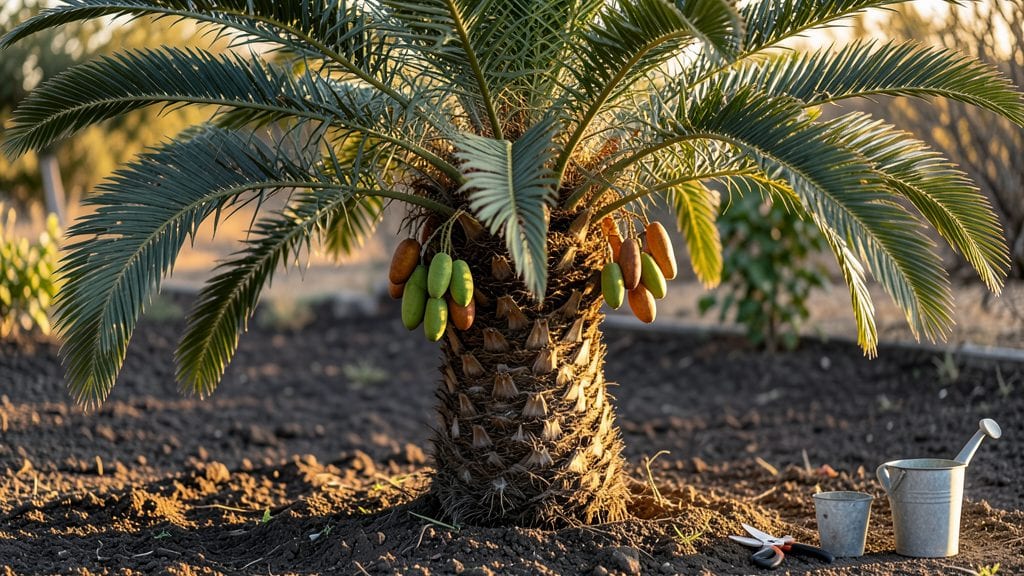
Growing a dates fruit tree in your backyard means sweet rewards with surprisingly little upkeep—once you know the secrets to its tropical roots.
I planted mine in a sheltered corner of my Southern California yard, and now it produces clusters of golden dates every autumn, with minimal pruning needed beyond removing dead fronds. The key is mimicking its natural desert habitat: hot days, cool nights, and soil that drains like sand.
Dates thrive in USDA zones 8-11, where frost never touches them, but container growing works even in cooler climates if you bring them indoors during winter.
Start with well-draining soil mixed with sand or perlite—think cactus mix, not heavy garden loam—and plant in full sun for 8+ hours daily. Young trees need regular watering to establish roots, but once mature, they’re shockingly drought-tolerant, making them low-maintenance once settled.
Harvest begins in late summer to fall, when the fruit softens and turns deep amber. The tree’s minimal pruning needs—just removing dead fronds—keep it looking elegant while encouraging new growth.
With proper care, you’ll go from bare soil to a year-round tropical centerpiece producing edible gold within 3-5 years, with far less effort than most fruit trees demand.
Common challenges? Mostly just patience—dates grow slowly at first, and frost is their only real enemy. But once established, they reward you with sweet, sun-ripened fruit and a striking silhouette that turns heads. Ready to grow your own desert oasis?
📚 In This Guide
- What you need
- Instructions
- Tips and common mistakes
- Wrapping up and next steps
What you need
- ● Date palm tree (Phoenix dactylifera) – Choose a young sapling (3–5 feet tall) from a nursery or reputable seller. Pro tip: Opt for cold-hardy varieties like Medjool or Deglet Noor if you live in cooler climates.
- ● Well-draining soil mix – A blend of sandy loam, perlite, and compost (ratio: 60% soil, 20% perlite, 20% compost).
- ● Large container or planting hole – For container growing, use a 15–20 gallon pot with drainage holes. For ground planting, dig a hole 3x wider and as deep as the root ball.
- ● Pruning shears – Bypass pruners (sharp, 6–8 inch blades) for clean cuts on small branches.
- ● Loppers – For thicker branches (½–1.5 inches in diameter).
- ● Disinfectant (rubbing alcohol or bleach solution) – To sterilize tools between cuts and prevent disease.
- ● Mulch (organic, like straw or wood chips) – 2–3 inches thick to retain moisture and regulate soil temperature.
- ● Drip irrigation system or hose with spray nozzle – Date palms need consistent moisture but hate soggy roots.
- ● Balanced fertilizer (10-10-10 or 8-3-9) – Apply every 4–6 weeks during growing season (spring–fall).
- ○ Support stake (optional but helpful for young trees) – A 4–5 foot bamboo or metal stake to stabilize the tree in windy areas.
- ● Soil moisture meter – Ensures you’re watering at the right depth (dates hate overwatering!).
- ● Slow-release fertilizer tablets – Convenient for container-grown trees.
- ● Shade cloth (30–50%) – Protects young trees from intense afternoon sun in hot climates.
- ● Humidity tray or pebble tray – Boosts air moisture for indoor or greenhouse setups.
- ● Tree collar sprayer – For targeted pest control (e.g., scale insects or palm weevils).
- ● Grafting tools (if propagating from cuttings) – Includes a grafting knife and rafting tape.
How to grow a dates fruit tree with minimal pruning
This method delivers year-round harvests while keeping upkeep simple—ideal for warm climates.
Select the Right Variety and Planting Site
Choose a cold-hardy date palm variety like 'Medjool' or 'Deglet Noor' if you live in USDA zones 9-11. Dates thrive in full sun with well-draining soil and require 60-100°F daytime temperatures year-round. Avoid low-lying areas where cold air settles, as even brief dips below 30°F can damage the trunk.
Test your soil's pH—dates prefer 6.5-7.5. If your soil is too alkaline, amend with elemental sulfur before planting. I dig a hole twice as wide as the root ball but only as deep, placing the tree so the top of the root ball sits 1-2 inches above ground level. This prevents water from pooling around the trunk and rotting the base.
Plant and Establish the Tree
Remove the tree from its container and loosen any circling roots gently with your fingers. Place it in the hole, backfilling with the native soil mixed with 1 part compost to improve drainage. Water deeply immediately after planting to settle the soil and eliminate air pockets. You'll know it's right when water drains freely from the bottom of the hole.
Mulch around the base with 3-4 inches of organic mulch, keeping it 6 inches away from the trunk to prevent rot. Dates need consistent moisture during their first year, so water twice weekly until new fronds emerge. After that, reduce to once weekly during dry spells, watching for yellowing fronds as a sign of underwatering.
Fertilize for Optimal Fruit Production
Dates respond best to a balanced fertilizer with equal parts nitrogen, phosphorus, and potassium. Apply ½ pound of 10-10-10 fertilizer per year of tree age in early spring, just as new fronds begin to unfurl. For a 5-year-old tree, that's 2.5 pounds spread evenly in a 12-inch radius around the trunk. Water deeply after fertilizing to help nutrients penetrate the soil.
Skip winter fertilization entirely—dates enter dormancy and won't use nutrients during cooler months. I also add ½ cup of Epsom salt per application to boost magnesium, which prevents frond yellowing. Look for new fronds to emerge within 3-4 weeks of fertilizing—this confirms the tree is actively growing and absorbing nutrients.
Prune Strategically for Airflow and Fruit Access
Dates require minimal pruning, but removing dead or diseased fronds prevents pests and improves air circulation. Use clean, sharp pruners to cut just above a leaf node where the frond meets the trunk. Never remove more than 20% of the fronds at once, as this stresses the tree. I prune only in late winter or early spring, before new growth begins.
Watch for fronds that turn brown and crispy—these are dead and should be removed immediately. Never prune during fruit production, as this disrupts the tree's energy balance and reduces yield. Healthy dates trees produce fruit on the second-to-last frond, so avoid cutting back beyond that point unless the frond is clearly diseased.
Harvest and Encourage Year-Round Production
Dates ripen over 3-4 months, starting in late summer. Harvest when the fruit softens slightly and changes color from green to brown. I pick by gently twisting the fruit from the stem—it should come off easily without tearing. Leave a few clusters unharvested to attract pollinators and encourage next year's crop.
To extend the harvest season, thin young fruit clusters to 3-4 dates per bunch when they're still small. This ensures the remaining fruit grows larger and ripens more evenly. Store unripe dates in a cool, dry place until they soften, or dehydrate them in the sun for a longer shelf life. With proper care, a mature date tree can produce fruit year-round in warm climates.
Tips & tricks for perfect dates fruit tree growth
Mastering date palm care comes down to understanding the plant's natural rhythms and climate needs. Here's what I've learned from years of growing these tropical jewels with minimal fuss.
Climate Control: While dates thrive in 60-100°F daytime temperatures, nighttime temperatures below 60°F can stress the tree. In cooler climates, consider planting near a south-facing wall or using frost blankets during unexpected cold snaps. I've found that even brief dips below 30°F can cause irreversible damage, so monitor forecasts during winter months. The key is creating microclimates that mimic their natural desert environment.
Root Development Strategy: When planting, focus on creating the perfect root environment rather than just getting the tree in the ground. The 1-2 inch elevation above ground level is crucial—it prevents water from pooling against the trunk, which can cause rot. I also recommend adding a layer of coarse sand mixed with the native soil at the bottom of the planting hole to improve drainage further. This mimics the well-draining conditions of their native desert habitats.
Watering Wisdom: The twice-weekly watering schedule during the first year is non-negotiable, but how you water matters just as much. Use drip irrigation or soaker hoses to deliver water directly to the root zone rather than overhead watering. This prevents fungal diseases and ensures the roots get consistent moisture. I've seen many beginners overwater, causing root rot—always check that water drains freely from the bottom of the planting hole after watering.
Fertilization Timing: The 3-4 week window for new frond emergence after fertilizing is your best indicator of success. If you don't see new growth within this timeframe, your tree might need more phosphorus (the middle number in your 10-10-10 fertilizer). I've found that adding a handful of bone meal to the planting hole at the start provides a phosphorus boost that pays off in the long run. Remember, dates enter dormancy in winter, so skip fertilization entirely during cooler months when the tree isn't actively growing.
Pro Tips for Dates Fruit Tree
- Mastering date palm care comes down to understanding the plant's natural rhythms and climate needs.
- Climate Control: While dates thrive in 60-100°F daytime temperatures, nighttime temperatures below 60°F can stress the tree.
- Root Development Strategy: When planting, focus on creating the perfect root environment rather than just getting the tree in the ground.
Frequently asked questions
about growing a date fruit tree—because every gardener deserves clarity! Here are answers to the most common queries to help you cultivate this rewarding (and low-maintenance) tree.How long does it take for a date tree to bear fruit?
A date tree typically takes 3–5 years to produce its first harvest, depending on the variety and growing conditions. Patience is key—young trees focus on root and branch development before fruiting. Dwarf varieties may fruit slightly sooner, but full-size trees can take up to 7 years in cooler climates.
Can date trees survive cold winters?
Most date trees thrive in USDA Zones 8–11 and struggle below 20°F (-6°C). If you live in a colder zone, opt for cold-hardy varieties like 'Medjool' (with protection) or grow the tree in containers to move indoors in winter. Mulching and windbreaks can also help shield roots and trunks from frost damage.
Why aren’t my date tree flowers turning into fruit?
Several factors can cause poor fruiting:
- Pollination issues: Date trees are self-pollinating but benefit from cross-pollination. Plant two trees nearby for better yields.
- Improper watering: Too much or too little water can drop flowers. Keep soil consistently moist during blooming season (spring).
- Nutrient deficiencies: Lack of potassium or phosphorus can stunt fruit development. Fertilize with a balanced palm/tree fertilizer in early spring.
Do date trees need heavy pruning, or can I keep it minimal?
Date trees hate aggressive pruning—it stresses the tree and reduces yields. Focus on light maintenance:
- Remove dead or diseased branches in late winter.
- Trim overlapping branches to improve airflow.
- Avoid cutting back more than 20–30% of the canopy at once.
Are there alternatives to traditional date trees for colder climates?
If your climate is too cold for classic date trees, consider these hardier alternatives with similar tropical vibes:
- 'Phoenix dactylifera' (Dwarf Date Palm): Cold-hardy to 15°F (-9°C) and produces edible fruit.
- Jujube Tree (Ziziphus jujuba): Thrives in Zones 5–9 and yields sweet, date-like fruit.
- Mulberry Tree (Morus spp.): Cold-tolerant and produces fast-growing, fruit-laden branches.
Wrapping up and next steps
Growing a dates fruit tree is a rewarding journey that offers a year-round harvest with surprisingly minimal pruning effort—perfect for both beginners and seasoned gardeners! 🌱 With the right knowledge, you can enjoy sweet, nutritious dates while keeping maintenance simple.
Whether you’re drawn to the tree’s resilience or the delicious fruit it produces, now is the perfect time to plant and nurture your own.
Ready to take the next step? Start by selecting the right variety for your climate, then plant your tree and follow the care tips shared here. Before you know it, you’ll be savoring homegrown dates straight from your backyard! 🍈✨