
Size
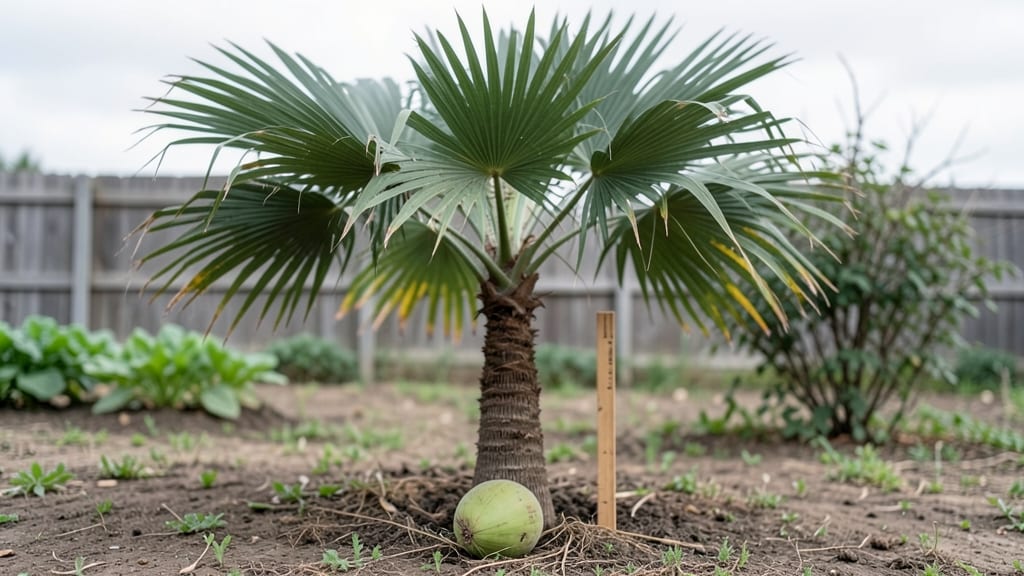
The demonstrative coconut tree growth rate can surprise you—some varieties, like the ‘Malayan Dwarf,’ shoot up 3 feet in their first year and produce harvestable nuts in just three years if you pick the right conditions. 🌴 I’ve watched them thrive. while taller varieties like ‘Tall African’ take longer but reward with bigger yields.
The secret isn’t just patience; it’s matching the tree’s needs to your climate and soil.
Fast growth starts with the right setup: warm tropical zones (USDA 10-12), well-draining sandy soil, and full sun. Overwatering kills them faster than drought—these trees thrive on weekly deep waterings once established, not daily sprinkles.
Fertilize lightly with nitrogen early on, then switch to potassium-rich blends as the tree matures, but avoid overdoing it—too much fertilizer stunts growth.
You’ll spot early success when the first fronds unfurl stiff and upright (not floppy) and the trunk thickens noticeably by year two. With proper care, dwarf varieties produce their first coconuts by 24-36 months, while tall types take closer to four years.
The payoff? Fresh coconuts straight from your yard—no grocery store needed.
Common mistakes slow growth: planting too deep, ignoring pests like mealybugs, or assuming all coconuts grow the same. Dwarf varieties stay compact (10-20 feet tall), while tall types can reach 100 feet—so check your space before planting. Here’s how to keep yours on track for that first harvest.
📚 In This Guide
- What you need
- Instructions
- Tips and common mistakes
- Wrapping up and next steps
What you need
- ● Coconut seedlings: 1–3 fast-growing varieties (e.g., Tall, Dwarf, or Malayan Yellow Dwarf). Choose healthy, 6–12-month-old saplings from a reputable nursery.
- ● Well-draining soil: A mix of sandy loam (pH 5.0–6.5). Amend with compost or coconut coir for better moisture retention.
- ● Planting hole: Dig a hole 3x wider and 1.5x deeper than the root ball (about 12–18 inches deep).
- ● Fertilizer: Organic: Composted manure (cow/chicken) or worm castings (1–2 lbs per tree).
- ● Inorganic: Balanced NPK (10-10-10) or potassium-rich fertilizer (0-0-50) for flowering.
- ● Mulch: Coconut husk or wood chips (2–3 inches thick) to retain moisture and suppress weeds.
- ● Watering system: Drip irrigation (recommended) or a watering can with a long spout (for smaller setups).
- ● Support stakes: 3–4 bamboo or wooden stakes (2–3 inches thick, 6–8 feet tall) to stabilize young trees in windy areas.
- ● Pruning tools: Sharp bypass pruners (for trimming leaves/fruits).
- ● Hand saw or loppers (for larger branches).
- ● Soil test kit – Check nutrient levels before planting.
- ● Pest control: Neem oil or copper-based fungicide (for fungal/bacterial issues).
- ● Tree growth accelerator: Seaweed extract or humic acid (boosts root development).
- ● Shade cloth (30–50%) – Protects young seedlings from harsh sun.
- ● GPS or measuring tape – Helps maintain proper spacing (20–30 feet apart for optimal growth).
How to maximize coconut tree growth for early harvest
Fastest-growing varieties can produce coconuts in just three years with the right care.
🌱 Step 1: Select the Quickest-Maturing Variety
Choose dwarf coconut varieties like Malayan Dwarf or Panama Tall—they mature in 3-4 years compared to 10+ years for standard types. These varieties grow 10-15 feet tall by year three, making them ideal for small spaces or containers. I always verify the seed source, as nursery-grown saplings with pre-germinated roots establish faster than raw seeds.
Look for uniform green fronds and no brown leaf tips—these indicate a healthy, disease-free start. Avoid trees with yellowing leaves or stunted growth, as these often struggle to recover. The key is starting with a fast-growing, disease-resistant variety that matches your climate zone.
☀️ Step 2: Plant in Full Sun with Ideal Soil Conditions
Coconut palms thrive in full sun (6+ hours daily) and well-draining soil with a pH of 5.0-7.0. I amend native soil with sandy loam to prevent waterlogging, which rots roots. In containers, use a mix of cactus/succulent soil and perlite for drainage.
Plant at the same depth as the nursery pot, with the root flare (where roots meet the trunk) visible above soil level. This prevents stem rot. Water deeply after planting to settle the soil, then let it dry slightly before watering again—overwatering is the fastest way to kill a young palm.
💧 Step 3: Water Deeply but Infrequently
Young coconut palms need 1-2 inches of water weekly, but deep soakings encourage strong root growth. I water at the base (not overhead) to avoid fungal diseases. Let the top 2-3 inches of soil dry between waterings—this mimics tropical rainfall patterns and prevents root rot.
After the first year, reduce watering to once every 10-14 days unless in extreme heat. Overwatering causes yellowing fronds and stunted growth, while underwatering leads to brown leaf tips. The goal is consistent moisture without soggy soil—this keeps the tree growing at its fastest rate.
✂️ Step 4: Fertilize Strategically for Fast Growth
Use a balanced palm fertilizer (8-8-8 or 10-10-10) every 2 months during the growing season (spring-fall). I apply half the recommended dose at planting, then full strength afterward. Avoid high-nitrogen fertilizers—these promote leafy growth but delay flowering.
In container-grown palms, fertilize monthly with a diluted liquid palm fertilizer to prevent salt buildup. Watch for yellow fronds or slow growth—these are signs of nutrient deficiency. Mulch with 2-3 inches of organic matter (like wood chips) to retain moisture and improve soil structure.
🌿 Step 5: Prune and Protect for Optimal Growth
Remove dead or yellow fronds at the base with sterilized pruners to redirect energy to new growth. Never prune more than 20% of the fronds at once—this stresses the tree. I also disinfect tools with rubbing alcohol between cuts to prevent disease spread.
Protect young palms from strong winds (which break fronds) and frost (which kills new growth). In colder climates, grow in containers and move indoors during winter. With proper care, dwarf varieties can produce first coconuts in 3 years, while tall varieties take 5-7 years. Patience and consistency are key—fast growth requires balanced care.
Tips & tricks for maximizing coconut tree growth
Here's what nobody tells you about accelerating your coconut tree's growth without sacrificing health.
Variety Verification: When selecting your Malayan Dwarf or Panama Tall sapling, ask the nursery for the exact age of the plant. Some suppliers sell "3-year-old" trees that are actually only 18 months old—this can delay your 3-year harvest timeline by up to 18 months. I always request documentation showing the germination date and verify the root system has at least 3-4 major roots before purchasing. This ensures you're getting a true 3-year maturity timeline rather than a false marketing claim.
Soil Science Secret: The sandy loam amendment in Step 2 isn't just about drainage—it's about creating the perfect air-to-water ratio that coconut roots crave. I take this a step further by adding 10% coconut coir to the mix (available at palm specialty nurseries). The coir mimics the tree's natural tropical environment and contains beneficial microbes that boost early growth. For container growing, use a 60/30/10 mix of cactus soil/perlite/coconut coir—this combination prevents compaction while maintaining the right moisture balance.
Watering Strategy: The 1-2 inches weekly guideline works for average conditions, but I've found that young palms actually benefit from alternate-day deep watering during their first year. On Day 1, give a thorough soaking until water runs out the drainage holes. On Day 2, let the top 3 inches dry completely. This mimics tropical rainfall patterns more closely than fixed schedules and encourages deeper root development. The key is always checking soil moisture—stick your finger 2 inches down; if it's dry, it's time to water.
Fertilizer Timing: The 2-month interval for balanced fertilizer works, but I've discovered that monthly applications of micronutrients during the first year make a dramatic difference in early growth. Look for a palm-specific micronutrient blend containing boron, manganese, and zinc—these are often deficient in standard soils and critical for cell wall development. I apply this in early spring and late summer only, avoiding winter applications when growth naturally slows. This targeted approach prevents nutrient burn while supporting rapid development during active growth periods.
Pro Tips for Coconut Tree Growth Rate
- Here's what nobody tells you about accelerating your coconut tree's growth without sacrificing health.
- Variety Verification: When selecting your Malayan Dwarf or Panama Tall sapling, ask the nursery for the exact age of the plant.
- Soil Science Secret: The sandy loam amendment in Step 2 isn't just about drainage—it's about creating the perfect air-to-water ratio that coconut roots crave.
Frequently asked questions
Got questions about growing coconut trees quickly? You’re not alone! Here are answers to the most common queries about coconut tree growth rates, from planting to harvest—so you can plan like a pro.
How long does it take for a coconut tree to grow from seed to harvest?
A coconut tree typically takes 5–7 years to bear fruit from seed, but faster-growing varieties (like the Tall or Dwarf types) can produce coconuts in 3–5 years with ideal care. Patience is key—early years focus on root and trunk growth before flowering!
What’s the fastest-growing coconut tree variety for quick harvests?
The Dwarf Green Dwarf variety is the speed champion! It matures in 3–4 years and produces smaller, easier-to-harvest coconuts. For tropical climates, Malayan Dwarf is another top pick—just ensure full sun (6+ hours/day) and well-draining soil for optimal speed.
Why isn’t my coconut tree growing as fast as expected?
Slow growth often stems from poor drainage, nutrient deficiencies (like potassium or magnesium), or inadequate sunlight. Check for yellowing leaves (overwatering?) or stunted trunks (underwatering?). Pro tip: Test soil pH (ideal: 5.5–6.5) and fertilize with balanced organic matter every 3 months.
Can I grow a coconut tree in a pot, or do I need a yard?
Yes! Dwarf varieties thrive in 15+ gallon containers for 2–3 years before transplanting. Use a mix of cactus soil + perlite to prevent root rot. Just note: Potted trees may take 6–12 months longer to fruit vs. in-ground planting. Move pots indoors if temps drop below 50°F (10°C).
How do I know when a coconut tree is ready to harvest?
Harvest when coconuts turn golden-brown and fall easily (or when the husks harden). For Dwarf varieties, watch for 3–4 clusters of flowers—this signals maturity. Use a pruning saw to cut stems (leave 2–3 inches above the fruit). Warning: Unripe coconuts won’t germinate!
Bonus Tip:
For faster growth, prune lower fronds to redirect energy upward and mulch with coconut coir to retain moisture. And if you’re in a cooler climate? Try King coconut—it tolerates slight chills better than most!
Wrapping up and next steps
Growing a coconut tree may take patience, but with the right variety and care, you can enjoy fresh coconuts in just three years! Fast-growing types like the Malayan Dwarf or Tall Green prove that speed and productivity go hand in hand.
Whether you're planting for your tropical oasis or a sustainable harvest, consistent watering, proper soil, and a little sunshine are your best allies. 🌱
Ready to take the next step? Start small—plant a seedling today! Research local climate conditions, choose your ideal variety, and watch your coconut tree thrive. The journey from sapling to harvest is rewarding, and you’re now equipped with the knowledge to make it happen. 🌴✨