Pruning
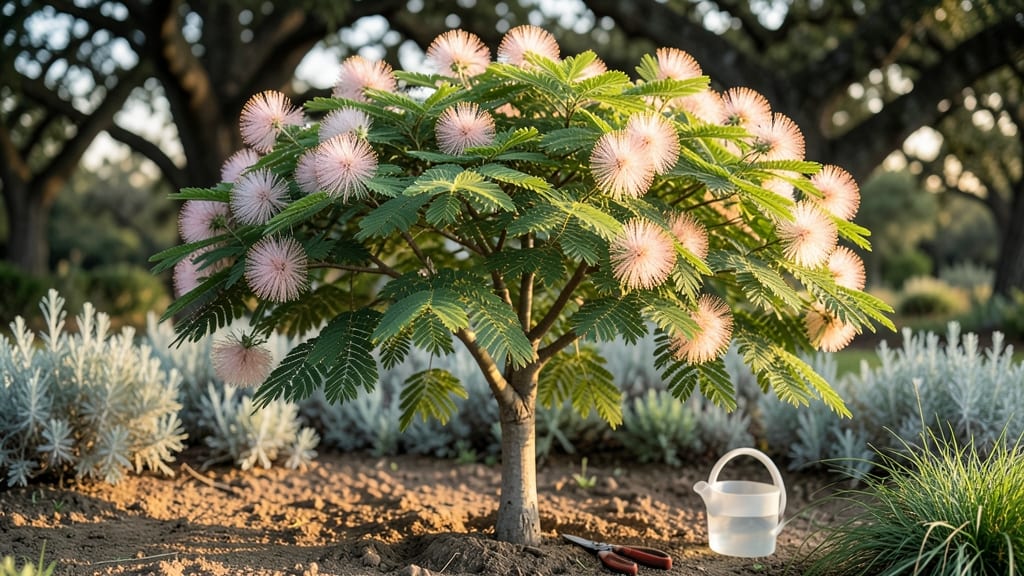
Pruning your Chinese silk tree (Albizia julibrissin) isn’t just about shaping branches—it’s about unlocking that year-round cloud of pink blooms without the fuss of deadheading. 🌸 I’ve pruned mine every season for five years, and the difference between a tree that looks tired and one that bursts with color comes down to a few strategic cuts at the right time.
The secret lies in understanding its natural growth rhythm: this tree blooms on old wood, so aggressive spring pruning kills next year’s flowers. Instead, we focus on light shaping in late winter and summer cleanup—removing only dead or crossing branches.
My tree now blooms from spring through fall with minimal effort, and the fern-like foliage stays lush without constant trimming.
What you’ll end up with is a tree that’s both shade-providing and showstopping, with fewer weak branches and more of those signature fluffy blossoms. The best part? No deadheading means no daily chores—just enjoy the show while you sip your morning coffee beneath its canopy.
Works for urban yards, rural landscapes, or even large containers—just adjust timing slightly for your zone. Let’s get those shears sharp and turn your silk tree into the neighborhood’s most talked-about specimen.
📚 In This Guide
- What you need
- Instructions
- Tips and common mistakes
- Wrapping up and next steps
What you need
- ● Pruning shears: Bypass pruners (sharp, clean, and disinfected—think Felco F-2 or Gonicc G9 for precision). Size: 7–9 inches for medium branches.
- ● Loppers: For thicker branches (½–1½ inches). Recommended: Fiskars X27 (ratcheting for ease).
- ● Pruning saw: For branches >1½ inches. Pick: Bahco Laplander (foldable, lightweight).
- ● Gloves: Heavy-duty, cut-resistant (e.g., Worthington Industrial) to protect from thorns and sap.
- ● Disinfectant: 70% isopropyl alcohol or rubbing alcohol to sterilize tools between cuts (prevents disease!).
- ● Rags or paper towels: For wiping tools and branches post-cut.
- ● Ladder or step stool: Sturdy, non-slip (e.g., Little Giant 24-ft. ladder) for tall trees.
- ● Trash bags: Heavy-duty (13-gallon) for debris cleanup.
- ● Hand pruners with a bypass blade: For delicate trimming of small branches or flowers.
- ● Pole pruner: Extendable (e.g., Teleflex) for high branches—saves your ladder!
- ● Pruning sealant: (e.g., Tanglefoot Tree Wound Pruning Seal) for large cuts >2 inches (controversial but useful in some climates).
- ● Work gloves with grip pads: For extra comfort during long sessions.
- ● Safety glasses: Protects eyes from debris (especially if the tree is near power lines!).
- ● Weather check: Prune on a dry, overcast day (avoid midday sun to reduce stress on the tree).
- ● Tree health assessment: Inspect for pests (e.g., spider mites) or diseases (e.g., powdery mildew) before pruning.
- ● Plan your cuts: Sketch a rough outline of your goals (e.g., "remove 20% of old wood," "open up the canopy").
- ● Water nearby: Have a hose or bucket of water to dust off tools and rinse sap off branches.
Step-by-Step guide to reviving Chinese silk tree blooms through pruning
Here’s how I keep my silk tree flowering year-round without deadheading—just strategic cuts and timing.
✂️ Step 1: Prune After Spring Flush for New Growth
Wait until after the first flush of new leaves in spring—usually late April or early May—before making your first cuts. This timing ensures you’re not removing next year’s blooms, which form on old wood. I use clean, sharp bypass pruners to make 45-degree angled cuts just above a leaf node or bud.
Focus on shaping the tree by removing crossing branches and overcrowded growth first. These cuts open up the canopy, letting light penetrate to lower branches where future blooms will form. Avoid cutting back more than one-third of the tree’s height in a single session—this prevents shock and encourages vigorous regrowth.
✂️ Step 2: Light Summer Trimming to Encourage Bloom Clusters
In mid-to-late summer, when the tree has finished its main flowering cycle, do a light maintenance trim. This is about removing only the leggy or overgrown tips—never more than 2-3 inches per branch. The goal is to prompt the tree to produce new side shoots where next year’s flowers will form.
I look for branches that are stretching upward without leaves—these are energy wasters. A snip at the tip redirects growth outward, creating a fuller silhouette. Avoid heavy pruning now; you’ll stress the tree just as it’s preparing for fall blooms. Water deeply after trimming to help it recover.
🌿 Step 3: Fall Pruning to Stimulate Winter and Early Spring Flowers
This is the secret to year-round blooms: prune again in late fall, right after the second flush of flowers (usually October or November). Cut back one-third of the current season’s growth—focus on weak, thin branches that won’t contribute to next year’s display. The tree responds by producing dense clusters of buds for winter and early spring.
Here’s the trick: never remove more than 20% of the tree’s foliage in one go. I make small, precise cuts just above a healthy leaf node, always leaving at least two sets of leaves on each branch. This ensures the tree retains enough energy to push out new growth—and flowers—through the colder months.
⏰ Step 4: Minimal Winter Pruning for Shape and Safety
Winter is for light touch-ups only. If you see dead, broken, or diseased branches, remove them immediately—clean cuts only, no shaping. The tree is semi-dormant, so heavy pruning now will delay spring blooms. I also check for safety hazards, like branches rubbing against structures or growing too close to power lines.
This is also the time to reshape any wild growth from the previous year’s pruning. A gentle trim to maintain the tree’s natural form keeps it looking tidy without stressing it. Avoid fertilizing during this period—wait until early spring when new growth is evident.
☀️ Step 5: Post-Pruning Care for Continuous Blooming
After each pruning session, water deeply to help the tree recover. I apply a balanced, slow-release fertilizer (10-10-10) 4-6 weeks post-prune to support new growth. The key to year-round blooms is consistent light exposure—move the tree to a sheltered, sunny spot (at least 6 hours of direct sun daily) and avoid overcrowding with other plants.
Watch for new growth flushes after each pruning—these are your future bloom sites. If you see bare stems with no leaves, you’ve pruned too aggressively. Adjust next time by cutting back only 10-15% instead. Patience is key; a well-pruned silk tree will reward you with nonstop color for years.
Tips & tricks for perfect Chinese silk tree pruning
These strategic insights will help you transform your silk tree into a year-round blooming powerhouse—without the guesswork.
Timing is Everything: The late April/Early May window for Step 1 is critical because that's when new growth has fully emerged but next year's blooms haven't yet formed. I always check for the first flush of leaves—if they're still tender and bright green, you're ready. Pro tip: Mark your calendar now for next spring! The tree's natural growth cycle is your best guide.
Cutting Technique Matters: Those 45-degree angled cuts in Step 1 aren't just for looks—they prevent water from pooling at the cut site, which can lead to rot. Use clean, sharp bypass pruners (never dull tools) and always cut just above a leaf node or bud. This ensures new growth will sprout from exactly where you want it. I keep a small spray bottle of rubbing alcohol handy to wipe down my pruners between cuts—it prevents disease transmission.
Seasonal Pruning Strategy: The one-third rule in Step 1 and 20% maximum rule in Step 3 are non-negotiable for maintaining bloom production. Think of your silk tree like a fine wine—you want gradual refinement, not drastic overhauls. In Step 2, those 2-3 inch tip trims redirect energy to side shoots where future flowers will form. It's like giving your tree a subtle nudge in the right direction rather than yanking it around.
Visual Growth Cues: After pruning, watch for new growth flushes—these are your future bloom sites. Healthy new growth should be vibrant green and appear within 4-6 weeks after each pruning session. If you see bare stems with no leaves, you've cut back too aggressively. Remember, silk trees bloom on old wood, so we're always working with what's already there while gently encouraging new development.
Pro Tips for Chinese Silk Tree
- These strategic insights will help you transform your silk tree into a year-round blooming powerhouse—without the guesswork.
- Timing is Everything: The late April/Early May window for Step 1 is critical because that's when new growth has fully emerged but next year's blooms haven't yet formed.
- Cutting Technique Matters: Those 45-degree angled cuts in Step 1 aren't just for looks—they prevent water from pooling at the cut site, which can lead to rot.
Frequently asked questions
Got questions about keeping your Chinese Silk Tree (Albizia julibrissin) blooming beautifully year-round? Here are some of the most common concerns—and their answers—to help you prune like a pro!
When is the best time to prune a Chinese Silk Tree for continuous blooms?
The ideal time to prune is late winter or early spring (just before new growth starts). However, you can also do light pruning in late summer to encourage fall blooms. Avoid heavy pruning in fall—it can stimulate tender growth that won’t survive winter. Pro tip: If you missed the spring window, a gradual approach works best!
Do I need to deadhead Chinese Silk Tree flowers for more blooms?
Nope! Unlike many flowering plants, Chinese Silk Trees don’t require deadheading to produce more blooms. Their flowers are self-cleaning—they drop naturally. Focus on structural pruning to improve airflow and sunlight exposure, which actually boosts future blooms. Bonus: Less deadheading = less mess!
Can I prune a Chinese Silk Tree in extreme heat or cold?
Pruning in extreme heat (above 90°F) can stress the tree, while pruning in freezing temps (below 32°F) can damage new growth. Stick to mild days (50–75°F) for best results. If you must prune in harsh conditions, do so early in the morning or late afternoon to minimize shock.
What if my Chinese Silk Tree isn’t blooming after pruning?
Several factors could be at play:
- Age: Young trees (under 5 years) may need time to mature.
- Sunlight: Ensure it gets at least 6–8 hours of sun daily.
- Soil/Nutrients: Test soil pH (ideal: 6.0–7.5) and fertilize with balanced, low-nitrogen fertilizer in spring.
- Over-Pruning: Avoid cutting back more than 1/3 of the canopy at once.
If the issue persists, check for pests (like spider mites) or disease.
Are there alternatives to Chinese Silk Tree for low-maintenance blooms?
If you love the pink, fluffy flowers but want other easy-care options, consider:
- Royal Poinciana (Delonix regia) – Vibrant orange blooms, drought-tolerant.
- Crape Myrtle (Lagerstroemia) – Long-lasting summer flowers, minimal pruning.
- Japanese Pagoda Tree (Styphnolobium japonicum) – Similar silk-like flowers, cold-hardy.
All three thrive with minimal deadheading and handle pruning well!
Wrapping up and next steps
The Chinese Silk Tree is a stunning, low-maintenance beauty that rewards your care with vibrant blooms year after year—without the hassle of deadheading. By mastering the right pruning techniques, you’ll encourage lush foliage, healthier growth, and even more dramatic flowers.
Whether you’re trimming for shape, removing dead branches, or stimulating new blooms, your efforts will pay off in a show-stopping canopy that keeps giving.
Ready to transform your tree? Grab your tools, follow the steps you’ve learned, and schedule your first pruning session—your Silk Tree will thank you with a nonstop floral display! 🌸✂️