
Trees
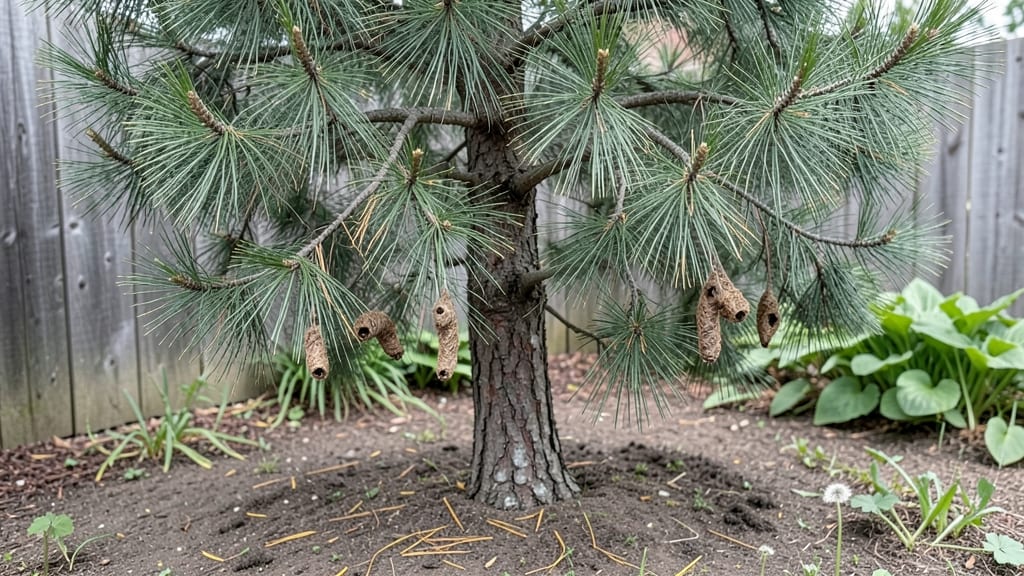
Those strange gray-brown cones on your pine trees might actually be bagworms wreaking havoc. That’s bagworms—and they’ll strip your tree bare if you don’t act fast. 🌲 I’ve battled these pests for years, and the key is catching them early with a fast-acting natural spray that works without harsh chemicals.
Most gardeners wait too long, but this method stops them in their tracks within days.
The secret isn’t complicated: a mix of soap, water, and a few natural additives disrupts their feeding cycle immediately. You’ll need household dish soap, a garden sprayer, and a ladder (or a telescoping wand) to reach high branches.
The process takes less than 30 minutes and works best in late summer when the larvae are most active.
Within 48 hours, you’ll see the bags start to drop or the larvae stop feeding. Your pine needles stay lush and green, and the tree recovers faster than with chemical treatments. The best part? This spray is safe for kids, pets, and beneficial insects—just don’t overspray nearby plants.
Works for all pine varieties, from dwarf to towering evergreens. Once you’ve used this method, you’ll never let bagworms take over again. Let’s get your trees back to their full glory—naturally.
📚 In This Guide
- What you need
- Instructions
- Tips and common mistakes
- Wrapping up and next steps
What you need
- ● Baking soda – 1 tablespoon (for the spray base)
- ● Dish soap (mild, like Castile) – 1 teaspoon (breaks down waxy bags)
- ● Water – 1 gallon (distilled or dechlorinated if possible)
- ● Spray bottle or garden sprayer – 1-2 gallons capacity (for even coverage)
- ● Pruning shears or scissors – 1 pair (for trimming heavily infested branches)
- ● Gloves (gardening or rubber) – 1 pair (protection from spines and sap)
- ● Ladder or step stool – as needed (for tall trees)
- ● Trash bag (heavy-duty) – 1-2 (for collecting bagworm bags and debris)
- ● Neem oil – 1 teaspoon (boosts natural insect-repelling properties)
- ● Horticultural oil – 1 tablespoon (for stubborn infestations)
- ● Magnifying glass – 1 (to spot hidden eggs or larvae)
- ● Label or marker – 1 (to mark treated areas for follow-ups)
Step-by-Step instructions for treating bagworms on pine trees
Here's the fast, natural method I rely on when bagworms threaten my pines—no harsh chemicals needed.
🪴 Step 1: Inspect and Identify the Problem
Start by examining your pine trees closely for the distinctive 1-2 inch brown bags hanging from branches. These are the bagworms' protective casings, and each contains a single caterpillar. Look for defoliation—needles turning yellow or brown—which confirms active feeding. The earlier you catch them, the faster you can eliminate them.
I grab a pair of gloves and gently shake each branch over a white sheet or tarp to spot any fallen bags. This helps me gauge the severity—light infestations (a few bags per tree) can be handled quickly, while heavy ones (dozens per branch) need immediate action. Don’t wait until the bags are full-sized; young caterpillars are easier to kill.
🌿 Step 2: Apply a Natural Spray Solution
Mix a 1 tablespoon of horticultural oil (like neem or refined mineral oil) with 1 quart of water in a spray bottle. Add ½ teaspoon of liquid dish soap (like Dawn) to help the solution stick to the bags. Shake well before spraying—this blend suffocates the caterpillars inside while breaking down their protective waxy coating.
Spray the solution directly onto the bags on a calm, overcast day to avoid drift. Focus on the undersides of branches where most bags hide. Reapply every 7-10 days until the bags turn white and shriveled—this means the caterpillars are dead. I always spray in the early morning so the oil has time to work before the sun evaporates it.
✂️ Step 3: Physically Remove Damaged Bags
Once the bags turn white and brittle, they’re ready for removal. Put on gloves and carefully pluck each bag off the branches, dropping them into a bucket of soapy water to drown any surviving caterpillars. For stubborn bags, use pruning shears to snip them off. This step prevents next year’s infestation—bagworms overwinter in these casings.
I also prune any heavily defoliated branches back by ⅓ of their length to encourage new growth. Bagworms target stressed trees, so reducing their food source helps the pine recover faster. Dispose of pruned branches in sealed bags to ensure no caterpillars escape.
☀️ Step 4: Monitor and Prevent Future Infestations
After treatment, keep an eye on your pines weekly during the growing season. Look for new bags forming—if you spot them early, a quick spray will stop them before they cause damage. I also apply a preventative spray of neem oil in early spring and late summer to deter egg-laying females from settling on the trees.
Healthy pines are less attractive to bagworms, so water deeply during dry spells and fertilize with a slow-release pine-specific fertilizer in early spring. Mulch around the base with 3-4 inches of organic mulch to retain moisture and improve root health. This two-pronged approach—treatment plus prevention—keeps my pines lush and bagworm-free year after year.
Tips & tricks for fast bagworm elimination
Here's how to make this natural treatment even more effective—saving you time and effort while keeping your pines healthy.
Timing is Everything: In Step 1, focus on young caterpillars—they're easier to kill than mature ones. Look for bags that are less than 1 inch long, as these contain smaller, more vulnerable caterpillars. Early detection means fewer treatments overall, which aligns perfectly with our goal of fast elimination.
Solution Mixing Tip: When preparing your spray in Step 2, use a separate spray bottle just for the trees to avoid cross-contamination. I also recommend shaking the mixture vigorously for 30 seconds before each use—this ensures the horticultural oil and dish soap stay properly blended and work together to suffocate the caterpillars.
Monitoring Shortcut: In Step 4, set a reminder on your phone for every 7 days to check your trees. This prevents you from missing new bags between treatments. I mark my calendar with bright stickers so I don't forget—bagworms multiply fast, and you want to catch them before they become a bigger problem.
Cleanup Strategy: After removing bags in Step 3, don't just toss them in the yard—they can hatch next season! Instead, place the sealed bag of pruned branches in your outdoor trash bin immediately. This one step prevents next year's infestation before it starts, making your treatment truly long-term effective.
Pro Tips for Bagworms On Pine Trees
- Here's how to make this natural treatment even more effective—saving you time and effort while keeping your pines healthy.
- Timing is Everything: In Step 1, focus on young caterpillars—they're easier to kill than mature ones.
- Solution Mixing Tip: When preparing your spray in Step 2, use a separate spray bottle just for the trees to avoid cross-contamination.
Frequently asked questions
Got questions about tackling bagworms on your pine trees? You’re not alone—these pesky pests can be tricky! Here are some of the most common concerns and straightforward answers to help you take action with confidence.
What do bagworms look like, and how can I tell if my pine tree has them?
Bagworms are easy to spot once you know what to look for. They appear as small, sack-like cocoons (about the size of a finger) dangling from pine needles. Inside, you’ll find a fuzzy caterpillar. Look for brownish-gray bags clustered on branches—if you see them, it’s time to act!
When is the best time to treat bagworms on pine trees?
The ideal window is late May through early July, when the caterpillars are young and most vulnerable. This is before they spin their protective bags, making them easier to kill with sprays. Pro tip: Treat in the evening to avoid harming beneficial insects like bees.
Are chemical sprays the only way to eliminate bagworms?
Not at all! Natural sprays like neem oil, soapy water, or Bt (Bacillus thuringiensis) are effective and safer for the environment. For a DIY approach, mix 1 tbsp neem oil + 1 tsp mild dish soap in a gallon of water. Spray thoroughly on both sides of the foliage for best results.
Why do bagworms keep coming back even after treatment?
Bagworms have a two-year life cycle, so some may survive in their cocoons. To break the cycle, remove and destroy all bags (burn or bag them) in fall or winter. Also, check for female moths laying eggs in spring—they look like tiny white specks on branches. Prune and dispose of heavily infested branches to reduce future outbreaks.
Will bagworms kill my pine tree if left untreated?
While bagworms won’t kill a healthy pine tree overnight, severe infestations can stress the tree, making it susceptible to disease or other pests. Heavy defoliation over time weakens the tree, so early treatment is key. Good news: Pines are resilient—with prompt action, they’ll bounce back!
Wrapping up and next steps
Bagworms may seem like a daunting challenge, but with the right natural spray solution and consistent effort, you can protect your pine trees and restore their health. 🌲 Remember, early detection and treatment are key—don’t wait until the infestation spreads!
Start by inspecting your trees regularly and applying your homemade spray as soon as you spot those telltale bags.
Ready to take action? Grab your supplies, roll up your sleeves, and give your pine trees the care they deserve! Your future will thank you for it.