
Planting
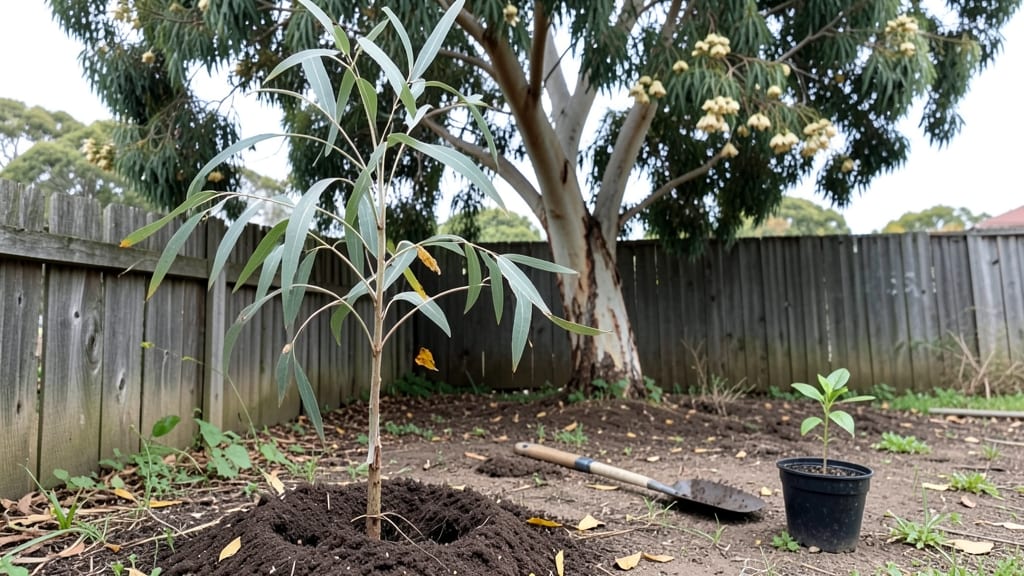
The best place to plant a eucalyptus tree is where it gets full sun and room to stretch its roots—think 6+ hours of direct sunlight daily and at least 20 feet from structures.
I planted mine near the southern edge of my yard, and within two years, it shot up 20 feet tall with that signature silvery-green foliage. The key isn’t just sunlight—it’s avoiding waterlogged soil and competing plants.
Eucalyptus hates sitting in soggy ground, so raised beds or slopes work better than low spots where rain pools.
Your climate matters too—these trees thrive in USDA zones 8-11, mimicking their native Mediterranean or subtropical habitats. In cooler zones, plant against a south-facing wall to capture extra warmth. The soil should drain like a sieve: sandy loam or gravelly mixes are ideal.
I’ve seen eucalyptus struggle in heavy clay unless amended with 30% perlite or coarse sand—that’s the difference between lush growth and a sad, stunted tree.
You’ll know you’ve picked the right spot when the tree starts shooting up 3-5 feet per year and develops that signature eucalyptus scent—stronger on hot afternoons. Just watch the roots: they spread aggressively, so keep it at least 15 feet from sidewalks or foundations.
In drought-prone areas, mulch heavily to retain moisture without smothering the roots. The payoff? A towering, fast-growing shade tree that’s also a hummingbird magnet.
One last tip: check local regulations first—some areas ban eucalyptus as invasive. My neighbor’s tree in Arizona thrives where mine in California’s fog belt barely grows. Location isn’t just about sun; it’s about matching your microclimate to the tree’s native conditions.
Start with these basics, and you’ll have a eucalyptus that grows like it’s racing the sky.
📚 In This Guide
- What you need
- Instructions
- Tips and common mistakes
- Wrapping up and next steps
What you need
- ● Eucalyptus sapling or bare-root tree: Choose a healthy, disease-free specimen (1–3 years old for best results). Pro tip: Look for roots that aren’t dried out or circling!
- ● Shovel or digging tool: A round-point shovel (16–18 inches wide) or d-handle spade for digging holes.
- ● Garden gloves: A pair of durable, breathable gloves (e.g., nitrile-coated for grip and protection).
- ○ Well-draining soil mix (optional but recommended): 50% native soil
- ● 30% coarse sand or perlite (for drainage)
- ● 20% compost or aged manure (for nutrients)
- ● Mulch (organic): 3–4 inches of pine bark, wood chips, or straw (avoid fresh mulch—it can mat and suffocate roots).
- ● Watering can or hose with a gentle spray nozzle: Eucalyptus trees need deep watering (1–2 gallons per week for the first year).
- ● Staking system (for young trees): 2 wooden or bamboo stakes (4–5 feet tall)
- ● Soft tree tie straps (3–4 pieces, 1-inch wide)
- ● Soil pH test kit: Eucalyptus prefers slightly acidic to neutral soil (pH 6.0–7.5). Adjust with sulfur (to lower pH) or lime (to raise pH) if needed.
- ● Slow-release fertilizer: A balanced 10-10-10 or 8-3-9 blend (apply lightly at planting time). Pro tip: Avoid high-nitrogen fertilizers—they can burn roots!
- ● Tree guard or protective barrier: A metal or plastic tree ring (12–18 inches tall) to prevent lawnmower damage.
- ● Pruning shears: Bypass pruners (for shaping or removing dead branches).
- ● Post-hole digger (if staking): For securing stakes deeper into the ground.
Where to plant eucalyptus trees: optimal locations for thriving growth
Eucalyptus trees grow fastest when planted in the right spot—here’s how to choose their perfect sun-drenched home.
Select a Location With Full Sun Exposure
Eucalyptus trees demand at least 6-8 hours of direct sunlight daily for vigorous growth. In warmer climates, they thrive with full sun exposure (south or southwest-facing spots), while in cooler regions, they still need 6+ hours—just avoid deep shade, which slows growth and weakens wood structure.
Observe your yard’s sunlight patterns over a week. Notice where shadows linger longest—these areas will stunt your eucalyptus. If your site gets less than 6 hours, supplement with a strong grow light (6,000-7,000 lumens) for 12 hours daily during early growth.
Ensure Well-Draining Soil and Space for Root Spread
Eucalyptus roots spread aggressively, so plant at least 20 feet from structures, sidewalks, or septic systems. Their roots can crack concrete and disrupt plumbing over time. Test soil drainage by digging a 12-inch hole—if water pools after 30 minutes, amend with 3-4 inches of coarse sand or gravel to improve aeration.
These trees prefer sandy or loamy soil with a pH of 6.0-7.0. If your soil is heavy clay, mix in composted bark (from the 1 cubic yard you’ll need) to loosen texture. Avoid waterlogged areas—they cause root rot, which stunts growth and can kill young trees within weeks.
Choose a Wind-Sheltered Spot for Young Trees
While mature eucalyptus tolerate wind, seedlings and young trees under 5 feet tall need protection from strong gusts. Plant near a natural windbreak (fence, hedge, or existing trees) to prevent stem bending or breakage. In exposed areas, stake the tree with two 4-foot wooden stakes and soft tree ties for the first growing season.
Watch for leaf scorch (brown edges) or stunted growth—these are signs of wind stress. If your yard is open, consider planting near a south-facing wall (in the Northern Hemisphere) to block cold winter winds while maximizing sunlight.
Space Trees Properly for Long-Term Growth
Eucalyptus varieties like Eucalyptus globulus (tallow wood) grow 60-100 feet tall with 30-50 feet spread. Space multiple trees at least 30 feet apart to prevent root competition and ensure each gets enough sunlight. If planting near a property line, leave extra space—their roots extend farther than their canopy.
For smaller varieties (Eucalyptus gunnii, cider gum), allow 15-20 feet between plants. Overcrowding leads to slow growth, weak branches, and increased pest susceptibility. Mark planting spots with wooden stakes before digging to avoid misalignment.
Time Planting for Optimal Establishment
Plant eucalyptus in early spring or late fall when temperatures are mild (50-70°F) and rainfall is consistent. Avoid transplanting in summer heat—seedlings struggle to establish roots in dry soil, leading to wilting or death within days. If planting in summer, water daily for the first 2 weeks to compensate.
Dig a hole twice as wide as the root ball but no deeper. Loosen roots gently if pot-bound, then backfill with native soil mixed with compost (from your 1 cubic yard supply). Water deeply to eliminate air pockets—soggy soil is better than dry pockets during initial root spread.
Tips & tricks for perfect eucalyptus tree placement
Here's what I've learned from years of watching eucalyptus thrive—and fail—in different conditions.
Sunlight Strategy: The 6-8 hours of direct sunlight in Step 1 is non-negotiable for fast growth. I've seen eucalyptus planted in partial shade grow at half the rate of sun-exposed trees. For accurate sunlight mapping, use a solar pathfinder tool or observe your yard at noon for 3 consecutive days—this reveals the true sun exposure patterns. In urban areas, south-facing walls can create microclimates that provide extra sunlight for struggling seedlings.
Soil Science: When testing drainage in Step 2, I always dig the 12-inch hole and fill it with water, then time how long it takes to drain completely. If it takes longer than 30 minutes, you know you need to amend the soil. For clay-heavy areas, mixing in the 1 cubic yard of composted bark not only improves drainage but also introduces beneficial microbes that help young roots establish faster. I've seen eucalyptus planted in unamended clay struggle for years to break through compacted soil.
Wind Protection: The windbreak recommendation in Step 3 is particularly critical for young trees under 5 feet tall. I've lost several eucalyptus seedlings to wind damage in exposed locations. For temporary protection, I use flexible tree ties with foam padding to prevent stem damage while allowing natural movement. In open areas, planting near a south-facing wall creates a natural windbreak while maximizing sunlight exposure—the perfect compromise.
Long-Term Spacing: The 30 feet minimum spacing for mature eucalyptus in Step 4 might seem excessive, but I've seen root systems extend twice as far as the tree's canopy. When planting near property lines, I always add an extra 5 feet of buffer to account for root spread. For smaller varieties, marking planting spots with wooden stakes before digging prevents misalignment that could lead to future crowding issues.
Pro Tips for Where To Plant A Eucalyptus Tree
- Here's what I've learned from years of watching eucalyptus thrive—and fail—in different conditions.
- Sunlight Strategy: The 6-8 hours of direct sunlight in Step 1 is non-negotiable for fast growth.
- Soil Science: When testing drainage in Step 2, I always dig the 12-inch hole and fill it with water, then time how long it takes to drain completely.
Frequently asked questions
Got questions about planting eucalyptus trees? You’re not alone! Here are answers to the most common concerns—from spacing to soil and everything in between.
How far apart should eucalyptus trees be planted?
Space mature eucalyptus trees 20–30 feet apart to allow for their expansive root systems and towering height (some reach 100+ feet!). If planting smaller varieties like Eucalyptus cinerea, reduce spacing to 10–15 feet. Overcrowding leads to competition for water and nutrients, stunting growth.
Can eucalyptus trees grow in partial shade?
While they thrive in full sun (6+ hours daily), young eucalyptus can tolerate partial shade (3–4 hours of sunlight) for short periods. However, prolonged shade weakens growth, increases disease risk, and may cause leaf drop. If your yard has limited sun, opt for dwarf varieties like Eucalyptus pauciflora.
What’s the best time of year to plant eucalyptus?
Plant in early spring or fall when temperatures are mild (50–75°F). Avoid extreme heat or frost, which stress young roots. In warmer climates, late winter works too. Give seedlings 6–8 weeks to establish before summer’s peak heat arrives.
What if my eucalyptus leaves turn yellow or drop?
Yellowing leaves often signal overwatering, poor drainage, or nutrient deficiencies. Check soil moisture—eucalyptus prefers well-draining soil and dries out between waterings. Add iron or magnesium if leaves appear pale. Drooping? It may need more sunlight or protection from wind.
Are there low-maintenance alternatives to eucalyptus?
Yes! If you love eucalyptus’s look but want less upkeep, try:
- Olive trees (Olea europaea) – Drought-tolerant and slow-growing.
- Bay laurel (Laurus nobilis) – Fragrant, evergreen, and adaptable.
- Melaleuca – Similar foliage but smaller and salt-tolerant.
Wrapping up and next steps
Planting a eucalyptus tree is a rewarding choice—these fast-growing beauties thrive in sunny, spacious spots with well-draining soil. Whether you’re adding shade, privacy, or wildlife appeal to your landscape, prioritize full sun, room to grow, and protection from strong winds for the best results. 🌿✨
Now that you’ve got the perfect location in mind, it’s time to roll up your sleeves and plant with confidence! Start by preparing the soil, dig a deep hole, and give your eucalyptus the care it needs to flourish. Happy planting—your future tree will thank you!