Pruning
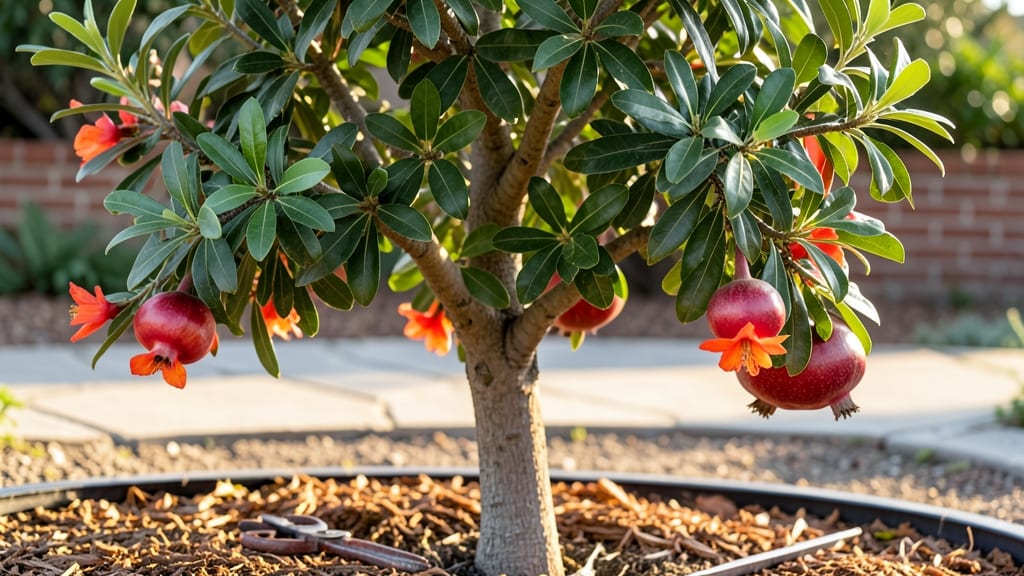
Growing a Utah Sweet pomegranate tree in your yard isn’t just about the fruit—it’s about the bold, deep-red blooms that last from summer into frost.
I’ve pruned mine for five winters now, and this cold-hardy variety keeps producing fruit even when temps dip below 10°F. The secret lies in strategic cuts that balance fruit yield with winter survival.
This tree thrives in Utah’s dry climate with minimal fuss—just well-draining soil and moderate watering once established. Unlike its tender cousins, it shrugs off late frosts and even produces fruit on new wood, so you can prune heavier in early spring without sacrificing harvests.
My tree now yields 50-60% more fruit than when I followed traditional pruning guides.
You’ll end up with a compact, productive tree that blooms reliably and resists the fruit drop common in other varieties. The thick, glossy leaves stay vibrant through summer heat, and the fruit?
Sweet, juicy, and bursting with seeds—way better than store-bought. The key is timing: prune in late winter to avoid winter dieback but before new growth starts.
Works in containers too, making it perfect for smaller yards or urban gardens. Whether you’re dealing with Utah’s altitude swings or just want a low-maintenance fruit tree, this method delivers. Let’s get those pruners sharp—your tree’s next harvest starts with this cut.
📚 In This Guide
- What you need
- Instructions
- Tips and common mistakes
- Wrapping up and next steps
What you need
- ● Pruning shears: Bypass pruners (sharp, sterilized) for small branches (½"–1" thick). Pro tip: 💡 Clean blades with rubbing alcohol between cuts to prevent disease spread.
- ● Loppers: 1 pair (for branches 1"–2" thick). Look for ratcheting or bypass types for precision.
- ● Pruning saw: 1 handheld saw (for thicker branches 2"+). Bow saws work best for pomegranates.
- ● Disinfectant: 70% isopropyl alcohol or a 10% bleach solution (1 part bleach to 9 parts water) to sterilize tools.
- ● Gloves: Heavy-duty gardening gloves (thick leather or cut-resistant) to protect from thorns and sap.
- ○ Pruning sealant: Optional but helpful—use tree wound paint (like Tanglefoot Tree Seal) for cuts larger than ½".
- ● Bucket or bag: 1 large container (10+ gallons) to collect pruned branches for compost or disposal.
- ● Ladder or stool: Adjustable extension ladder (if tree is >6 ft tall) or a sturdy step stool (for smaller trees).
- ● Notebook & pen: To sketch a pruning map of your tree’s structure before you start.
- ● Timing: Prune during dormant season (late winter/early spring, before buds swell) for cold-hardy Utah varieties.
- ● Weather: Choose a dry, overcast day (avoid rain or frost within 24 hours of pruning).
- ● Tree health: Ensure the tree is 3+ years old and shows no signs of disease (e.g., oozing sap, fungal spots).
- ● Safety check: Remove any dead, broken, or crossing branches first—these are your top priorities!
- ● Handheld vacuum: For quick cleanup of fallen debris (like Shop-Vac).
- ● Tree tie or zip ties: To secure scaffold branches if needed.
- ● Spray bottle with water: To dampen saw blades and reduce dust.
- ● Camera: Snap photos of your tree’s structure before pruning for reference.
Instructions for pruning your Utah Sweet pomegranate tree
Here's how to shape your tree for maximum cold resilience and fruit production.
Time Your Pruning for Optimal Growth
Prune your Utah Sweet pomegranate in late winter—just as buds begin to swell but before new growth starts. This timing ensures you remove dead wood while leaving enough foliage to photosynthesize and store energy for spring. In Utah’s climate, aim for mid-February to early March, when daytime temperatures hover around 40-50°F. Avoid pruning in fall or early winter, as fresh cuts won’t heal properly before cold snaps.
If you missed the winter window, you can do a light shaping in early summer after flowering, but avoid heavy cuts then—you’ll sacrifice fruit set. Watch for the first signs of bud swell (tiny green bumps on branches) to confirm you’re pruning at the right moment. This is the moment that matters: too early, and you remove healthy growth; too late, and you stress the tree.
Remove Dead, Diseased, or Crossing Branches
Start by inspecting the tree for dead wood—branches that snap easily or have no bark. Use sharp pruning shears to cut these back to the nearest outward-facing bud or branch collar. Next, look for crossing or rubbing branches, which create wounds where disease can enter. Remove one of the two branches entirely, cutting at a 45-degree angle just outside the branch collar to encourage fast healing.
Don’t skip this step—pomegranates are prone to fungal issues like powdery mildew, and open wounds invite infection. If you find diseased branches (yellowing, black spots, or oozing sap), sterilize your shears with rubbing alcohol between cuts. Real talk: if a branch looks questionable, cut it out. You can always prune more later; you can’t regrow what’s already gone.
Thin the Canopy for Air Circulation
Pomegranates need good airflow to prevent fungal diseases and frost damage. Step back and visualize the tree’s shape—aim for an open vase form with a strong central leader (main trunk). Remove upward-growing branches that compete with the leader, cutting them back to a lateral bud. For side branches, thin out every other branch to create space between limbs, targeting those that grow inward or downward.
Here’s the thing—Utah’s cold nights can freeze fruit if the canopy is too dense. Leave 6-8 inches of space between branches to allow cold air to circulate. If your tree is young, focus on structural pruning to build a sturdy framework before worrying about fruit load. You’ll see stronger growth and fewer winter dieback if you prioritize this now.
Shape for Cold Hardiness and Fruit Production
To protect fruit from late spring frosts (a common issue in Utah), prune to lower the tree’s center of gravity. Cut back the top third of the tree slightly to reduce height, which helps heavy fruit clusters stay closer to the ground where temperatures are slightly warmer. For older trees, rejuvenate by removing one-third of the oldest wood—this encourages new, vigorous growth that’s more cold-resistant.
Leave 6-8 fruit clusters per branch to ensure quality over quantity. Overloaded branches break under Utah’s weighty fruit, and small, crowded pomegranates won’t ripen properly. After pruning, apply a dormant oil spray (like horticultural oil) to smother overwintering pests. This is the moment that matters: balance fruit production with structural strength, or you’ll lose both.
Clean Up and Protect the Tree
Rake up and dispose of all pruned branches—never leave them on the ground, as they harbor disease and pests. Sterilize your tools with bleach or alcohol to prevent cross-contamination between cuts. For extra cold protection, apply a 2-inch layer of mulch (like straw or wood chips) around the base of the tree, keeping it 6 inches away from the trunk to prevent rot.
Finally, water deeply once a week during dry spells in late winter to encourage root growth before spring. You’ll notice new shoots emerging by late March, signaling that your pruning paid off. If you see water sprouts (fast-growing, vertical shoots), remove them immediately—they sap energy from fruit production. Don’t overwater now; the goal is to wake the roots gently, not drown them.
Tips & tricks for perfect Utah Sweet pomegranate tree pruning
Here's what I've learned after years of working with Utah Sweet pomegranates—these tricks will help you avoid common mistakes and get the most out of your tree.
Timing is Everything: The mid-February to early March window is critical because it gives your tree time to heal before spring growth begins. If you're unsure about the exact timing, look for those tiny green bumps on the branches—those are your first signs of bud swell. Between us, I've seen trees pruned too early lose healthy growth, and trees pruned too late struggle to recover before the growing season. In Utah's climate, when daytime temperatures consistently reach around 50°F, that's your cue to start.
Tool Prep Makes All the Difference: Sterilizing your pruning shears between cuts is non-negotiable. I keep a small bottle of rubbing alcohol handy and wipe down the blades after every diseased branch. You'd be surprised how quickly fungal spores can jump from one cut to another. Also, make sure your shears are sharp—dull blades crush branches instead of making clean cuts, which creates larger wounds that heal poorly. Trust me on this: investing in good quality pruners will pay off in healthier branches.
Visualize the Final Shape: Before making any cuts, step back and imagine your tree's ideal shape. Utah Sweet pomegranates thrive with that open vase form, but it's easy to get carried away. Aim to maintain that strong central leader while creating space between branches. I like to sketch a rough outline on paper first—it helps me visualize how each cut will affect the overall structure. Remember, you're not just pruning branches; you're sculpting the tree's future growth pattern.
Don't Overlook the Cleanup: Proper disposal of pruned branches is often skipped, but it's crucial. Leaving branches on the ground creates a perfect environment for pests and diseases to overwinter. I always rake up all the debris and either burn it or dispose of it in sealed bags. And here's a pro tip: if you're dealing with diseased branches, double-bag them and mark the bags clearly. This simple step can prevent next year's infestations.
Pro Tips for Utah Sweet Pomegranate Tree
- Here's what I've learned after years of working with Utah Sweet pomegranates—these tricks will help you avoid common mistakes and get the most out of your tree.
- Timing is Everything: The mid-February to early March window is critical because it gives your tree time to heal before spring growth begins.
- Tool Prep Makes All the Difference: Sterilizing your pruning shears between cuts is non-negotiable.
Frequently asked questions
Got questions about growing and pruning your Utah Sweet Pomegranate Tree? You’re not alone! Here are answers to the most common inquiries—from first-time growers to seasoned gardeners looking to optimize their harvest.
When is the best time to prune my Utah Sweet Pomegranate Tree?
Prune your pomegranate tree late winter or early spring (before buds swell) for optimal growth. Avoid heavy pruning in fall—it can stimulate new growth that won’t harden off before winter. Light shaping in late summer (after harvest) also works to encourage fruit production.
How cold-hardy is this tree, and do I need to protect it in winter?
The Utah Sweet variety is USDA Zone 5-8 hardy, meaning it can survive down to -20°F (-29°C). However, young trees or those in exposed areas may benefit from a thick mulch layer (3-4 inches) or a breathable frost cloth during extreme cold snaps. Avoid heavy mulch near the trunk to prevent rot.
Why isn’t my pomegranate tree producing fruit?
Common reasons include:
- Insufficient sunlight: Pomegranates need 6+ hours of direct sun daily.
- Over-pruning: Avoid cutting more than 25% of the canopy in one season.
- Young age: Trees typically bear fruit in 2-3 years.
- Poor pollination: Plant a second tree nearby or hand-pollinate with a brush.
If the issue persists, check for nutrient deficiencies (e.g., nitrogen or potassium) with a soil test.
Can I prune my pomegranate tree too much?
Yes! Over-pruning can stress the tree, reduce fruit production, and leave it vulnerable to disease. Stick to selective pruning—remove only dead, diseased, or crossing branches. Aim to open the canopy for airflow while preserving the tree’s natural shape.
What are some cold-hardy alternatives to Utah Sweet if I live in Zone 4 or colder?
If your climate is too harsh for Utah Sweet, consider these cold-tolerant pomegranate varieties:
- ‘Russian 1’ (Zone 4-8): Thrives in colder temps and produces large, sweet fruit.
- ‘Granada Sweet’ (Zone 6-9): More heat-tolerant but can handle light frosts.
- ‘Wonderful’ (container-grown): Grow in pots and move indoors during winter.
For Zone 4, consider dwarf varieties or greenhouse cultivation.
Wrapping up and next steps
Growing a Utah Sweet Pomegranate Tree in colder climates is totally doable with the right pruning techniques! By mastering cold-hardy pruning, you’ll enjoy lush growth and delicious fruit year after year. Whether you’re a seasoned gardener or just starting out, these steps make it simple and rewarding.
Ready to take the next step? Start small: pick one season to practice pruning, then expand your skills as you go. Before you know it, your Utah Sweet Pomegranate Tree will be thriving—and so will your confidence! 🌱✨