
Trees
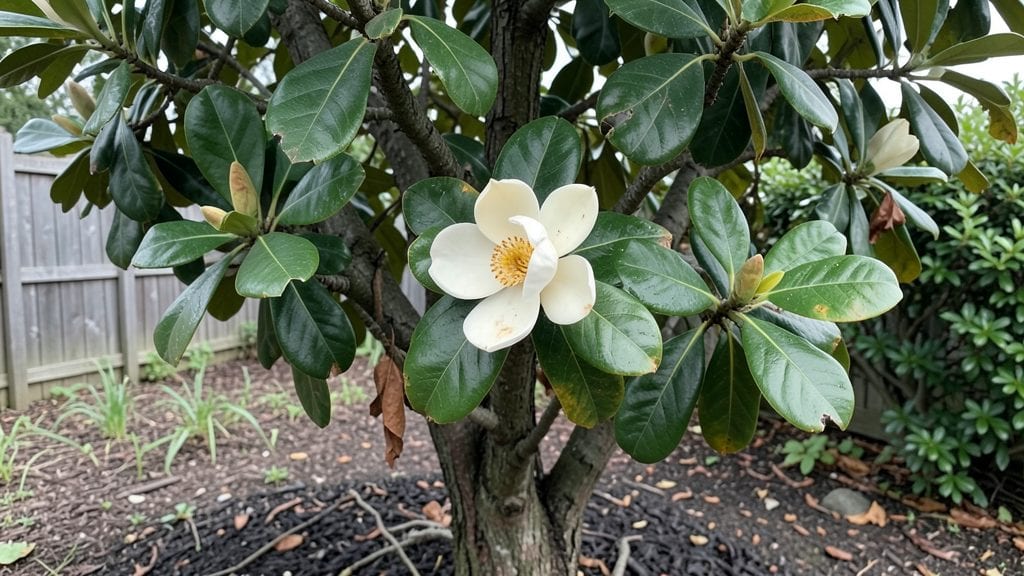
Planting Southern magnolia trees in your landscape means year-round beauty with minimal fuss—those glossy evergreen leaves and intoxicating spring blooms make them worth every bit of care.
I’ve grown mine for over a decade, and the key to their success lies in mimicking their natural habitat: rich, acidic soil and morning sun with afternoon shade relief.
The first year is all about getting the roots established, but once they’re in, these trees thrive through droughts, heatwaves, and even light frosts without a second thought.
You’ll need well-draining soil with a pH between 5.0 and 6.5—think leaf mold or pine bark mixed into native soil—and a spot with at least 6 hours of sunlight daily, though they tolerate partial shade better than full sun in hot climates.
Planting in early spring or fall gives roots time to settle before extreme weather, and young trees benefit from a 3-inch layer of mulch to retain moisture while keeping roots cool.
Water deeply once a week unless rainfall provides an inch or more, but avoid soggy soil, which leads to root rot.
What you’ll end up with is a 50-foot-tall sentinel that stays lush year-round, its dark green leaves rustling in summer breezes and its fragrant white blooms lighting up spring mornings.
Pruning is minimal—just remove dead or crossing branches in late winter—but the real magic happens when you step back and admire how little these trees need to stay stunning. They’re the ultimate low-maintenance statement plant for any yard.
Works beautifully in USDA zones 7 through 10, though they’ll handle occasional dips into zone 6 with proper winter mulching. Whether you’re planting a single specimen or lining a driveway, these trees deliver decades of drama with almost no upkeep. Ready to make yours the talk of the neighborhood?
📚 In This Guide
- What you need
- Instructions
- Tips and common mistakes
- Wrapping up and next steps
What you need
- ● Southern Magnolia Tree: 1 container-grown nursery tree (3–5 gallons, 4–6 ft tall) or
- ● 1 bare-root tree (for dormant season planting, fall/winter).
- ● Planting Site: Full sun to partial shade (6+ hours of sunlight daily).
- ● Well-draining, acidic soil (pH 5.0–6.5). Amend heavy clay with 2–3 inches of organic matter (compost or peat moss).
- ● Tools: 1 shovel or spade (for digging).
- ● 1 garden trowel (for root adjustments).
- ● 1 wheelbarrow (for soil/amendments).
- ● 1 hose with nozzle (for watering).
- ● 1 pruning shears (sterilized, for shaping).
- ● Soil Amendments (if needed): 5–10 lbs of sulfur (to lower pH in alkaline soil).
- ● 2–3 cubic feet of compost or peat moss (for drainage).
- ● Mulch: 3–4 inches of pine bark or wood chips (keep 6 inches away from trunk).
- ● Soil pH test kit (to confirm acidity levels).
- ● Slow-release fertilizer (10-10-10 or magnolia-specific blend).
- ● Tree stakes & ties (if planting in windy areas).
- ● Drip irrigation system (for consistent watering).
- ● Fungicide (e.g., copper-based, for disease prevention).
- ● Garden gloves & knee pads (for comfort!).
How to plant and maintain Southern magnolia trees
Here's the straightforward approach I've used to grow healthy, thriving magnolias that handle frost beautifully.
Choose the Perfect Planting Location
Southern magnolias thrive with full sun exposure—at least 6 hours of direct sunlight daily. Look for a spot with well-draining soil, as these trees hate soggy roots. I always check the soil first by digging a small hole and feeling for moisture—if it stays damp for more than a few hours, amend with compost or plant on a slight mound.
Consider mature size too. These trees can reach 80 feet tall, so give them plenty of space—30-40 feet between trees when planting multiple specimens. If you're planting near a house or driveway, leave at least 20 feet of clearance to avoid root interference with foundations or sidewalks.
Prepare the Planting Hole
Dig a hole twice as wide as the root ball but no deeper—this encourages roots to spread outward rather than settling too low. Southern magnolias prefer slightly acidic soil (pH 5.0-6.5). If your soil tests higher, mix in 2-3 inches of peat moss or sulfur into the native soil you remove from the hole.
Loosen the roots gently if they're circling or bound in the container. Place the tree in the hole so the top of the root ball sits 1-2 inches above ground level. This prevents water from pooling around the trunk, which can cause rot. Backfill with the native soil mixture, tamping lightly as you go to remove air pockets.
Water and Mulch Thoroughly
Water the tree deeply right after planting—10-15 gallons should soak the root ball completely. You'll know it's enough when water runs out the bottom of the hole and stops draining after 15-20 minutes. This first watering helps settle the soil and eliminates air gaps around the roots.
Apply 3-4 inches of mulch (wood chips or pine straw work best) around the base, keeping it 6 inches away from the trunk. Mulch retains moisture and regulates soil temperature, which is especially helpful during frost. Replenish mulch annually to maintain this protective layer.
Provide Ongoing Care for Frost Resistance
Southern magnolias are frost-tolerant, but young trees benefit from protection during their first few winters. Apply a 2-3 inch layer of mulch in late fall to insulate roots. Avoid heavy pruning in winter—wait until late winter or early spring when the tree is just starting to bud, as this encourages new growth.
Water deeply once a month during dry spells—even in winter, if rainfall is minimal. You'll know it's time when the top 6 inches of soil feels dry. Fertilize lightly in early spring with a balanced, slow-release fertilizer (10-10-10 ratio) to support new growth without overwhelming the tree.
Monitor for Pests and Diseases
Check leaves regularly for signs of scale insects or spider mites, which are common on magnolias. I use a strong stream of water to dislodge pests early—this works best in the morning when pests are least active. For fungal issues like powdery mildew, apply neem oil as a preventive spray in humid conditions.
Southern magnolias are generally low-maintenance, but prune out any dead, diseased, or crossing branches immediately. The best time to prune is right after flowering, when the tree has finished its spring growth surge. Always use clean, sharp tools to make clean cuts—this minimizes stress on the tree.
Tips & tricks for perfect Southern magnolia tree care
These practical insights will help you avoid common pitfalls and give your frost-resistant magnolia the best chance to thrive for decades.
Soil Testing Matters: Before planting, test your soil's pH level—magnolias prefer the slightly acidic range of 5.0-6.5. I've seen many gardeners skip this step and end up with stunted growth. If your soil tests higher, mix in 2-3 inches of peat moss or sulfur into the planting hole as directed. This small investment prevents years of frustration with poor growth.
Root Ball Positioning: That 1-2 inch elevation above ground level in Step 2 isn't just about drainage—it's about preventing root rot. I learned this the hard way after seeing a neighbor's tree decline from water pooling around its trunk. Use a level to ensure proper positioning, and create a slight mound if needed to achieve the right elevation.
Watering Wisdom: The 15-20 minute drainage test after watering is crucial. I recommend using a garden hose with a slow, steady flow to avoid disturbing the soil. For newly planted trees, I often split the 10-15 gallons into two waterings—half immediately after planting, then another half 24 hours later. This helps settle the soil gradually without shocking the roots.
Mulch Maintenance: That 3-4 inch layer of mulch isn't just for show—it's your tree's winter blanket. In late fall, I double-check the mulch depth and add pine straw if needed. The key is keeping it 6 inches away from the trunk to prevent moisture buildup that can cause rot. Replenish annually in early spring after the worst winter weather has passed.
Pro Tips for Southern Magnolia Trees
- These practical insights will help you avoid common pitfalls and give your frost-resistant magnolia the best chance to thrive for decades.
- Soil Testing Matters: Before planting, test your soil's pH level—magnolias prefer the slightly acidic range of 5.0-6.5.
- Root Ball Positioning: That 1-2 inch elevation above ground level in Step 2 isn't just about drainage—it's about preventing root rot.
Frequently asked questions
Got questions about Southern Magnolia trees? You’re not alone!
Whether you're a first-time gardener or a landscaper, these evergreen giants bring beauty but come with unique care needs. Here are answers to the most common queries to help you grow—and protect—your magnolia with confidence.
How cold can Southern Magnolia trees tolerate?
Southern Magnolias (Magnolia grandiflora) are hardy to USDA Zones 7-10, meaning they can handle temperatures down to 10°F (-12°C) without permanent damage. However, prolonged exposure to below 0°F (-18°C) may cause leaf burn or dieback. For colder climates, plant in sheltered spots or mulch heavily to insulate roots.
When is the best time to plant a Southern Magnolia?
The ideal window is late fall to early spring (October–March), when soil is cool but workable. This gives roots time to establish before summer heat. Avoid planting in peak summer, as extreme heat can stress young trees. Pro tip: Water deeply after planting and keep soil moist for the first 6–12 months.
Why are my Southern Magnolia leaves turning brown?
Brown leaves often signal cold damage, pests, or disease. Check for:
- Winter burn: Crispy edges from dry winter air? Mulch thicker and water occasionally in winter if rain is scarce.
- Scale insects or spider mites: Look for sticky residue or webbing. Treat with horticultural oil or insecticidal soap.
- Fungal issues (e.g., leaf spot):strong> Prune affected leaves and apply fungicide if needed.
Are there dwarf varieties of Southern Magnolia for small yards?
Yes! If space is limited, consider these compact options:
- ‘Little Gem’: Grows to 20–25 ft with a narrow form—perfect for tight spaces.
- ‘Bracken’s Brown Beauty’: Dark foliage, 15–20 ft tall, and slow-growing.
- ‘Edith’: A 10–15 ft shrub with fragrant blooms.
Note: Even dwarf varieties need 6+ feet of clearance for mature growth.
How do I prune a Southern Magnolia without harming it?
Prune only in late winter or early spring (before new growth starts) to avoid stress. Use these steps:
- Remove dead/diseased branches first—cut back to healthy wood.
- Avoid “topping” (cutting the main stem)—this weakens the tree.
- Sterilize tools with rubbing alcohol to prevent disease spread.
- Shape lightly: Southern Magnolias have a natural form; minimal pruning preserves their beauty.
Wrapping up and next steps
Southern magnolia trees are a showstopper for year-round beauty and resilience—perfect for gardeners who love drama without the fuss! 🌿 With the right care, these frost-hardy giants thrive in diverse climates, offering glossy foliage, fragrant blooms, and timeless elegance.
Whether you're a beginner or a seasoned green thumb, planting one is a rewarding investment in nature’s splendor.
Ready to transform your landscape? Start small:
- Pick a prime spot (sunlight + space!)
- Gather your tools and soil amendments
- Dig in and watch your magnolia grow!