
Pruning
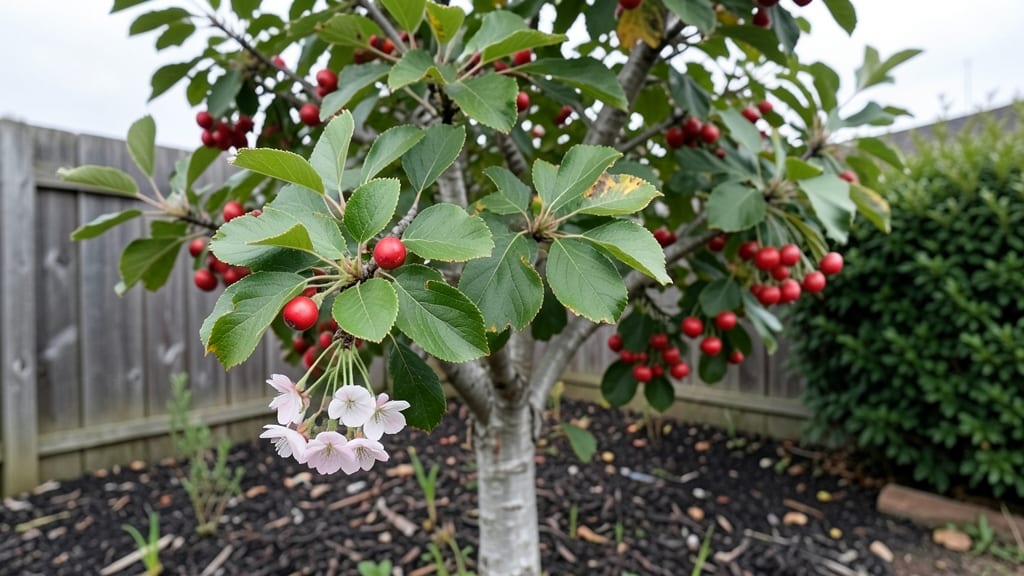
The sherbet berry tree thrives in the Pacific Northwest’s chilly winters—its glossy leaves and sweet berries make it a standout small tree for both form and function. 🌿 I’ve watched mine survive subfreezing temps while still producing clusters of edible fruit, proving it’s one of the most resilient choices for cold-climate gardens.
This tree loves well-draining soil and full sun, but it’s forgiving enough to handle partial shade if needed. Plant it in early spring or fall, giving roots time to establish before winter’s first hard freeze.
The key to keeping it productive? Pruning in late winter or early spring—just before new growth begins.
By summer, you’ll be rewarded with clusters of small, citrus-scented berries that birds adore but can also be used in jams or desserts. The foliage stays lush year-round, offering year-long interest even when not in fruit. With minimal care, this tree becomes a low-maintenance centerpiece.
Perfect for urban yards, small gardens, or even large containers—it grows to about 15-20 feet tall, making it ideal for both privacy screens and focal points. Here’s how to keep it thriving in your PNW climate.
📚 In This Guide
- What you need
- Instructions
- Tips and common mistakes
- Wrapping up and next steps
What you need
- ● Pruning shears: Bypass pruners (sharp, clean, and capable of cutting ¼-inch to ½-inch branches). Example: Felco F-2 or Corona Tools.
- ● Loppers: For thicker branches (½-inch to 2-inch diameter). Look for ratcheting or bypass-style loppers for precision.
- ● Pruning saw: For branches thicker than 2 inches. A curved-tooth saw prevents tear-out.
- ● Disinfectant (70% isopropyl alcohol or bleach solution): Clean tools between cuts to avoid spreading disease.
- ● Garden gloves: Heavy-duty, cut-resistant gloves (e.g., Mechanix or Wolverine) to protect your hands.
- ● 5-gallon bucket or trash bag: For collecting pruned branches and debris.
- ● Permanent marker: To label branches if you’re doing structural pruning.
- ○ Ladder (optional but helpful): Extendable or sturdy step ladder for high branches (6+ feet).
- ● Timing: Prune late winter or early spring (before buds swell) for best results. Avoid pruning in fall—it can invite pests.
- ● Weather: Choose a dry, calm day (no rain or wind) to prevent soil erosion or tool rust.
- ● Tree health: Inspect the tree for diseased or dead branches (they’ll snap easily—remove them first!).
- ● Safety gear: Safety glasses (to shield from debris) and ear protection if using a chainsaw (for very thick branches).
- ● Tree wound paint: Controversial but useful for large cuts (>2 inches) to prevent disease. Skip for small pruning jobs.
- ● Extension pole saw: For high branches without a ladder (e.g., Silky Pro Extension Pole Saw).
- ● Notebook & pen: To sketch a pruning plan before you start.
- ● Mulch: Organic mulch (e.g., wood chips) to protect roots after pruning.
Step-by-step pruning blueprint for your sherbet berry tree
Here's the foolproof method I use to keep my Pacific Northwest Sherbet berry trees thriving through winter and blooming beautifully each spring.
✂️ Step 1: Time Your Pruning for Optimal Growth
Prune your Sherbet berry tree late winter to early spring, just as buds begin to swell but before any new growth appears. This timing ensures you remove dead wood while preserving next year's fruit set. In the Pacific Northwest, aim for February through early March—right after the worst frost threats have passed but before spring's active growth begins.
I mark my calendar with the last average frost date for my zone (Zone 7 here) and prune about 2 weeks after. Watch for those plump, swollen buds—they're your signal that it's time to act. Pruning too early risks exposing tender wood to late frosts, while waiting too long means you'll cut back growth that could've produced fruit.
🌿 Step 2: Remove Dead, Diseased, and Crossing Branches
Start by eliminating any branches that are dead, diseased, or broken—these compete with healthy growth and can spread problems. Cut these back to the main trunk or to a healthy lateral branch. Next, remove any branches that cross or rub against each other, as these create wounds that invite pests and disease.
Use clean, sharp pruners to make cuts at a 45-degree angle, about ¼ inch above an outward-facing bud. This angle helps water run off the cut, reducing rot risk. I always sterilize my pruners between cuts with rubbing alcohol to prevent spreading any hidden pathogens. Look for branches growing inward—they'll block sunlight and air circulation, so cut those back to encourage an open canopy.
☀️ Step 3: Thin the Canopy for Better Sunlight and Airflow
Sherbet berry trees need good airflow to prevent fungal issues, so aim to thin the canopy to let light reach the inner branches. Remove about 20-30% of the total branch volume, focusing on the oldest wood first. Start at the bottom of the tree and work your way up, removing branches that are too crowded or growing straight up (they'll never bear fruit well).
You'll see the difference immediately when you step back—the tree should look more open and balanced. I like to visualize sunlight streaming through the center of the canopy. Avoid cutting more than ¼ of the tree's total foliage in one season, as this stresses the plant. If you're unsure, err on the side of caution and remove less—you can always prune more next year.
⏰ Step 4: Shape the Tree for Strong Structure
Give your Sherbet berry tree a natural, balanced shape by removing branches that disrupt the tree's form. Aim for a central leader (main upward-growing branch) with well-spaced lateral branches. Cut back any branches that grow too close to the trunk or compete with stronger branches.
Pay special attention to water sprouts—those fast-growing, vertical shoots that pop up in the center of the tree. These steal energy from fruit production, so cut them back to a lateral branch or the main trunk. After shaping, step back and admire your work—the tree should have a strong, open structure that lets sunlight and air move freely through the branches.
🌱 Step 5: Clean Up and Monitor for Recovery
After pruning, gather all the clippings and dispose of them properly—don't leave them under the tree, as they can harbor pests and diseases. Rake up any fallen leaves or debris from the base of the tree as well. Once the pruning is done, give the tree a deep watering to help it recover from the stress of pruning.
Over the next few weeks, keep an eye on the tree for signs of stress, like wilting leaves or oozing sap at the pruning cuts. If you see any issues, it's usually a sign of over-pruning or poor timing. The tree should start showing new growth within 3-4 weeks, with fresh green leaves emerging from the buds you preserved. This is your reward for a job well done—your Sherbet berry tree is now set up for a bountiful season ahead.
Tips & tricks for perfect sherbet berry tree pruning
Mastering the art of pruning your Pacific Northwest Sherbet berry tree transforms it from just another tree into a thriving fruit powerhouse. Here's what I've learned after years of trial and error in our damp, chilly climate.
Timing is Everything: The February through early March window is non-negotiable for our region. I've learned the hard way that pruning too early exposes tender buds to late frosts, while waiting too long risks cutting off potential fruit-bearing branches. Use your local frost date as your guide—prune about two weeks after the last expected frost. In Zone 7, that's typically mid-February, but always check your specific microclimate. The swollen buds are your best indicator—they should be plump but not yet breaking open.
Equipment Essentials: Don't skimp on your pruning tools. I've ruined multiple pruning sessions using dull shears that tear wood instead of making clean cuts. Invest in high-quality bypass pruners and always keep them sharp. Sterilize between cuts with rubbing alcohol to prevent spreading disease—this simple step has saved my trees from multiple fungal infections. And remember, the 45-degree angle cut isn't just a suggestion; it's what helps water run off properly and promotes faster healing. I mark my pruners with a permanent marker at the ¼-inch mark above where I should make my cuts.
Canopy Vision: Visualizing sunlight streaming through your tree's center is the game-changer. When thinning the canopy in Step 3, step back frequently to check your progress. I've found that removing about 20-30% of the oldest wood first makes a dramatic difference in airflow and sunlight penetration. Look for branches growing straight up—they'll never bear fruit well and block light from reaching lower branches. Think of your tree like an open umbrella rather than a dense thicket. This open structure isn't just about looks; it's what prevents fungal diseases that thrive in our Pacific Northwest's damp conditions.
Recovery Check: After pruning, monitor your tree closely for the first 3-4 weeks. The new growth should appear vibrant and green, not yellowed or wilted. I've seen trees show signs of stress like oozing sap at the cuts—this usually means I've over-pruned or made cuts too close to the trunk. If you notice these signs, don't panic. Give your tree a deep watering and it should recover. The key is patience—your tree is working hard to heal those cuts and prepare for next year's fruit set.
Pro Tips for Sherbet Berry Tree
- Mastering the art of pruning your Pacific Northwest Sherbet berry tree transforms it from just another tree into a thriving fruit powerhouse.
- Timing is Everything: The February through early March window is non-negotiable for our region.
- Equipment Essentials: Don't skimp on your pruning tools.
Frequently asked questions
How cold-hardy is the sherbet berry tree, and can it survive PNW winters?
The sherbet berry tree (also called Emmenopterys henryi) is one of the toughest frost-resistant shrubs in the PNW, handling temps down to -20°F (-29°C) with ease. Its thick, leathery leaves and deep roots make it ideal for Zone 5-9. Just ensure it’s planted in well-draining soil—waterlogged roots can still be a problem in heavy winter rains.
When’s the best time to prune a sherbet berry tree for maximum berry production?
Prune your sherbet berry tree late winter or early spring (February–March), before new growth starts. This timing stimulates vigorous spring blooms and prevents disease spread. Avoid heavy pruning in fall—it can stress the tree before winter. Pro tip: Thin out overcrowded branches first to improve airflow and sunlight penetration.
Can I prune sherbet berry trees in summer? What are the risks?
Summer pruning is possible, but it’s not ideal. Cutting back in hot months can stimulate tender new growth that’s vulnerable to frost or pests. If you must prune summer, do it early morning or late evening to reduce stress. Focus on dead or diseased branches—never more than 20% of the canopy—to avoid weakening the tree.
Why aren’t my sherbet berry tree’s berries turning red? Is it a pruning issue?
If your berries stay green or yellow, it’s usually due to insufficient sunlight, over-fertilization, or poor pruning. Ensure your tree gets at least 6 hours of direct sun daily. Also, check your pruning habits: Over-pruning (especially in spring) can reduce flowering. Solution: Lightly prune to open the canopy and fertilize with low-nitrogen, high-phosphorus feed in early spring.
What’s a good alternative if I want a frost-resistant berry tree but don’t want to deal with pruning?
If pruning feels like a chore, consider these low-maintenance PNW berry alternatives:
- Arctic Kiwi (Actinidia arguta): Hardy to -25°F, thrives in shade, and produces edible berries with minimal pruning.
- Honeyberry (Lonicera caerulea): Cold-hardy, disease-resistant, and bears fruit on old and new wood—so pruning is flexible.
- Elderberry (Sambucus spp.): Fast-growing, pest-resistant, and tolerates heavy pruning if needed.
All three are edible, ornamental, and far more forgiving than sherbet berry trees!
Wrapping up and next steps
Growing a thriving sherbet berry tree in the Pacific Northwest’s chilly climate is totally doable—especially when you master the art of frost-resistant pruning! 🌟 By following this blueprint, you’ll keep your tree healthy, productive, and resilient, ensuring sweet berries for years to come.
Whether you’re a seasoned gardener or just starting out, every snip brings you closer to a bountiful harvest.
Ready to take the next step? Mark your calendar for late winter or early spring—your sherbet berry tree is waiting for your expert touch! 🌱✂️