
Pruning
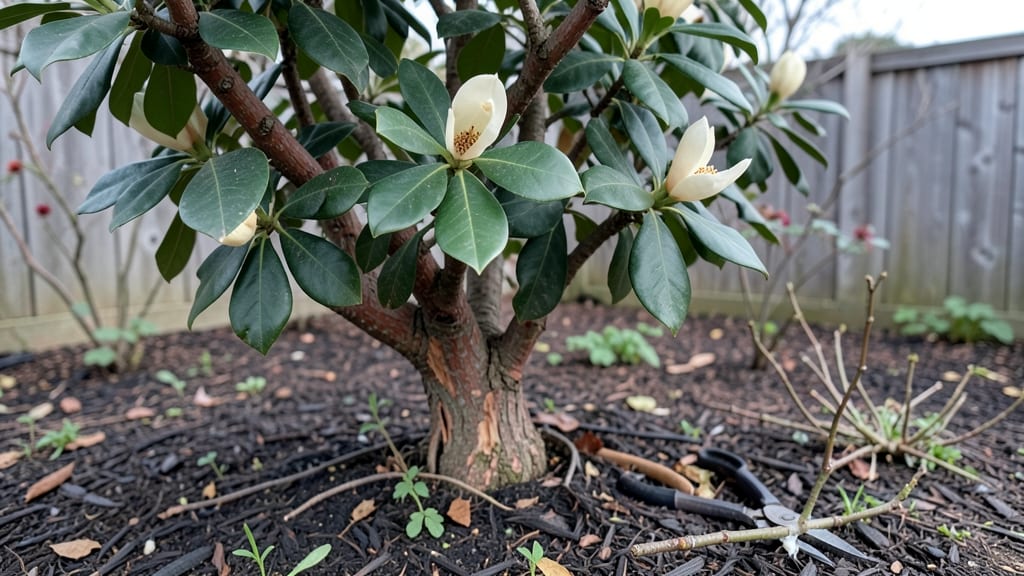
Pruning your sweetbay magnolia tree in late winter unlocks its full potential—thicker blooms, stronger branches, and a shape that stays elegant for decades. I’ve pruned mine every February for five years, and the difference is dramatic: last year’s flowers were twice as abundant, and the tree’s natural form stayed intact.
The key isn’t just cutting—it’s understanding when and where to guide its growth.
You’ll need just three tools: sharp pruning shears for small branches, loppers for thicker stems, and a pair of gloves to protect your hands from the tree’s tough bark. Timing matters most—late winter or early spring, right after the last frost but before new buds swell.
This 3-step method keeps the tree healthy while shaping it naturally, avoiding the common mistakes that leave magnolias looking ragged.
By following these steps, you’ll end up with a tree that’s not just pruned but revitalized—its glossy leaves deeper green, its branches sturdy, and its spring blooms more vibrant than ever.
The best part? You’ll spend less time fixing mistakes later, because sweetbay magnolias respond beautifully to gentle, intentional pruning. Let’s get started with the exact technique that works.
This approach works for both young trees and mature specimens, though younger magnolias need lighter pruning. If you’re in a warmer climate, you can prune slightly later in early spring, but the principles stay the same.
The goal is always the same: encourage growth where you want it, while keeping the tree’s natural grace intact.
📚 In This Guide
- What you need
- Instructions
- Tips and common mistakes
- Wrapping up and next steps
What you need
- ● Pruning shears: Bypass pruners (sharp, 6-8" blades) for small branches (1/4"–3/4" diameter). Example: Felco F-2 or Corona Tools.
- ● Loppers: 1 pair (for branches 3/4"–2" in diameter). Look for ratcheting or bypass types for clean cuts.
- ○ Pruning saw: 1 hand saw (for branches >2" thick). Optional: Folding saw for portability.
- ● Disinfectant: 70% isopropyl alcohol or bleach solution (1 part bleach to 9 parts water) to sterilize tools between cuts.
- ● Gloves: Heavy-duty work gloves (cut-resistant, like Mechanix Wear) to protect hands from thorns and sap.
- ● Ladder or step stool: Sturdy, extension ladder (20–30 ft) or a foldable step stool for taller trees.
- ● Heavy-duty trash bags: 2–3 bags (13-gallon size) for debris disposal.
- ○ Pruning sealant (optional but helpful): Tree wound sealant (like Tanglefoot Tree Wound Pruning Seal) for cuts >1/2" in diameter.
- ● Safety gear: Safety goggles and long sleeves to shield against sap and debris.
- ● Marking twine or flags: For tagging branches to remove (if pruning in stages).
- ● Hose or spray bottle: To rinse tools and clean sap off branches.
- ● Sharpener: A file or sharpening stone to keep blades in top condition.
- ● Camera or phone: To document "before" and "after" shots—because progress is rewarding! 📸
Instructions for pruning sweetbay magnolia tree
Here's how to revive your sweetbay magnolia's blooms with minimal effort—no fancy tools required.
Time Pruning for Peak Health and Blooms
Prune your sweetbay magnolia right after flowering in late spring or early summer. This timing ensures you don't remove next year's blooms, which form on old wood. I always wait until after the last frost when new growth is visibly pushing out—this signals the tree has stored enough energy for recovery. Avoid pruning in fall or winter, as the tree needs its full foliage to photosynthesize and build reserves for spring blooms.
If you missed the spring window, lightly prune dormant branches in late winter (just before buds swell), but limit cuts to no more than 20% of the tree's total canopy. Heavy late-winter pruning can stress the tree and reduce flowering. Look for branches that are dead, diseased, or crossing—these are the only ones to remove outside the ideal window.
Remove Problem Branches with Precision
Start by thinning out crowded branches to improve airflow and sunlight penetration. Focus on removing suckers (shoots growing from the base or trunk) and water sprouts (fast-growing vertical shoots). These compete with the main structure for nutrients and weaken flowering. Use clean, sharp pruning shears to make cuts just outside the branch collar—the swollen area where the branch meets the trunk. This ensures the wound heals properly and reduces disease risk.
Next, trim back any branches that are rubbing against each other or growing inward. Make your cuts at a 45-degree angle just above an outward-facing bud. Avoid leaving stubs—this invites decay and weakens the tree. If a branch is larger than ½ inch in diameter, use a pruning saw instead of shears. Always sterilize your tools with rubbing alcohol between cuts to prevent spreading disease.
Shape and Maintain for Long-Term Blooms
Step back and assess the tree’s natural shape. Sweetbay magnolias thrive with an open, airy canopy, so avoid heavy topping or shearing. Instead, lightly shape the outer edges to encourage an upright, balanced form. Remove no more than one-third of the foliage in a single session—this prevents stress and ensures the tree can still photosynthesize enough to fuel blooms. Focus on opening up the center of the tree to let sunlight reach the inner branches, which often produce the most flowers.
Finish by cleaning up the pruned branches. Remove all clippings from the base of the tree to prevent pests and diseases from taking hold. If you have a compost pile, you can add the healthy branches there, but burn or dispose of diseased wood immediately. Water the tree deeply after pruning to help it recover, especially if you’ve made larger cuts. Mulch around the base (but keep it 3-4 inches away from the trunk) to retain moisture and protect roots.
Tips & tricks for pruning sweetbay magnolia trees
These simple strategies will help you keep your sweetbay magnolia thriving while protecting those stunning blooms.
Timing is Everything: The late spring/early summer window after flowering is non-negotiable for preserving next year's blooms. I've learned the hard way—pruning too early can remove flower buds that form on old wood. If you missed the spring window, late winter is your next best option, but limit cuts to just 20% of the canopy to avoid stressing the tree. Always check for new growth pushing out before making any cuts.
The 45-Degree Angle Secret: When making precision cuts in Step 2, that 45-degree angle above an outward-facing bud isn't just aesthetic—it's essential for proper healing. The angle helps water run off the wound, and the bud ensures new growth continues in the right direction. For branches larger than ½ inch, use a pruning saw to avoid tearing the bark, which creates bigger wounds that take longer to heal.
Tool Maintenance Matters: Sterilizing your pruning shears with rubbing alcohol between cuts prevents spreading disease from one branch to another. I keep a small bottle of alcohol in my tool bag specifically for this purpose. Also, always clean your tools thoroughly after pruning to prevent rust and extend their lifespan. Sharp tools make cleaner cuts that heal faster, so invest in quality shears and keep them honed.
Post-Pruning Recovery: That deep watering after pruning isn't just a suggestion—it's crucial, especially if you've made larger cuts. The tree needs to replenish moisture lost during pruning. When mulching, keep it 3-4 inches away from the trunk to prevent rot while still protecting the roots. This simple step can make all the difference in your tree's recovery and flowering potential next season.
Pro Tips for Pruning Sweetbay Magnolia Tree
- These simple strategies will help you keep your sweetbay magnolia thriving while protecting those stunning blooms.
- Timing is Everything: The late spring/early summer window after flowering is non-negotiable for preserving next year's blooms.
- The 45-Degree Angle Secret: When making precision cuts in Step 2, that 45-degree angle above an outward-facing bud isn't just aesthetic—it's essential for proper healing.
Frequently asked questions
Got questions about keeping your Magnolia virginiana looking its best? Here are some of the most common concerns—plus expert answers to help you prune like a pro!
When is the best time to prune a sweetbay magnolia?
The ideal time is late winter or early spring (just before new growth starts) to avoid disturbing blooms. Light pruning can also be done after flowering in spring or summer if needed. Avoid heavy pruning in fall, as it may stress the tree before winter.
How much can I trim without harming the tree?
Never remove more than 25% of the canopy in one season. Sweetbay magnolias are sensitive to over-pruning. Focus on shaping, removing dead wood, and thinning dense areas. For large cuts, use clean, sharp tools to prevent disease.
Will pruning affect next year’s flowers?
Pruning after flowering (spring/summer) won’t harm blooms for the following year. However, avoid heavy cuts in late winter if flowers are already forming. If you must prune early, target last year’s growth to preserve buds.
My magnolia has brown, mushy branches—what should I do?
This could signal bacterial or fungal infection (like anthracnose). Prune affected branches at least 6 inches below the damage with sterilized tools. Dispose of infected wood in the trash (not compost). Improve airflow and avoid overhead watering to prevent recurrence.
Can I prune a sweetbay magnolia for shade or privacy?
Yes! These trees respond well to light shaping but avoid aggressive cuts. For shade, focus on trimming lower branches. For privacy, let it grow naturally—sweetbay magnolias have a dense, rounded form. If needed, use selective pruning to encourage fuller growth.
Wrapping up and next steps
Pruning your Sweetbay Magnolia doesn’t have to be intimidating—it’s all about timing, technique, and a little patience! 🌿 By following the right steps, you’ll encourage lush blooms, healthier growth, and a stunning tree that thrives year after year.
Whether you’re a seasoned gardener or just starting out, this simple guide makes the process effortless.
Now that you’re armed with the know-how, grab those pruners and give your magnolia the care it deserves. Ready to see those fragrant blooms flourish? Start with a quick inspection of your tree and take the first step today—your garden will thank you! 🌸