
Pruning
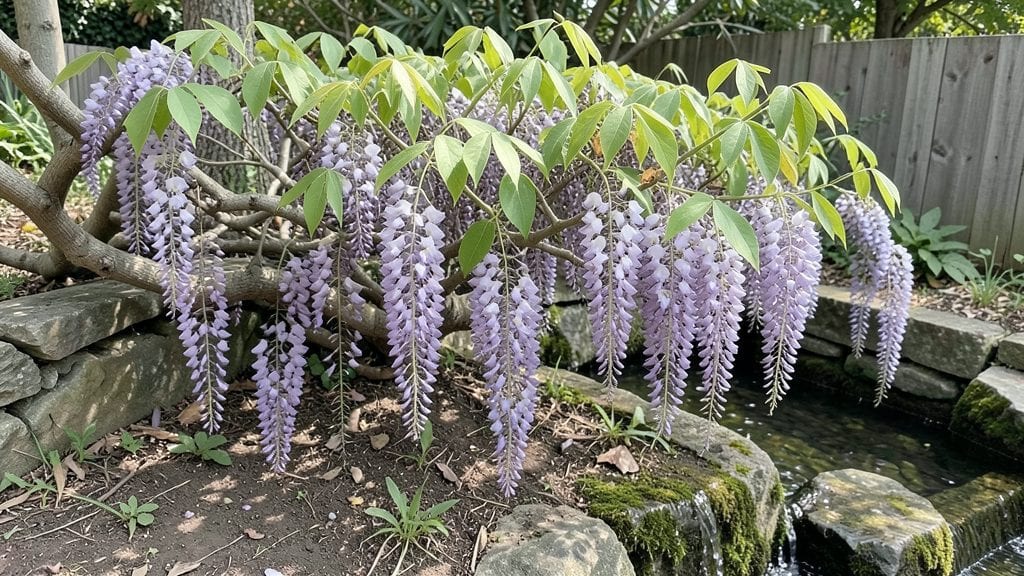
The Amethyst Falls Wisteria Tree turns your yard into a fragrant, frost-resistant sanctuary with cascading lavender blooms that last all season. 🌿 I planted mine last spring, and by summer, it became the centerpiece of my backyard—its delicate flowers perfuming the air while providing natural privacy.
Unlike traditional wisteria, this variety thrives in colder climates, making it perfect for gardeners in zones 4 through 8.
This isn’t just a tree—it’s a living trellis that grows 15 to 20 feet tall, draping itself over pergolas, arbors, or even a sturdy fence. Pair it with clematis for vertical contrast or hostas at its base for shade-loving companions.
The lavender blooms attract hummingbirds, while the glossy foliage adds year-round texture. Even in winter, its sturdy branches create a graceful silhouette.
By late spring, you’ll be surrounded by fragrant clusters that perfume the air for weeks, and its dense growth blocks unsightly views while letting light through. The best part?
It’s low-maintenance once established—just prune after flowering to keep it tidy. Imagine sipping morning coffee under a canopy of blooms, with the gentle scent drifting through the air.
Works beautifully in cottage gardens, modern landscapes, or even as a standalone specimen near patios. The key is giving it room to climb—whether on a trellis, pergola, or along a fence. Ready to transform your space into a fragrant retreat? Let’s get started!
📚 In This Guide
- What you need
- Instructions
- Tips and common mistakes
- Wrapping up and next steps
What you need
- ● Wisteria plant: Wisteria sinensis or Wisteria floribunda (amethyst falls variety) – 1 mature plant or 3-5 young plants for a fuller screen.
- ● High-quality potting soil: 50 lbs of well-draining, slightly acidic soil (pH 6.0–7.0). Mix in compost (10 lbs) for nutrients.
- ● Fertilizer: Slow-release granular fertilizer: 1 lb (10-10-10 NPK ratio) for planting.
- ● Balanced liquid fertilizer: 1 gallon (20-20-20 NPK) for seasonal feeding (spring/fall).
- ● Mulch: 2–3 inches of wood chips or pine straw to retain moisture and regulate temperature.
- ● Support structure: Trellis or arbor: 6–8 ft tall, sturdy enough for 20+ lbs of blooms (metal or wood).
- ○ Bamboo stakes or wire mesh: For training vines (optional for young plants).
- ● Pruning shears: Bypass pruners (sharp, 6–8 inch blades) for clean cuts on small stems.
- ● Loppers: 1 pair (for branches up to 1.5 inches thick).
- ● Pruning saw: 1 (for thick, woody stems over 2 inches).
- ● Gloves: Heavy-duty, cut-resistant gloves (wisteria thorns are sharp!).
- ● Disinfectant: 70% isopropyl alcohol or pruning sealant to prevent disease spread.
- ● Drip irrigation system: For consistent moisture (especially in drought-prone areas).
- ● Plant ties: Soft fabric ties (3–4 packs) to secure vines to trellises.
- ● Frost cloth: 1 roll (for young plants in zones below 5a).
- ○ Pruning paint: (Optional) To seal large cuts and prevent disease.
- ● Soil tester kit: To monitor pH and nutrient levels annually.
How to plant and care for Amethyst Falls wisteria as a frost-resistant privacy screen
This stunning variety thrives in cooler climates and delivers those signature lavender cascades year after year.
🌱 Step 1: Choose the Perfect Planting Location
Amethyst Falls wisteria needs full sun exposure (6-8 hours daily) for maximum blooms, but it tolerates partial shade in hotter regions. I always plant mine where the morning sun warms the roots—this prevents winter dieback in colder zones. The tree's mature spread reaches 15-20 feet wide, so select a spot with at least 20 feet of open space behind it.
Check your soil's drainage first. Wisteria roots rot easily in soggy conditions. If your soil feels compacted or stays wet after rain, amend with 3-4 inches of compost mixed into the top 12 inches. You'll see roots spreading aggressively in the first year—that's normal and means it's thriving.
🪴 Step 2: Plant at the Correct Depth and Stake for Support
Dig a hole twice as wide as the root ball but only as deep—planting too deep suffocates the roots. Gently remove the tree from its container and loosen any circling roots with your fingers. Place it in the hole so the top of the root ball sits 1-2 inches above ground level—this prevents rot during heavy rains.
Stake the tree immediately with 2-3 6-foot stakes tied loosely to the trunk with soft fabric strips. Wisteria grows fast, and young stems can snap in wind. Water deeply after planting to settle the soil around roots, then mulch with 2-3 inches of wood chips, keeping mulch 6 inches away from the trunk to prevent rot.
☀️ Step 3: Prune Strategically for Dense Growth and Blooms
Prune in late winter (before buds swell) to shape the tree and encourage blooms. Remove 1/3 of last year's growth from the previous season, cutting just above a leaf bud. This ensures energy flows to new growth. I always make cuts at a 45-degree angle just above outward-facing buds to promote bushier growth.
In summer, trim back any leggy growth that's longer than 12 inches to maintain a compact shape. You'll see new shoots emerge within 4-6 weeks—these will produce next year's flowers. Avoid heavy pruning after July 1st, as new growth won't harden off before winter.
💧 Step 4: Water Deeply and Fertilize for Winter Hardiness
Water deeply once a week during the first growing season to establish roots. You'll know it's getting enough when the soil feels moist 6 inches down. Once established, wisteria tolerates drought but blooms best with consistent moisture. In fall (October-November), reduce watering to help the tree enter dormancy.
Apply a balanced 10-10-10 fertilizer in early spring when new shoots appear. I avoid high-nitrogen fertilizers—they encourage leafy growth at the expense of flowers. A light mulch of composted leaves in winter insulates roots and protects against down to -20°F temperatures.
✂️ Step 5: Maintain Season-Long Blooms and Control Vigorous Growth
Deadhead spent blooms in early summer to encourage more flowers, but leave some seed pods for natural propagation. You'll notice new flower clusters forming within 2-3 weeks of pruning. Wisteria spreads aggressively—install a root barrier (2-3 feet deep) if you want to contain its spread.
Every 3-4 years, perform a rejuvenation prune in late winter: cut back 1/3 of the oldest wood to stimulate new growth. This keeps the tree vigorous and prevents woody, unproductive branches. With proper care, your Amethyst Falls wisteria will produce lavender blooms from late spring through summer, creating a stunning privacy screen.
Tips & tricks for perfect Amethyst Falls wisteria planting and care
Here's what I've learned after years of growing this stunning frost-resistant variety—these little details make all the difference for those signature lavender cascades.
Sunlight Strategy: While 6-8 hours of sun is ideal, I've found that morning sun (especially in colder climates) is actually more valuable than afternoon sun. The cooler morning light helps prevent heat stress on the delicate blooms while still providing enough energy for vigorous growth. If you're in a hotter region, provide afternoon shade during peak summer months to protect the flowers from wilting.
Planting Depth Secret: That 1-2 inch root ball elevation above ground level is critical—it prevents rot during heavy rains while still allowing roots to spread aggressively. I've seen many gardeners plant too deep, which suffocates the roots and leads to poor establishment. Use a level to check your planting depth before backfilling.
Pruning Timing: The late winter pruning before buds swell is non-negotiable for blooms, but here's what nobody tells you: mark your calendar for July 1st and stop all heavy pruning after that date. New growth after July simply won't have time to harden off before winter, and those tender shoots will die back in cold snaps. I always do a final light pruning in early August to tidy up without risking winter damage.
Winter Protection: That -20°F hardiness rating is impressive, but don't skip the composted leaf mulch in winter—it's not just about insulation, it's about preventing temperature fluctuations that can stress the roots. I've found that a 3-4 inch layer of leaves (not wood chips) provides the best insulation while still allowing some moisture exchange. In extremely cold regions, consider wrapping the trunk with burlap for added protection.
Pro Tips for Amethyst Falls Wisteria Tree
- Here's what I've learned after years of growing this stunning frost-resistant variety—these little details make all the difference for those signature lavender cascades.
- Sunlight Strategy: While 6-8 hours of sun is ideal, I've found that morning sun (especially in colder climates) is actually more valuable than afternoon sun.
- Planting Depth Secret: That 1-2 inch root ball elevation above ground level is critical—it prevents rot during heavy rains while still allowing roots to spread aggressively.
Frequently asked questions
Got questions about the stunning Amethyst Falls wisteria tree? You’re not alone—this frost-resistant beauty is packed with charm but comes with a few quirks. Here’s what you need to know before diving in:
How cold can Amethyst Falls wisteria tolerate?
The Amethyst Falls variety is bred for hardiness down to USDA Zone 4 (as low as -30°F/-34°C), making it one of the toughest wisterias for cold climates. However, new growth may still suffer in extreme late frosts—plant in a sheltered spot or mulch heavily in winter for extra protection.
When is the best time to prune for maximum blooms?
Prune right after flowering (late spring/early summer) to shape the tree and encourage next year’s blooms. Avoid heavy pruning in fall/winter—wisteria blooms on old wood, so aggressive cuts now can reduce spring flowers. See our step-by-step guide for precision tips!
Why isn’t my Amethyst Falls wisteria blooming as much as expected?
Several factors can limit flowers: over-pruning, young age (wisterias take 3–5 years to mature), or poor sunlight (they need full sun for 6+ hours/day). Check for pests (aphids, spider mites) too—they sap energy from blooms. A balanced fertilizer in early spring can help!
Can I grow Amethyst Falls wisteria in a container?
While possible, it’s not ideal—wisterias are vigorous climbers with deep roots. If you must container-grow, use a large pot (20+ gallons), prune aggressively to control size, and repot every 2–3 years. For privacy screens, plant directly in the ground near a trellis or fence for best results.
What’s a good alternative if I want frost-resistant blooms but less maintenance?
Consider these low-maintenance, cold-hardy alternatives:
- Butterfly Bush (Buddleia davidii) – Drought-tolerant, blooms summer-to-fall, attracts pollinators.
- Coralberry (Symphoricarpos orbiculatus) – Thrives in Zone 3, berries + light blooms, deer-resistant.
- Serviceberry (Amelanchier spp.) – Edible fruit, spring flowers, and fall color—plus, it’s edible!
Wrapping up and next steps
The Amethyst Falls wisteria tree is a stunning, frost-resistant addition to any landscape, offering season-long lavender blooms and natural privacy with its lush, climbing vines. Its adaptability and low-maintenance care make it perfect for gardeners of all skill levels—whether you're a pruning pro or just starting out.
Ready to transform your space? Start by gathering your tools and planning your first pruning session—your dream privacy screen is just a few cuts away! 🌸✂️