Pruning
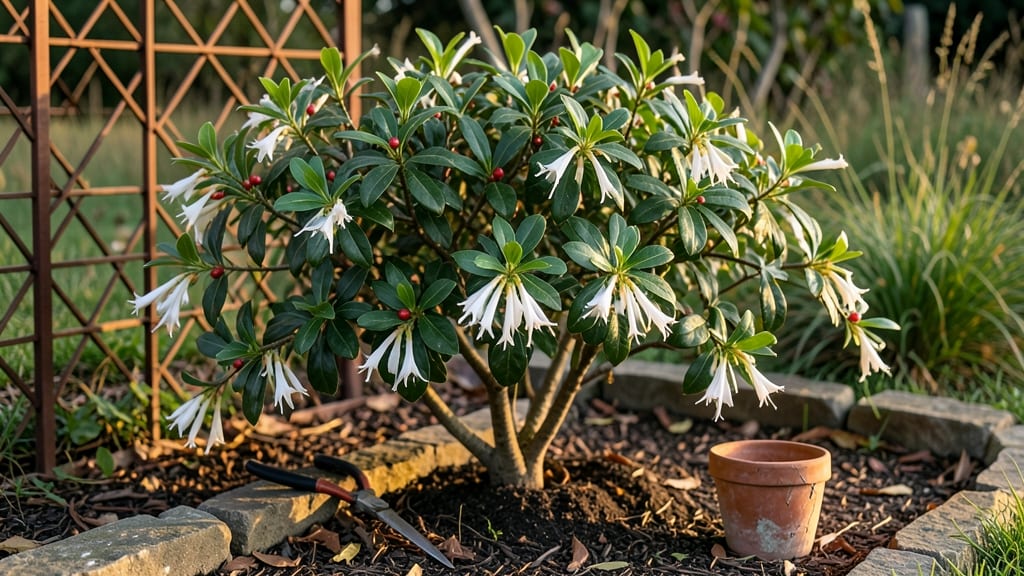
My night jasmine tree (Cestrum nocturnum) became the star of my Pacific Northwest garden after I learned how to prune it for frost resistance. 🌿 The key isn't just cutting back—it's shaping the plant to handle our damp, chilly winters while keeping those intoxicating nighttime blooms coming.
I've killed more than one with well-meaning but wrong pruning, so I'm sharing exactly what works here.
This tropical beauty thrives in our zone 8-9 climate when given the right care: well-draining soil, morning sun and afternoon shade, and consistent moisture without soggy roots.
The pruning itself takes about 20 minutes twice a year—once in late winter to clean up frost damage, and again in early summer to encourage new growth. Most people over-prune, which stresses the plant and reduces flowering.
When done right, you'll end up with a compact, bushy tree covered in fragrant white flowers that perfume the evening air. The blooms arrive reliably if you prune just above leaf nodes and avoid cutting into old wood.
I've had mine flowering from July through October, even after our occasional September frosts.
The same techniques work for containers too—just use a slightly smaller pot and prune more aggressively to keep it manageable. Here's how to get started without the common mistakes that kill night jasmine trees in our climate.
📚 In This Guide
- What you need
- Instructions
- Tips and common mistakes
- Wrapping up and next steps
What you need
- ● Pruning shears: Bypass pruners (for clean cuts on small branches), sharp and sterilized (1 pair).
- ● Loppers: For thicker branches (½"–1½" diameter), ratcheting or bypass type (1 pair).
- ● Pruning saw: Hand saw with fine teeth (for branches >1½" thick, 1 unit).
- ● Gloves: Heavy-duty, cut-resistant (1 pair) to protect from thorns.
- ● Disinfectant: 70% isopropyl alcohol or household bleach (1:9 ratio) (small bottle) to sterilize tools.
- ● Sealing wax: Pruning sealant (small jar) for large cuts to prevent disease.
- ○ Extension pole: Adjustable 6–10 ft (optional, for hard-to-reach branches).
- ● Work lights: LED clip-on lights for early morning/late evening pruning.
- ● Ladder: Sturdy, 4–6 ft (if tree is tall; prioritize safety!).
- ● Garden twine: For temporarily securing branches during shaping.
- ● Notebook & pen: To jot down pruning notes or track growth.
- ● Timing: Prune in late winter/early spring (before new growth) or right after flowering (summer).
- ● Weather: Choose a dry, overcast day (avoid pruning in frost or rain).
- ● Safety gear: Long sleeves/pants (night jasmine thorns are sneaky!).
- ● Tree health check: Inspect for diseased or dead branches before starting.
Instructions for pruning night jasmine in the Pacific Northwest
Here's how to keep your night jasmine thriving through our region's frosty winters.
✂️ Step 1: Time Your Pruning for Winter Hardiness
Prune your night jasmine in late winter or early spring, just before new growth begins. This timing ensures the plant has time to develop a strong framework before summer's heat arrives. In the Pacific Northwest, aim for February or March when frost is still possible but the worst winter chill has passed.
Look for dormant branches with no green buds—these are ready for pruning. Avoid cutting back into old wood, as night jasmine blooms on new growth. You'll know you're pruning at the right time when you see the first signs of swelling buds along the stems.
✂️ Step 2: Remove Dead, Weak, or Crossing Branches
Start by removing any dead or diseased branches—they'll be dry, brittle, and brown. Cut these back to the main trunk or a healthy lateral branch. Next, look for branches that are weak, thin, or crossing others. These compete for energy and can lead to poor blooming.
Use clean, sharp pruners to make your cuts at a 45-degree angle just above an outward-facing bud. This encourages the new growth to develop away from the center of the plant, improving airflow and sunlight penetration. Night jasmine responds well to this open structure, leading to more abundant blooms.
✂️ Step 3: Thin the Canopy for Air Circulation
Thin out the center of the plant to allow light and air to reach the inner branches. Remove about one-third of the oldest wood to rejuvenate the plant and encourage new growth. Focus on branches that are overcrowded or growing inward, as these can block sunlight and trap moisture, inviting fungal diseases.
Step back occasionally to assess the plant's shape. You want a balanced, open canopy that allows sunlight to reach all parts of the tree. This is especially important in the Pacific Northwest, where damp conditions can lead to fungal issues if the plant isn't pruned properly.
✂️ Step 4: Shape the Tree for Frost Resistance
Night jasmine benefits from a slightly rounded or vase-like shape, which helps it shed snow and ice more easily. Avoid heavy pruning that could leave the plant too exposed, as this can make it more vulnerable to frost damage. Instead, focus on light shaping to maintain a natural form.
Prune branches back to a strong lateral branch or bud, and avoid cutting into old wood unless necessary. This ensures the plant retains its vigor and blooming potential. After pruning, clean up any fallen debris to reduce the risk of pests and diseases.
⏰ Step 5: Monitor and Maintain Through the Growing Season
After pruning, keep an eye on your night jasmine for new growth. Water deeply but infrequently, allowing the soil to dry out slightly between waterings. This encourages strong root development, which helps the plant withstand frost better in winter.
Fertilize lightly in early spring with a balanced, slow-release fertilizer to support new growth. Avoid heavy feeding, as this can lead to tender new growth that's more susceptible to frost damage. By late summer, reduce watering slightly to harden off the plant for winter.
Tips & tricks for pruning night jasmine in the Pacific Northwest
Here's what I've learned after years of pruning night jasmine in our damp, frost-prone climate—these tricks will help you avoid common mistakes and keep your plant thriving.
Timing is Everything: In Step 1, don't rush to prune as soon as you see buds swelling—wait until you can see those tiny green buds but they're still firm to the touch. I've learned this the hard way: pruning too early can stimulate new growth that gets nipped by late frosts. The February-March window gives you that perfect balance between dormancy and new growth.
The 45-Degree Angle Secret: When making cuts in Step 2, the 45-degree angle isn't just about aesthetics—it's about directing growth. Make sure your cuts are just above an outward-facing bud (you'll see them as tiny bumps). I always check by holding the branch where the bud faces away from the center. This simple technique dramatically improves airflow and bloom production.
Canopy Thinning Strategy: In Step 3, when removing one-third of the oldest wood, focus on the thickest branches first. These are the ones that block sunlight and trap moisture. I like to step back every few cuts to visualize the plant's shape—imagine sunlight streaming through the center like rays. This open structure is crucial for preventing fungal issues in our wet climate.
Frost Resistance Tip: For Step 4, avoid creating a perfectly round shape—night jasmine handles snow better with a slightly irregular, vase-like form. The natural irregularities help shed snow more effectively. After pruning, I always run my hand along the branches to check for any sharp edges that could tear in winter storms.
Pro Tips for Night Jasmine Tree
- Here's what I've learned after years of pruning night jasmine in our damp, frost-prone climate—these tricks will help you avoid common mistakes and keep your plant thriving.
- Timing is Everything: In Step 1, don't rush to prune as soon as you see buds swelling—wait until you can see those tiny green buds but they're still firm to the touch.
- The 45-Degree Angle Secret: When making cuts in Step 2, the 45-degree angle isn't just about aesthetics—it's about directing growth.
Frequently asked questions
Got questions about keeping your night jasmine tree thriving in the Pacific Northwest’s chilly climate?
Here are answers to the most common concerns—from pruning timing to frost protection—so you can enjoy those fragrant blooms year after year.
When is the best time to prune my night jasmine tree in the PNW?
The ideal time is late winter or early spring (February–March), just before new growth begins. This helps harden wood for frost while avoiding late-season pruning, which can leave cuts vulnerable to cold damage. Avoid pruning in fall—new growth won’t toughen up before winter!
How do I protect my night jasmine from frost in the PNW?
Night jasmine (Cestrum nocturnum) is semi-frost-hardy (USDA Zones 9–11), but PNW winters can push it. Mulch the base with 3–4 inches of wood chips, wrap young trees in burlap for temps below 20°F, and plant in a sheltered spot (e.g., near a south-facing wall). If frost hits, prune dead branches in spring.
Should I prune night jasmine after it blooms?
No—prune before blooms appear (late winter) to shape the tree and encourage dense, frost-resistant growth. Night jasmine blooms on current-year wood, so summer pruning (to control size) is fine but avoid heavy cuts. Pro tip: Deadhead spent flowers in spring to redirect energy to new blooms!
Can I grow night jasmine in containers in the PNW?
Yes! Use a large pot (15+ gallons) with drainage holes and a well-draining mix (cactus/succulent soil works). Move containers indoors or to a garage during hard freezes (<20°F). Just beware: Cestrum nocturnum can outgrow containers quickly—prune roots annually if needed.
Why aren’t my night jasmine blooms as fragrant as they should be?
Faint fragrance often signals stress or poor growing conditions. Check for:
- Insufficient sunlight: Needs full sun (6+ hours/day)—PNW shade can reduce blooms.
- Overwatering: Let soil dry slightly between waterings; soggy roots = fewer blooms.
- Nutrient deficiency: Feed with balanced fertilizer (10-10-10) in spring.
If the issue persists, test soil pH (aim for 6.0–7.0).
Wrapping up and next steps
The night jasmine tree is a stunning addition to any Pacific Northwest garden, offering fragrant blooms and resilience against frost—when pruned with care. By following the right techniques, you’ll encourage healthier growth, vibrant flowers, and long-term beauty.
Now that you’re equipped with the tools, timing, and tips, there’s no better time to roll up your sleeves and give your tree the attention it deserves!
🌿 Ready to transform your garden? Grab your pruners, mark your calendar for late winter or early spring, and start pruning with confidence. Your night jasmine will thank you with show-stopping blooms and years of effortless charm. Happy pruning! 🌸