
Flowers
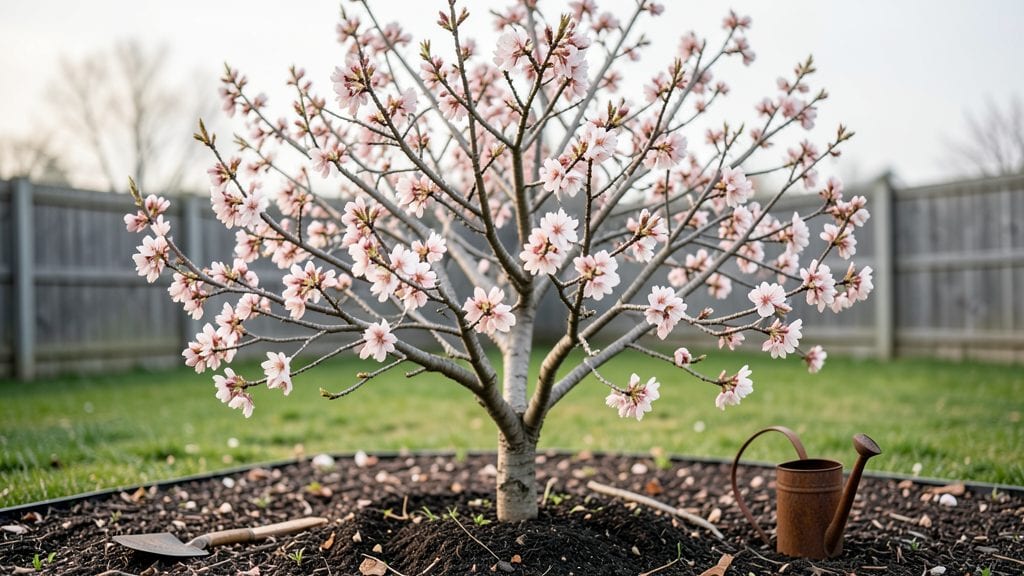
The nectarine tree flowers in the Pacific Northwest bloom with stubborn beauty—resisting frost better than most stone fruit—but they still need the right care to turn those delicate blossoms into fruit.
I learned that the hard way after my first tree produced half the expected harvest because I didn’t understand its timing. The key isn’t just waiting for spring; it’s creating the perfect conditions for those flowers to thrive when they appear.
Timing matters most here: nectarine blooms arrive early, often just as late frosts linger. That’s why watering deeply before bud break and avoiding heavy pruning in late winter becomes critical. A balanced fertilizer with nitrogen, phosphorus, and potassium—applied in early spring—helps too, but don’t overdo it.
Too much nitrogen now means fewer flowers, and that’s a fruitless summer waiting to happen.
What you’ll end up with is a tree covered in pinkish-white blossoms that smell like summer even in April. Those flowers need pollinators—so plant companion flowers nearby if bees are scarce—and gentle hands.
Prune only after blooming to avoid cutting off next year’s potential. The payoff? A harvest of sweet, juicy nectarines that taste like sunshine.
This guide covers everything from frost protection tricks to troubleshooting poor flowering. Whether you’re dealing with a young tree or a veteran, the Pacific Northwest’s climate demands extra attention—but the results are worth it. Let’s get those blooms thriving.
📚 In This Guide
- What you need
- Instructions
- Tips and common mistakes
- Wrapping up and next steps
What you need
- ● Nectarine tree saplings or seeds: Choose Prunus persica var. nectarina (frost-resistant varieties like ‘Redhaven’ or ‘Fantasia’). 2-3 plants recommended for cross-pollination.
- ● Well-draining soil: Mix 1 part native soil with 1 part compost and 1 part perlite/sand (for PNW’s heavy clay areas).
- ● Organic fertilizer: 10-10-10 NPK ratio (or fish emulsion for organic growers). Apply 2 lbs per 100 sq ft at planting.
- ● Mulch: 3-4 inches of wood chips or straw to retain moisture and protect roots from frost.
- ● Hand trowel or transplant spade (for digging holes 1.5x wider than the root ball).
- ● Pruning shears (sterilized with 70% isopropyl alcohol).
- ● Watering can or hose with nozzle (drip irrigation ideal for PNW’s wet winters).
- ○ Frost cloth or row covers (optional but highly recommended for late frosts—50% shade cloth works well).
- ● pH test kit (aim for 6.0–7.0; amend with lime or sulfur if needed).
- ● Sunlight: 6–8 hours of full sun daily (PNW’s partial shade won’t suffice for optimal blooms!).
- ● Climate zone: Plant in USDA Zones 5–8 (choose frost-hardy cultivars for Zone 5).
- ● Spacing: 15–20 feet apart to allow airflow and prevent disease.
- ● Water source: Drip irrigation or soaker hose (avoid overhead watering to prevent fungal blooms).
Instructions for encouraging frost-resistant nectarine tree flowers in the Pacific Northwest
Here's how I coax vibrant blooms from nectarine trees despite our chilly springs.
Choose the Right Variety for Cold Climates
Not all nectarines handle Pacific Northwest winters equally. Look for varieties bred for cold hardiness like 'Redhaven' or 'Starking Delicious'—these can tolerate dips down to 15°F without losing their blooms. I always check the USDA hardiness zone rating on the nursery tag, aiming for Zone 5 or higher to match our region's typical lows.
Young trees need extra protection. If you're planting from a nursery, select a 3-4 year old tree—these have established root systems that better withstand winter stress. Avoid grafted trees unless you're certain the rootstock is cold-resistant, as weak unions can fail in freeze-thaw cycles.
Plant in the Optimal Location for Spring Blooms
Nectarine trees need full sun exposure—at least 6-8 hours daily—to develop strong flower buds. In the Pacific Northwest, this means planting on the south or southwest side of your property to maximize winter sun exposure, which helps prevent frost damage to dormant buds. I always avoid low spots where cold air pools overnight.
The soil should drain quickly but retain moisture—nectarines hate soggy roots. Amend heavy clay with 2-3 inches of compost mixed into the planting hole to improve drainage while holding nutrients. Test your soil pH before planting; nectarines prefer 6.0-7.0—too acidic, and the tree struggles to absorb nutrients needed for flowering.
Protect Flowers from Late Spring Frosts
Our biggest challenge is late spring frosts after buds have opened. I use frost cloth draped loosely over the tree when nighttime temperatures drop below 32°F after buds show color. Secure the cloth with stakes but leave room for air circulation—trapped heat can actually harm the tree more than the frost itself.
Another trick I've found works is watering the soil deeply the night before a frost warning. The moisture releases heat as it freezes, creating a microclimate that's 3-5°F warmer near the tree's roots. Just don't overdo it—soggy soil invites root rot, and you don't want that counteracting your frost protection.
Prune for Airflow and Flower Production
Prune your nectarine tree in late winter (before buds swell) to remove dead, crossing, or inward-growing branches. This creates an open canopy that allows sunlight to reach all parts of the tree—critical for even flower development. I always make cuts just outside the branch collar at a 45-degree angle, using clean, sharp pruners to prevent tearing.
Thin out some of the fruit later in the season (after blooms set), leaving 6-8 inches between remaining fruit. This might seem counterintuitive, but fewer, larger nectarines develop better than a heavy load of small ones. The energy the tree saves goes right back into next year's flower production.
Fertilize Strategically for Next Year's Blooms
Apply a balanced 10-10-10 fertilizer in early spring when buds begin to swell, using 1/2 pound per inch of trunk diameter. For a mature tree with a 6-inch trunk, that's about 3 pounds total. I always water the area thoroughly before and after applying fertilizer to prevent root burn.
In late summer, switch to a low-nitrogen, high-phosphorus fertilizer (like 5-10-10) to encourage root growth and next year's flower buds. Avoid high-nitrogen fertilizers in late summer—they promote leafy growth at the expense of reproductive structures. I also add 2-3 inches of compost around the drip line each fall to build soil fertility naturally.
Tips & tricks for perfect nectarine tree flowers in cold climates
Here's what nobody tells you about growing nectarine trees that actually bloom reliably in our unpredictable Pacific Northwest springs.
Variety Matters: The right variety makes all the difference in our climate. While 'Redhaven' and 'Starking Delicious' are my go-tos, also consider 'Crimson Snow' or 'Fantasia'—these varieties have shown excellent cold tolerance in our region. When selecting, look for trees labeled "Zone 5 or higher" on the nursery tag, and avoid grafted trees unless you're certain the rootstock is frost-resistant. I learned this the hard way after losing two young grafted trees to winter dieback.
Sun Exposure Secret: Those 6-8 hours of daily sun are non-negotiable, but placement matters just as much. In our region, planting on the south or southwest side of your property isn't just about sunlight—it's about capturing that winter sun that prevents frost damage to dormant buds. I've found that even a slight elevation change (just 2-3 feet higher) can make a dramatic difference in frost protection during those critical bloom times.
Frost Protection Pro Tip: When using frost cloth, don't make the mistake of covering the tree too tightly—this can trap heat and actually harm the tree more than the frost itself. Secure the cloth loosely with stakes, leaving plenty of room for air circulation. For the watering trick before frost warnings, I've had the best results with a soaker hose set on low for 30-45 minutes the night before. This creates that 3-5°F warmer microclimate without risking soggy soil.
Pruning Precision: Timing your late winter prune is crucial—you want to do it before buds swell, but not so early that you're pruning in cold weather. I aim for late January to early February in our region. When making your 45-degree angle cuts, use clean, sharp pruners and make sure to cut just outside the branch collar. This technique prevents tearing and promotes faster healing, which is especially important for trees that will be flowering soon after.
Pro Tips for Nectarine Tree Flowers
- Here's what nobody tells you about growing nectarine trees that actually bloom reliably in our unpredictable Pacific Northwest springs.
- Variety Matters: The right variety makes all the difference in our climate.
- Sun Exposure Secret: Those 6-8 hours of daily sun are non-negotiable, but placement matters just as much.
Frequently asked questions
Got questions about nurturing nectarine tree flowers in the Pacific Northwest? You’re not alone! Here are some of the most common queries—and their answers—to help you grow a thriving orchard, even with frost risks.
When do nectarine tree flowers typically bloom in the PNW?
Nectarine tree flowers usually bloom in late April to early May in the Pacific Northwest, depending on your exact location and microclimate. Warmer coastal areas may see blooms slightly earlier, while inland regions can experience delays. Frost watch is critical—protect flowers with frost cloth or irrigation if late frosts are forecasted!
How can I protect nectarine flowers from late frost?
Late frosts are the #1 threat to nectarine blooms. Use these tactics:
- Frost cloth or row covers—draped before sunset for extra warmth.
- Overhead irrigation—creates a protective ice layer around buds.
- Smudge pots or heat lamps—for small trees in high-risk zones.
- Choose late-blooming varieties like ‘Redhaven’ or ‘Fantasia’ to avoid frost windows.
Can I grow nectarines from seed, or should I buy a grafted tree?
While you can grow nectarines from seed, the results are unpredictable—fruit may not match the parent tree’s quality, size, or frost resistance. Grafted trees are the gold standard: they produce reliable fruit faster and are bred for your climate. Skip the seed route unless you’re experimenting!
Do nectarine flowers need pollinators, or can they self-pollinate?
Nectarine trees are self-fertile, meaning they can pollinate themselves. However, bees and other pollinators still boost fruit set and quality. Planting a second variety nearby (even if it’s another nectarine or peach) can increase yields. Pro tip: Plant bee-friendly flowers nearby to attract pollinators!
Why aren’t my nectarine tree flowers turning into fruit?
If blooms aren’t converting to fruit, check these common culprits:
- Frost damage—kills pollen or flower tissue.
- Poor pollination—hand-pollinate with a small brush if bees are scarce.
- Nutrient deficiencies—apply balanced fertilizer (high in nitrogen before blooming, phosphorus during).
- Disease or pests—inspect for aphids, mites, or fungal spots (e.g., brown rot).
- Young tree stress—wait a season if the tree is less than 3 years old.
Pro Tip: Thin fruit after harvest to improve size and quality!
Wrapping up and next steps
Watching your nectarine tree flowers bloom in the Pacific Northwest is a rewarding experience—especially when you know they’re resilient against frost! 🌸 From selecting the right variety to nurturing your tree, every step brings you closer to a bountiful harvest.
Now that you’re armed with tips and answers, it’s time to roll up your sleeves and plant that dream tree.
Start by choosing a sunny spot, prepping the soil, and keeping an eye on those delicate blooms. Before you know it, you’ll be savoring homegrown nectarines—and maybe even sharing the joy with neighbors! What are you waiting for? Get growing! 🌱