
Pruning
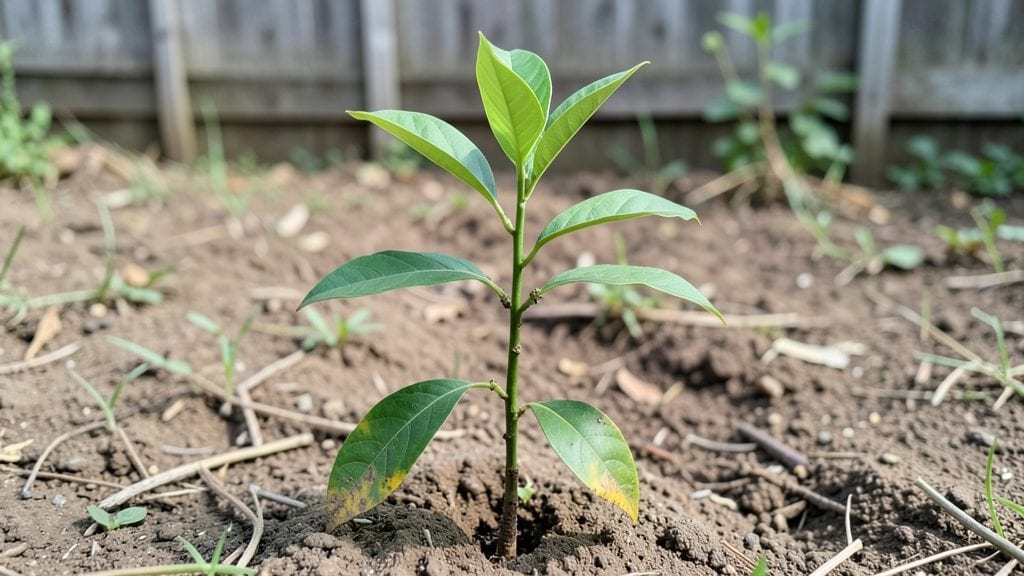
That first mango tree sprout you nurtured from seed is about to become your fast-growing tropical treasure—if you prune it right from the start. 🌱 I learned the hard way that skipping early trims means leggy branches and fewer fruits later, but the right cuts now guarantee a sturdy, productive tree in just a few years.
The key is shaping it early while keeping it strong enough to handle Florida’s summer heat or California’s coastal breezes.
You’ll need sharp pruning shears, a clean workspace, and a clear goal: encourage airflow and sunlight penetration while removing weak growth. Start with the topmost leaves—cut just above a leaf node where new branches can form—and repeat every 4-6 weeks during the growing season.
The first year is all about training the structure; by year two, you’ll see that thick trunk and bushy canopy you’ve been dreaming of.
What you’ll end up with is a vibrant green mango tree that fruits year-round in the right climate, with branches heavy enough to support those sweet, juicy rewards. The secret is patience—those early cuts might seem harsh, but they’re what turns a scraggly sapling into a fruit-bearing powerhouse.
Once you master the rhythm, you’ll never look at a mango tree the same way again.
Works in USDA Zones 10-11 and with container growing for cooler climates—just move it indoors before frost. The same principles apply whether you’re pruning a backyard tree or a patio-sized dwarf variety. Let’s get those shears ready!
📚 In This Guide
- What you need
- Instructions
- Tips and common mistakes
- Wrapping up and next steps
What you need
- ● Ready to give your mango tree sprout the perfect trim for lush growth and bountiful fruit? Here’s what you’ll need to tackle the job like a pro! 🌱✂️
- ● Pro tip: 💡 Check your tools before starting! Dull blades tear bark—always sharpen shears and saws for clean cuts.
Step-by-Step guide to pruning fast-growing mango sprouts
Here's the method I've used to keep my mango tree productive and healthy while encouraging rapid, fruit-bearing growth.
✂️ Step 1: Identify and Remove Suckers and Weak Growth
Start by examining your mango tree for suckers—those fast-growing shoots that sprout from the base or along the trunk. These compete with your tree for nutrients and slow down fruit production. Use sharp pruning shears to cut these back to the ground. You'll notice they often appear after heavy pruning or when the tree is stressed.
Next, look for weak or crossing branches. These are usually thinner, paler, or growing directly into another branch. Remove these entirely at their base. The goal is to open up the center of the tree for better airflow and sunlight penetration. I always wear gloves—mango sap can irritate skin.
✂️ Step 2: Thin Out Overcrowded Branches
Mango trees grow quickly, and their branches can become dense. Focus on removing branches that are growing too close together or directly upward. These vertical water sprouts drain energy from fruit production. Cut them back to a strong lateral branch or bud. You'll see these as thin, straight shoots with no side branches.
Leave only the strongest, most outward-growing branches. Aim for a well-spaced framework that lets sunlight reach the inner canopy. I like to step back every few cuts to visualize the tree's shape—this helps me avoid over-thinning in one area.
☀️ Step 3: Prune for Light and Airflow
Now, focus on the tree's canopy shape. Remove any branches that are blocking sunlight from reaching the center. Mango trees need good light penetration to produce fruit. Cut back any branches that are growing inward or downward—they create dense shade and invite disease.
Pay special attention to the outer edges of the tree. These branches should be the most vigorous, as they'll bear the most fruit. If you see a branch that's growing too long, cut it back by about one-third to encourage bushier growth. This is where you'll see the most immediate response in fruit production.
⏰ Step 4: Time Your Pruning for Fastest Growth
For fastest growth and fruit production, prune your mango tree in late winter or early spring, just before new growth begins. This timing gives the tree plenty of time to recover and grow before the next fruiting season. Avoid pruning during hot, dry periods—the tree will struggle to heal.
After pruning, give your tree a balanced fertilizer to support new growth. Water deeply but avoid soaking the roots. You'll see new shoots emerge within 2-4 weeks, and these will be the branches that produce fruit in the coming season. Keep an eye out for any signs of stress, like yellowing leaves or wilting branches.
🌿 Step 5: Maintain Through the Growing Season
Once the initial pruning is done, monitor your tree for new suckers or weak growth. Remove these as they appear to keep the tree focused on fruit production. I check my tree every 4-6 weeks during the growing season to stay ahead of any issues.
In late summer, do a light pruning to remove any dead or diseased branches. This keeps the tree healthy and prevents pests from moving in. You'll notice the tree's energy shift toward ripening existing fruit rather than producing new growth. This is the perfect time to let the tree rest before the next growing season.
Tips & tricks for pruning fast-growing mango sprouts
A few strategic cuts can transform your mango tree from a chaotic tangle to a fruit-bearing powerhouse. Here's what I've learned after years of trial and error.
Tool Tip: Invest in a pair of sharp, bypass pruning shears—dull blades tear branches, causing more damage than good. I also keep a small pair of hand pruners for those hard-to-reach suckers at the base. Sterilize your tools with rubbing alcohol between cuts to prevent spreading disease, especially when dealing with diseased branches in Step 5.
Visual Cue: When pruning in Step 3, look for branches that form a 45-degree angle from the trunk—these are ideal for fruit production. Vertical branches (water sprouts) should be cut back to a lateral bud. I like to visualize the tree as an open umbrella, letting light and air flow to the center rather than creating a dense canopy.
Timing Secret: The late winter/early spring window is critical for Step 4—this is when your tree's energy shifts from dormancy to growth. If you're in a warmer climate, aim for just before the first flush of new leaves appears. I've found that trees pruned at this time show new shoots within 2-4 weeks, exactly as mentioned in the instructions.
Recovery Strategy: After heavy pruning, your tree will look dramatic—almost like you've overdone it. Don't panic! The 4-6 week maintenance checks in Step 5 are your chance to monitor recovery. If you see excessive leaf drop or wilting, give your tree a deep watering and hold off on fertilizer until new growth appears.
Pro Tips for Mango Tree Sprout
- A few strategic cuts can transform your mango tree from a chaotic tangle to a fruit-bearing powerhouse.
- Tool Tip: Invest in a pair of sharp, bypass pruning shears—dull blades tear branches, causing more damage than good.
- Visual Cue: When pruning in Step 3, look for branches that form a 45-degree angle from the trunk—these are ideal for fruit production.
Frequently asked questions
Got questions about mango tree sprout pruning?
Here are answers to the most common concerns—whether you're a new grower or a seasoned pruner looking to refine your technique.
When is the best time to prune new mango tree sprouts?
The ideal time to prune mango sprouts is late winter or early spring (just before the growing season starts). This encourages healthy growth while avoiding frost damage. Avoid heavy pruning during flowering or fruiting seasons, as it can stress the tree. Light trimming can be done year-round to shape the tree, but major cuts should wait for dormancy.
How do I know which sprouts to prune from my mango tree?
Prune water sprouts (thin, fast-growing shoots with no leaves) and crossing or rubbing branches first—they compete for nutrients. Keep 3-5 strong, outward-facing branches per main limb to ensure airflow and sunlight penetration. Look for suckers (shoots from the base) and remove them unless you want to propagate new trees.
How long does it take for a pruned mango tree to recover and fruit again?
With proper pruning, a mango tree typically regains vigor within 4-6 weeks and may produce fruit in 1-2 years (young trees) or the same season (mature trees). Over-pruning can delay fruiting by a year or more, so stick to no more than 25% of the tree’s canopy per session.
Can I use pruned mango sprouts to grow new trees?
Rooting hormone
speeds up the process—dip cuttings (4-6 inches long) in hormone powder and plant them in moist sand or perlite. Keep them in partial shade and mist daily. Success rates vary, but many growers report 60-80% survival within 2-3 months. Label your new plants to track varieties!
What should I do if my mango tree’s sprouts turn yellow or wilt after pruning?
Yellowing or wilting can signal stress, disease, or over-pruning. Check for fungal spots (like anthracnose) and treat with copper fungicide if needed. If the issue persists, reduce watering and fertilize lightly with a balanced 10-10-10 mix. Avoid pruning again until new growth appears.
Pro Tip:
Use sterilized pruners (rubbing alcohol or bleach wipe) to prevent disease spread. And always prune at a 45-degree angle just above a leaf node—this encourages faster healing and new growth!
Wrapping up and next steps
Growing a thriving mango tree starts with smart pruning—your secret weapon for fast growth, abundant fruit, and year-round harvests! 🌱 By mastering the art of trimming, you’ll shape a healthier tree, boost airflow, and encourage those juicy mangoes to flourish.
Now that you’re armed with the right tools, techniques, and tips, it’s time to roll up your sleeves and get pruning!
Ready to take the next step? Start small—pick a sunny day, grab your pruners, and trim with confidence. For extra guidance, explore seasonal pruning guides or join a local gardening group to swap tips. Your mango tree (and future fruit feasts!) will thank you. 🍈✨