
Size
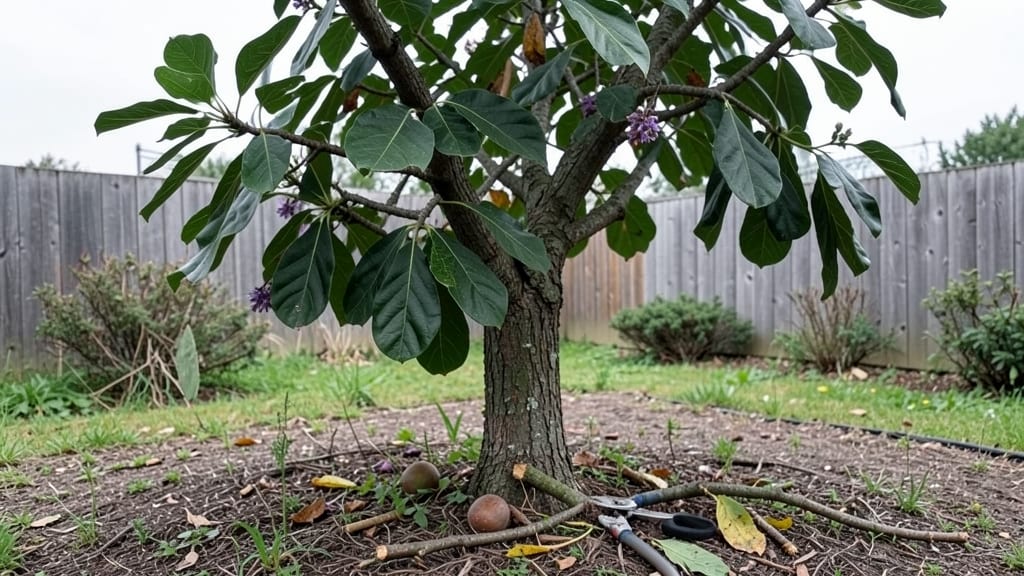
Learn how to stop pawpaw tree from growing too tall—the key lies in pruning at the right time and trimming strategically, as I did after mine shot up 12 feet in just three years, blocking my yard’s sunlight. my morning sunlight.
The key isn’t brute-force topping (that backfires) but targeted pruning that keeps the canopy manageable while preserving fruit production.
You’ll need sharp pruners, a ladder for higher branches, and a clear day to assess the tree’s structure. The best time to prune is late winter or early spring, when the tree is dormant but about to burst with new growth.
Focus on removing upward-growing branches and thinning the center to let light penetrate—this encourages a bushier, more compact shape without sacrificing those delicious pawpaw fruits.
What you’ll end up with is a tree that stays under 8-10 feet tall while still producing abundant harvests. The branches will spread wider, creating shade without overshadowing your garden, and you’ll avoid the heartbreak of a tree that outgrows its space.
Plus, the pruned wood makes great firewood or mulch—no waste in the process.
Works for both young saplings and mature trees, though older specimens may need gradual pruning over a few seasons. Here’s how to do it safely and effectively without stressing the tree.
📚 In This Guide
- What you need
- Instructions
- Tips and common mistakes
- Wrapping up and next steps
What you need
- ● Pruning shears or hand pruners: Sharp, bypass-style pruners (for cuts up to ½ inch thick). Pro tip: Clean blades with rubbing alcohol between cuts to prevent disease spread! 💡
- ● Loppers: For thicker branches (½ to 1½ inches in diameter). Look for bypass loppers (safer for clean cuts) or anvil loppers (for heavy-duty work).
- ● Pruning saw: A curved-tooth pruning saw (8-10 inches long) for branches over 1½ inches thick. Avoid cheap saws—they can tear wood.
- ● Extension pole pruner: A 3- to 6-foot telescoping pole saw (with sharp blades) for high branches. Safety first: Never stand on ladders or chairs!
- ● Work gloves: Heavy-duty, cut-resistant gloves (e.g., Mechanix or similar) to protect your hands from thorns and rough bark.
- ○ Disinfectant (optional but recommended): 70% isopropyl alcohol or a 10% bleach solution (1 part bleach to 9 parts water) to sterilize tools between cuts.
- ● Heavy-duty trash bags or bucket: For collecting pruned branches. A 5-gallon bucket with a lid works great for small jobs.
- ● Ladder (if needed): A stable, extendable ladder (e.g., 24- to 32-foot aluminum ladder) rated for your weight. ⚠️ Warning: Never overreach—position the ladder 1 foot away from the tree for every 4 feet of height.
- ● First-aid kit: Just in case! Include bandages, antiseptic wipes, and tweezers for splinters or minor cuts.
- ● Tree wound dressing (pruning sealant): Controversial but some swear by it! Use a latex-based sealant (like Tanglefoot Tree Wound Pruning Seal) for large cuts on older trees.
- ● Rope or harness system: For very tall trees, a tree climber’s harness or throw line (with a Prusik knot) can help reach high branches safely.
- ● Garden hose or spray bottle: To rinse tools and clean sap off branches post-pruning.
- ● Marking spray or tape: Colored spray paint (e.g., pink or yellow) to mark branches for removal before cutting.
- ● Safety goggles: Protect your eyes from debris, especially when using a pruning saw.
Step-by-step pruning guide for a compact paw paw tree
Here’s the method I’ve used for years to keep these shade-loving giants manageable without sacrificing fruit production.
Time Your Pruning for Maximum Impact
Prune your paw paw tree in late winter or early spring, just as buds begin to swell but before new growth starts. This timing ensures you remove unwanted branches when the tree’s energy is still dormant, minimizing stress. Avoid pruning in fall—it invites disease and pests that thrive in the tree’s weakened state.
If you must prune later in the season, do it in early summer after the tree has finished flowering. Never prune in late summer or fall, as this delays next year’s fruit set. Watch for the first tiny green buds along the branches—that’s your cue to grab your tools.
Identify and Remove Structural Branches
Start by removing water sprouts—those fast-growing, vertical shoots that emerge from the trunk or larger branches. These compete with fruit-bearing wood for energy and make the tree look wild. Cut them back to their point of origin with clean, sharp pruners.
Next, target crossing or rubbing branches—any limbs that grow toward each other or touch. These create wounds where disease can enter and weaken the tree. Make your cuts just outside the branch collar (the swollen area where the branch meets the trunk). Never leave stubs, as they invite rot and pests.
Thin the Canopy for Airflow and Light
Step back and look at your tree’s shape. Paw paws thrive with an open, vase-like structure that lets sunlight reach the lower branches. Remove 10-20% of the tree’s total branches, focusing on those growing inward or downward. Start with the smallest branches first—they’re easier to remove and less stressful for the tree.
Use the "third cut" method for larger branches: First, make an undercut about 6 inches out from the branch collar. Then, cut from the top side, about 2 inches farther out. Finally, remove the stub by cutting just outside the branch collar. This prevents bark from tearing and ensures a clean wound.
Shape for Compact Growth
Paw paws respond well to selective pruning—focus on encouraging lateral branches to fill out the canopy. When you remove a vertical branch, you’ll often see smaller side branches emerge from its base. These will grow outward, creating a fuller, bushier tree.
If your tree is already too tall, never top it—this creates a messy, weak growth habit. Instead, prune the uppermost branches to redirect energy downward. Over time, this encourages new growth at a lower height. Be patient; compacting a mature paw paw takes 2-3 years of consistent pruning.
Clean Up and Monitor for Recovery
After pruning, dispose of all cuttings immediately—never leave them on the ground, as they can harbor pests or diseases. Seal larger wounds (over ½ inch in diameter) with pruning sealant to protect the tree from infection. Smaller cuts will heal naturally over time.
Water the tree deeply after pruning to help it recover. Watch for new growth in 4-6 weeks—this is your signal that the tree is adjusting well. If you see excessive leaf drop or wilting, you may have pruned too aggressively. Next time, remove only 5-10% of the canopy to avoid stress.
Tips & tricks for pruning a compact paw paw tree
These practical insights will help you master the art of pruning without stressing your tree or sacrificing those delicious paw paws.
Timing is Everything: The late winter/early spring window is critical because the tree's energy is still dormant, making it less vulnerable to stress. I've seen trees recover poorly after fall pruning because the wounds don't have time to heal before winter sets in. If you miss this window, early summer after flowering is your next best option—but never wait until late summer or fall, as this can delay next year's fruit production by weeks.
Visual Cues for Pruning: When identifying branches to remove, look for water sprouts that grow straight up like arrows. These vertical shoots are easy to spot—they're the skinny, fast-growing branches that make your tree look unruly. For crossing branches, imagine you're holding a flashlight to the tree—any branches blocking light from reaching the center need to go. This open structure is what lets sunlight reach all parts of the canopy, which is essential for fruit production.
The Third Cut Method: This technique might seem fussy, but it makes all the difference for clean cuts. Start your undercut about 6 inches out from the branch collar—this prevents bark from tearing when you make the final cut. The key is patience: take your time with the top cut (2 inches farther out) so you don't accidentally damage the branch collar. I've seen too many pruning jobs go wrong because someone rushed this step and left ugly wounds that took years to heal.
Recovery Monitoring: After pruning, watch for new growth in 4-6 weeks as your signal that everything's on track. If you see excessive leaf drop or wilting within the first week, you've likely removed too much canopy. Next time, stick to removing just 5-10% of the branches. Remember, paw paws are patient trees—they'll thank you for gradual, thoughtful pruning with years of abundant fruit production.
Pro Tips for Stop Paw Paw Tree From Growing Too Tall
- These practical insights will help you master the art of pruning without stressing your tree or sacrificing those delicious paw paws.
- Timing is Everything: The late winter/early spring window is critical because the tree's energy is still dormant, making it less vulnerable to stress.
- Visual Cues for Pruning: When identifying branches to remove, look for water sprouts that grow straight up like arrows.
Frequently asked questions
about managing your paw paw tree’s height—because even the best pruning plans need a little extra clarity! Here are answers to the most common questions to keep your tree under control without stressing it out.When is the best time to prune a paw paw tree to control its height?
The ideal time is late winter or early spring, just before new growth starts (around February–March in most climates). This timing promotes healthy regrowth and minimizes stress. Avoid pruning in fall—it can stimulate tender new shoots that won’t survive winter. Pro tip: If you must prune in summer, do it early and keep it light to avoid shocking the tree.
Can I just cut the top off my paw paw tree to make it shorter?
While you can top your paw paw tree (cutting the main stem), it’s not recommended unless absolutely necessary. Topping causes vigorous, weak growth and a messy canopy. Instead, use selective pruning to shape the tree gradually. If you’ve already topped it, focus on pruning back the new shoots to encourage a stronger structure.
How often should I prune my paw paw tree to keep it from getting too tall?
For young trees (under 5 years), prune annually to establish a compact shape. Mature trees (5+ years) only need pruning every 2–3 years unless you’re correcting major overgrowth. Always remove no more than 25% of the canopy in one session to avoid stressing the tree. Think of it like a haircut—consistent but not drastic!
What if my paw paw tree keeps growing tall despite pruning?
If your tree seems determined to reach for the sky, it might be due to:
- Over-fertilizing (especially with nitrogen)—cut back on fertilizer.
- Poor pruning technique (e.g., cutting too low or unevenly).
- Genetics—some paw paw varieties grow taller naturally.
Are there any chemical methods to slow down a paw paw tree’s growth?
Chemical growth regulators (like hormone-based sprays) can temporarily slow growth, but they’re not ideal for paw paw trees. These methods can stress the tree or reduce fruit production. Instead, focus on proper pruning, mulching, and soil management for natural, sustainable control. For severe cases, consult a certified arborist about selective herbicides for suckers—but use with caution!
Wrapping up and next steps
Managing your paw paw tree’s height doesn’t have to be a daunting task—just a little patience, the right tools, and a strategic approach!
By pruning at the correct time, using proper techniques, and keeping an eye on its growth, you’ll soon enjoy a compact, healthy tree that’s perfect for your space. 🌿✨
Ready to take action? Pick a calm day, grab your pruners, and start shaping that canopy with confidence. Your future self—and your yard—will thank you!