
Size
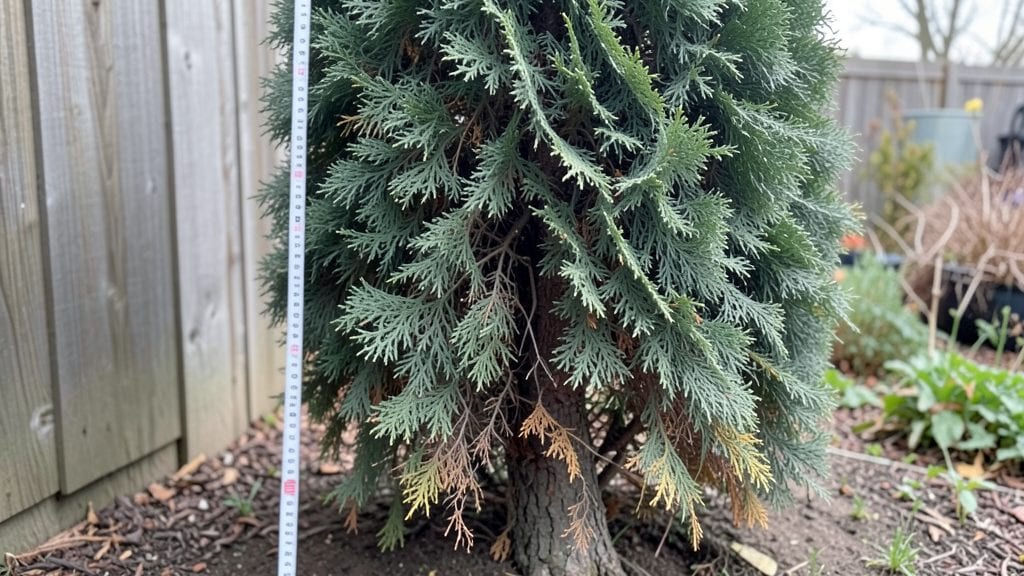
Wondering how tall do Leyland cypress trees get? They shoot up like rockets—30 to 60 feet at full maturity, with some Pacific Northwest giants topping out at 70 feet if left unchecked. 🌲 I planted mine a decade ago, and they’ve already become the unmissable green wall my neighbors envy.
The real magic? Their 3 to 4 feet per year growth rate means privacy in record time, but that speed comes with trade-offs.
Spacing is everything—plant them 10 to 15 feet apart if you want a solid privacy screen, or 20 feet apart for a more natural look. Pruning isn’t just for shaping; it’s the secret weapon to control height.
Cut back 1/3 of the new growth in late winter, and you’ll keep them at a manageable 20 to 30 feet without sacrificing density. Just don’t overdo it—these trees hate aggressive pruning.
What you get is a year-round green fortress that blocks wind, noise, and nosy neighbors. The foliage stays vibrant even in winter, and the scent? Pure pine freshness on a sunny day.
The downside? They’re not for small yards—these trees need room to stretch their legs, and their roots can be aggressive near foundations.
In the Pacific Northwest’s mild, wet climate, they thrive with minimal fuss, but in hotter, drier areas, they’ll need extra water and protection from afternoon sun. If you’re eyeing a privacy solution that grows fast and stays lush, Leyland cypress is your best bet—just plan for the long term.
📚 In This Guide
- What you need
- Instructions
- Tips and common mistakes
- Wrapping up and next steps
What you need
- ● Leyland Cypress Trees – 3–5 trees per 30-foot section (spaced 5–6 feet apart for optimal growth). Choose 1–3 year-old balled-and-burlapped (B&B) or container-grown saplings (6–12 feet tall).
- ● Shovel or Tree Spade – Heavy-duty, 18–24 inches wide for digging planting holes.
- ● Wheelbarrow or Bucket – For mixing soil amendments (e.g., compost, peat moss).
- ● Garden Gloves – Durable, long-cuffed to protect hands while handling soil and roots.
- ● Measuring Tape – 25–50 feet to mark spacing and layout.
- ● Stakes & Twine – 4–6 stakes per tree (2–3 feet tall) for temporary support.
- ● Mulch (Pine Bark or Wood Chips) – 2–3 cubic yards (3–4 inches deep, keep 6 inches away from tree trunk).
- ● Watering Hose or Sprinkler – With adjustable nozzle for deep watering.
- ● Tree Fertilizer – Slow-release, acidic (pH 5.5–6.5) formula (e.g., Miracle-Gro Shake ’n Feed for Trees & Shrubs).
- ● Pruning Shears or Loppers – Bypass pruners (for small branches) and loppers (for thicker stems) for shaping.
- ● Soil pH Test Kit – Ensure your soil is acidic (pH 5.5–6.5); Leylands thrive in slightly acidic conditions.
- ● Root Stimulator – Mycorrhizal fungi or liquid rooting hormone to boost early growth.
- ● Drip Irrigation System – Automated watering for consistent moisture (especially in dry summers).
- ● Erosion Control Fabric – Landscape fabric to prevent weed competition near the base.
- ● Tree Guards or Wire Cages – Protect young trees from deer or pets.
How to plan and plant Leyland cypress for a Pacific Northwest privacy screen
Here's how to create a lush, wind-resistant privacy screen that thrives in the PNW's mild, wet climate.
📏 Step 1: Understand Leyland Cypress Growth Patterns
Leyland cypress trees grow 3-4 feet per year under ideal conditions, reaching 40-60 feet tall and 12-15 feet wide at maturity. In the Pacific Northwest, they typically grow 10-20% slower due to cooler summers and frequent cloud cover. Plan for 30 feet of height in 10-12 years with proper spacing—plant 4 trees spaced 6-8 feet apart for a 20-foot-wide screen that blocks views effectively.
This evergreen stays dense year-round, making it perfect for year-long privacy. The fast growth means you'll see significant height gains in just a few seasons. I always measure the space first—Leylands cast dense shade that suppresses ground cover, so plan for a clean, mulched area beneath them.
🌱 Step 2: Choose the Right Location and Soil Prep
Leyland cypress thrives in full sun (6+ hours daily) but tolerates partial shade in the PNW's cooler summers. Avoid low spots where water pools—they hate soggy roots. Test soil drainage by digging a 12-inch hole and filling it with water; if it doesn't drain in 2-3 hours, amend with 3 inches of compost and 1 inch of coarse sand to improve drainage.
The PNW's acidic soil suits Leylands naturally, but if your soil is highly alkaline (pH above 7.5), amend with sulfur or peat moss to lower pH. I always check soil pH before planting—Leylands perform best in slightly acidic to neutral (pH 5.5-7.0) soil. Spread 3 inches of mulch around the base (but not touching the trunk) to retain moisture and regulate temperature.
☀️ Step 3: Plant at the Right Time and Depth
Plant Leyland cypress in early spring or fall when temperatures are 50-70°F—this gives roots time to establish before summer heat or winter frost. Dig a hole twice as wide as the root ball but no deeper—planting too deep suffocates roots. Gently remove the tree from its container and loosen any circling roots with your fingers before placing it in the hole.
Backfill with native soil (don't use amended soil from the hole) and water deeply to eliminate air pockets. Stake only if necessary—Leylands establish quickly and rarely need support. After planting, water once weekly for the first month, then taper to every 10-14 days once established. The key is deep, infrequent watering to encourage deep root growth.
✂️ Step 4: Prune for Shape and Health
Leyland cypress grows naturally conical, but light pruning keeps it dense and prevents leggy growth. Prune in late winter or early spring before new growth begins. Remove no more than 25% of the foliage at a time—over-pruning stresses the tree. Use clean, sharp shears to make cuts just above a leaf node (the bump where branches meet the stem).
Focus on thinning out interior branches to improve airflow and reduce disease risk. The PNW's damp climate can lead to fungal issues, so prune to open the canopy while maintaining a tight, uniform shape. After pruning, apply a fungicide spray as a preventative measure. I always prune after a dry spell—wet conditions promote fungal spores.
🌿 Step 5: Maintain for Long-Term Privacy
Fertilize once in early spring with a slow-release, balanced fertilizer (10-10-10) to support steady growth. Water deeply once monthly during the first growing season, then reduce to every 3-4 weeks once established. Leylands in the PNW rarely need extra water after the first year—they're drought-tolerant once mature.
Monitor for aphids or spider mites, common in PNW cypress trees. Treat infestations early with neem oil or insecticidal soap—wait until afternoon to apply to avoid burning foliage in direct sun. Mulch annually in late winter to 2-3 inches deep to protect roots from temperature swings. With proper care, your 30-foot privacy screen will be fully established in 8-10 years.
Tips & tricks for perfect Leyland cypress privacy screens
Creating a lush, wind-resistant privacy screen takes planning—and these insights will help you maximize growth while avoiding common pitfalls.
Growth Rate Reality: While Leyland cypress grow 3-4 feet per year in ideal conditions, the Pacific Northwest's cooler summers and frequent cloud cover slow growth by 10-20%. To hit that 30-foot height in 10-12 years, plant 4 trees spaced 6-8 feet apart—this creates a 20-foot-wide screen that blocks views effectively. I've seen many homeowners underestimate spacing, leading to overcrowding that stunts growth. Measure your space carefully before purchasing trees.
Soil Drainage Test: The 2-3 hour drainage test in Step 2 is critical—Leyland cypress hate soggy roots. If water pools in your test hole, amend with 3 inches of compost and 1 inch of coarse sand to improve drainage. In the PNW's acidic soil, Leylands thrive naturally, but if your soil tests highly alkaline (pH above 7.5), lower it with sulfur or peat moss. I always check pH before planting—proper soil conditions make all the difference in growth rate.
Pruning Strategy: When pruning in late winter or early spring, focus on thinning out interior branches rather than cutting back outer growth. Removing no more than 25% of foliage prevents stress while improving airflow to reduce fungal risks. The PNW's damp climate makes fungal issues common, so prune after a dry spell and apply fungicide as a preventative. I've seen many trees suffer from over-pruning—less is more with Leylands.
Watering Wisdom: After planting, water once weekly for the first month to encourage deep root growth, then taper to every 10-14 days. The key is deep, infrequent watering—this prevents shallow roots that can't support the tree's height. Once established, Leylands become drought-tolerant, but proper early watering sets the foundation for that 30-foot height in 8-10 years.
Pro Tips for How Tall Do Leyland Cypress Trees Get
- Creating a lush, wind-resistant privacy screen takes planning—and these insights will help you maximize growth while avoiding common pitfalls.
- Growth Rate Reality: While Leyland cypress grow 3-4 feet per year in ideal conditions, the Pacific Northwest's cooler summers and frequent cloud cover slow growth by 10-20%.
- Soil Drainage Test: The 2-3 hour drainage test in Step 2 is critical—Leyland cypress hate soggy roots.
Frequently asked questions
Got questions about Leyland cypress height? You’re not alone!
Here are some of the most common queries—and straightforward answers—to help you plan your privacy screen with confidence.
How fast do Leyland cypress trees grow?
Leyland cypress trees are fast growers, adding 3–4 feet per year under ideal conditions. In the Pacific Northwest’s mild, moist climate, they can reach 10–15 feet in just 5 years! Just be mindful of their aggressive growth—regular pruning keeps them manageable.
Can I prune a Leyland cypress to control its height?
Pruning is key to managing their towering stature. Trim in late winter or early spring before new growth starts. Use sharp tools to avoid tearing, and focus on shaping the top to encourage bushier growth. Pro tip: Never cut more than 1/3 of the tree’s height at once to prevent stress.
Are Leyland cypress trees drought-tolerant?
While they thrive in the PNW’s rainy climate, Leyland cypress aren’t drought-resistant. Young trees need regular watering (1–2 inches per week), and established trees still benefit from deep watering during dry spells. Mulching helps retain moisture—just keep it 3–4 inches away from the trunk.
What are good alternatives if Leyland cypress is too tall?
If height is a concern, consider these PNW-friendly alternatives:
- Emerald Green Arborvitae (30–40 ft, slower growth, deer-resistant)
- Thuja plicata ‘Atrovirens’ (Western Red Cedar) (50+ ft, but slower and more native)
- Dwarf Leyland Cypress hybrids (e.g., ‘Leighton Green’—grows to 15–20 ft)
Each offers privacy without the same rapid vertical expansion.
Why is my Leyland cypress losing branches at the top?
Top-heavy Leylands often shed branches due to overgrowth or poor pruning. If the issue persists, check for:
- Sun scorch (common in hot, dry summers—water deeply)
- Pests like spider mites or bagworms (treat with horticultural oil)
- Storm damage (prune dead branches immediately)
If the tree looks structurally unsound, consult an arborist—safety first!
Wrapping up and next steps
Leyland cypress trees are fast-growing privacy powerhouses—reaching 30 to 50 feet tall (or higher with ideal care!) in the Pacific Northwest’s climate. Whether you’re dreaming of a lush green barrier or a towering focal point, their height potential makes them a top choice for landscapes.
Ready to transform your outdoor space? Start by measuring your yard, picking the right variety, and planting with confidence! 🌲✨