Pruning
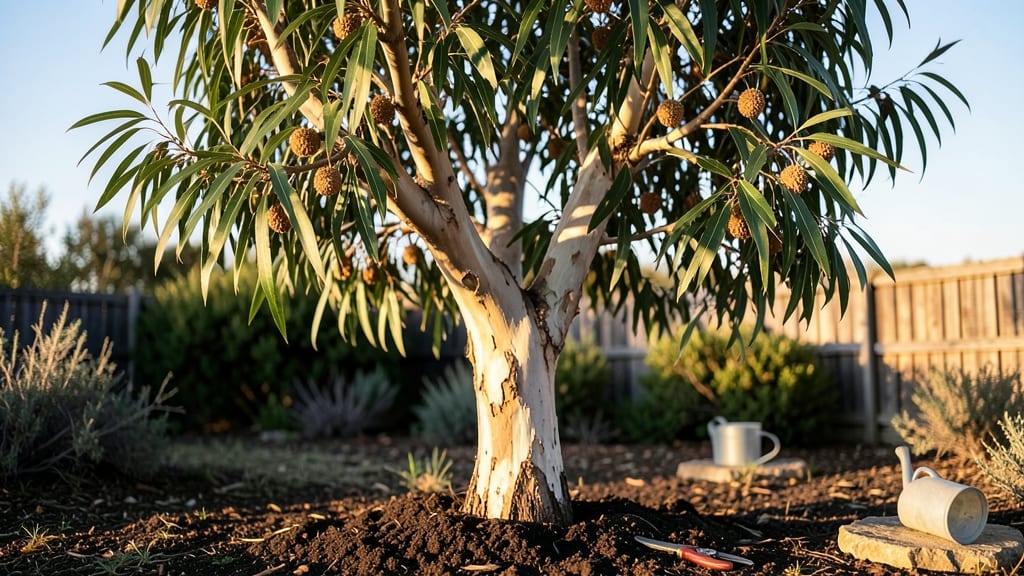
Those sticky, sap-filled gum tree gumballs might look like nature’s weird confections, but they’re actually a sign your eucalyptus tree is under stress—whether from drought, pests, or seasonal shifts.
I’ve spent years dealing with these sap-filled orbs dropping onto patios and sidewalks, and I’ll show you how to prune them away safely while keeping your tree healthy.
The key is timing and technique: harvest gumballs when they’re small (before they harden) and prune branches that produce them aggressively. You’ll need sharp pruners, gloves, and a bucket for collection—plus a plan to dispose of them properly (they’re not safe for pets or kids).
The goal isn’t just cleanup; it’s giving your tree the best chance to recover its energy.
With the right approach, you’ll see fewer gumballs next season and a stronger tree overall. Pruned branches encourage new growth, and proper care reduces stress—meaning fewer of those messy drops. Plus, you’ll avoid the frustration of scrubbing sap off your driveway every spring.
Works for any eucalyptus variety, from towering blue gums to compact varieties. Let’s get those branches trimmed and your yard gumball-free!
📚 In This Guide
- What you need
- Instructions
- Tips and common mistakes
- Wrapping up and next steps
What you need
- ● Gum tree (Eucalyptus spp.) – Ensure it’s a safe, edible variety like Eucalyptus globulus or Eucalyptus polyanthemos. Avoid toxic species!
- ● Pruning shears or loppers – Sharp, sterilized (7–12" blades for medium branches). Quantity: 1 pair.
- ● Heavy-duty gloves – Cut-resistant (gardening or pruning gloves) to protect hands from thorns/branches.
- ● Ladder or step stool – Sturdy, 6–10 ft tall (for high branches). Safety first!
- ● Large bucket or mesh bag – 10+ gallon capacity for collecting gumballs (avoid plastic—it can damage them).
- ○ Disinfectant (optional but recommended) – 70% isopropyl alcohol or bleach solution (1:9 water ratio) to sterilize tools.
- ● Weather check – Harvest gumballs on a dry, sunny day (avoid rain/slippery conditions).
- ● First-aid kit – Bandages, antiseptic wipes (for minor cuts/thorns).
- ● Long sleeves/pants – Lightweight, breathable fabric to protect from scratches.
- ● Water & snacks – Hydration breaks are key for outdoor work!
- ● Harvesting knife – For trimming stubborn gumballs from branches.
- ● Labeling tags – If storing multiple batches (note harvest date/variety).
- ● Drying rack or paper towels – For air-drying gumballs before storage.
- ● Local plant ID guide/app – Double-check gum tree species to avoid toxic lookalikes.
Step-by-Step instructions for pruning gum trees for safe gumball harvest
Here's how to prune your gum tree properly so you can collect those prized gumballs without harming the tree.
Identify the Right Time to Prune
Prune your gum tree in late winter or early spring, just before new growth begins. This timing ensures the tree isn’t stressed during its active growing season. Gumballs form on new growth, so pruning too late can remove potential harvests. Look for dormant branches—they’ll appear leafless and slightly woody, signaling the tree is resting.
If you’re in a warm climate, avoid pruning during extreme heat or drought—stressed trees produce fewer gumballs. A light frost in the days before pruning can also help, as it signals the tree to focus energy on survival rather than new growth, making gumball production more reliable.
Select the Branches to Prune
Focus on mature branches that are at least 2-3 inches in diameter—these are the ones producing the largest gumballs. Avoid cutting back young, green shoots unless they’re crowding the main trunk or branches, as these won’t yield gumballs yet. Use sharp, clean pruning shears to make angled cuts just above a bud or lateral branch to encourage healthy regrowth.
Remove any dead, diseased, or crossing branches first—they compete with healthy growth for nutrients and can reduce gumball production. If a branch is too thick to cut cleanly with hand pruners, use a pruning saw instead. Always cut just outside the branch collar (the swollen area where the branch meets the trunk) to prevent damage.
Prune for Optimal Gumball Production
Thin out the canopy by removing up to 25% of the tree’s branches—this improves airflow and sunlight penetration, both of which boost gumball formation. Start at the outer edges of the tree and work inward, removing branches that are rubbing against each other or growing inward. These branches often produce smaller, lower-quality gumballs.
Leave some older branches intact—they store nutrients that help the tree recover after pruning. If you’re harvesting gumballs for the first time, avoid heavy pruning; instead, focus on selective thinning to encourage future production. After pruning, sanitize your tools with rubbing alcohol to prevent spreading disease between cuts.
Collect and Store Gumballs Safely
Once gumballs form (typically 6-12 months after pruning), harvest them by gently twisting them off the branches or cutting the stems with clean shears. Place them in a paper bag or mesh sack to allow airflow and prevent mold. Avoid plastic bags—condensation can ruin the gumballs.
Store gumballs in a cool, dry place (around 55-65°F) away from direct sunlight. They’ll last several months if kept dry. To test for freshness, gently squeeze a gumball—it should feel firm but slightly soft, not hard or crumbly. If they develop a musty smell or mold, discard them immediately.
Maintain the Tree After Pruning
Water the tree deeply after pruning to help it recover, especially if the weather is dry. Mulch around the base with 2-3 inches of organic mulch (like wood chips) to retain moisture and protect roots. Avoid piling mulch against the trunk—keep it 2-3 inches away to prevent rot.
Fertilize in early spring with a balanced, slow-release fertilizer to support new growth. Gum trees respond well to phosphorus-rich fertilizers, which encourage root and gumball development. Monitor the tree for pests or disease in the months after pruning—early signs include yellowing leaves, sticky residue, or sawdust-like frass (a sign of borers).
Tips & tricks for perfect gum tree gumball harvest
Here's what nobody tells you about pruning gum trees that'll make all the difference in your gumball yield.
Timing is Everything: The late winter or early spring timing in Step 1 is critical because gumballs form on new growth. I learned this the hard way after pruning too late one year and losing my entire harvest. Look for those dormant branches that appear leafless and slightly woody—they're the perfect indicator you're ready to prune. In warm climates, avoid pruning during extreme heat or drought, as stressed trees simply won't produce as many gumballs.
Branch Selection Strategy: When selecting branches in Step 2, focus on mature branches that are at least 2-3 inches in diameter. These are the gumball producers! I always test by gently squeezing the branch—if it feels firm and woody, it's ready. Avoid cutting young green shoots unless they're crowding the main trunk. Remember, you're not just pruning for aesthetics; you're shaping your future gumball production.
Pruning Technique Matters: The way you make your cuts in Step 2 and Step 3 makes a huge difference. Always cut just outside the branch collar—the swollen area where the branch meets the trunk. This prevents damage and encourages healthy regrowth. For thicker branches, use a pruning saw instead of hand pruners. I've seen too many people make jagged cuts that actually invite disease into the tree.
Post-Pruning Care: After you've done all that work, don't forget the maintenance in Step 5. Watering deeply after pruning helps the tree recover, and that 2-3 inches of organic mulch makes all the difference in retaining moisture. I always keep the mulch 2-3 inches away from the trunk to prevent rot. And that early spring fertilization? It's what gives your tree the boost it needs for next season's gumball production.
Pro Tips for Gum Tree Gumballs
- Here's what nobody tells you about pruning gum trees that'll make all the difference in your gumball yield.
- Timing is Everything: The late winter or early spring timing in Step 1 is critical because gumballs form on new growth.
- Branch Selection Strategy: When selecting branches in Step 2, focus on mature branches that are at least 2-3 inches in diameter.
Frequently asked questions
Got questions about harvesting, storing, or working with gum tree gumballs? You’re not alone! Here are answers to the most common queries to help you navigate this sticky (but rewarding) process like a pro.
What’s the best time of year to harvest gum tree gumballs?
Harvest gumballs when they’re freshly fallen but still firm—typically in late spring to early summer (varies by climate). Avoid wet or moldy gumballs, as they spoil faster. Pro tip: Morning harvests yield the freshest gumballs, as dew can make them stickier!
How do I safely remove gumballs without damaging the tree?
Use sterilized pruning shears to snip gumballs from branches (never pull—they’re fragile!). Cut at a 45-degree angle just above a leaf node to prevent sap bleeding. For large clusters, support the branch to avoid snapping. Never strip bark or over-prune—healthy trees produce more gumballs!
Can I store gum tree gumballs for later use, and how?
Yes! Store gumballs in a cool, dry place (like a mesh bag in the fridge) for up to 2 weeks. For long-term storage, dry them: spread on a tray in sunlight for 3–5 days, then store in airtight containers. Freezing is another option—just blanch first to preserve texture.
What should I do if my gumballs attract pests or mold?
Pests (like ants or beetles) or mold mean it’s time to discard the gumballs. Prevent issues by harvesting only clean, dry gumballs and storing them properly. For sticky residue on tools, wipe with rubbing alcohol or soapy water. If mold appears, sterilize containers with vinegar before reuse.
Are there alternatives to gum tree gumballs for crafts or cooking?
Try resin (for crafts), pine sap (similar texture), or tree sap substitutes like caramelized sugar for cooking. For pruning practice, use fake gumballs (available online) or even orange peels (for kids’ projects). Just note: substitutes won’t have the same authentic gumball flavor or properties!
Wrapping up and next steps
Harvesting gum tree gumballs is a rewarding experience—whether you're after unique flavors, artisanal crafts, or nature’s bounty. With the right tools, timing, and storage know-how, you can turn your gum tree into a treasure trove of versatile goodies. 🌿✨
Ready to put your skills to the test? Start small—try harvesting just a few gumballs to perfect your technique before scaling up. Share your creations (or pruning wins!) with fellow enthusiasts, and who knows? You might inspire others to explore the magic of gum trees too!