Pruning
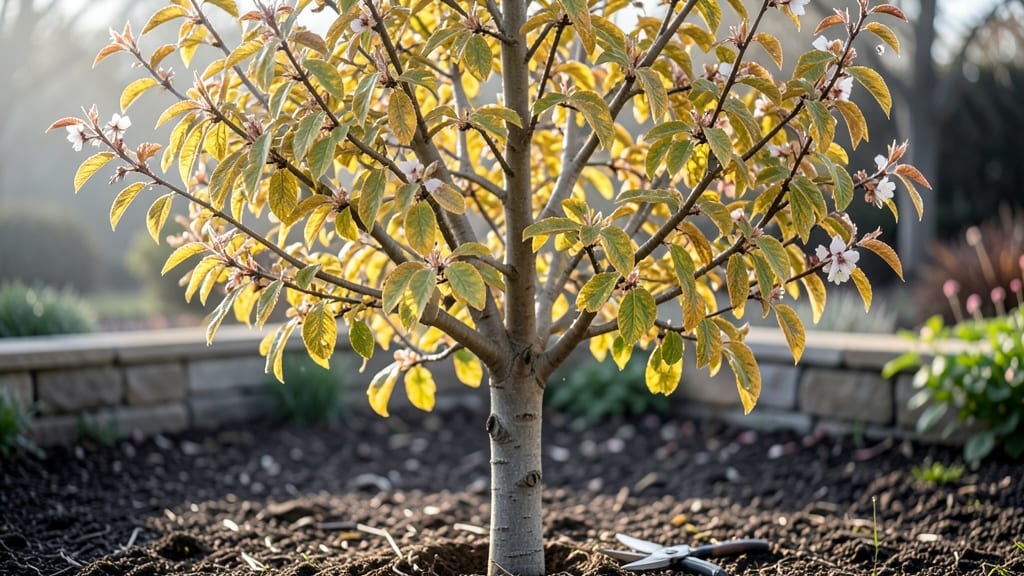
Your Gold Dust peach tree isn't just another ornamental—it's the sun-kissed centerpiece that thrives where others fail. 🌿 This frost-tolerant variety turns your Pacific Northwest yard into a golden canopy, even after winter's harshest freezes.
The secret lies in pruning that balances beauty with resilience, ensuring those striking golden leaves return year after year without the usual peach tree struggles.
This isn't about complicated horticulture—just three core pruning cuts that work whether you're shaping for show or encouraging hardiness. You'll need sharp bypass pruners, a 10-foot ladder for taller trees, and about 90 minutes in early spring before buds swell.
The key? Pruning to open the canopy for sunlight while keeping branches sturdy enough to handle wet winters—no more snapped limbs come storm season.
By summer, you'll have a tree that's disease-resistant, pest-proof, and covered in foliage so vibrant it looks Photoshopped. The golden leaves stay lush even in partial shade, and the structure remains strong enough to support snow.
Best of all, this method works for both ornamental Gold Dust varieties and fruit-bearing types—just adjust your timing slightly for harvests.
We'll cover exactly when to prune for frost resistance, how to spot stress signs (like yellowing leaves that aren't just autumn), and why your neighbors will be asking for your secret. Let's get those branches looking intentional—not just pruned, but strategic.
📚 In This Guide
- What you need
- Instructions
- Tips and common mistakes
- Wrapping up and next steps
What you need
- ● Pruning shears: Bypass pruners (sharp, clean, and sterilized with rubbing alcohol). Recommended: Felco F-2 or comparable (for branches up to ½ inch thick).
- ● Loppers: For thicker branches (½–1.5 inches). Example: Corona 3-in-1 Lopper.
- ● Pruning saw: For branches over 1.5 inches (e.g., Fiskars X7).
- ● Disposable gloves: Nitrile or rubber (to protect from thorns and sap).
- ● Rubbing alcohol (70%+): For sterilizing tools between cuts (prevents disease spread).
- ○ Pruning sealant (optional): Wound dressing (e.g., Tanglefoot Tree Wound Pruning Sealer) for large cuts.
- ● Ladder or step stool: If your tree is taller than 6 feet. Safety tip: Use a sturdy, non-slip model!
- ● Bucket or tarp: For collecting pruned branches (compost or dispose of later).
- ● Timing: Prune in late winter or early spring (before buds swell) for Pacific Northwest’s frost-resistant varieties.
- ● Weather: Choose a dry, overcast day to minimize stress on the tree.
- ● Safety gear: Safety glasses (in case of debris) and closed-toe shoes.
- ● Tree health check: Inspect for signs of disease (e.g., oozing sap, dead branches) before pruning.
- ● Sharpen your tools! Dull blades tear wood, inviting pests and disease. 🔪✨
- ● Label your cuts: Use a marker to note branches removed for training (helps track progress).
- ● Disinfect tools between trees: Even if your Gold Dust is healthy, this prevents cross-contamination.
Step-by-step guide to pruning your Gold Dust peach tree for PNW resilience
Here's how I transform a Gold Dust peach's natural vigor into a frost-tolerant, productive tree tailored for the Pacific Northwest's unpredictable climate.
🌱 Step 1: Time Your First Pruning for Late Winter Dormancy
Wait until mid-to-late February when the tree is fully dormant but before bud swell begins. This timing ensures you remove winter-damaged wood while preserving next season's fruit buds. Look for brown, brittle branches that snap easily—these are dead and should be cut back to healthy wood.
I always prune on a dry, sunny day when temperatures are above 40°F. Cold, wet conditions stress the tree and invite bacterial infections. Use sharp pruning shears to make clean cuts just outside the branch collar—the swollen area where the branch meets the trunk. Never leave stubs, as they invite rot and pests.
✂️ Step 2: Remove Dead and Crossing Branches First
Start by eliminating dead, diseased, or broken branches—these are the easiest to spot and remove. Next, target crossing branches that rub against each other, as these create wounds that weaken the tree. When two branches compete for space, remove the smaller one at its point of origin.
Here's the thing—I pay special attention to branches growing inward toward the center of the tree. These never get enough sunlight and become weak, crowded growth. Cut them back to an outward-facing branch or the trunk. This opens the canopy for better airflow and fruit production.
☀️ Step 3: Thin the Canopy for Sunlight Penetration
Gold Dust peaches thrive with 6-8 hours of direct sunlight, so I aim to create an open, vase-shaped structure. Remove branches that grow straight up or down—these create a dense, shaded center. Instead, encourage lateral branches that spread outward to catch sunlight.
When thinning, step back every few cuts to visualize the tree's shape. You're looking for 30-40% open space in the canopy. This prevents humidity buildup in the center, which is critical in the PNW's damp climate. Never remove more than 25% of the tree's foliage in one season—this stresses the tree and reduces fruit production.
⏰ Step 4: Shape for Frost Resistance and Airflow
To protect against late spring frosts—a common PNW issue—prune to create a low, wide canopy. This allows warm air to circulate near the ground and protects blossoms from cold snaps. Remove any branches below 18-24 inches from the ground, as these rarely produce quality fruit and are prone to frost damage.
I also make sure the tree's center is at least 12 inches wider than its height. This wide base helps the tree absorb heat during cold nights. Avoid heavy pruning of scaffold branches (the main structural limbs)—these provide stability and support for future growth.
🌿 Step 5: Post-Pruning Care for Healthy Regrowth
After pruning, apply a thin layer of organic mulch around the base (but not touching the trunk) to retain moisture and regulate soil temperature. Water deeply to compensate for the tree's increased need for hydration after pruning. Look for new leaf buds by early spring—that's your sign the tree is recovering well.
I avoid fertilizing immediately after pruning, as new growth is more susceptible to frost damage. Instead, wait until late spring when the tree shows active growth. This timing ensures the tree uses its energy for root development rather than foliage.
Tips & tricks for perfect Gold Dust peach tree pruning
These essential tips will help you transform your Gold Dust peach into a resilient, productive tree that thrives in the Pacific Northwest's climate.
Timing is Everything: The mid-to-late February window is critical because it's when the tree is fully dormant but before bud swell begins. I've learned this the hard way—pruning too early in winter can leave cuts vulnerable to frost damage, while waiting too long risks removing next season's fruit buds. If you miss this window, aim for early spring before buds appear, but be prepared to make more delicate cuts.
Equipment Matters: Invest in a good pair of pruning shears with bypass blades—they make clean cuts that heal faster than those from dull tools. For thicker branches (over ½ inch), use a pruning saw. Always sterilize your tools with rubbing alcohol between cuts to prevent spreading disease. I also keep a small bucket of water nearby to wipe down tools and clean up sap.
Visual Cues for Canopy Health: When thinning the canopy in Step 3, look for branches that grow straight up or down—they create a dense center that blocks sunlight. Instead, focus on lateral branches that spread outward. A good rule of thumb is to visualize sunlight streaming through the center of the tree—you should see at least 30-40% open space. This open structure is what makes Gold Dust peaches so productive in the PNW.
Frost Protection Strategy: To create that low, wide canopy for frost resistance, aim to have the tree's center at least 12 inches wider than its height. This wider base helps absorb heat during cold nights. I also recommend removing any branches below 18-24 inches—they rarely produce quality fruit in our climate and are more vulnerable to frost damage. Think of it as creating a natural "heat sink" at the base of the tree.
Pro Tips for Gold Dust Peach Tree
- These essential tips will help you transform your Gold Dust peach into a resilient, productive tree that thrives in the Pacific Northwest's climate.
- Timing is Everything: The mid-to-late February window is critical because it's when the tree is fully dormant but before bud swell begins.
- Equipment Matters: Invest in a good pair of pruning shears with bypass blades—they make clean cuts that heal faster than those from dull tools.
Frequently asked questions
Got questions about growing and pruning your Gold Dust Peach Tree? You’re not alone—this frost-resistant gem has unique needs! Here are answers to the most common queries to keep your tree thriving in the Pacific Northwest’s climate.
How cold can a Gold Dust Peach Tree tolerate?
The Gold Dust Peach Tree is one of the hardiest peach varieties, surviving temperatures down to 15°F (-9°C) with proper care. However, young trees or newly planted ones may need winter protection (like burlap wraps or mulch) until established. Pro tip: Plant in a sheltered spot to shield it from harsh winds, which can exacerbate cold damage.
When is the best time to prune a Gold Dust Peach Tree?
Prune your tree late winter or early spring (just before buds swell) to encourage strong growth and fruit production. Avoid heavy pruning in fall—it can stimulate new growth that’s vulnerable to frost. Key timing: Remove dead or crossing branches first, then shape the tree for airflow.
Can I prune too much? What’s the ideal amount?
Yes! Over-pruning can stress the tree and reduce fruit yield. Aim to remove no more than 25% of the canopy in a single session. Focus on:
- Dead, diseased, or weak branches
- Water sprouts (fast-growing vertical shoots)
- Crossing or rubbing branches
For a mature tree, light annual pruning (10–15%) keeps it healthy without sacrificing productivity.
Why aren’t my Gold Dust Peach Tree’s fruits ripening?
Several factors can delay ripening, but the most common in the PNW are:
- Insufficient sunlight: Ensure the tree gets 6+ hours of direct sun daily—peaches need warmth to ripen.
- Over-fertilization (especially nitrogen): Too much leafy growth at the expense of fruit. Balance with potassium and phosphorus in early spring.
- Late frost damage: Young blossoms are frost-sensitive. Use frost cloth during bloom if late frosts are forecasted.
If the issue persists, check for pests (like aphids) or fungal diseases, which can weaken the tree.
What’s a good alternative if I can’t grow a Gold Dust Peach Tree?
If your climate or space is challenging, consider these low-maintenance, frost-tolerant alternatives:
- Aprium (Pluot): A hybrid of apricot and plum, like the Flavor Grenade, with better cold hardiness (down to 0°F/-18°C).
- Nectarine: Thinner-skinned than peaches, varieties like Red Gold tolerate 10°F (-12°C) and ripen earlier.
- Cherry Plum: Self-pollinating and hardy (to 10°F/-12°C), with sweet-tart fruit perfect for jams or fresh eating.
All three thrive in the PNW and require similar pruning care!
Wrapping up and next steps
Growing a thriving Gold Dust Peach Tree in the Pacific Northwest is absolutely within reach—even with frost! 🌟 By mastering the right pruning techniques, you’ll ensure a bountiful harvest while keeping your tree healthy and resilient.
Start with the tools and timing we’ve outlined, then refine your approach each season based on your tree’s unique needs.
Ready to take the next step? Bookmark this guide and schedule your first pruning session before winter sets in. Your future peach harvests will thank you!