
Trees
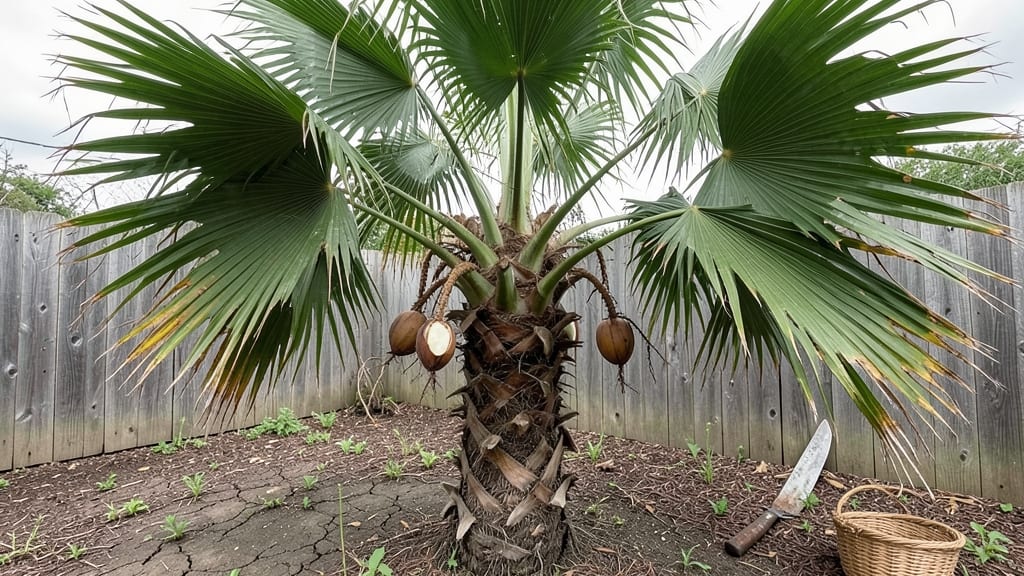
Growing palm trees for their fruit isn't just for tropical paradises—it's a year-round harvest you can achieve with the right species and care. 🌴 I've grown date palms in my Zone 9 backyard, and the sweet, caramel-like fruit they produce in winter makes every effort worth it.
These trees thrive where most fruit trees would freeze, offering shade, beauty, and edible rewards with surprisingly little maintenance.
The key is choosing cold-hardy varieties like Medjool dates or Texas sapote palms, which tolerate brief dips below freezing. You'll need well-draining soil, full sun, and occasional deep watering—no fancy equipment required.
My trees produce fruit within 3-5 years, and once established, they need minimal attention beyond annual fertilization. The real magic happens when you see those first clusters forming in late summer.
What you'll end up with is a tropical oasis that bears fruit twice yearly, depending on the species. The taste is unlike anything you'd find in stores—sweet, chewy, and packed with natural sugars.
Plus, the ornamental value is unbeatable: towering fronds sway year-round, and the trees become the centerpiece of any landscape. Even in cooler climates, container-growing makes it possible to bring palms indoors during winter.
Here's the thing—palm fruit trees aren't just low-maintenance; they're resilient. They handle drought better than most fruit trees and resist many pests. The biggest challenge? Patience—these trees take time to mature, but once they do, they reward you with decades of harvests.
Whether you're in Florida or California, there's a palm variety that can thrive in your climate. Let's get those first fruits growing!
📚 In This Guide
- What you need
- Instructions
- Tips and common mistakes
- Wrapping up and next steps
What you need
- ● Palm tree seeds or saplings: Choose from varieties like Cocos nucifera (coconut) or Phoenix dactylifera (date palm). For seeds, ensure they’re fresh (within 6 months) and viable.
- ● Well-draining soil: Mix 50% potting soil with 50% perlite/sand (10-15 lbs per planting hole). Palm trees hate soggy roots!
- ● Large containers or planting hole: For saplings: 15-20 gallon pots (with drainage holes) or a hole 3x wider than the root ball.
- ● For seeds: 6-inch deep pots (2-3 seeds per pot).
- ● Fertilizer: A balanced palm fertilizer (e.g., 8-2-12 NPK ratio) or organic options like composted manure or banana peels (for potassium). Apply every 3 months.
- ● Watering can or hose with nozzle: Aim for 1-2 gallons per watering (adjust for climate). Drip irrigation is ideal for mature trees.
- ● Mulch: 2-3 inches of wood chips or palm leaf mulch to retain moisture and regulate soil temp.
- ● Soil pH tester: Palms thrive in slightly acidic to neutral soil (pH 6.1-7.5). Adjust with lime (to raise) or sulfur (to lower) if needed.
- ● Pruning shears or saw: For trimming dead fronds or overgrowth. Sterilize tools with rubbing alcohol between cuts!
- ● Shade cloth (30-50% coverage): Protect young saplings from harsh sun during their first year.
- ● Support stakes: Use 3-4 ft bamboo stakes and soft ties to stabilize saplings in windy areas.
- ● Humidity tray: For seed germination, place pots on a tray with 1 inch of water and pebbles to maintain moisture.
How to grow and harvest palm tree fruit year-round
Palm trees thrive in warm climates and reward minimal care with stunning fruit—here's how to cultivate them successfully.
🌱 Step 1: Select the Right Palm Species for Your Climate
Not all palms produce fruit, so choose species known for edible yields like the date palm (Phoenix dactylifera) or coconut palm (Cocos nucifera). These thrive in USDA zones 10-12 and need full sun (6+ hours daily). If you live in cooler regions, opt for palm hybrids like the Medjool date palm, which tolerates slightly milder winters.
Check local frost dates—palms die back at 32°F or below, so protect young trees with frost cloth if needed. I always plant mine near a south-facing wall to capture reflected heat. The key is matching your climate to the palm's hardiness; a tropical species won't survive a New England winter, no matter how much you water it.
🪴 Step 2: Plant in Well-Draining Soil with Proper Spacing
Palms hate soggy roots, so amend native soil with sandy loam or a mix of 50% garden soil, 30% sand, and 20% compost. Dig a hole twice as wide as the root ball but no deeper—palms need room to spread their shallow roots. Space mature palms 15-20 feet apart to allow airflow and prevent fungal diseases.
Plant in early spring when soil warms to 65°F—this gives roots time to establish before summer heat. Water deeply after planting to settle soil around roots, but avoid overwatering. You'll know moisture is right when the top 2 inches of soil feel damp but not saturated. Mulch with 2-3 inches of organic mulch (like wood chips) to retain moisture and regulate soil temperature.
☀️ Step 3: Provide Consistent Water and Fertilize Seasonally
Young palms need weekly deep watering during their first year, while mature trees tolerate drought once established. Water at the base—never overhead—to prevent fungal spores from splashing onto fronds. You'll see healthy fronds as deep green and upright; yellowing or drooping signals over- or under-watering.
Fertilize twice yearly: in early spring with a balanced palm fertilizer (8-2-12) and again in mid-summer with a low-nitrogen, high-potassium blend (4-6-8) to encourage fruiting. Follow package rates—over-fertilizing burns roots. I swear by a slow-release granular fertilizer because it feeds palms steadily without the risk of salt buildup.
⏰ Step 4: Prune and Protect for Year-Round Fruit Production
Remove dead or yellow fronds in early spring to redirect energy to new growth. Never prune more than one-third of the fronds at a time—palms photosynthesize through their entire canopy. Watch for sap-sucking insects like palm weevils; treat infestations immediately with neem oil or systemic insecticide to prevent tree death.
Female palms produce fruit 1-2 years after planting, while males may never fruit. If you want edible fruit, plant known female cultivars (like 'Medjool' dates) and pollinate by hand if needed. Protect young fruit from birds and squirrels with netting—once established, palms usually outgrow these pests. Harvest when fruit reaches full color and firmness (dates turn golden-brown; coconuts turn brown and rattle when shaken).
🌿 Step 5: Harvest and Store for Long-Term Enjoyment
Dates ripen asynchronously, so check clusters weekly starting in late summer. Pick when the fruit detaches easily from the stem—unripe dates won’t soften after picking. Coconuts are ready when the husk turns tan and the shell sounds hollow when tapped. Harvest with a sharp knife, leaving a 1-inch stem to prevent bleeding.
Store dates at room temperature for 2-3 weeks to sweeten, then refrigerate. Coconuts keep 6-12 months in a cool, dry place. For long-term storage, freeze dates or dry coconuts in a dehydrator at 135°F for 8-12 hours. I always process a batch in late fall—fresh palm fruit makes an incredible holiday gift or pantry staple.
Tips & tricks for perfect palm tree fruit harvest
Growing fruit-bearing palm trees successfully comes down to understanding their unique needs—and avoiding common pitfalls that can turn your tropical dream into a disappointment. Here’s what I’ve learned from years of working with these stunning plants.
Climate Matching is Everything: When selecting your palm species in Step 1, don’t just look at hardiness zones—check your local frost dates and microclimate. I planted a coconut palm in my backyard once, only to watch it struggle through a mild winter that still dipped to 30°F. The key is choosing species that match not just your zone but your specific conditions. For example, Medjool date palms tolerate slightly cooler winters than other varieties, making them perfect for zone 9 gardens with proper winter protection.
Soil Science Matters More Than You Think: In Step 2, that soil mix of 50% garden soil, 30% sand, and 20% compost isn’t just arbitrary—it’s about replicating the well-draining conditions palms thrive in. I’ve seen palms struggle in heavy clay soils no matter how much I watered them. Test your native soil first—if it’s compacted or holds water, amend it aggressively. And remember, palms hate soggy roots, so if your area gets heavy rainfall, consider planting in a raised bed or mound to improve drainage.
Fertilizer Timing is Critical: The twice-yearly fertilization schedule in Step 3 works because it aligns with the palm’s natural growth cycles. Early spring feeding supports new frond growth, while the mid-summer high-potassium blend encourages fruiting. Here’s my pro tip: split that second application into two smaller feedings—once in early summer and again in late summer. This gives your palms a steady nutrient supply without risking salt buildup from over-fertilizing. I’ve seen palms scorch from too much fertilizer too quickly, so go slow and consistent.
Harvesting Secrets for Best Flavor: For Step 5, when checking dates weekly, look for that telltale sign: the fruit should pull away from the stem with gentle pressure, not requiring force. And here’s something nobody tells you—dates continue ripening after harvest! For maximum sweetness, store them at room temperature for those 2-3 weeks, checking daily. For coconuts, that hollow sound when tapped is your best indicator of readiness. I’ve cracked coconuts too early only to find the meat still underdeveloped—always trust that sound over the color.
Pro Tips for Fruit Of Palm Trees
- Growing fruit-bearing palm trees successfully comes down to understanding their unique needs—and avoiding common pitfalls that can turn your tropical dream into a disappointment.
- Climate Matching is Everything: When selecting your palm species in Step 1, don’t just look at hardiness zones—check your local frost dates and microclimate.
- Soil Science Matters More Than You Think: In Step 2, that soil mix of 50% garden soil, 30% sand, and 20% compost isn’t just arbitrary—it’s about replicating the well-draining conditions palms thrive in.
Frequently asked questions
Got questions about harvesting and enjoying fruit of palm trees? You’re not alone! Here are some of the most common queries—plus quick, practical answers to keep your palms thriving and your harvests plentiful.
Can I harvest fruit from any palm tree?
Not all palm trees produce edible fruit! Only species like coconut palms (Cocos nucifera), date palms (Phoenix dactylifera), and peach palms (Bactris gasipaes) yield fruit worth harvesting. Always research your palm’s variety before expecting a harvest—some are ornamental only!
How long does it take for a palm tree to bear fruit?
Patience is key! Most palm trees take 3–7 years to mature enough for fruiting, depending on the species and growing conditions. For example, date palms may fruit in 4–5 years, while coconut palms can take up to 10 years. Provide optimal care (sunlight, water, and soil) to speed up the process!
What’s the best way to tell when palm fruit is ripe?
Ripeness varies by type:
- Dates: Soft to touch, slightly sticky, and deep amber or brown.
- Coconuts: Hard shell with three "eyes" (pores) that ooze a milky liquid when tapped.
- Peach palms: Bright red or orange, with a sweet aroma when ripe.
Why isn’t my palm tree producing fruit?
Several factors could be at play:
- Age: Young palms (under 3 years) won’t fruit.
- Climate: Some palms need tropical heat; others thrive in arid conditions.
- Pollination: Many palms rely on wind, insects, or bats—lack of pollinators can halt fruiting.
- Nutrition: Poor soil or over/under-fertilizing stresses the tree.
Are palm fruits safe to eat raw, or do they need cooking?
It depends on the fruit!
- Dates: Perfectly safe raw—just rinse and enjoy!
- Coconut meat: Raw is fine, but many prefer it toasted or blended into milk.
- Peach palm fruit: Often cooked or fermented to soften the texture and enhance flavor.
- Heart of palm: Always cooked (raw can cause digestive upset).
Wrapping up and next steps
The fruit of palm trees offers a delicious, low-maintenance way to enjoy fresh, nutritious produce year-round—without the fuss! Whether you're drawn to sweet dates, creamy coconut, or exotic tropical delights, these trees deliver effortless abundance with minimal care.
Perfect for beginners or seasoned gardeners, their resilience and versatility make them a game-changer for any landscape.
Ready to harvest your own tropical bounty? Start by choosing the right palm variety for your climate, then gather your supplies and follow the simple steps outlined above. Your first crop could be just months away! 🌱✨