
Pests
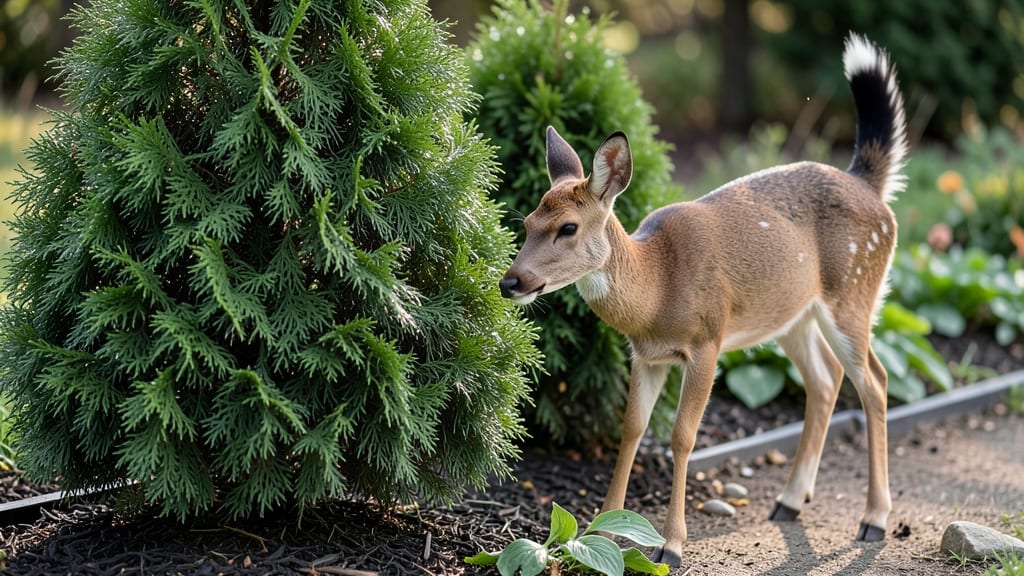
Planting deer-resistant arborvitae trees means finally getting that lush, evergreen barrier you’ve been dreaming of—without the constant battle of chewed leaves. 🌲 I’ve watched deer completely ignore my Thug arborvitae while devouring every other plant in the yard, and the difference is night and day.
These trees thrive in full sun to partial shade, need well-drained soil, and grow at a steady pace—perfect for creating privacy screens, windbreaks, or dramatic focal points. Spacing them 3-6 feet apart ensures they fill in beautifully without overcrowding, and their dense foliage deters deer while providing year-round greenery.
You’ll end up with a low-maintenance hedge that stays vibrant all winter, blocks unwanted views, and requires minimal pruning. Pair them with deer-resistant perennials like lavender or Russian sage for extra protection, and watch your landscape transform into a deer-proof sanctuary.
Works equally well for urban yards, rural properties, or anywhere deer are a problem. Here’s how to make them the star of your landscape design—without the browsing damage.
📚 In This Guide
- What you need
- Instructions
- Tips and common mistakes
- Wrapping up and next steps
What you need
- ● Deer-resistant arborvitae trees (e.g., Thuja occidentalis 'Emerald Green', 'American Arborvitae', or 'Deer Resistant' cultivars): Quantity: 3–5 plants (depending on desired height/coverage)
- ● Size: 3–5 ft tall (young trees establish faster)
- ● High-quality potting soil or native soil mix (enriched with compost)
- ● Organic mulch (e.g., shredded bark or pine straw, 3–4 inches)
- ○ Deer repellent spray (optional but recommended for extra protection; look for Thuja-safe formulas)
- ○ Tree guards or wire mesh (optional: 6–8 ft tall, buried 12 inches deep to deter gnawing)
- ● Shovel or trowel (for digging planting holes)
- ● Garden gloves (to protect your hands)
- ● Measuring tape (to space plants 3–6 ft apart)
- ● Wheelbarrow (for hauling soil/mulch)
- ● Watering can or hose with nozzle (gentle spray setting)
- ● Pruning shears (to trim damaged branches post-planting)
- ○ Soil pH test kit (optional: arborvitae prefer slightly acidic soil (pH 6.0–7.0))
How to plant deer-resistant arborvitae as an effective privacy screen
Here's the proven method I use to establish a dense, deer-proof evergreen barrier that thrives year-round.
🌱 Step 1: Select the Right Varieties for Your Climate
Not all arborvitae are equally deer-resistant. I recommend Emerald Green (Thuja occidentalis 'Smaragd') or American Arborvitae (Thuja occidentalis), as deer typically avoid these varieties due to their strong foliage oils. Check your hardiness zone—most arborvitae thrive in zones 3-8, but verify your local nursery's recommendations for specific cultivars.
If deer are a persistent problem in your area, consider Leyland Cypress (× Cupressocyparis leylandii) as an alternative—it’s less palatable and grows faster, though it may require more maintenance. Planting 4 trees spaced 3-4 feet apart creates a natural, dense barrier that deer won’t bother with once established.
🪴 Step 2: Prepare the Planting Site for Optimal Growth
Choose a location with full sun to partial shade—arborvitae tolerate light shade but grow best with 6+ hours of direct sunlight daily. Avoid low-lying areas where cold air settles, as these trees are susceptible to winter burn. Amend the soil with 2-3 inches of compost to improve drainage, especially if your soil is heavy clay.
Dig holes twice as wide as the root ball but only as deep as the container. Gently remove the tree from its pot and loosen any circling roots with your fingers. Place the tree in the hole so the top of the root ball sits 1-2 inches below ground level—this prevents stem rot and encourages strong root development.
💧 Step 3: Plant and Water for Immediate Stability
Backfill the hole with native soil, pressing lightly to eliminate air pockets but avoiding compaction. Water deeply until the soil is evenly moist to 12 inches deep—this encourages roots to grow downward rather than staying shallow. Mulch the base with 2-3 inches of shredded bark, keeping it 3 inches away from the trunk to prevent rot.
Deer are less likely to browse newly planted trees if they’re established quickly. After planting, water 2-3 times per week for the first month, then taper to once a week once the tree is settled. Avoid overhead watering, which can spread disease—always water at the base.
☀️ Step 4: Protect and Maintain for Long-Term Deer Resistance
For the first year, protect young trees with deer-resistant fencing (at least 8 feet tall) or repellent sprays containing rotten egg scent or garlic-based formulas. Deer learn to avoid arborvitae over time, but young, tender growth is still tempting. Prune lightly in early spring to shape the tree and encourage dense growth, but avoid heavy trimming, which can stress the plant.
Fertilize in early spring with a slow-release, balanced fertilizer (10-10-10 ratio) to support steady growth. Over-fertilizing can lead to weak, deer-attractive foliage, so follow package instructions carefully. Monitor for spider mites or bagworms—these pests weaken trees and make them more appealing to deer. Treat infestations immediately with neem oil or horticultural oil.
⏰ Step 5: Monitor and Adjust for a Deer-Proof Barrier
After 2-3 years, your arborvitae should establish a dense, deer-resistant screen. If deer continue to browse, consider adding physical barriers like wire mesh or planting companion species like boxwood or holly, which deer also avoid. Prune out any damaged branches in late winter to encourage new, healthy growth.
Here’s the thing—once arborvitae reach 5-6 feet tall, deer rarely bother them. The key is consistent watering, proper spacing, and early protection. With these steps, you’ll have a lush, evergreen barrier that stands up to even the hungriest deer.
Tips & tricks for perfect deer-resistant arborvitae planting
These proven strategies will help you establish a thriving, deer-proof evergreen screen that outlasts even the most persistent browsers.
Variety Selection Tip: When choosing between Emerald Green and American Arborvitae, consider your climate's specific challenges. Emerald Green handles urban pollution better, while American Arborvitae tolerates wetter soils. For coastal areas, the Leyland Cypress alternative mentioned in Step 1 grows faster but needs more maintenance—weigh this against your long-term care capacity. The key is selecting a variety that aligns with your local ecosystem's natural conditions.
Soil Preparation Strategy: The 2-3 inches of compost recommendation in Step 2 is non-negotiable for heavy clay soils, but don't overdo it. Too much organic matter can create anaerobic conditions that harm roots. For sandy soils, mix in some peat moss instead to improve water retention. Always test your soil's pH (ideal range is 6.0-7.0) before amending—arborvitae prefer slightly acidic to neutral conditions.
Watering Wisdom: The 2-3 times per week schedule in Step 3 assumes average rainfall conditions. In hot, dry summers, you may need to water daily until the trees establish strong root systems. A simple test: stick your finger 2 inches into the soil—if it's dry, water again. Drip irrigation systems work best for consistent moisture without overhead wetting, which prevents fungal diseases that make trees more appealing to deer.
Deer Defense Tactics: For the first year's protection mentioned in Step 4, combine physical barriers with repellents for maximum effectiveness. Hang deer-resistant fencing at least 8 feet tall (deer can jump this height) and apply repellent sprays every 4-6 weeks during browsing season. The rotten egg scent isn't just for shock value—it disrupts deer's feeding patterns through its strong sulfur compounds. Rotate repellent formulas seasonally to prevent deer from becoming accustomed to them.
Pro Tips for Deer Resistant Arborvitae Trees
- These proven strategies will help you establish a thriving, deer-proof evergreen screen that outlasts even the most persistent browsers.
- Variety Selection Tip: When choosing between Emerald Green and American Arborvitae, consider your climate's specific challenges.
- Soil Preparation Strategy: The 2-3 inches of compost recommendation in Step 2 is non-negotiable for heavy clay soils, but don't overdo it.
Frequently asked questions
Got questions about keeping deer away from your arborvitae? You’re not alone! Here are the most common concerns—and straightforward answers—to help you plant with confidence.
What makes arborvitae deer-resistant?
Deer-resistant arborvitae varieties, like Thuja occidentalis ‘Emerald Green’ or Thuja plicata ‘Green Giant’, have tough, fibrous foliage with a bitter taste deer avoid. Their waxy coating and strong scent also deter browsing. While no plant is 100% deer-proof, these types are far less appealing than tender options like hostas or roses.
When is the best time to plant deer-resistant arborvitae?
Plant in early spring or fall for ideal results. Spring (March–April) gives roots time to establish before summer heat, while fall (September–October) allows them to settle before winter dormancy. Avoid planting in extreme heat or frost—roots need consistent moisture to thrive.
Do I still need deer repellent if I plant resistant varieties?
While resistant arborvitae reduce risk, repellents (like hot pepper spray or deer-resistant granules) add extra protection, especially in high-deer areas. Reapply every 4–6 weeks or after rain. Physical barriers (like fencing) can also help young trees until they mature.
Are there alternatives if deer keep eating my arborvitae?
Yes! Try these deer-deterrent evergreens:
- Juniperus virginiana ‘Skyrocket’ (tall, aromatic)
- Picea pungens ‘Glauca Globosa’ (blue spruce, prickly)
- Ilex crenata ‘Green Lustre’ (holly, spiny leaves)
Why are my deer-resistant arborvitae still being eaten?
Possible culprits: starvation (deer eat anything in winter), young trees (new growth is tender), or misidentified varieties. Check labels—some “resistant” types may be less tough than advertised. Try spraying foliage with egg-based repellent or wrapping trunks in tree guards to protect bark.
Wrapping up and next steps
Choosing deer-resistant arborvitae is a game-changer for your privacy hedge—no more chewed leaves or ruined landscapes! 🌲 These evergreens offer year-round beauty while keeping deer at bay, making them a smart, low-maintenance pick. Whether you’re planting for aesthetics or functionality, you’ve got the perfect solution.
Ready to transform your yard? Start by selecting the best variety (like ‘Emerald Green’ or ‘American Arborvitae’) and plant with confidence. Your future self—and your deer—will thank you!