
Pruning
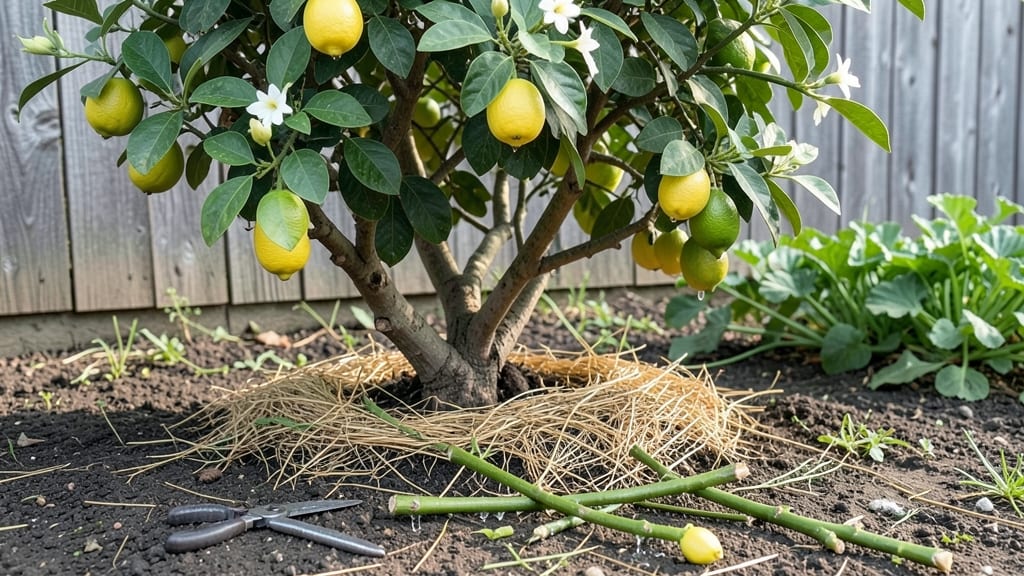
Cutting back your lemon tree at the right time isn’t just about shaping—it’s the secret to year-round fruitfulness that most gardeners miss. I’ve watched my own tree go from sparse blooms to heavy fruit loads simply by cutting back at the right times, and the difference is night and day.
The key isn’t just when you prune but how—thinning crowded branches and removing dead wood opens up the canopy to sunlight, which is what citrus trees crave for fruit production.
You’ll need sharp pruning shears, rubbing alcohol to sterilize cuts, and a clear day to avoid stressing the tree.
The best time to prune is late winter or early spring, just before new growth begins—but avoid heavy cuts in summer, when the tree is already working hard to produce fruit. I’ve made the mistake of pruning too late, and my tree took months to recover.
Even a small adjustment in timing can mean the difference between a harvest and a struggle.
What you’ll end up with is a lemon tree that’s not just pretty but productive—think glossy new leaves, abundant blossoms, and fruit appearing even in cooler months. The pruning itself takes about 20-30 minutes, and the payoff is worth every snip.
You’ll also notice fewer pests and diseases creeping in, since good airflow reduces humidity in the canopy. Once you see the first flush of blossoms after pruning, you’ll never go back to skipping this step.
This method works for both potted lemon trees and those planted in the ground, though container-grown trees need slightly lighter pruning. If you live in a colder climate, wait until after the last frost to prune—citrus trees are sensitive to cold, and fresh cuts can invite rot.
Start small, observe how your tree responds, and adjust next year based on what you learn. The goal isn’t perfection; it’s progress toward a tree that rewards you with lemons all season long.
📚 In This Guide
- What you need
- Instructions
- Tips and common mistakes
- Wrapping up and next steps
What you need
- ● Pruning shears: Bypass pruners (sharp, clean, and capable of cutting up to ¼-inch diameter branches). Example: Felco F-2 or similar.
- ● Loppers: For thicker branches (up to 1-inch diameter). Look for bypass-style loppers with a 10-12-inch handle for leverage.
- ○ Hand pruners (optional): For small, precise cuts (e.g., ½-inch or less).
- ● Garden saw: For branches thicker than 1-inch (e.g., 8-10-inch bow saw or pruning saw).
- ● Disposable gloves: Heavy-duty, nitrile-coated gloves to protect against thorns and sap.
- ● Rubbing alcohol (70% isopropyl) or bleach solution: For sterilizing tools between cuts (1 part bleach to 9 parts water).
- ○ Pruning sealant (optional): Wound dressing (e.g., Tanglefoot Tree Wound Pruning Seal) for large cuts.
- ● Trash bags or bucket: For collecting pruned branches (at least 5-gallon capacity).
- ● Ladder or step stool: Sturdy, non-slip (e.g., 24-36-inch height, weight-rated for 250+ lbs).
- ● Safety glasses: To shield eyes from debris.
- ● Work boots or closed-toe shoes: With ankle support for stability.
- ● Hose or spray bottle: For rinsing tools and cleaning sap off branches.
- ● Check the best pruning time for your climate (early spring or late winter, before new growth starts).
- ● Ensure the tree is healthy—no signs of disease (e.g., mold, oozing sap) or pest infestation.
- ● Have a clear plan: Sketch or mentally map out branches to remove (aim for 20-30% of the tree’s canopy).
- ● Water the tree 24 hours before pruning to reduce stress.
Instructions for cutting back your lemon tree
Here’s how to prune your lemon tree for better shape, airflow, and fruit production.
Time Your Pruning for Optimal Growth
Prune your lemon tree in late winter or early spring, just before new growth begins. This timing ensures you’re cutting back when the tree is dormant but ready to rebound with fresh energy. Avoid pruning in fall or winter when the tree is stressed or during blooming periods, as this can reduce next year’s fruit set.
Look for the first signs of bud swell on the branches—that’s your cue. If you’re in a warm climate where winter isn’t cold, prune after a light frost or when the tree shows signs of slowing down. You’ll notice older leaves yellowing slightly or dropping, signaling the tree is preparing for a growth spurt.
Remove Dead, Diseased, or Weak Branches First
Start by identifying and cutting out any dead, diseased, or crossing branches. Dead branches are dry, brittle, and snap easily when bent. Diseased branches may have dark spots, oozing sap, or unusual growths. Use clean, sharp pruning shears to make a clean cut just outside the branch collar—the swollen area where the branch meets the trunk or larger branch.
Crossing branches rub against each other, creating wounds that invite pests and disease. If two branches grow too close, remove the weaker one—the one with smaller diameter or less vigor. This step ensures your tree has a strong foundation for new growth and reduces future problems.
Thin Out Overcrowded Areas for Better Airflow
Next, focus on thinning out the canopy to improve airflow and sunlight penetration. Lemon trees need good airflow to prevent fungal diseases like powdery mildew. Look for branches that are growing inward or too densely packed. Remove about one-third of the oldest or least productive branches to open up the center of the tree.
You’ll notice some branches are shaded by others and look pale or sparse. These branches aren’t contributing much and should be pruned back to a strong lateral branch or bud. Avoid over-thinning—leave enough foliage to support photosynthesis. A well-thinned tree will have a balanced shape and fewer weak spots.
Shape the Tree for Balance and Fruit Production
Now, shape the tree by cutting back overgrown or leggy branches to encourage a compact, bushy form. Aim for a rounded, open-center shape that allows sunlight to reach the inner branches. Cut back to a strong outward-facing bud or branch to promote new growth in the right direction.
If your lemon tree has become too tall or top-heavy, you can lightly prune the top to reduce height, but avoid heavy pruning that could stress the tree. Focus on maintaining a balanced silhouette—no single branch should dominate the tree’s structure. After pruning, step back and visualize how sunlight will hit the tree throughout the day.
Clean Up and Apply Post-Pruning Care
After pruning, sterilize your tools with rubbing alcohol to prevent spreading disease. Collect and dispose of all pruned branches—don’t leave them on the ground, as they can harbor pests or fungi. Once the cuts are made, water the tree deeply to help it recover and reduce stress.
Apply a balanced fertilizer (like a 10-10-10 or citrus-specific formula) a few weeks after pruning to support new growth. Keep the tree well-watered but avoid overwatering, as fresh cuts are more susceptible to rot. Monitor the tree closely in the weeks following pruning for any signs of stress or disease.
Tips & tricks for pruning your lemon tree
A few simple tricks can make all the difference when pruning your lemon tree for maximum fruit production and tree health.
Timing is Everything: In Step 1, when you're looking for those first signs of bud swell, don't rush—wait until you see at least 20-30% of the buds starting to plump up. This usually happens about 2-3 weeks before your last expected frost date. If you prune too early, you risk encouraging new growth that could be damaged by cold. If you wait too late, you might miss the optimal window for spring growth.
Branch Collar Matters: When removing branches in Step 2, pay close attention to the branch collar—the swollen area where the branch meets the trunk. Cutting just outside this collar prevents damage to the protective tissues that help wounds heal. I've seen people cut too close to the trunk, which can leave ugly scars and invite disease. Use clean pruning shears and make your cuts at a 45-degree angle to help water run off.
Visualize the Airflow: In Step 3, when you're thinning out the canopy, step back and visualize how sunlight moves through the tree. You want to create a dome shape that allows light to reach all branches. Remove branches that grow straight up or inward—they block sunlight from reaching the inner leaves. Aim to remove about one-third of the oldest branches to encourage new growth while maintaining the tree's structure.
Post-Pruning Care: After you've finished pruning, don't just walk away! In Step 5, sterilize your tools with rubbing alcohol to prevent spreading disease between cuts. Then, water the tree deeply to help it recover. I've found that applying a thin layer of compost around the base after pruning helps retain moisture and provides nutrients for new growth. Monitor the tree closely for the first few weeks after pruning for any signs of stress or disease.
Pro Tips for Cutting Back Lemon Tree
- A few simple tricks can make all the difference when pruning your lemon tree for maximum fruit production and tree health.
- Timing is Everything: In Step 1, when you're looking for those first signs of bud swell, don't rush—wait until you see at least 20-30% of the buds starting to plump up.
- Branch Collar Matters: When removing branches in Step 2, pay close attention to the branch collar—the swollen area where the branch meets the trunk.
Frequently asked questions
Got questions about pruning your lemon tree? You’re not alone—many gardeners wonder how to time cuts, what tools to use, or how to avoid mistakes. Here are answers to the most common queries to help you prune like a pro!
When is the best time of year to cut back a lemon tree?
The ideal time is late winter or early spring (just before new growth starts). This gives your tree a head start on recovery and avoids stressing it during fruiting seasons. Avoid heavy pruning in summer or fall, as it can disrupt flowering or fruit production.
Can I prune a lemon tree at any time, or will it hurt the fruit?
Light pruning (removing dead or crossing branches) is safe year-round, but major cuts should wait for dormancy. Pruning during flowering or fruiting can reduce yields, so plan ahead! If you must prune mid-season, keep cuts minimal to minimize stress.
How do I know which branches to cut back?
Focus on:
- Dead/diseased branches (snap test: dry branches break easily).
- Overcrowded or crossing branches (rubbing creates wounds).
- Suckers (shoots growing from the base or trunk).
- Water sprouts (fast-growing vertical shoots).
What if my lemon tree doesn’t bloom after pruning?
Lemon trees need balanced pruning—don’t overdo it! If no flowers appear, check:
- Light exposure (6+ hours of sun daily).
- Age of the tree (young trees may take 2–3 years to fruit).
- Fertilizer (low nitrogen can delay blooming; use citrus-specific feed).
Do I need special tools, or will regular pruners work?
Basic pruners work for small branches, but for thicker limbs (½" or larger), use bypass pruners or a pruning saw. Sterilize tools with rubbing alcohol to prevent disease spread. Avoid hedge trimmers—they tear wood, inviting pests.
Wrapping up and next steps
Cutting back your lemon tree isn’t just about shaping—it’s about revitalizing your plant for bountiful harvests year after year. By following seasonal pruning techniques, you’ll encourage healthier growth, better airflow, and more delicious fruit. 🌿✨
Ready to take action? Start by scheduling your next pruning session—whether it’s a light trim in spring or a deeper cut in winter—and watch your lemon tree thrive! Your future lemons are waiting!