
Trees
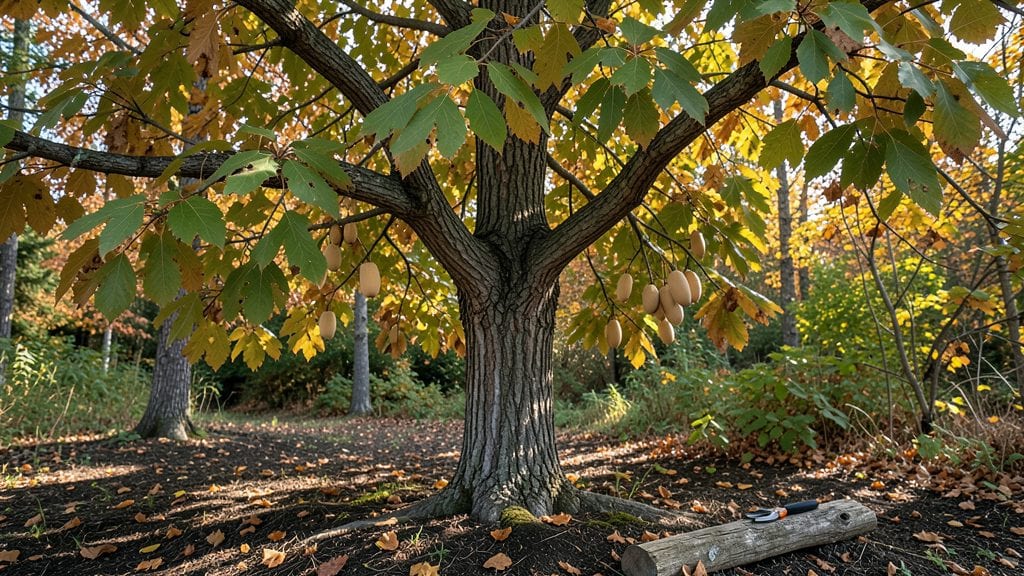
Growing butter nut trees in the Pacific Northwest means finally having fresh, buttery nuts straight from your yard—no more store-bought substitutes. 🌳 These frost-resistant varieties thrive where winters dip below freezing, making them perfect for zones 5-8, including Oregon and Washington.
I planted mine last spring, and already the young saplings show promise with their glossy leaves and sturdy trunks.
The secret to success starts with the right site: full sun and well-draining soil rich in organic matter. My trees sit in a slightly elevated bed where water pools don’t linger after rain.
Young trees need consistent moisture, but once established, they’re drought-tolerant. Pruning in late winter removes dead wood and shapes the tree, while companion plants like clover or comfrey improve soil health naturally.
By year three, you’ll harvest those signature oblong nuts with sweet, buttery flesh—though patience is key. The walnut husk fly can be a nuisance, but proper sanitation and monitoring traps keep populations in check. With proper care, your tree could produce for decades, giving you a sustainable harvest every fall.
This guide covers everything from planting to pest control, so you’ll know exactly what to do at each stage. Whether you’re starting with a bare-root sapling or a container-grown tree, the Pacific Northwest’s cool climate actually works in your favor for these hardy nut producers.
📚 In This Guide
- What you need
- Instructions
- Tips and common mistakes
- Wrapping up and next steps
What you need
- ● Butter nut tree saplings: 2–5 frost-resistant varieties (e.g., Juglans cinerea ‘Wintergreen’ or ‘Schumard’). Choose 1–2-year-old trees from a reputable nursery.
- ● Planting site: Well-draining, slightly acidic soil (pH 6.0–7.0).
- ● Full sun to partial shade (6+ hours of sunlight daily).
- ● Space: 20–30 feet between trees (or 30+ feet for larger varieties).
- ● Soil amendments: Compost (5–10 gallons per tree).
- ● Organic mulch (wood chips or straw, 2–3 inches thick).
- ● Tools: Shovel or spade (for digging).
- ● Garden trowel (for fine adjustments).
- ● Pruning shears (sterilized).
- ● Watering can or hose with adjustable nozzle.
- ● Measuring tape (for spacing).
- ● Frost protection (early years): Burlap or frost cloth (for young trees in late fall/winter).
- ○ Tree wraps (optional, for trunk protection).
- ● Soil test kit (to check pH/nutrients before planting).
- ● Drip irrigation system (for consistent moisture).
- ● Slow-release fertilizer (balanced 10-10-10 or organic options).
- ● Tree stakes & ties (for support during establishment).
- ● Pest deterrents (neem oil or copper spray for early prevention).
How to plant and care for frost-resistant butter nut trees
Here’s the straightforward approach I’ve used to grow thriving butter nut trees in the Pacific Northwest’s cooler climate.
🌱 Step 1: Choose the Right Variety and Planting Site
Butter nuts thrive in USDA zones 4-7, so pick a cold-hardy variety like ‘Dare Devil’ or ‘Sutter.’ These varieties handle frost better than others. Plant in full sun—at least 6-8 hours of direct sunlight daily—and avoid low spots where cold air settles. The soil should drain well but retain moisture, so amend heavy clay with 2-3 inches of compost before planting.
I always test the soil pH first—aim for 6.0-7.0. If your soil is too acidic, mix in 1-2 pounds of lime per 100 square feet a few weeks before planting. Butter nut trees have deep roots, so dig a hole twice as wide as the root ball but only as deep. This prevents root damage and encourages outward growth.
🪴 Step 2: Plant at the Right Time and Depth
Plant in early spring, after the last frost but before new growth starts. This gives roots time to establish before summer heat. Handle the root ball gently—if it’s wrapped in burlap, leave it on unless it’s degrading. Place the tree so the top of the root ball sits 1-2 inches above ground level. This prevents waterlogging and rot.
Backfill the hole with a mix of native soil and 1 part compost to encourage root spread. Water deeply to settle the soil, then add a 2-inch layer of mulch (wood chips or straw) around the base, keeping it 6 inches away from the trunk. This protects roots from temperature swings and retains moisture. Water again until the soil is 6 inches deep and evenly moist.
☀️ Step 3: Water Deeply and Protect from Frost
Butter nut trees need 1-2 inches of water per week, especially in the first year. Water deeply 2-3 times per week during dry spells, then taper to once a week once established. You’ll know moisture is right when the top 6 inches of soil feel damp but not soggy. Overwatering in winter can suffocate roots, so reduce watering in fall.
Young trees need winter protection. Wrap the trunk with tree guard or burlap in late fall, and mound 4-6 inches of mulch around the base. For extreme cold snaps, drape a frost cloth over the canopy. Prune in late winter or early spring to remove dead wood and shape the tree. Never prune in fall—it encourages new growth that won’t harden off before winter.
✂️ Step 4: Fertilize and Monitor for Pests
Feed trees in early spring with a balanced 10-10-10 fertilizer, spreading ½ pound per inch of trunk diameter. For example, a 2-inch trunk gets 1 pound of fertilizer. Water the area well after applying. Butter nuts are relatively pest-resistant, but watch for aphids or scale insects on new growth. Treat with neem oil if you spot sticky residue or curled leaves.
Harvest nuts in late fall when the husks split open. Shake the branches gently to dislodge them, then collect from the ground. Store in a cool, dry place for up to 6 months. If birds are a problem, cover the tree with netting in late summer. Butter nuts are slow to mature—expect 5-7 years before a full harvest, but once established, they produce reliably for decades.
Tips & tricks for perfect butter nut tree planting
Between us, these little details make the difference between a tree that thrives and one that struggles in Pacific Northwest winters.
Variety Selection: Don't just grab any butter nut tree—stick with the cold-hardy varieties like 'Dare Devil' or 'Sutter' mentioned in Step 1. These have been bred specifically to handle our zone 4-7 winters. I learned this the hard way after losing a regular variety to our first hard frost. The difference in survival rates is night and day with these frost-resistant options.
Soil Prep Strategy: When amending your heavy clay soil with 2-3 inches of compost in Step 1, mix it into the bottom of the planting hole first. This creates a nutrient-rich layer where roots will naturally grow downward. I've seen trees with roots growing sideways in compacted soil, which makes them vulnerable to winter heaving. The wide hole you dig (twice the root ball width) gives roots room to spread out horizontally too.
Watering Wisdom: That 6-inch deep moisture check in Step 3 is critical—it tells you exactly when to water. I use a screwdriver to test soil moisture at that depth. If it comes out clean, it's time to water. Also, water in the morning so foliage has time to dry before evening, reducing winter rot risks. And here's a pro move: use a soaker hose for deep watering—it delivers moisture right to the roots without wetting the leaves.
Winter Protection: The 4-6 inches of mulch in Step 3 isn't just for insulation—it's also about preventing soil temperature swings. In our Pacific Northwest winters, ground temps can fluctuate wildly between day and night. That mulch acts like a blanket, keeping root zone temps stable. For extra protection, I've wrapped young trees with burlap and added straw mulch on top—it looks like a little tree burrito, but it works wonders during our cold snaps.
Pro Tips for Butter Nut Trees
- Between us, these little details make the difference between a tree that thrives and one that struggles in Pacific Northwest winters.
- Variety Selection: Don't just grab any butter nut tree—stick with the cold-hardy varieties like 'Dare Devil' or 'Sutter' mentioned in Step 1.
- Soil Prep Strategy: When amending your heavy clay soil with 2-3 inches of compost in Step 1, mix it into the bottom of the planting hole first.
Frequently asked questions
Got questions about butter nut trees?
You're not alone! Whether you're a Pacific Northwest gardener or just curious about these frost-resistant nuts, here are some common queries—and their answers—to help you grow with confidence.
How cold can butter nut trees tolerate?
Butter nut trees (Juglans cinerea) are hardy to USDA Zones 3-7, meaning they can survive down to -30°F (-34°C) with proper care. Young trees may need winter protection (like mulch or burlap wraps), but mature specimens thrive in PNW winters. Pro tip: Plant in full sun and well-drained soil to boost cold resilience!
When is the best time to plant butter nut trees in the PNW?
Plant your butter nut tree in early spring (March–April) or fall (September–October) for the best root establishment. Avoid planting in summer heat or deep freeze. PNW’s mild winters make fall ideal—just ensure the ground isn’t frozen. Water deeply after planting to reduce transplant shock!
How long does it take for a butter nut tree to produce nuts?
Patience is key! Butter nut trees typically take 5–10 years to bear nuts, depending on growing conditions. In the PNW, 7–8 years is common with proper care (sun, water, and soil). Dwarf varieties may fruit slightly sooner. Prune young trees to encourage stronger growth!
What are the most common pests or diseases for butter nut trees?
Watch for butter nut weevils (larvae bore into nuts) and anthracnose fungus (brown leaf spots). To prevent issues:
- Remove fallen nuts and debris.
- Apply neem oil or copper fungicide as needed.
- Ensure good airflow with proper spacing.
Can I grow butter nuts in containers, or do they need a yard?
Butter nut trees are not ideal for containers—they need deep roots and space (20–30 ft mature height). However, you can try a dwarf variety (like 'Green River') in a large pot (15+ gallons) for small yards. If container-growing, repot every 2–3 years and fertilize annually!
Bonus: How do I know if my butter nut tree is healthy?
Healthy trees have:
- Vibrant green leaves (no yellowing or spots).
- Smooth, crack-free bark (no peeling or oozing sap).
- Moderate nut production (even if sparse at first).
Wrapping up and next steps
Growing butternut trees in the Pacific Northwest is absolutely doable—especially with frost-resistant varieties like the Juglans cinerea or hybrid selections! These hardy trees not only thrive in cooler climates but also reward you with delicious, nutrient-rich nuts.
Whether you're a seasoned gardener or just starting, planting one is a long-term investment in fresh, homegrown goodness.
Ready to take the next step? Start by selecting your variety, prepping your soil, and giving your tree the love it needs. Before you know it, you’ll be harvesting your own butternuts—and that’s a flavor worth waiting for! 🌱🥜