Trees
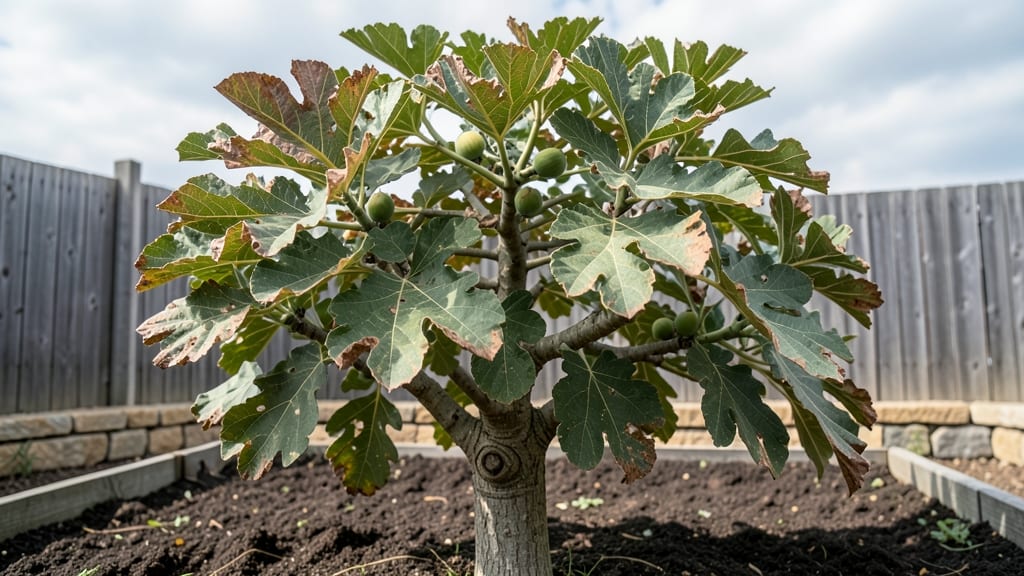
When your Turkey Fig tree leaves turn brown, it’s usually a cry for help—not a death sentence. 🌿 I’ve nursed back more than a few of these fast-growing privacy screens after brown patches, and the fixes are simpler than you’d think.
The key is figuring out whether your tree is thirsty, drowning, stressed, or under attack.
Start by checking the soil: if it’s bone-dry two inches down, underwatering’s likely. If it’s soggy, you’re overdoing it. Brown edges often mean low humidity, while yellowing between veins signals nutrient issues. Pests like spider mites leave stippled leaves, while fungal spots create dark, greasy patches.
Once you spot the pattern, the solution becomes clear—adjust watering, prune damaged growth, or treat pests before they spread.
📚 In This Guide
- What you need
- Instructions
- Tips and common mistakes
- Wrapping up and next steps
What you need
- ● Brown Turkey Fig Tree: 1–3 saplings or mature trees (depending on desired screen size). Look for healthy, disease-free plants at a local nursery.
- ● Well-draining soil: A mix of native soil, compost (20%), and perlite or sand (10–20%) for aeration. Pro tip: Brown turkey figs thrive in slightly acidic to neutral soil (pH 6.0–7.5).
- ● Mulch: 2–3 inches of organic mulch (e.g., wood chips or bark) to retain moisture and regulate temperature.
- ● Garden shovel or spade: For digging holes (1.5x wider and deeper than the root ball).
- ● Pruning shears: Sharp, sterilized shears for trimming (avoid dull blades to prevent tearing).
- ● Watering can or hose with a gentle nozzle: For deep watering (1–2 gallons per tree initially).
- ○ Gloves & knee pads: Optional but highly recommended! Protect your hands and joints during planting.
- ○ Stakes & ties (optional): For young trees in windy areas to provide temporary support.
- ● Sunlight: A location with full sun (6+ hours/day)—brown turkey figs are sun-worshippers!
- ● Space: Mature trees can reach 15–25 feet tall and wide. Plan for spacing (15–20 feet apart for a dense screen).
- ● Drought tolerance: Once established, these trees need minimal watering (water deeply 1–2x/week in dry spells).
Step-by-Step guide to reviving brown Turkey fig tree leaves
Here's how I nurse these tough trees back to vibrant green—no fancy tools, just smart care.
🌿 Step 1: Assess the Damage and Identify the Cause
Start by examining the leaves closely. Brown Turkey figs typically develop brown leaves due to underwatering, overwatering, or nutrient deficiency. Check the soil—if it's bone dry 2 inches deep, you're underwatering. If it's soggy with a foul smell, you're overwatering. Yellowing between veins usually means iron deficiency.
Look at the tree's location too. If it's in full afternoon sun without afternoon shade, the leaves may be sunburned. Brown edges often signal windburn or salt buildup from tap water. I always check the soil pH with a simple test kit—figs prefer 6.0-7.0. If yours is outside that range, that's likely the culprit.
💧 Step 2: Adjust Watering and Soil Conditions
Brown Turkey figs need deep but infrequent watering. Water only when the top 4-6 inches of soil feel dry—stick your finger in to check. If the soil is dry, water slowly until it runs out the drainage holes. If it's still damp, wait another day. I use a soaker hose for established trees to deliver water directly to the roots without wetting the leaves.
For nutrient issues, I mix in 2-3 tablespoons of citrus fruit fertilizer (figs love the zinc and iron) around the drip line. If your soil is alkaline, add 1 inch of sulfur per square foot and re-test in 3 months. Mulch with 2-3 inches of organic mulch to retain moisture and regulate soil temperature. Keep the mulch 6 inches away from the trunk to prevent rot.
☀️ Step 3: Provide Proper Light and Airflow
Brown Turkey figs thrive in full sun (6+ hours daily), but they need afternoon shade in hot climates. If your tree is in intense afternoon sun, prune nearby structures or install shade cloth (30-50% density) for the hottest 2-3 hours. You'll see new growth within 2-4 weeks once the stress is removed.
Ensure good airflow by pruning out any crossing or crowded branches. I always remove any dead or diseased branches first—sterilize your pruners with rubbing alcohol between cuts to prevent spreading issues. Thin the canopy by 25-30% to let light and air penetrate to the center. This encourages new leaf growth from the inside out.
✂️ Step 4: Prune Strategically to Encourage New Growth
Prune in late winter or early spring when the tree is dormant. Cut back any branches with more than 50% brown leaves to encourage new growth. Make cuts just above a leaf node or outward-facing bud. Avoid "heading back" (cutting into old wood)—figs respond poorly to severe pruning and may not regrow.
For severely affected branches, I make a small notch above a healthy bud to signal the tree where to grow. Water thoroughly after pruning to reduce stress. You'll see new shoots emerging within 3-6 weeks if the tree is otherwise healthy. If no new growth appears after 8 weeks, reassess water, light, and soil conditions.
Tips & tricks for reviving brown Turkey fig tree leaves
Here's what nobody tells you about bringing these tough trees back to life—tricks that'll have your fig tree thriving in no time.
Soil Test First: Before adjusting anything, grab a soil test kit to check your pH and nutrient levels. Fig trees prefer 6.0-7.0 pH, and they're particularly sensitive to iron deficiency. I've seen trees with perfect watering still struggling because their soil was too alkaline. If your test shows pH above 7.0, add 1 inch of sulfur per square foot and retest in 3 months—this is the quickest way to fix the problem.
Watering Secret: The 4-6 inch deep soil check in Step 2 is your golden rule. Use your finger to test moisture—if it's dry at that depth, water slowly until it runs out the drainage holes. For established trees, I use a soaker hose to deliver water directly to the roots without wetting the leaves, which prevents salt buildup from tap water. Watering in the morning gives the tree time to dry out before evening, reducing fungal risks.
Pruning Hack: When pruning branches with more than 50% brown leaves, make your cuts just above a leaf node or outward-facing bud. I've found that making a small notch above a healthy bud signals the tree exactly where to grow new shoots. This method gives you more control over where new growth appears, especially important for shaping your privacy screen. Always sterilize your pruners with rubbing alcohol between cuts to prevent spreading any potential diseases.
Shade Strategy: For trees in intense afternoon sun, I recommend installing shade cloth with 30-50% density for just the hottest 2-3 hours in the afternoon. You'll see new growth within 2-4 weeks once you remove this stress factor. The key is timing—too much shade all day can weaken the tree, but afternoon protection makes all the difference in hot climates.
Pro Tips for Brown Turkey Fig Tree Leaves
- Here's what nobody tells you about bringing these tough trees back to life—tricks that'll have your fig tree thriving in no time.
- Soil Test First: Before adjusting anything, grab a soil test kit to check your pH and nutrient levels.
- Watering Secret: The 4-6 inch deep soil check in Step 2 is your golden rule.
Frequently asked questions
How fast does a Brown Turkey Fig Tree grow for a privacy screen?
A Brown Turkey Fig Tree grows at a moderate pace, adding about 12–24 inches per year under ideal conditions. With proper spacing (15–20 feet apart), you can expect a dense privacy screen in 3–5 years. For faster results, plant multiple trees or use dwarf varieties like Little Miss Figgy.
When is the best time to plant Brown Turkey Fig Trees?
Plant your trees in early spring or fall when temperatures are mild (50–75°F). This gives roots time to establish before extreme heat or cold. Avoid planting in summer—young trees can struggle with transplant shock in intense sun or drought.
What can I do if my Brown Turkey Fig Tree leaves turn brown or yellow?
Brown or yellow leaves usually signal overwatering, underwatering, or pests. Check soil moisture—figs prefer well-draining soil. If leaves are crispy, it’s likely drought stress; if mushy, root rot may be the issue. Inspect for scale insects or aphids and treat with neem oil if needed.
Are there drought-tolerant alternatives to Brown Turkey Fig Trees?
Yes! If you need low-maintenance privacy with drought tolerance, consider:
- Texas Ebony (Ebenopsis ebano) – Thrives in heat, minimal water
- Desert Willow (Chilopsis linearis) – Fast-growing, drought-resistant
- Olive Tree (Olea europaea) – Classic Mediterranean choice
- Mexican Sycamore (Platanus mexicana) – Handles poor soil well
Can I grow Brown Turkey Figs for fruit and privacy?
Brown Turkey is a dual-purpose variety—it produces sweet, purple-skinned figs in late summer while maintaining a lush, dense canopy. Just be prepared for messy fruit drops (use a net if needed) and prune annually to balance growth and harvest.
Wrapping up and next steps
Transforming your outdoor space with brown turkey fig tree leaves is a game-changer—offering lush, year-round privacy with minimal fuss! 🌿 Whether you're a busy homeowner or a gardening newbie, this resilient tree delivers beauty and functionality without the high-maintenance demands.
Now that you’re armed with the right knowledge, it’s time to plant, nurture, and enjoy your new green sanctuary.
Ready to take the next step? Mark your calendar, gather your tools, and start planting—your future shade and serenity await! 🌱