Pruning
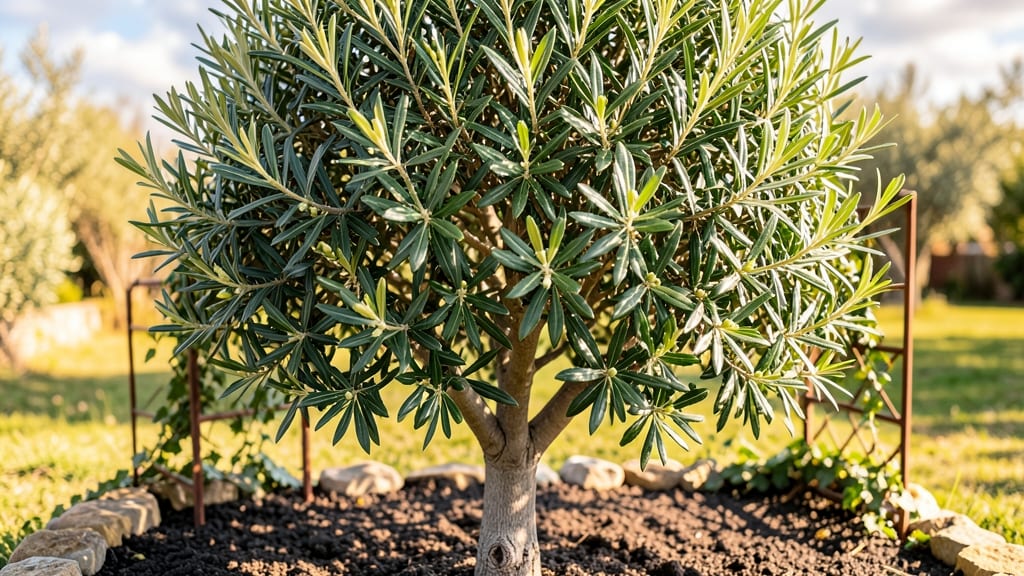
The Wilsoni olive tree thrives where others struggle—cool coastal climates like the Pacific Northwest. 🌿 I’ve grown mine for five years through Seattle winters, and it’s not just surviving; it’s putting out glossy new leaves and tiny, edible olives every season.
Most olive trees need Mediterranean heat, but this variety handles misty summers and damp winters like a champ.
What makes it special? Unlike finicky olive cultivars, Wilsoni tolerates 60°F winters and even does well in USDA Zone 8 when sheltered. It’s a small tree—10 to 15 feet tall—so it fits urban yards, and its silvery-green foliage adds texture that’s hard to beat.
The trade-off? It grows slower than other olives, but that means fewer pruning headaches for beginners.
You’ll end up with a tree that looks like it belongs in a Tuscan courtyard, even in Portland. The leaves stay leathery and vibrant year-round, and with the right care, you’ll get olives by year three or four—small but perfectly usable for curing.
The key is mimicking its natural Mediterranean rhythm: less water in winter, more in summer, and pruning only to shape, not to force growth.
Works in containers too—just use a 15-gallon pot and bring it indoors when temps drop below 30°F. Here’s how to keep it thriving without the fuss of traditional olives.
📚 In This Guide
- What you need
- Instructions
- Tips and common mistakes
- Wrapping up and next steps
What you need
- ● Pruning shears: Bypass pruners (sharp, 6–8 inch blades) for small branches.
- ● Loppers: 1 pair (18–24 inch) for thicker branches (½–1.5 inch diameter).
- ● Pruning saw: 1 curved-tooth saw (for branches >1.5 inch).
- ● Disinfectant: 70% isopropyl alcohol or 10% bleach solution (1 part bleach to 9 parts water) to sterilize tools between cuts.
- ● Gloves: Heavy-duty leather or nitrile-coated (olive branches can be thorny!).
- ● Tarp or drop cloth: 1 (4x6 ft) to collect debris.
- ● Rake: 1 (for clearing fallen leaves/branches).
- ○ Pruning sealant (optional but helpful): Wound dressing (e.g., Tanglefoot Tree Wound Pruning Seal) for large cuts.
- ● Ladder: Extendable (12–16 ft) for tall trees.
- ● Pole pruner: For high branches (if no ladder is available).
- ● Marking twine or flags: To tag branches for removal.
- ● Compost bin: For repurposing pruned branches.
- ● Safety glasses: Protect your eyes from debris.
Step-by-step instructions for growing a healthy Wilsoni olive tree
Here's how I've successfully cultivated this hardy Mediterranean beauty in cooler climates.
🌱 Step 1: Select and Prepare the Right Location
The Wilsoni olive thrives in full sun—at least 6-8 hours daily—but handles Pacific Northwest's milder sun better than other varieties. Choose a sheltered spot against a south-facing wall or fence to protect it from harsh winds, which can stress young trees. I always test the site by observing how much sunlight it gets during the winter months—this tree needs consistent exposure even when days are shorter.
Amend the soil with 3-4 inches of compost mixed into the top 12 inches of native soil. Wilsoni olives prefer well-draining, slightly alkaline soil with a pH between 7.0-8.0. If your soil is heavy clay, create a raised bed or mound to improve drainage. The roots will thank you later with stronger growth.
🪴 Step 2: Plant at the Correct Depth and Stake for Support
Dig a hole twice as wide as the root ball but no deeper. Gently remove the tree from its container and loosen any circling roots with your fingers. Position the tree so the top of the root ball sits 1-2 inches above ground level—this prevents water from pooling at the base and causing rot. Place the tree in the hole and backfill with native soil mixed with compost.
Firm the soil gently around the roots, creating a slight basin to catch water. Install a 5-6 foot stake on the north side of the tree and secure it with soft tree ties. This prevents wind rock, which can damage the root system. Water deeply immediately after planting to settle the soil and eliminate air pockets.
☀️ Step 3: Water Deeply and Establish a Consistent Routine
Water the tree deeply once per week during the first growing season, providing about 1-2 gallons depending on pot size. Check moisture by sticking your finger 2-3 inches into the soil—if it feels dry, water again. Overwatering is the biggest killer of young olives, so let the top 2-3 inches of soil dry out between waterings.
Mulch around the base with 2-3 inches of wood chips or straw, keeping it 6 inches away from the trunk to prevent rot. This conserves moisture, regulates soil temperature, and reduces weed competition. I always reapply mulch annually to maintain its protective layer.
✂️ Step 4: Prune for Shape and Airflow in Early Spring
Prune your Wilsoni olive in late winter or early spring, before new growth begins. Remove any dead, diseased, or crossing branches first, cutting back to the nearest outward-facing bud. Thin out crowded branches to improve airflow—this prevents fungal diseases that thrive in humid Pacific Northwest climates.
Shape the tree by selectively pruning to encourage an open canopy. Aim for a balanced form with the lowest branches 3-4 feet from the ground for easier harvesting. Avoid heavy pruning in fall, as new growth won't harden off before winter. You'll see stronger, more vigorous growth in the following season.
🌿 Step 5: Fertilize and Monitor for Pests
Apply a balanced 10-10-10 fertilizer in early spring, using about ½ pound per 100 square feet of soil. Water thoroughly after application to prevent root burn. In midsummer, switch to a low-nitrogen, high-phosphorus fertilizer (like 5-10-10) to encourage fruit development. Always follow package instructions for application rates.
Watch for common pests like olive fruit fly and scale insects. If you spot sticky residue on leaves or small black flies, treat with neem oil or insecticidal soap. I've found that maintaining tree health through proper watering and pruning reduces pest issues significantly. Healthy trees naturally resist most infestations.
Tips & tricks for perfect Wilsoni olive tree cultivation
Here's what nobody tells you about growing this Mediterranean beauty in cooler climates—tricks that make all the difference between a struggling plant and a thriving tree.
Sunlight Strategy: While Wilsoni olives need that critical 6-8 hours of daily sun, don't assume summer sun equals winter sun. I've seen trees fail because gardeners only checked summer sunlight. Test your site during the shortest winter days—if it gets less than 4 hours, supplement with a south-facing wall or portable grow light during critical months. The Pacific Northwest's winter light is weaker, so every extra hour counts.
Soil Science: That 7.0-8.0 pH range is non-negotiable for Wilsoni olives, but don't just test once. I test my soil pH annually because organic matter decomposition naturally lowers pH over time. If you're in acidic Pacific Northwest soil, mix in crushed oyster shell or dolomitic lime according to package instructions to maintain that alkaline balance. The roots will reward you with stronger growth.
Watering Wisdom: The 2-3 inch dry zone between waterings is crucial, but timing matters too. Water in the early morning to prevent fungal issues from evening moisture. I've found that watering at the same time daily creates a rhythm your tree will appreciate—consistency matters more than exact amounts. And always water at the base, not the leaves, to prevent disease.
Pruning Precision: When shaping your tree in late winter or early spring, focus on creating an "open vase" shape rather than a dense canopy. This improves airflow and sunlight penetration, which is especially important in humid Pacific Northwest climates. I like to make my first pruning cuts just outside the outward-facing buds—this encourages new growth in the direction I want while maintaining the tree's natural structure.
Pro Tips for Wilsoni Olive Tree
- Here's what nobody tells you about growing this Mediterranean beauty in cooler climates—tricks that make all the difference between a struggling plant and a thriving tree.
- Sunlight Strategy: While Wilsoni olives need that critical 6-8 hours of daily sun, don't assume summer sun equals winter sun.
- Soil Science: That 7.0-8.0 pH range is non-negotiable for Wilsoni olives, but don't just test once.
Frequently asked questions
Got questions about growing and caring for your Wilsoni Olive Tree? You’re not alone! Here are answers to the most common queries—from pruning to troubleshooting—so you can keep your Mediterranean beauty thriving in the Pacific Northwest.
How often should I prune my Wilsoni Olive Tree?
Prune your Olea europaea ‘Wilsonii’ lightly in late winter or early spring (before new growth starts) to shape it and encourage airflow. Avoid heavy pruning—olive trees respond best to gradual trimming. Pro tip: Remove only dead, crossing, or overcrowded branches to maintain its natural form.
Can Wilsoni Olive Trees survive PNW winters?
Yes! These trees are hardy to USDA Zone 7 (down to 0°F), making them perfect for the Pacific Northwest. Key tip: Mulch the base in winter for extra insulation, and avoid pruning in fall—it can stimulate tender new growth vulnerable to frost.
What if my olive tree’s leaves turn yellow?
Yellowing leaves often signal overwatering or poor drainage. Olive trees prefer dry conditions—water deeply but infrequently (every 2–3 weeks in summer, less in winter). Check for root rot if yellowing persists, and ensure the soil drains well.
Are there dwarf alternatives to Wilsoni Olive Trees?
If space is limited, consider Olea europaea ‘Little Ollie’ (dwarf variety) or ‘Arbequina’, both compact and suitable for containers. These stay under 6–8 feet tall while offering the same Mediterranean charm—just with less pruning!
How do I protect my olive tree from pests?
Watch for scale insects or spider mites, common in PNW olive trees. Spray with neem oil or insecticidal soap for mild infestations. Prevention tip: Encourage beneficial insects like ladybugs by planting companion flowers nearby.
Wrapping up and next steps
The Wilsoni olive tree proves that Mediterranean beauty can thrive even in the Pacific Northwest’s unique climate—with the right care, especially when it comes to pruning! 🌿 By mastering techniques like open-center shaping, winter pruning, and disease prevention, you’ll keep your tree healthy, productive, and stunning year-round.
Ready to give your Wilsoni olive tree the love it deserves? Grab your tools, roll up your sleeves, and start pruning today—your future harvest (and curb appeal!) will thank you. Happy gardening! 🌟