Pruning
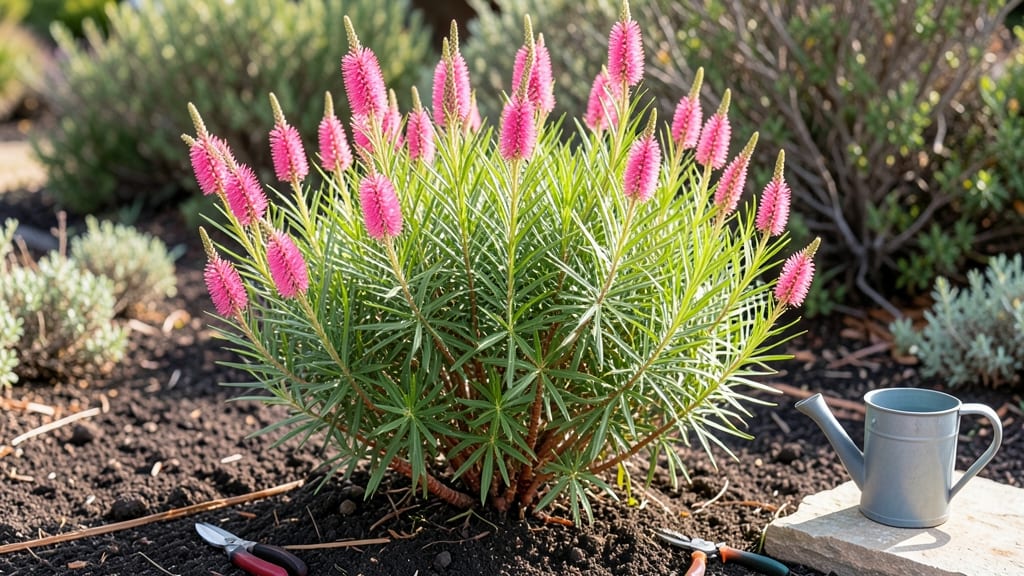
Pink bottlebrush trees (Callistemon spp.) burst into fiery pink bloom cycles that last all year—if you prune them right. I’ve learned the hard way that skipping this step means sparse flowers and leggy growth, but mastering the technique transforms my backyard into a nonstop floral show.
The secret lies in timing and technique, not just cutting branches willy-nilly.
This tree thrives in full sun and well-draining soil, but its year-round blooms depend on strategic pruning after each flush of flowers. Start with sharp pruners and a clear plan: trim back one-third of the oldest growth in early spring, then lightly shape the branches after blooms fade.
Over time, you’ll train it to produce dense, vibrant clusters instead of sparse, weak stems.
What you’ll end up with is a tree that looks like it’s always in peak season—bold pink plumes from spring through fall, and even winter interest if you leave some seed heads.
The key is consistency: prune lightly but regularly, and you’ll avoid the shock that kills blooms. My tree now puts out three times more flowers than it did before I learned this method.
Works in zones 7-10, though cold-hardy varieties can handle brief dips below freezing. For colder climates, choose Callistemon ‘Little John’—it’s the most frost-tolerant and still delivers those showstopping blooms. Let’s get those shears ready!
📚 In This Guide
- What you need
- Instructions
- Tips and common mistakes
- Wrapping up and next steps
What you need
- ● Pruning shears: Bypass pruners (for clean cuts on small branches) – 1 pair (sharp, high-quality, e.g., Felco or Fiskars).
- ● Loppers: Bypass or anvil type (for thicker branches, 1.5–2.5" cutting capacity) – 1 pair.
- ● Pruning saw: Curved-tooth saw (for branches >2" in diameter) – 1.
- ● Gloves: Heavy-duty, cut-resistant (e.g., Mechanix or garden gloves) – 1 pair.
- ● Disinfectant: 70% isopropyl alcohol or bleach solution (1 part bleach to 9 parts water) – small spray bottle.
- ○ Sealing wax or pruning paste: (optional but recommended for large cuts) – small tub.
- ● Ladder or step stool: (if tree is >6 ft tall) – 1 (ensure it’s stable!).
- ● Trash bags or bucket: (for collecting pruned branches) – 1–2.
- ● Safety goggles: (to protect from debris) – 1 pair.
- ● Notebook & pen: (to sketch pruning plan or notes) – 1.
- ● Timing: Prune in late winter or early spring (before new growth starts) or after flowering (to avoid sacrificing blooms).
- ● Weather: Choose a dry, overcast day (humidity can spread disease).
- ● Tree health: Ensure the tree is free of pests/disease before pruning.
- ● Safety check: Inspect the area for power lines or hazards before climbing.
- ● Handheld leaf blower: (for clearing debris post-prune).
- ● Tree paint: (for sealing cuts on large branches, e.g., Dynamat Tree Wound Pruning Seal).
- ● Pruning guidebook: (e.g., “Pruning Made Easy” by Christopher Brickell).
- ● Camera: (to document “before” and “after” progress!).
Step-by-step guide to pruning your pink bottlebrush tree for year-round blooms
Here's how I keep my pink bottlebrush tree flowering beautifully through every season—no frost damage, no bare branches.
Time Your Pruning for Maximum Bloom
Prune your pink bottlebrush tree in late winter or early spring, just as new growth begins but before buds swell. This timing ensures you remove dead wood while encouraging fresh, vibrant blooms for the season. Avoid pruning in fall—new growth won’t harden off before winter, and tender stems will freeze back.
Watch for the first signs of green tips on branches—those are your cue to start. If you wait until leaves appear, you’ll miss the best window for shaping the tree. I always mark my calendar for February to March in my climate zone, but adjust based on your last frost date.
Remove Dead, Diseased, or Crossing Branches
Start by cutting out any dead, diseased, or damaged branches first. These are easy to spot—they’ll be brown, brittle, or lacking leaves. Use clean, sharp pruners to make a 45-degree angle cut just above a outward-facing bud or lateral branch. This prevents water from pooling and rotting the wound.
Next, look for branches that cross or rub against each other. These create weak points where bark gets damaged, inviting pests and disease. Remove the smaller of the two branches at its base. You’ll know you’re doing it right when the tree’s structure opens up—more light reaches the center, which encourages denser, healthier growth.
Shape the Tree for Airflow and Light
Step back and assess the tree’s overall shape. Bottlebrush trees thrive with an open, vase-like form that allows air to circulate. Start by thinning out the innermost branches to reduce crowding. Remove about 20-30% of the oldest, thickest branches to rejuvenate the tree—this is called "renewal pruning" and keeps it vigorous.
Focus on keeping the lower branches shorter to maintain an attractive height. You’ll want the tree to have a tapered silhouette, wider at the base and narrower at the top. This natural shape not only looks stunning but also helps the tree withstand wind and snow better. Avoid cutting back more than one-third of the tree’s height in a single pruning session.
Encourage New Growth for Year-Round Blooms
To keep your pink bottlebrush flowering continuously, prune lightly throughout the growing season. After the first flush of blooms fades, trim back one-third of the current season’s growth. This stimulates a second round of flowers. You’ll see fresh, vibrant buds forming within 4-6 weeks of this light pruning.
Pay special attention to any long, leggy branches that aren’t flowering well. Cut these back to a side branch or bud to redirect energy into producing more blooms. Avoid heavy pruning in late summer—this can stimulate tender growth that won’t survive winter. Instead, focus on shaping and thinning to keep the tree healthy and blooming.
Clean Up and Protect for Winter
After pruning, clean your tools with rubbing alcohol to prevent spreading disease. Collect and dispose of all pruned branches—don’t leave them on the ground, as they can harbor pests. Once the tree is pruned, apply a 2-3 inch layer of mulch around the base, keeping it 6 inches away from the trunk to prevent rot.
For frost-prone areas, consider wrapping young or newly pruned trees with burlap or frost cloth during the coldest months. This extra protection helps tender new growth survive until it hardens off. Water deeply before the first freeze to ensure the roots are hydrated and can draw up moisture as needed. With these steps, your pink bottlebrush will reward you with bold, pink blooms from spring through fall.
Tips & tricks for perfect bottlebrush tree pruning
Here's what I've learned after years of pruning my pink bottlebrush—these tricks will keep your tree blooming like a pro.
Watch for the Green Tips: The first green tips on branches in late winter are your exact signal to start pruning. These tiny growth indicators appear just as the tree breaks dormancy, and missing this window means you'll either prune too early (removing healthy buds) or too late (after buds have already formed). Confession: I skipped this step for years and wondered why my tree never looked as lush as my neighbor's.
The 45-Degree Cut Matters: When removing branches, always make your cuts at a 45-degree angle just above an outward-facing bud. This angle prevents water from pooling in the wound, which can lead to rot. I learned this the hard way after seeing several cuts develop fungal issues. Think of it like creating a tiny roof that sheds water away from the healing branch.
Renewal Pruning Strategy: Removing 20-30% of the oldest, thickest branches during your late winter pruning is called renewal pruning, and it's the secret to keeping your tree vigorous. These branches are often the first to produce weak growth, so cutting them back stimulates stronger, more productive branches. Don't make my mistake: overdoing this can shock your tree, so stick to that 20-30% guideline.
Seasonal Light Pruning: After your main blooms fade, give your tree a light trim by removing one-third of the current season's growth. This simple step triggers a second round of flowers within 4-6 weeks. I've found that this light touch in summer keeps my tree blooming continuously without stressing it before winter. The key is to work with the tree's natural growth cycles rather than fighting them.
Pro Tips for Bottlebrush Tree Pink
- Here's what I've learned after years of pruning my pink bottlebrush—these tricks will keep your tree blooming like a pro.
- Watch for the Green Tips: The first green tips on branches in late winter are your exact signal to start pruning.
- The 45-Degree Cut Matters: When removing branches, always make your cuts at a 45-degree angle just above an outward-facing bud.
Frequently asked questions
When is the best time to prune my pink bottlebrush tree?
Prune your Callistemon in late winter or early spring (just before new growth starts) to encourage vibrant pink blooms. Avoid heavy pruning in fall—it can stimulate tender growth vulnerable to frost. Light trimming to shape or remove dead wood can happen anytime, but never prune during flowering season.
How do I protect my bottlebrush tree from frost?
Pink bottlebrush trees are hardy to USDA Zones 8-11, but young plants or cold snaps need help. Mulch the base with 2-3 inches of organic matter (like wood chips) and cover with frost cloth if temps drop below 25°F. Water deeply before frost to reduce stress, and avoid pruning in late fall—wait until spring to trim.
Can I prune my bottlebrush tree too much?
Yes! Over-pruning can stunt blooms or leave your tree vulnerable to pests. Stick to 1/3 of the plant’s height max per year, and avoid cutting into old wood—new growth emerges from the tips. If you accidentally prune too hard, don’t worry: Callistemon is resilient and will bounce back with proper care.
Why isn’t my bottlebrush tree blooming as much as it used to?
Pink bottlebrush trees bloom on new wood, so consistent pruning is key. If blooms are sparse, check for:
- Under-pruning: Trim back 1/3 of old growth in late winter to encourage fresh branches.
- Over-fertilizing: Too much nitrogen = leafy growth, fewer flowers. Use a low-nitrogen, high-phosphorus fertilizer in early spring.
- Stress: Drought, pests, or poor soil can reduce blooms. Ensure well-draining soil and regular watering (but avoid soggy roots).
What’s a good alternative if my pink bottlebrush tree struggles in my climate?
If your area gets harsh winters (below Zone 8), consider these frost-tolerant alternatives:
Plant
Bloom Color
Hardiness Zone
Correa (Native Australian Fuchsia)
Pink/red
7-10
Grevillea (Spider Flower)
Pink, red, or yellow
7-10
Lavender (Dwarf varieties)
Purple/pink
5-9
All three thrive in full sun and drought-tolerant soils, just like Callistemon!
Wrapping up and next steps
The bottlebrush tree pink is a stunning addition to any landscape, and with the right pruning techniques, you can enjoy its vibrant blooms year-round—even through frost! 🌸 By mastering the art of selective pruning, timing, and frost protection, you’ll keep your tree healthy, full, and bursting with color.
Whether you’re a seasoned gardener or just starting out, these steps make it simple and rewarding.
Ready to transform your garden? Grab your tools, follow the blueprint, and watch your bottlebrush tree thrive! Start with a single pruning session this season and build from there—your future blooms will thank you! 🌿✨