
Pruning
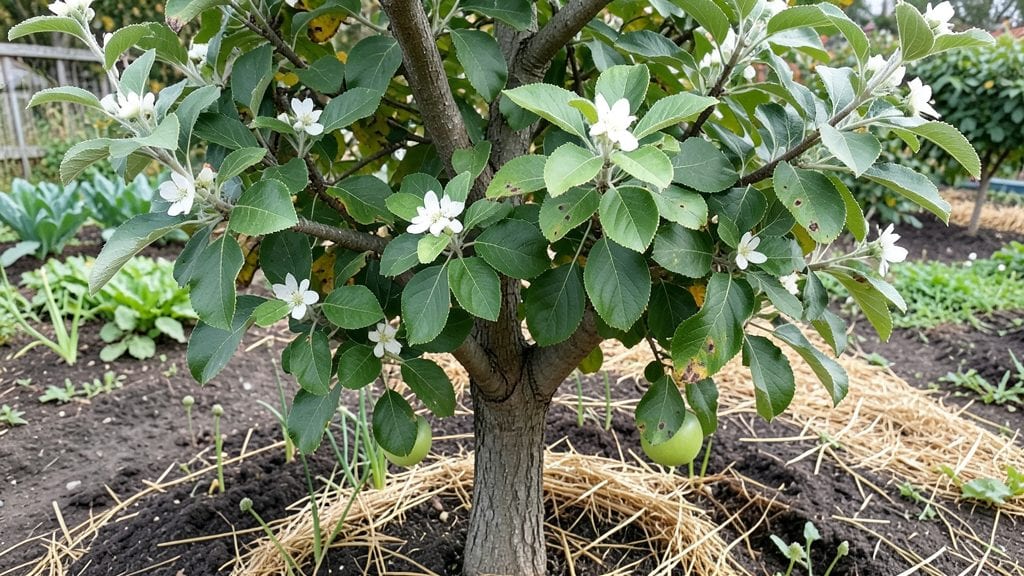
Mastering apple tree identification begins with their leaves and bark—two clues that reveal far more than you’d expect. 🍏 I’ve spent years sorting through orchards and backyards, and the first thing I check is whether the leaves are serrated with rounded teeth (true apples) or sharp, jagged edges (crabapples).
That tiny detail can save you from pruning the wrong tree—or worse, mistaking a toxic lookalike for a fruit-bearing gem.
The bark tells another story: mature apple trees develop a deeply furrowed, scaly texture, while younger trees have smooth, grayish skin. Crabapples, on the other hand, often sport thinner, more brittle bark that peels easily.
Pro tip: rub your thumb along the trunk—apple bark feels rougher, almost like sandpaper, while hawthorns (another common imposter) have smoother, almost waxy surfaces. Grab a notebook and jot down these details before the leaves fall.
Once you’ve matched the leaves and bark, verify with fruit (if available) or seasonal cues—apple blossoms appear in early spring, long before leaves unfurl, while crabapples bloom later and produce tiny, tart fruit.
For extra certainty, snap a photo and use an app like PictureThis or LeafSnap to cross-check. Misidentifying your tree could mean years of wrong care, so double-check before you prune or fertilize.
Here’s the kicker: even if it’s an apple tree, not all varieties are edible. Wild crabapples and some ornamental apples contain trace toxins, so when in doubt, treat the fruit as inedible until you confirm the species.
Once you’re sure, you’ll know exactly how to nurture it—whether that’s shaping its growth, protecting it from pests, or simply admiring its harvest potential.
📚 In This Guide
- What you need
- Instructions
- Tips and common mistakes
- Wrapping up and next steps
What you need
- ● Notebook or digital note-taking app – To jot down observations like leaf shape, bark texture, and fruit characteristics.
- ● Camera or smartphone – Capture close-ups of leaves, bark, buds, and flowers for later reference.
- ● Magnifying glass (5x–10x magnification) – Helps examine fine details like leaf veins, bud scales, or bark fissures.
- ● Measuring tape or ruler (inches/metric) – Measure leaf length, width, and petiole length for precise comparisons.
- ● Field guide or printed apple tree identification chart – Use a trusted resource like National Audubon Society Field Guide to North American Trees or online databases (e.g., USDA Plant Database).
- ○ Pruning shears (sterilized) – Optional but helpful: If you need to collect a small leaf or twig sample, use clean shears to avoid spreading disease.
- ● Gloves – Protect your hands when handling thorny branches or rough bark.
- ● Hand lens with built-in light – Great for low-light conditions or detailed bark analysis.
- ● Apple variety database app – Apps like PictureThis or PlantNet can cross-reference your findings.
- ● Small plastic bags or envelopes – Collect fallen leaves or buds for off-site analysis.
Step-by-step guide to identifying apple trees by leaf and bark
Mastering these two simple features will let you confidently match any apple tree to its species—no botanist degree required.
🌿 Step 1: Examine Leaf Shape and Arrangement
Start by selecting three to five healthy, mature leaves from different parts of the tree. Apple leaves are simple (single blade) and alternate (one leaf per node), but their shape varies dramatically by species. Look for these key characteristics: leaf length (typically 2-5 inches), serrated edges (teeth vary from fine to coarse), and base shape (rounded, tapered, or asymmetrical).
Hold the leaf up to a bright window—this highlights the vein pattern. Most apple leaves have prominent central veins with secondary veins branching at 45-60 degree angles. Note whether the leaf feels smooth or slightly fuzzy—some varieties like Granny Smith have a distinct waxy coating. I always compare my findings to a field guide (or reliable app) to narrow down possibilities.
🌱 Step 2: Study Bark Texture and Color
Inspect the trunk and larger branches for bark patterns. Young apple trees have smooth, grayish bark, but as they mature, it develops plates or ridges that vary by species. Run your hand along the bark—rough, deeply furrowed bark suggests an older tree, while smooth, scaly bark is common in younger specimens. Pay special attention to lenticels (small raised pores) that appear as tiny white or gray dots.
Check for color variations—some apple trees develop reddish or orange hues in winter, while others remain uniformly gray. I’ve found that wild crabapples often have shinier, more vibrant bark compared to cultivated varieties. If the tree is in full sun, the bark may appear lighter than shaded sections.
✂️ Step 3: Compare Findings to Known Species Traits
Cross-reference your observations with a reliable identification chart. For example, Honeycrisp apples typically have narrow, pointed leaves with fine serrations, while Fuji apples feature broader, more rounded leaves with coarser teeth. Bark on McIntosh trees tends to develop deep furrows earlier than other varieties. I keep a small notebook by my favorite trees to track seasonal changes—leaf color in autumn can be a game-changer for identification.
Look for additional clues like fruit shape (if available) or flower clusters (apple blossoms grow in umbel-like clusters). If you’re still unsure, take clear photos of both leaves and bark from multiple angles. Many university extension offices offer free identification services—just email your images with location details for expert confirmation.
🔍 Step 4: Verify with Seasonal Cues
Apple tree identification becomes easier with seasonal observation. In spring, note the flower color (white to pale pink) and leaf emergence timing. Some varieties bloom earlier than others, which can help narrow it down. By summer, the fruit shape and size become another key identifier—round apples often belong to Golden Delicious types, while elongated fruits might indicate Granny Smith.
In fall, observe leaf color changes—some apples turn deep red, while others stay yellow-green until late. I’ve seen wild crabapples develop brilliant orange-red foliage, a trait that’s nearly unmistakable. If you’re identifying a young tree, focus on leaf arrangement and bark texture, as fruit may not appear for years. Patience and consistent observation are your best tools.
Tips & tricks for perfect apple tree identification
A few key observations can transform your casual tree-watching into expert-level identification. Here's what I've learned from years of fieldwork that makes all the difference.
Leaf Angle Matters: The angle of your leaf examination makes a surprising difference. Always examine leaves from the sunlit side of the tree—shade leaves can appear paler and less defined. I've caught myself making errors by comparing sunlit and shaded leaves directly; they can look like completely different species! Also, focus on mature leaves from mid-canopy—the youngest leaves are still developing their characteristic shapes.
Bark Texture Tells Time: The bark's progression from smooth to furrowed isn't just about age—it's a species signature. Young trees of some varieties like Granny Smith develop subtle ridges earlier than others. I've seen McIntosh bark develop pronounced furrows by age 10, while Fuji bark remains smoother longer. Run your thumb along the bark's edge—roughness often appears before you can see it with your eyes.
Seasonal Color Clues: The fall color change is your most reliable seasonal indicator. While most apples turn yellow or orange, wild crabapples often develop bright red foliage that's nearly impossible to miss. I've used this trait to identify crabapple trees in urban landscapes where other features were obscured. Start observing trees in late summer to catch the early color shifts that reveal their true nature.
Photographic Documentation: Your smartphone can be your most powerful tool. Take photos from three angles: close-up of leaves, mid-range of bark, and wide shot of the tree structure. I always include a coin for scale and note the season. Many university extension services offer free identification—just email your photos with location details. This digital record becomes invaluable for tracking seasonal changes over years.
Pro Tips for Apple Tree Identification
- A few key observations can transform your casual tree-watching into expert-level identification.
- Leaf Angle Matters: The angle of your leaf examination makes a surprising difference.
- Bark Texture Tells Time: The bark's progression from smooth to furrowed isn't just about age—it's a species signature.
Frequently asked questions
Got questions about identifying apple trees? You’re not alone! Here are some of the most common queries—plus quick, practical answers to help you spot the right species with confidence.
How do I tell the difference between a young apple tree and a crabapple tree?
Young apple trees and crabapples can look similar, but leaf shape and fruit are key clues. Apple tree leaves are oval with serrated edges, while crabapple leaves are often smaller, rounder, and slightly glossy. Crabapples also produce tiny, tart fruit (often in clusters), whereas true apple trees bear larger, sweeter fruit. Check the bark too—apple trees develop horizontal lenticels (tiny raised lines) as they mature.
What’s the best time of year to identify apple tree species?
The late spring to early summer (May–June) is ideal for ID’ing apple trees because that’s when leaves are fully grown and flowers have faded. You’ll also spot fruit buds forming, which vary by species (e.g., Granny Smith buds are pointed, while Honeycrisp buds are rounded). Avoid winter—bark patterns are harder to read, and summer heat can stress trees during close inspection.
Can I use an app to identify apple trees, or do I need an expert?
Apps like PictureThis or PlantNet are great for leaf and bark ID, but they’re not foolproof. For 100% accuracy, combine app results with a field guide (e.g., “Apple Trees of North America”) and cross-check with local nursery experts. Pro tip: Take photos of leaves, bark, and fruit from multiple angles—apps need clear details!
What if my tree looks like an apple tree but has no fruit?
No fruit could mean it’s a young tree (apple trees take 3–5 years to bear fruit), a crabapple (which produces tiny, inedible fruit), or a pollination issue. Check for flower buds in late winter—if they’re present but no fruit forms, your tree might need a compatible pollinator nearby. Also, disease or pests (like fire blight) can prevent fruiting.
How do I measure leaf size to confirm an apple tree species?
Grab a ruler or measuring tape and compare leaf length/width to known species. For example:
- Honeycrisp: Leaves are 2–4 inches long, elliptical with fine serrations.
- Fuji: Leaves are 3–5 inches long, slightly broader with a pointed tip.
- Granny Smith: Leaves are 2–3.5 inches, dark green and leathery.
Wrapping up and next steps
Identifying apple tree species doesn’t have to be a daunting task—with the right tools and a keen eye, you can confidently match leaves, bark, and growth patterns to the perfect variety! 🍏 Whether you’re a backyard gardener or a pruning enthusiast, recognizing these key traits unlocks the door to better care, harvesting, and even historic insights about your tree.
Now that you’re armed with this leaf shape and bark guide, why not take the next step? Grab your pruners, sketchbook, or camera, and head outdoors to put your knowledge to the test.
Share your findings with fellow gardeners or even tag us—we’d love to see your discoveries! Happy identifying! 🌳✨