
Trees
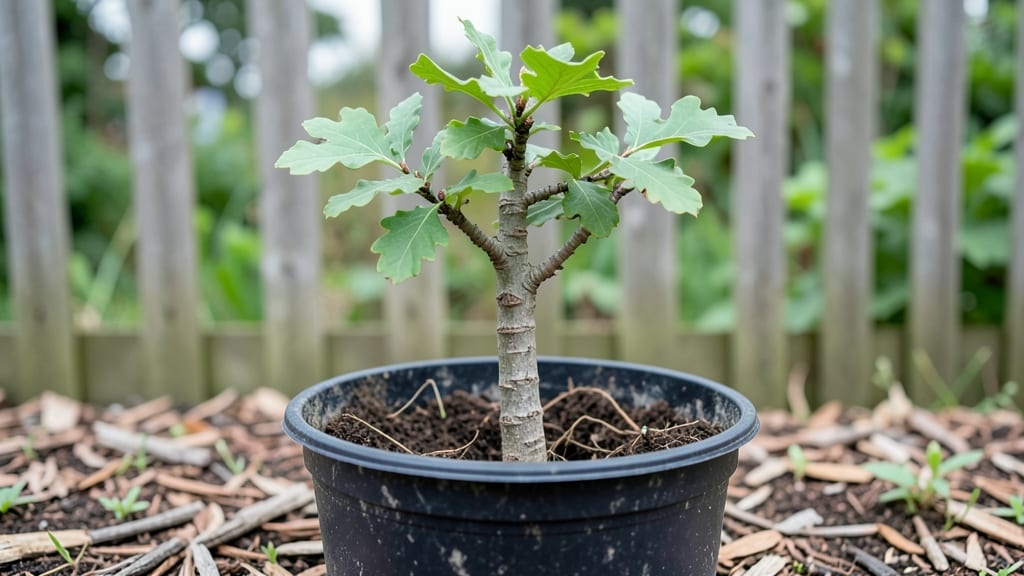
A 15-gallon oak tree might sound like an oxymoron, but the right species can thrive in containers—especially in the Pacific Northwest’s mild, damp climate. 🌿 I’ve grown white oak and bur oak in pots for years, and they’ve become my go-to for privacy screens that don’t require acres of yard.
The key is choosing a slow-growing variety that tolerates root restriction, like the Japanese oak or pin oak, which stay manageable in larger containers.
The setup is simpler than you’d think: a 15-gallon fabric pot (for root health), well-draining soil mix, and a spot with 6+ hours of sun. Watering’s the trickiest part—too much causes root rot, too little stunts growth.
I check soil moisture weekly and adjust based on the season. Pacific Northwest summers can dry out containers fast, so mulch helps retain moisture without smothering roots.
By year three, you’ll see a sturdy 6-foot screen with glossy leaves that block wind and noise. These trees handle pruning well, so you can shape them into hedges or let them grow naturally. The trade-off? They’ll outgrow the pot eventually—plan for repotting or ground planting after 5-7 years.
If oak proves too finicky, consider arborvitae or hornbeam—they’re just as effective for privacy and more forgiving in containers. But with the right species and care, a 15-gallon oak can be your fastest-growing, low-maintenance screen.
📚 In This Guide
- What you need
- Instructions
- Tips and common mistakes
- Wrapping up and next steps
What you need
- ● 15-gallon oak tree sapling (e.g., Quercus robur or Quercus garryana—native or cold-hardy varieties for PNW climates).
- ● High-quality potting soil (50 lbs): Mix 60% topsoil, 30% compost, and 10% perlite for drainage.
- ● Gallon-sized nursery container (or 5-gallon pot for initial transplanting) with drainage holes.
- ● Slow-release fertilizer (10-10-10 or organic options like fish emulsion—1 lb per tree).
- ● Mulch (3-4 inches of cedar chips or pine bark) to retain moisture.
- ● Tree stakes & soft ties (2 stakes per tree, 3/8-inch-wide ties).
- ● Drip irrigation system (or a 5-gallon watering can with a long spout).
- ● Trowel or spade (for planting).
- ● Garden gloves (to protect your hands from thorns or rough bark).
- ● Pruning shears (sterilized, for shaping and dead branch removal).
- ● Measuring tape (to mark planting depth and spacing—aim for 10–15 feet apart for privacy screens).
- ● Wheelbarrow (for hauling soil and mulch).
- ● Sunlight access: Full sun (6+ hours/day) for optimal growth.
- ● Well-draining soil: Test pH (ideal: 6.0–7.5); amend if needed.
- ● Local regulations: Check HOA or city codes for tree planting rules.
- ● Patience: Oaks grow slowly (1–2 feet/year)—plan for long-term privacy!
- ● Mycorrhizal fungi (boosts root growth—mix into planting hole).
- ● Tree guard (to protect from rodents or pets).
- ● Soil moisture meter (for PNW’s unpredictable rain patterns).
- ● Organic pest control (neem oil spray for aphids or mites).
Step-by-Step guide to planting and establishing a 15-Gallon oak tree for privacy
Here's how to plant your oak tree so it thrives quickly in Pacific Northwest conditions.
🪴 Step 1: Choose the Perfect Planting Location
Oak trees need full sun—at least 6-8 hours daily—to establish strong roots and rapid growth. In the Pacific Northwest, this means selecting a spot with minimal overhead shade from other trees or structures. I always measure the tree's mature spread (typically 30-50 feet for this size) to ensure it won't outgrow your space or interfere with sidewalks or driveways.
Check the soil drainage by digging a 12-inch deep hole—if water pools after 30 minutes, amend the soil with 3-4 inches of compost to improve aeration. Oaks hate soggy roots, so avoid low spots where water collects. The ideal location balances sun exposure, drainage, and future growth space.
🌱 Step 2: Dig and Prepare the Planting Hole
Dig a hole twice as wide as the root ball but no deeper—this prevents root suffocation. For a 15-gallon oak, that’s about 24-30 inches wide and 12-15 inches deep. Loosen the sides of the hole with a shovel to encourage root expansion into surrounding soil.
Mix the native soil with 5 gallons of compost (or the amount specified for your site) and a handful of slow-release fertilizer (like 10-10-10) to give the tree a nutrient boost. This blend supports fast root establishment while avoiding chemical shock. Avoid heavy amendments like peat moss—they can compact and suffocate roots as they settle.
💧 Step 3: Plant and Water for Immediate Stability
Remove the oak from its container and gently loosen the root ball if it’s tightly bound. Place it in the hole so the top of the root ball sits 1-2 inches above ground level—this prevents waterlogging during heavy rains. Backfill with the amended soil, tamping lightly every 3 inches to eliminate air pockets.
Water deeply (about 5 gallons) to settle the soil and eliminate gaps. Mulch the base with 2-3 inches of wood chips, keeping it 6 inches away from the trunk to prevent rot. The first year is critical—water once weekly during dry spells (or when the top 2 inches of soil feel dry) to encourage deep root growth.
☀️ Step 4: Protect and Monitor for Fast Growth
Stake the tree only if necessary—young oaks often establish well without support in the Pacific Northwest’s mild winds. If staking, use two stakes on opposite sides, tied loosely with flexible material (like tree ties) to avoid girdling the trunk. Remove stakes after 12 months to prevent weak stem development.
Watch for new leaf growth in 4-6 weeks—this signals successful root establishment. If leaves yellow or drop, it’s often due to overwatering or poor drainage. Adjust care by letting the soil dry slightly between waterings. In the first year, focus on root health over rapid canopy growth—strong roots mean faster privacy in years to come.
⏰ Step 5: Yearly Maintenance for Long-Term Privacy
After the first year, fertilize once in early spring with a balanced, slow-release fertilizer (like 12-12-12) to support steady growth. Prune only to remove dead or crossing branches—oaks resent aggressive pruning and may develop weak branch unions. Avoid heavy trimming in the first 3-5 years to let the tree develop a strong structure.
In the Pacific Northwest, oaks grow 12-24 inches per year under ideal conditions. By year 3, your tree should provide partial privacy, and by year 5, it’ll form a dense screen. Monitor for pests like oak leaf blister gall (common in the region) and treat with neem oil if needed—prevention is easier than cure.
Tips & tricks for planting a 15-Gallon oak tree
These pro tips will help your oak tree establish quickly and grow into a sturdy privacy screen—especially in Pacific Northwest conditions where timing and soil prep make all the difference.
Sunlight Secret: That 6-8 hours of daily sun is non-negotiable for rapid growth. In the Pacific Northwest, morning sun is your best friend—it warms the soil without the afternoon heat stress. If your yard has partial shade, plant on the sunniest side of structures or fences to maximize those critical hours. I've seen oaks struggle in spots that get only 4-5 hours of sun, even with perfect soil.
Soil Test Matters: Before digging that 12-inch deep hole, grab a handful of your native soil and squeeze it. If it stays clumped tightly when dry, you'll need more compost than the 3-4 inches mentioned. Pacific Northwest soils often have high clay content—amend with an extra 2-3 inches of compost if needed. The goal is a crumbly, well-draining mix that holds moisture without becoming soggy.
Root Ball Technique: When loosening the root ball in Step 3, don't tear the roots—gently tease them apart with your fingers. I use a horticultural knife to carefully slice any circling roots that might have formed in the container. This encourages outward growth rather than girdling, which is crucial for that 12-24 inches of annual growth we're aiming for. The top 1-2 inches above ground level is especially important—this prevents water from pooling against the trunk during our rainy season.
Watering Strategy: That first 5-gallon deep watering should go straight to the roots, not the leaves. I use a soaker hose for 20 minutes to ensure even saturation without disturbing the soil. After the initial watering, check the top 2 inches of soil daily—if it's dry, water again. In summer, you might need to water twice weekly, but always let the soil dry slightly between waterings to prevent root rot. The Pacific Northwest's mild climate means we can often skip midday watering, but early morning is ideal.
Pro Tips for 15 Gallon Oak Tree
- These pro tips will help your oak tree establish quickly and grow into a sturdy privacy screen—especially in Pacific Northwest conditions where timing and soil prep make all the difference.
- Sunlight Secret: That 6-8 hours of daily sun is non-negotiable for rapid growth.
- Soil Test Matters: Before digging that 12-inch deep hole, grab a handful of your native soil and squeeze it.
Frequently asked questions
Got questions about your 15-gallon oak tree?
Here are some of the most common ones—plus straightforward answers to help you grow a thriving privacy screen in the Pacific Northwest.
What’s the fastest way to establish roots for a 15-gallon oak tree?
For quick root establishment, water deeply immediately after planting and mulch with 2–3 inches of organic material (like wood chips). Keep soil consistently moist for the first 6–8 weeks—especially during our region’s dry summers. Avoid overwatering, though; soggy roots slow growth.
How long until my oak tree provides full privacy?
Most 15-gallon oaks (like White Oak or Oregon White Oak) grow 12–24 inches per year in ideal conditions. Expect a 6–8-foot-tall screen in 3–5 years. For faster results, plant multiple trees in a staggered row—just leave 10–15 feet between them to avoid root competition.
Are 15-gallon oaks drought-tolerant in the PNW?
Once established, oaks are moderately drought-tolerant, but young trees need regular watering (every 5–7 days in summer). During our rainy season, reduce watering to prevent fungal issues. Pro tip: Group trees together to create a microclimate that retains moisture better.
Can I plant a 15-gallon oak near my house or fence?
Keep oaks 15–20 feet away from structures—they develop wide canopies and deep roots. For fences, maintain 10 feet of clearance to avoid root damage. If space is tight, consider dwarf varieties like ‘Schwedler’ White Oak (though growth rates will be slower).
What pests should I watch for in Pacific Northwest oak trees?
Common PNW threats include oak leaf gall wasps (harmless but unsightly) and oak root fungus (like Armillaria). Monitor for yellowing leaves or sawdust-like frass. Treat galls with horticultural oil if severe, and improve drainage to prevent fungal spread. Prevention tip: Avoid wounding the trunk!
What’s a good alternative if I need faster privacy?
For quicker screening, pair oaks with fast-growing evergreens like Leyland Cypress (12–24" per year) or Emerald Green Arborvitae (6–12" per year). These fill gaps while your oaks mature. Just ensure they complement your oak’s mature height (aim for 10–15 feet tall to avoid clashing textures).
Wrapping up and next steps
A 15-gallon oak tree is a fantastic choice for adding natural beauty and privacy to your Pacific Northwest garden—fast growth, resilience, and stunning foliage make it a winner! 🌳 Whether you're a beginner or a seasoned gardener, this tree thrives with minimal fuss, offering long-term rewards for your outdoor space.
Ready to plant? Start by selecting the perfect spot—sunlight, soil prep, and spacing are key. Then, grab your shovel and get growing! Your future privacy screen (and future you) will thank you.