Pruning
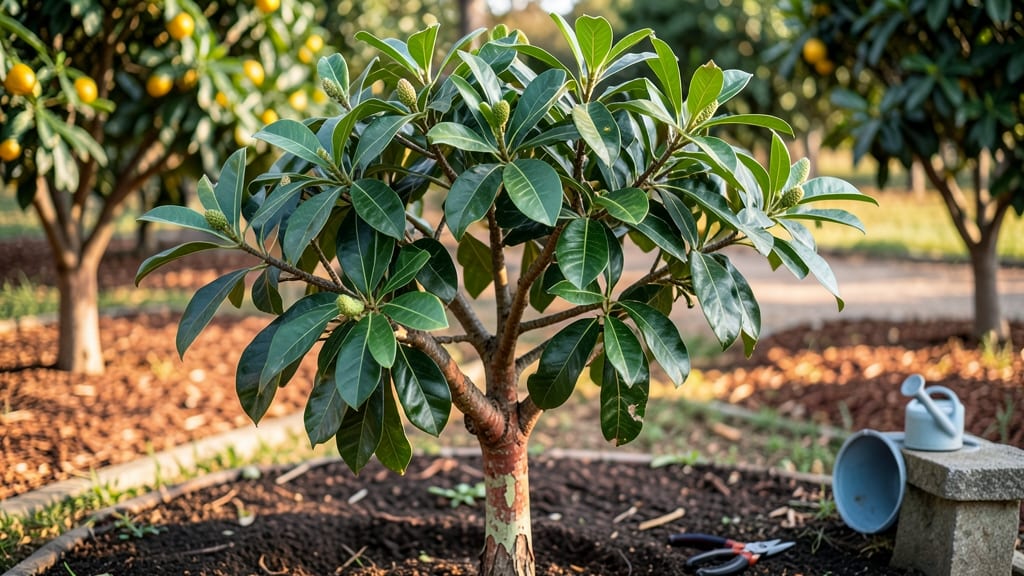
Your young lychee tree holds the secret to tropical flavors in your backyard—if you prune it right. ✂️ I’ve watched my first lychee sapling go from scraggly to structured in just two seasons, and the key was understanding when to trim for shape and future fruit.
The first year is all about setting up strong branches, not harvesting.
You’ll need basic pruning tools—a sharp pair of shears and a small saw for thicker branches—and about 30 minutes every few months. The real magic happens in late winter, when the tree’s dormant but the framework for next year’s harvest begins.
Cut back overcrowded branches by one-third, always at a 45-degree angle just above an outward-facing bud.
By summer, you’ll see lush, glossy leaves and the beginnings of flower clusters. That’s when you shift focus to thinning out overgrowth to improve airflow—critical for preventing fungal diseases. The payoff? A tree that produces hundreds of flowers each season, even if fruiting takes 3-5 years.
Works in zones 10-12 (or containers in cooler climates), and the same principles apply whether you’re shaping a bonsai-sized tree or a backyard giant. Here’s how to keep it thriving—without the guesswork.
📚 In This Guide
- What you need
- Instructions
- Tips and common mistakes
- Wrapping up and next steps
What you need
- ● Pruning shears: Bypass pruners (sharp, 6–8 inch blades) for clean cuts on small branches.
- ● Loppers: Bypass or anvil type (18–24 inch handles) for thicker branches (½–1 inch diameter).
- ● Pruning saw: Curved-tooth or folding saw for branches over 1.5 inches thick.
- ● Disinfectant: 70% isopropyl alcohol or diluted bleach solution (1 part bleach to 9 parts water) to sterilize tools between cuts.
- ● Gloves: Heavy-duty, cut-resistant (lychee trees can have thorns!).
- ○ Sealing wax or pruning paste: Optional but helpful for larger cuts (1–2 inches) to prevent disease.
- ● Bucket or bag: For collecting pruned branches (line with a trash bag for easy cleanup!).
- ● Knowledge of lychee tree structure: Familiarize yourself with the tree’s central leader and scaffold branches (main structural limbs).
- ● Weather check: Prune on a dry, overcast day (avoid rain or extreme heat to reduce stress on the tree).
- ● Timing: Best done in late winter/early spring (before new growth) or summer after harvest.
- ● Safety first: Wear long sleeves and closed-toe shoes—lychee trees can be thorny!
- ● Extension pole: For hard-to-reach branches (especially useful for taller trees!).
- ● Plant growth regulator: Hydrogen peroxide (3%) to clean wounds on larger cuts.
- ● Notebook & pen: To sketch the tree’s structure before/after pruning.
- ● Compost bin: For repurposing small pruned branches as mulch.
Step-by-Step guide to pruning your young lychee tree
Transform that scraggly sapling into a productive, fruit-bearing tree with these targeted pruning techniques.
✂️ Step 1: Assess and Remove Dead or Damaged Branches
Start by examining your lychee tree for any branches that are dead, diseased, or broken—these are your first targets. Use clean, sharp pruning shears to make a clean cut just outside the branch collar (that swollen area where the branch meets the trunk). This prevents unsightly stubs and reduces the risk of infection.
Look for branches that are brown, brittle, or have no leaves—these won’t recover and should be removed immediately. If you see any signs of fungal growth (like black spots or mold), sterilize your shears with rubbing alcohol between cuts. I always prune these first because they’re the easiest to spot and remove, and it sets the stage for healthier growth.
✂️ Step 2: Shape the Tree for Airflow and Light Penetration
Lychee trees thrive when they receive plenty of sunlight and air circulation. Focus on opening up the canopy by removing any branches that are growing inward or crossing over others. This prevents future rubbing, which can damage the bark and create entry points for pests or disease.
For a young tree, aim to create an open, vase-like shape with a central leader (the main upward-growing branch). If you notice branches growing at sharp angles (less than 45 degrees), consider thinning them out—these are more prone to breaking under the weight of fruit later on. Step back occasionally to visualize the tree’s structure; you want sunlight to reach all parts of the canopy.
✂️ Step 3: Prune for Fruit Production by Encouraging Flowering Branches
Lychee trees produce fruit on new growth, so the goal is to stimulate vigorous, healthy branches. Start by removing any suckers (shoots growing from the base of the tree) unless you’re intentionally propagating new trees. These compete with the main canopy for nutrients and can weaken your tree’s fruit production.
Next, focus on pruning back any overly long or leggy branches by about one-third of their length. This encourages the tree to branch out and produce more flowering shoots. I like to make cuts just above a leaf node or bud, angled slightly away from the bud to prevent water from pooling and rotting the cut. Avoid heavy pruning in the first year—just enough to shape and encourage growth without stressing the tree.
✂️ Step 4: Time Your Pruning for Optimal Growth
For young lychee trees, the best time to prune is late winter or early spring, just before new growth begins. This gives the tree plenty of time to heal and prepare for the growing season. Avoid pruning during the hottest months, as the tree will struggle to recover from the stress.
If you notice any water sprouts (fast-growing, vertical shoots) popping up during the growing season, trim them back immediately. These shoots divert energy away from fruit production and can make your tree look unkempt. A quick check every few months keeps your tree in top shape without overwhelming maintenance.
🌿 Step 5: Post-Pruning Care to Support Recovery
After pruning, give your lychee tree a light but thorough watering to help it recover. Avoid heavy watering right after pruning, as it can lead to root rot or fungal issues. Instead, focus on keeping the soil consistently moist but well-drained—lychee trees hate soggy roots.
Apply a balanced, slow-release fertilizer around the base of the tree to replenish nutrients lost during pruning. I like to use a 10-10-10 or 8-3-9 formula in early spring, following the package instructions for application rates. This gives your tree the energy it needs to produce new growth and set the stage for future fruit production. Keep an eye on the tree over the next few weeks—healthy new leaves should appear within 2-4 weeks, signaling that your pruning was successful.
Tips & tricks for pruning young lychee trees
Pruning young lychee trees might seem intimidating, but these targeted tips will help you transform that scraggly sapling into a thriving fruit producer with confidence.
Tool Preparation: Always sterilize your pruning shears between cuts, especially when dealing with diseased branches in Step 1. I use rubbing alcohol on a clean cloth—it kills bacteria and fungi that could spread to healthy parts of the tree. Sharp tools also make cleaner cuts that heal faster, so take a minute to hone your shears before you begin. This small step prevents infections that could set back your tree's growth for months.
Visual Cues for Healthy Growth: In Step 2, when shaping your tree, look for branches that grow at angles wider than 45 degrees—these are structurally stronger and better for supporting fruit. You'll know you're on the right track when sunlight can filter through to the center of the canopy. I step back every few cuts to check my progress, and it's amazing how much more open the tree looks after just a few strategic removals. This airflow is crucial for preventing fungal diseases that thrive in damp, shaded conditions.
Pruning Technique for Flowering: When pruning back leggy branches in Step 3, make your cuts just above a leaf node or outward-facing bud. The angle matters—cutting at a 45-degree angle away from the bud prevents water from pooling and rotting the wound. I think of it like creating a tiny roof that naturally sheds rain. This technique encourages the tree to put energy into new growth rather than struggling to heal poorly made cuts.
Seasonal Timing Insight: The late winter/early spring timing in Step 4 isn't just about convenience—it's when lychee trees naturally enter dormancy. Pruning during this period minimizes stress on the tree as it prepares for new growth. I've learned the hard way that summer pruning can shock the tree, especially in hot climates where recovery becomes difficult. Watch for those first tender leaves appearing—this is your signal that the tree is ready to bounce back from your pruning efforts.
Pro Tips for Young Lychee Tree
- Pruning young lychee trees might seem intimidating, but these targeted tips will help you transform that scraggly sapling into a thriving fruit producer with confidence.
- Tool Preparation: Always sterilize your pruning shears between cuts, especially when dealing with diseased branches in Step 1.
- Visual Cues for Healthy Growth: In Step 2, when shaping your tree, look for branches that grow at angles wider than 45 degrees—these are structurally stronger and better for supporting fruit.
Frequently asked questions
Got questions about nurturing your young lychee tree? You’re not alone!
Here are answers to the most common concerns—from pruning to patience—so you can keep your tree thriving with confidence.
How often should I prune a young lychee tree?
Prune your young lychee tree once a year, ideally in late winter or early spring (before new growth starts). Light shaping or dead branch removal can happen year-round, but avoid heavy cuts during fruiting seasons. Focus on removing water sprouts, crossing branches, and weak growth to encourage strong structure.
When will my young lychee tree bear fruit?
Patience is key! Young lychee trees typically take 3–5 years to bear fruit after planting, depending on variety and care. Dwarf varieties may fruit sooner (2–3 years), while standard trees can take longer. Ensure full sun, well-draining soil, and consistent watering to speed up the process.
Can I prune a young lychee tree in summer?
Summer pruning is possible, but it’s not ideal. Heavy cuts can stress the tree, especially in hot climates. If you must prune, do so early morning or late evening to reduce shock. Stick to minor adjustments like removing dead wood or diseased branches. Save major pruning for winter.
What if my young lychee tree isn’t growing after pruning?
Sluggish growth could mean over-pruning, poor soil, or pests. Check for yellowing leaves (nutrient deficiency), wilting (underwatering), or holes in foliage (pests). Adjust care by adding compost, ensuring 1–2 inches of water weekly, and inspecting for aphids or scale. If roots are shallow, mulch to retain moisture.
Are there low-maintenance alternatives to lychee trees?
If lychee trees seem high-maintenance, consider these tropical fruit alternatives:
- Mango: Faster-growing, drought-tolerant once established.
- Citrus (e.g., Meyer lemon): Hardy, cold-resistant, and produces fruit yearly.
- Guava: Thrives in heat, minimal pruning needed.
- Avocado: Slow but sturdy; great for containers.
Wrapping up and next steps
Growing a thriving young lychee treeg is all about patience, precision, and a little love—just like nurturing any new plant! By mastering year-round pruning, you’re setting the stage for a bountiful harvest with minimal effort.
Remember, consistency is key: trim at the right times, shape with care, and always prioritize airflow and sunlight. 🌿
Now that you’re armed with the know-how, there’s no time like the present to roll up your sleeves! Start with a single branch or two, and soon, your lychee tree will reward you with lush growth and sweet, fragrant fruit. Happy pruning—and here’s to your future harvest! 🍈✨