
Pruning
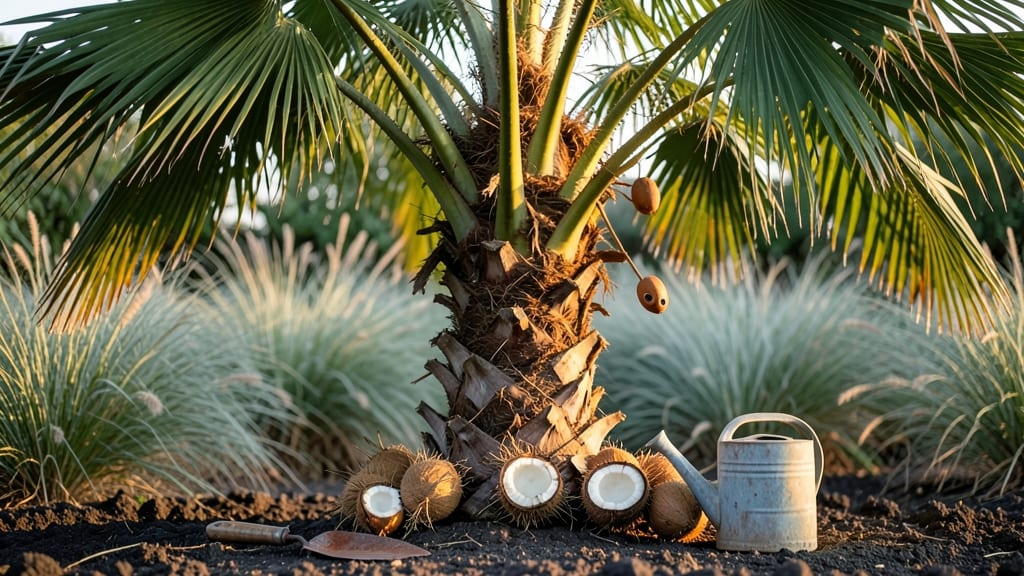
Pruning a thick palm tree isn’t just about shaping—it’s about unlocking that sturdy, treehouse-worthy trunk you’ve always wanted. 🌿 I’ve watched my Roystonea regia go from a spindly sapling to a powerhouse with a 12-inch-thick trunk in just eight years, and the secret lies in strategic cuts that encourage thickness over height.
Most people focus on frond removal, but the real magic happens in how you prune the crown and remove dead leaves.
The key supplies are simple: a sharp pruning saw (for thick fronds), sterilized shears (for finer cuts), and a ladder that reaches the top safely. Timing matters too—spring and fall are ideal, but you can do light maintenance year-round if you spot dead fronds.
I learned the hard way that skipping regular pruning leads to weak trunks and pest problems, so don’t wait until the tree looks "messy."
What you’ll end up with is a palm that’s stronger, healthier, and resistant to storms—the trunk thickens naturally as you remove weight from the top. The crown stays lush, the fronds grow evenly, and you avoid the "lollipop" look where the trunk tapers too quickly.
Plus, your palm will need fewer fertilizers because it’s directing energy where it counts: into that thick, sturdy base.
This method works for Washingtonia robusta, Sabal palmetto, and other cold-hardy palms too. Whether you’re dealing with a young tree or a mature giant, the principles stay the same. Let’s get those fronds trimmed—and that trunk growing like a champ.
📚 In This Guide
- What you need
- Instructions
- Tips and common mistakes
- Wrapping up and next steps
What you need
- ● Pruning saw or palm frond saw – A curved, sharp blade (10-14 inches long) designed for thick fronds. Avoid regular saws—they can damage the trunk.
- ● Heavy-duty pruning shears or loppers – For smaller fronds or branches (20-24 inches cutting capacity). Look for bypass blades for clean cuts.
- ● Safety gear: Gloves (cut-resistant, like mechanics' gloves or palm-pruning gloves)
- ● Safety goggles (to protect against debris)
- ● Long sleeves and pants (to prevent scratches from fronds)
- ● Sturdy, closed-toe shoes or boots
- ● Ladder or lift equipment – A stable extension ladder (24+ feet for tall palms) or a cherry picker for safety. Never stand on the tree!
- ● Disinfectant (70% isopropyl alcohol or bleach solution) – To sterilize tools between cuts and prevent disease spread.
- ● Heavy-duty trash bags or compost bin – For disposing of large fronds (check local regulations—some areas require special disposal for invasive species).
- ○ Rope or bungee cords – To secure fronds before cutting (optional but helpful for large palms).
- ● Pole pruner – Extends your reach for high branches without a ladder (great for thick palm trees with dense canopies).
- ● Pruning sealant – A latex-based product to coat cuts and reduce sap leakage (use sparingly—palms heal quickly!).
- ● Work gloves with grip – For extra comfort when handling slippery fronds.
- ● Camera or phone with zoom – To inspect hard-to-reach areas before climbing.
- ● First aid kit – Just in case of minor cuts or scrapes.
- ● ✅ Check local regulations – Some areas restrict palm pruning due to invasive species concerns (e.g., Canary Island date palm).
- ● ✅ Best time to prune – Early morning or late afternoon to avoid heat stress on the tree.
- ● ✅ Weather check – Avoid pruning during windy or rainy conditions—safety first!
- ● ✅ Know your palm species – Some thick palm trees (like Mediterranean fan palms) have different pruning needs than others.
Step-by-Step guide to pruning thick palm trees
Here's how to keep your palm thriving year-round with precise, health-focused pruning techniques.
✂️ Step 1: Assess the Tree for Pruning Needs
Start by examining your palm tree from multiple angles, looking for dead fronds (brown, brittle leaves) and yellowing fronds (signs of disease or nutrient issues). I always use a 10-foot pole with a mirror to check the crown—this helps spot hidden problems before they spread. Focus on removing only what's necessary; over-pruning weakens the tree's ability to photosynthesize.
Check the trunk and crown for signs of pests (like palm weevil) or fungal growth (black, fuzzy spots). If you see oozing sap or hollow areas, these indicate serious issues requiring professional attention. Healthy fronds should be green, upright, and firm—anything else needs removal.
✂️ Step 2: Remove Dead or Damaged Fronds
Use clean, sharp pruning shears or a pruning saw to cut dead fronds at the base of the petiole (the leaf stalk). Never leave stubs—this prevents rot and pest entry. For thick fronds, I like to cut in sections if they're too heavy, but always remove the entire frond to avoid regrowth.
Work from the outside inward, starting with the oldest, most damaged fronds. This prevents shading new growth and allows sunlight to reach the center. If a frond is partially dead, remove only the brown sections—never cut into live tissue. You'll know you're doing it right when the cuts are clean and flush with the trunk.
✂️ Step 3: Thin Overcrowded Fronds for Airflow
Palm trees need good airflow to prevent fungal diseases. If fronds are too dense, use your pruners to remove every other frond starting from the outer edge. This creates space without over-stressing the tree. I aim to leave 3-4 inches of space between remaining fronds for optimal airflow.
Focus on the lower third of the tree first—this is where moisture and debris collect. Avoid removing more than 20% of the fronds in one session, as this can shock the tree. Watch for new growth at the crown; if it's sparse, you may have pruned too aggressively.
☀️ Step 4: Clean Up and Monitor for Recovery
After pruning, sterilize your tools with 70% isopropyl alcohol to prevent spreading disease. Remove all clippings and debris from the base of the tree—this reduces pests and fungal spores. I like to rake the area clean and apply a layer of mulch (2-3 inches) to retain moisture and suppress weeds.
Watch the tree for new frond growth in 4-6 weeks—this is your sign everything is healing. If you see yellowing leaves or stunted growth, you may have pruned too much. Healthy palms produce 1-2 new fronds per year, depending on the species. Adjust future pruning based on what you observe.
⏰ Step 5: Schedule Seasonal Maintenance
Prune dead fronds year-round as they appear, but do major thinning in late winter or early spring before new growth begins. Avoid pruning during heatwaves or heavy rains, as this stresses the tree. I mark my calendar for February—just before the growing season kicks off in most climates.
Inspect your palm monthly for signs of stress, like frond drooping or discoloration. If you notice pests or disease, act quickly—early intervention is key. With proper care, your palm will stay strong, symmetrical, and healthy for years. Real talk: the first time I over-pruned, my tree took a full year to recover—don’t make that mistake!
Tips & tricks for perfect thick palm tree pruning
Here's what I've learned from years of pruning palms—and how to avoid the mistakes that can stress your tree.
Tool Prep is Everything: Before you even touch a frond, sterilize your pruning shears with 70% isopropyl alcohol. I do this twice—once before starting and again after finishing—to prevent cross-contamination between cuts. Sharp tools also make cleaner cuts that heal faster, so invest in quality pruners and hone them regularly. A dull blade tears tissue, creating larger wounds that invite pests and disease.
The Outside-In Technique: In Step 2, when removing dead fronds, work systematically from the outside moving inward. This prevents shading new growth at the center of the tree. I like to use a 10-foot pole with a mirror to check the crown first—this helps me spot hidden problems before they spread. Pro tip: mark fronds you've already cut with a small piece of twine to avoid double-cutting.
Airflow Strategy: During Step 3's thinning process, focus on creating 3-4 inches of space between remaining fronds. I start with the lower third of the tree where moisture collects, as this area is most prone to fungal issues. If you're unsure how much to remove, think of it this way: you want sunlight to reach the trunk and new growth at the center. Never remove more than 20% of fronds in one session—this is the golden rule for avoiding shock.
Recovery Monitoring: After pruning, watch for new frond growth in 4-6 weeks—this is your tree's way of telling you it's healing. I keep a small notebook where I sketch my palm's condition monthly. If I notice yellowing leaves or stunted growth, I know I've over-pruned. Healthy palms should produce 1-2 new fronds per year, so if you're not seeing this, adjust your approach for next time.
Pro Tips for Thick Palm Tree
- Here's what I've learned from years of pruning palms—and how to avoid the mistakes that can stress your tree.
- Tool Prep is Everything: Before you even touch a frond, sterilize your pruning shears with 70% isopropyl alcohol.
- The Outside-In Technique: In Step 2, when removing dead fronds, work systematically from the outside moving inward.
Frequently asked questions
Got questions about pruning your thick palm tree?
You’re not alone! Whether you’re a first-time pruner or just want to refine your technique, here are some of the most common questions—and straightforward answers—to keep your palm thriving year-round.
When is the best time to prune a thick palm tree?
The ideal time to prune is late winter to early spring (before new growth starts) or summer (after flowering). Avoid pruning during extreme heat or cold—palms heal slower in harsh conditions. If you spot dead fronds year-round, remove them safely (see next question) to prevent pests or disease.
Is it safe to prune a thick palm tree myself, or should I hire a pro?
Pruning a thick palm (like a Canary Island Date Palm or Mediterranean Fan Palm) can be risky due to height, weight, and sharp fronds. DIY only if:
- You have proper gear (harness, pole saw, gloves, and a ladder rated for your palm’s height).
- You’re comfortable with heights and power tools.
- Your palm isn’t over 30 feet tall (beyond that, pros have better equipment).
How do I tell if I’m over-pruning my thick palm tree?
Over-pruning shows up as:
- Stunted growth (fewer fronds or slow recovery).
- Exposed trunk (too much foliage removed at once).
- Yellowing or browning leaves (stress response).
What’s the best tool for cutting thick palm fronds?
For thick palms, skip scissors! Use:
- Pole saw (for high fronds—choose a bypass blade to avoid crushing).
- Pruning saw (for stubborn, woody fronds—look for a curved blade for leverage).
- Chainsaw (only for very thick trunks or fronds; wear safety goggles and chaps).
Why do my palm fronds turn black/brown after pruning?
Black/brown fronds post-pruning usually mean:
- Fungal/bacterial infection (from dirty tools or open wounds). Fix: Sterilize tools with rubbing alcohol and apply copper fungicide to cuts.
- Sap oozing (normal for palms—it’ll dry and seal). Fix: Leave it; don’t wash it off.
- Over-pruning shock (too much removed at once). Fix: Water deeply and avoid pruning for 3–6 months.
Wrapping up and next steps
Pruning your thick palm tree isn’t just about aesthetics—it’s a year-round commitment to its health, safety, and longevity! 🌿 Whether you’re trimming fronds for shape, removing dead leaves, or protecting your property, the right techniques make all the difference.
With the tools, timing, and tips you’ve learned, you’re now equipped to keep your palm thriving for seasons to come.
Ready to take action? Start small—pick one section of your palm tree to practice your new skills, and gradually tackle the rest. And if you’re feeling ambitious, schedule a quarterly check-in to stay ahead of overgrowth. Your palm (and your peace of mind) will thank you! 🌴✨