Trees
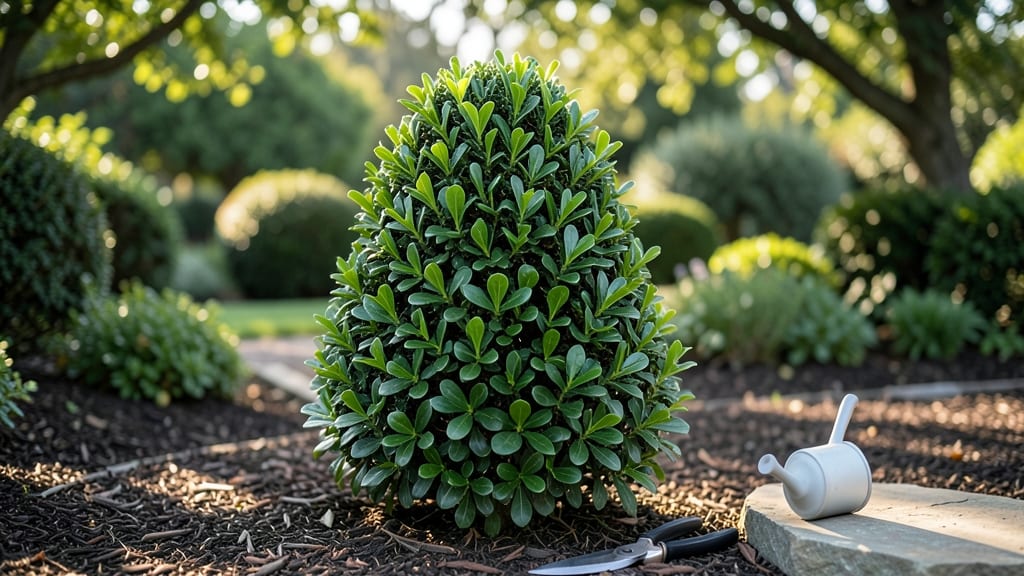
Small topiary trees turn tight spaces into elegant privacy screens without sacrificing your yard’s charm. 🌿 I remember my first attempt—clipping boxwood into a spiral—and how it instantly transformed a narrow side garden into a lush, structured retreat.
The key isn’t just the pruning; it’s the way they frame pathways, soften fences, or anchor a patio corner with year-round structure.
You’ll need just a few basics: 3-5 gallon containers for each tree, sharp pruning shears, and a sturdy trellis or wire frame if you’re shaping something dramatic. Start with evergreens like boxwood or yew—they hold their shape through all four seasons and take pruning like a pro.
For something bolder, try dwarf conifers or even small fruit trees trained into topiary forms.
What you end up with is a garden that feels intentional and polished, even when everything else is still waking up in spring. The shapes—globes, spirals, or formal cubes—add texture and height without overwhelming small spaces.
Plus, they’re low-maintenance once established, needing just a trim every 6-8 weeks to keep them tidy.
Perfect for urban courtyards, balcony gardens, or even as striking centerpieces in mixed borders. Whether you’re going for formal symmetry or a wild cottage garden vibe, topiary trees bring structure and personality to any design. Let’s get shaping!
📚 In This Guide
- What you need
- Instructions
- Tips and common mistakes
- Wrapping up and next steps
What you need
- ● Small topiary trees: Choose 3–5 dwarf varieties (e.g., Buxus sempervirens, Ilex crenata, or Ligustrum japonicum), sized 12–18 inches tall.
- ● Well-draining potting mix: 5–10 gallons, depending on pot size (use a blend of peat, perlite, and compost).
- ● Containers: 2–3 ceramic or plastic pots (12–16 inches in diameter) with drainage holes.
- ● Pruning shears: Sharp, bypass-style shears (for clean cuts).
- ● Topiary wire: 18–22-gauge copper or aluminum wire (1–2 feet per tree).
- ○ Support frame: Optional but helpful—use lightweight wire or foam armatures for complex shapes.
- ● Slow-release fertilizer: Balanced 10-10-10 or organic options like fish emulsion.
- ● Mulch: Pine bark or shredded leaves (1–2 inches) to retain moisture.
- ● Topiary clippers (for intricate designs).
- ● Decorative stakes or trellises (for vertical training).
- ● Spray bottle (for misting in dry climates).
- ● Watering can with a rose attachment (gentle watering = happy roots!).
How to train and maintain small topiary trees for year-round privacy
Here's the method I've perfected for sculpting lush, compact topiaries that deliver privacy without sacrificing space.
🌱 Step 1: Select the Right Species and Starting Plants
Choose slow-growing, dense varieties like boxwood, yew, or privet—they handle pruning best. I always start with 4-inch container-grown plants spaced 3-4 feet apart for mature privacy. Avoid fast growers like arborvitae; they'll outpace your pruning schedule and lose shape.
Dig holes twice as wide as the root ball but only as deep as the container. This encourages roots to spread horizontally for stability. Water deeply immediately after planting to eliminate air pockets. The soil should feel evenly moist to 6 inches down—not soggy, not dry.
✂️ Step 2: Establish the Basic Shape in First Year
Wait 4-6 weeks after planting before first pruning—let roots establish. Then, use sharp bypass pruners to create your foundation shape: square, round, or spiral. Cut just above a leaf node at a 45-degree angle to prevent water pooling.
Here's the thing—never remove more than 1/3 of the plant's foliage in one session. I like to do light shaping cuts every 6 weeks during the growing season. You'll see new growth filling in within 2-3 weeks—that's your signal to refine further.
☀️ Step 3: Master Seasonal Pruning for Year-Round Density
Spring is for fine-tuning: remove any winter-damaged branches and trim back overgrowth to maintain clean lines. Summer requires weekly maintenance—just a few minutes per plant to snip errant shoots before they spoil your design.
Fall is critical: reduce pruning by half as growth slows. I stop all shaping by mid-October to let plants harden off before winter. In winter, I only remove dead or crossing branches—never shape during dormancy unless you're in a mild climate.
💧 Step 4: Water and Feed for Compact Growth
Water deeply 2-3 times per week for the first year, then taper to once weekly once established. The key is consistency—topiary trees hate moisture stress. You'll know you're doing it right when the soil feels like a wrung-out sponge 2 inches down.
Feed with slow-release fertilizer in early spring and mid-summer. I use a 10-10-10 blend at half-strength to avoid burning tender new growth. Over-fertilizing causes weak, leggy growth that's nearly impossible to train properly.
🪴 Step 5: Protect and Refresh Over Time
Every 3-4 years, I do a rejuvenation prune in late winter: cut back one-third of the oldest growth to stimulate new shoots from the base. This keeps your topiary thick and full instead of hollow at the center.
Watch for pests like spider mites—they love stressed topiaries. I treat with neem oil spray at first sign of webbing. For fungal issues, remove infected branches immediately and avoid overhead watering. A healthy topiary should have no bare spots and uniform foliage density year-round.
Tips & tricks for perfect small topiary trees
A few key strategies will help your topiary trees thrive and deliver that lush, year-round privacy you're after.
Species Selection Tip: When choosing between boxwood, yew, or privet, consider your climate. Boxwood handles heat well but needs winter protection in colder zones, while yew thrives in cooler climates. Privet is the most versatile for most gardens. I've found boxwood creates the most uniform shapes when properly maintained, though it requires slightly more frequent pruning.
Root Establishment Strategy: That 4-6 week waiting period before first pruning is crucial. You'll know roots are established when new growth appears along the stem at soil level. Don't rush this step—rushing leads to stunted growth and poor recovery. I always check root establishment by gently tugging on the plant before making any cuts.
Pruning Precision: For those 45-degree cuts in Step 2, use a sharp bypass pruner and make clean cuts just above a leaf node. This prevents water from pooling and encourages new growth from the right spot. I mark my cuts with a pencil first to visualize the final shape before making any snips. This prevents over-trimming and maintains that perfect geometric form.
Seasonal Transition Tip: The shift from summer's weekly maintenance to fall's reduced pruning schedule is where many people go wrong. I mark my calendar for mid-October to remind myself to stop shaping completely—this timing lets the plants harden off properly before winter dormancy. In mild climates, you can extend shaping into November, but never later than when night temperatures drop below 40°F consistently.
Pro Tips for Small Topiary Trees
- A few key strategies will help your topiary trees thrive and deliver that lush, year-round privacy you're after.
- Species Selection Tip: When choosing between boxwood, yew, or privet, consider your climate.
- Root Establishment Strategy: That 4-6 week waiting period before first pruning is crucial.
Frequently asked questions
Got questions about small topiary trees?
You’re not alone! Here are answers to the most common queries to help you make the best choices for your space.
What’s the best small topiary tree for beginners?
Start with Boxwood or Yew—they’re hardy, slow-growing, and forgiving. Ligustrum is another great pick for its glossy leaves and adaptability. Avoid finicky varieties like Olive until you’ve mastered pruning basics!
How often should I trim small topiary trees?
Prune lightly every 4-6 weeks during the growing season (spring to fall) to maintain shape. For formal topiary, trim twice a month—but never cut more than ⅓ of the foliage at once. Pro tip: Use sharp, sterilized shears for clean cuts!
Can small topiary trees survive in shade?
Most thrive in partial shade (4-6 hours of sunlight), but avoid deep shade. Boxwood and Yew tolerate shade best, while Ligustrum needs at least morning sun. Yellowing leaves? It’s likely a hunger for light!
Are there affordable alternatives to pricier topiary trees?
Yes! Privet or Cherry Laurel are budget-friendly and fast-growing. For a pop of color, try Dwarf Gardenia (fragrant blooms!) or Japanese Holly (evergreen + berries). Check local nurseries for sales!
Why are my small topiary leaves turning brown or falling off?
Brown edges? Overwatering or underwatering are likely culprits. Yellow leaves? Too much shade or nutrient deficiency. Fix it: Water deeply 1-2x/week (check soil moisture) and fertilize in spring with balanced 10-10-10.
Do small topiary trees need winter care?
Most are cold-hardy, but mulch the base (2-3 inches) to protect roots. Wrap young trees in burlap if temps drop below 15°F. Avoid heavy snow buildup—gently brush it off to prevent branch damage.
Still stumped? Drop your question in the comments—we’re happy to help your tiny trees thrive!
Wrapping up and next steps
Small topiary trees are the perfect solution for adding elegance, privacy, and greenery to tight spaces without sacrificing style. Whether you’re a beginner or a seasoned gardener, their versatility makes them a low-maintenance yet high-impact choice for patios, balconies, or even indoor decor.
With the right care, these little powerhouses can thrive year-round, turning even the smallest corner into a lush, living masterpiece.
Ready to transform your space? Start small—pick your favorite topiary shape, gather your tools, and let your creativity grow! 🌿✨