Pruning
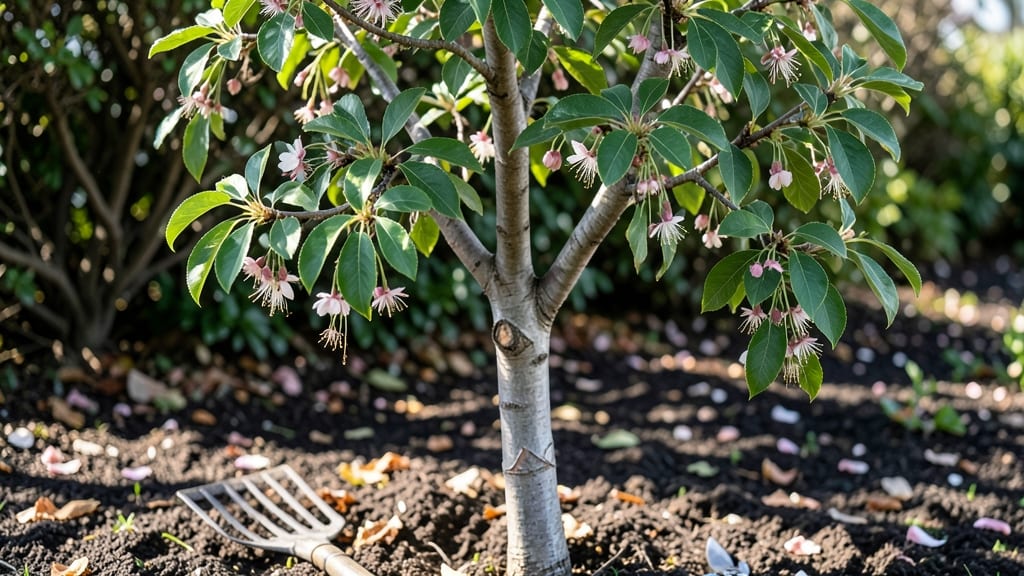
An ornamental almond tree brings Pacific Northwest charm with its delicate blossoms and minimal care demands—no fancy pruning skills required. 🌸 I planted mine last spring, and now it’s the star of my winter garden, its bare branches arching gracefully against stormy skies.
The real magic? It thrives in our damp climate while still delivering that signature almond fragrance when it blooms.
These trees love well-draining soil and full sun, but they’re forgiving enough to handle partial shade if you’re working with a shadier spot. Water deeply once a week after planting, then let nature take over—they’re surprisingly drought-tolerant once established.
The only pruning you’ll need is light shaping in late winter to encourage those stunning spring flowers.
What you’ll get is a year-round showstopper: fragrant pink blossoms in early spring, glossy green foliage through summer, and striking exfoliating bark in winter. Plus, it’s deer-resistant and handles our rainy winters like a champ.
Just watch for aphids—spray with soapy water if they appear, and you’re good to go.
Perfect for small yards, urban gardens, or even large containers. Whether you plant it as a specimen tree or mix it into a shrub border, this low-maintenance beauty will reward you with effortless elegance. Let’s get yours growing!
📚 In This Guide
- What you need
- Instructions
- Tips and common mistakes
- Wrapping up and next steps
What you need
- ● Ornamental almond tree: Choose a Prunus triloba or Prunus glandulosa variety (bare-root or container-grown). 1-2 trees recommended for visual impact.
- ● Well-draining soil: Mix 1 part native soil with 1 part compost and 1 part coarse sand (for sandy soil areas, add perlite).
- ● Organic mulch: 2-3 inches of wood chips, bark, or straw (keep 6 inches away from the trunk).
- ● Slow-release fertilizer: 10-10-10 NPK ratio (apply in early spring).
- ● Pruning tools: Bypass pruners (for small branches)
- ● Loppers (for thicker branches, ¾–1.5 inches in diameter)
- ● Pruning saw (for branches over 1.5 inches)
- ● Disinfectant: 70% isopropyl alcohol or a 10% bleach solution (to sterilize tools).
- ● Gloves & long sleeves: Protect against thorns and sap.
- ● Tree stake & ties: For young trees in windy PNW areas.
- ● Drip irrigation system: Ensures consistent moisture (especially in dry summers).
- ● Tree wound dressing: For sealing large cuts (use sparingly—healthy trees heal best without it!).
- ● Ladder or pole pruner: For high branches (safety first! 🚧).
- ● Camera or sketchpad: Document your tree’s shape before pruning (great for reference!).
- ● Check your USDA Hardiness Zone (ornamental almonds thrive in Zones 4-8—PNW is perfect!).
- ● Pick a sunny spot with 6+ hours of sunlight daily (partial shade tolerates but reduces blooms).
- ● Test your soil’s pH (6.0–7.5 ideal)—amend if needed with lime (to raise pH) or sulfur (to lower it).
- ● Plan for 3–4 feet of clearance around the tree’s mature size (15–25 feet tall/wide).
Step-by-step guide to planting and caring for your ornamental almond tree
This stunning Pacific Northwest tree thrives with minimal fuss—just follow these precise steps for year-round beauty.
🌱 Step 1: Choose the Right Location and Plant at the Optimal Time
Ornamental almond trees (Prunus spp.) love full sun—plant in a spot with at least 6-8 hours of direct sunlight daily. In the Pacific Northwest, late winter to early spring (February-March) is ideal, before new growth begins. The tree’s delicate roots hate disturbance, so dig a hole twice as wide as the root ball but no deeper—this encourages outward root spread rather than downward growth.
Amend the native soil with 3-4 inches of compost mixed into the bottom of the hole. The tree tolerates a range of soil types but performs best in well-draining, slightly acidic to neutral soil (pH 6.0-7.0). If your soil is heavy clay, add a layer of 1-2 inches of coarse sand at the bottom to prevent waterlogging. Gently place the tree in the hole, ensuring the graft union (visible bulge near the base) sits 2-3 inches above soil level—this protects against rot.
☀️ Step 2: Water Deeply and Mulch for Moisture Retention
After planting, water deeply to settle the soil around the roots—aim for 1-2 gallons per week during the first growing season, adjusting for rainfall. The top 2-3 inches of soil should stay consistently moist but never soggy. Overwatering in winter can suffocate roots, so reduce watering to every 3-4 weeks once established.
Spread 2-3 inches of organic mulch (like wood chips or bark) over the root zone, keeping it 6 inches away from the trunk to prevent moisture buildup. Mulch conserves water, regulates soil temperature, and suppresses weeds. Refresh the mulch annually in early spring—this is your tree’s secret to thriving in the Pacific Northwest’s damp winters.
✂️ Step 3: Prune Lightly for Structure and Airflow
Ornamental almond trees require minimal pruning, but strategic cuts encourage strong growth and airflow. The best time to prune is late winter or early spring, just before buds swell. Remove any dead, diseased, or crossing branches first—these are easy to spot as they lack leaves or have dark, shriveled bark. Cut back to a healthy outward-facing bud using clean, sharp pruners.
For shaping, limit yourself to 10-15% of the tree’s foliage per year. Focus on opening the center to improve sunlight penetration and reduce humidity (which can invite fungal issues). Avoid heavy pruning—this tree blooms on old wood, and aggressive cuts can reduce next year’s spectacular spring flowers. A light thinning of interior branches keeps the tree’s iconic, airy silhouette intact.
🌿 Step 4: Fertilize and Monitor for Pests/Diseases
Feed your ornamental almond tree in early spring with a balanced, slow-release fertilizer (10-10-10 or similar). Apply ½ pound per inch of trunk diameter around the drip line, then water deeply to activate the nutrients. Avoid high-nitrogen fertilizers—they promote leafy growth at the expense of flowers and fruit. In the Pacific Northwest, where soil is often nutrient-rich, fertilization can be skipped entirely if the tree shows no signs of deficiency (yellowing leaves or stunted growth).
Watch for common pests like aphids or spider mites, which thrive in dry conditions. A strong spray of water usually dislodges them, but severe infestations may require neem oil. Fungal diseases like powdery mildew can occur in humid summers—prune for airflow and apply a fungicide if needed. Healthy trees, however, rarely face serious issues, thanks to their natural resilience.
⏰ Step 5: Prepare for Winter and Enjoy Year-Round Interest
The ornamental almond tree’s beauty spans seasons: fragrant spring blooms, summer foliage, and winter interest from its peeling bark. In the Pacific Northwest, where winters are mild but damp, no special winter care is needed beyond ensuring the tree stays well-drained. If heavy rains are forecast, consider a 6-inch layer of mulch to protect roots from erosion.
As the tree matures, its striking bark becomes a winter focal point. Avoid pruning in fall—this can stimulate tender new growth that won’t harden off before winter. Instead, focus on keeping the area around the tree clear of debris. With minimal effort, your ornamental almond will reward you with decades of low-maintenance elegance, making it a standout in any Pacific Northwest landscape.
Tips & tricks for perfect ornamental almond tree care
Here's what nobody tells you about making your ornamental almond tree thrive in the Pacific Northwest—these are the details that separate a good tree from a showstopper.
Sunlight Secret: Those 6-8 hours of direct sunlight are non-negotiable, but here's the thing: morning sun is your tree's best friend. Pacific Northwest mornings often have less humidity, which means less stress on the tree during its most critical growth period. If you notice leaves curling or yellowing, it might be getting too much afternoon sun—consider a partial afternoon shade solution during peak summer months.
Root Zone Intelligence: When you're digging that hole twice as wide as the root ball, think horizontally, not vertically. Loosen the sides of the hole with a shovel to encourage roots to spread outward rather than downward. This creates a stronger root system that can better access water and nutrients. Confession: I skipped this step for years and wondered why my trees never grew as robustly as I hoped.
Mulch Mastery: That 2-3 inch layer of organic mulch isn't just decoration—it's a living system. Wood chips break down slowly, releasing nutrients as they decompose. But here's the pro move: mix in a handful of mycorrhizal fungi with your mulch at planting time. These beneficial fungi form symbiotic relationships with your tree's roots, dramatically improving water and nutrient uptake. It's like giving your tree a built-in support network.
Pruning Precision: When you're making those 10-15% annual cuts, focus on the "three Ds"—dead, diseased, and damaged branches first. Then look for branches that are crossing or rubbing against each other. These aren't just aesthetic choices; they're about creating an open canopy that allows sunlight to penetrate to the inner branches. I learned this the hard way after losing several branches to fungal infections caused by poor airflow.
Pro Tips for Ornamental Almond Tree
- Here's what nobody tells you about making your ornamental almond tree thrive in the Pacific Northwest—these are the details that separate a good tree from a showstopper.
- Sunlight Secret: Those 6-8 hours of direct sunlight are non-negotiable, but here's the thing: morning sun is your tree's best friend.
- Root Zone Intelligence: When you're digging that hole twice as wide as the root ball, think horizontally, not vertically.
Frequently asked questions
Got questions about keeping your ornamental almond tree thriving in the Pacific Northwest? You’re not alone! Here are some of the most common queries—and their answers—to help you care for this stunning, low-maintenance tree with confidence.
How cold-hardy is the ornamental almond tree for PNW winters?
The ornamental almond tree (Prunus triloba) is surprisingly resilient, handling USDA zones 5-8. In the PNW, it thrives in most areas—even Seattle’s chilly winters—thanks to its native adaptability. Just avoid planting in frost pockets where cold air settles. Pro tip: Mulch the base in late fall to protect roots!
When is the best time to prune an ornamental almond tree?
Prune in late winter or early spring (February–March) before new growth starts. This timing promotes healthy blooms and prevents disease. Avoid heavy pruning in fall—it can stimulate tender growth that won’t survive winter. Quick tip: Remove dead wood first, then shape lightly for airflow.
Will my ornamental almond attract bees or pests?
While it produces non-edible flowers (no fruit = no bees swarming), it’s still a magnet for pollinators like butterflies. As for pests, watch for aphids or spider mites—common in drought stress. Solution: Spray with water or neem oil if needed. (No, it won’t turn your yard into a honey factory!)
Can I grow an ornamental almond tree in a container?
Yes! Choose a large pot (20+ gallons) with drainage holes and use well-draining soil. Expect slower growth and smaller size, but it’s doable for patios or small yards. Key: Repot every 2–3 years and move indoors if temps drop below 10°F.
How much water does it need in the PNW’s rainy climate?
Once established, it’s drought-tolerant! Water deeply but infrequently—about 1 inch per week in summer (less in winter). Overwatering causes root rot, so let the soil dry slightly between waterings. Bonus: Rainy PNW skies mean less hand-watering for you!
Why aren’t my ornamental almond flowers blooming?
Blooms thrive with full sun (6+ hours/day) and proper pruning. If flowers are sparse, check for:
- Shade from nearby trees
- Over-fertilizing (too much nitrogen = leafy growth, fewer blooms)
- Young age (trees <3 years old may not bloom yet)
Wrapping up and next steps
The ornamental almond tree is a stunning, low-maintenance addition to your Pacific Northwest garden, offering year-round beauty with minimal effort. Its delicate blooms, lush foliage, and graceful form make it a standout choice—whether you're a seasoned gardener or just starting out.
With the right pruning techniques and a little care, you’ll enjoy its charm for decades!
Ready to transform your outdoor space? 🌿 Start by gathering your tools and scheduling your first pruning session this spring. Your future self (and your neighbors!) will thank you!