
Pruning
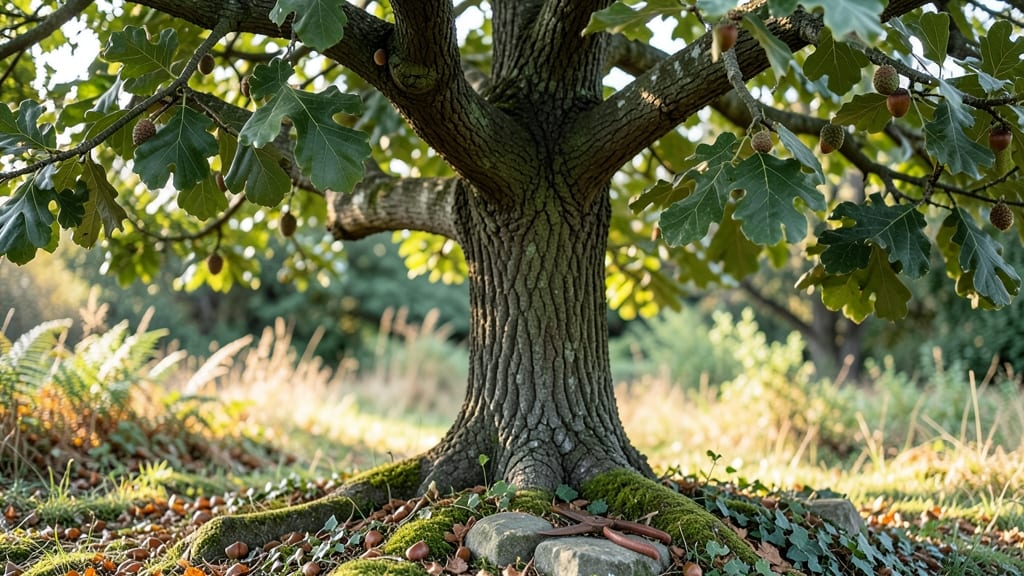
Those weird bumps on your oak branches—oak tree galls—aren’t just ugly; they’re a fascinating battle between tree and tiny wasp warriors. 🌿 I’ve watched mine turn into marble-sized sculptures, and while they look alarming, they’re usually harmless.
The key is telling which galls are just quirky nature and which might signal deeper trouble.
Most galls form when wasps lay eggs in the bark, triggering the tree to grow protective tissue around them. Some look like warts, others like pinecones, and a few even resemble acorns. The good news?
Healthy oaks shrug them off—it’s only when galls cover entire branches or ooze sap that you should worry. I’ve seen galls turn brown and drop off naturally by late summer, a sign the tree won’t need pruning.
If you’re unsure, check for signs of stress: yellowing leaves, stunted growth, or excessive gall clusters. That’s when you prune affected branches in late winter, sterilizing your tools to avoid spreading pests.
The real secret? A strong tree handles galls better than a weakened one—so focus on watering and mulching before reaching for the pruners.
Here’s the reassuring part: galls rarely kill oaks, and many even attract beneficial insects. The only time to panic is when the tree looks sick overall. We’ll cover how to spot the difference between normal galls and actual damage—so you can relax and enjoy your oak’s quirky decorations.
📚 In This Guide
- What you need
- Instructions
- Tips and common mistakes
- Wrapping up and next steps
What you need
- ● Pruning shears: Bypass pruners (for small branches, ¼"–¾" diameter) or loppers (for branches ¾"–2" diameter). Choose bypass (not anvil) for cleaner cuts.
- ● Pruning saw: A curved-tooth handsaw (for branches 2"–4" diameter) to avoid tearing bark.
- ● Sterilizing solution: 70% isopropyl alcohol or a 10% bleach solution (1 part bleach to 9 parts water) to disinfect tools between cuts.
- ● Rubbing alcohol or hand sanitizer: For wiping down tools and hands during the process.
- ● Disposable gloves: Nitrile or latex-free gloves to protect against sap and potential irritants.
- ● Trash bags or bucket: For collecting pruned branches and galls (check local regulations on disposal).
- ● Measuring tape: A 10–25 ft tape to assess branch size and gall proximity to the trunk.
- ● Notebook & pen: To record observations (e.g., gall size, location, and tree health notes).
- ● Tree wound dressing: Only use if the cut is large (>2" diameter). Choose a natural, breathable option like Tanglefoot Tree Wound Pruning Sealer.
- ● Ladder or extension pole: For hard-to-reach branches (ensure it’s stable and rated for outdoor use).
- ● Camera or smartphone: To document before/after pruning for reference or insurance purposes.
- ● Safety glasses: Protect your eyes from debris, especially when using a saw.
- ● Tree identification guide or app: Like iNaturalist or PictureThis, to confirm oak species and gall types.
How to assess and manage oak tree galls on branches
Here's how I tell the difference between harmless growths and signs your tree needs help.
🌿 Step 1: Identify the Gall Type and Location
Start by examining the galls closely. Most oak galls are caused by insects like gall wasps and appear as rounded bumps or growths on branches, leaves, or stems. Common types include oak apple galls (smooth, round, 1-2 inches wide) and spangle galls (small, hard, clustered bumps). Use a magnifying glass if needed—some galls have tiny holes where the insect emerged.
Check the gall's location: galls on leaf stems or veins are usually harmless, while galls on main branches or trunk may indicate stress or disease. I always mark suspicious galls with a soft pencil so I can monitor them over time. If the gall is oozing sap or has blackened tissue, that's a red flag.
🌱 Step 2: Assess Tree Health Around the Gall
Healthy oak trees can handle galls without issue, but stressed trees may show other symptoms. Look for yellowing leaves, thinning canopy, or dead branches near the gall. Run your fingers along the branch—healthy bark feels firm and smooth, while diseased bark may feel soft or spongy. If the gall is accompanied by cracked bark or fungal growth, that's a sign of a deeper problem.
I also check the soil around the tree. Compacted or waterlogged soil can weaken roots, making the tree more vulnerable to pests. If the ground feels hard when pressed or stays soggy after rain, that's another clue the tree might need care beyond just the gall.
✂️ Step 3: Decide Whether to Prune or Leave the Gall
Small, isolated galls on healthy branches can be left alone—they rarely harm the tree. But if the gall is larger than 2 inches, cracked, or on a main structural branch, prune it out carefully. Use sterilized pruning shears and make a clean cut just outside the gall to prevent spreading potential infections.
Here's the thing—don't remove galls during oak's active growing season (spring to early summer). Wait until late fall or winter when the tree is dormant. I also seal the cut with pruning sealant to protect against disease, but only if the branch is over ½ inch thick. For smaller branches, no sealant is needed.
💧 Step 4: Support Tree Health to Prevent Future Galls
Galls thrive on stressed trees, so focus on watering, mulching, and proper pruning. Water deeply once a week during dry spells, aiming for 1-1.5 inches of water per session. I use a soaker hose to deliver moisture slowly without wetting the leaves, which reduces fungal risks.
Apply 2-3 inches of organic mulch (like wood chips) around the base, keeping it 6 inches away from the trunk. This helps retain moisture and regulate soil temperature. If your oak is young (under 10 years old), fertilize lightly in early spring with a balanced, slow-release fertilizer to encourage strong growth.
☀️ Step 5: Monitor for Recurring Issues
Keep an eye on the pruned area for new galls or signs of decay over the next 6-12 months. Healthy new growth at the pruning site is a good sign. If you see more galls forming, the tree might be under stress from drought, poor soil, or pest infestations—time to dig deeper into its care routine.
Take photos of any concerning changes and compare them to last year's notes. I keep a simple log in a notebook or phone app to track gall activity. If the problem spreads, consult a certified arborist—they can assess whether the tree needs deep root fertilization, pest control, or even removal in extreme cases.
Tips & tricks for managing oak tree galls
Here's what I've learned from years of watching oak trees—small details make all the difference when deciding whether to prune or leave galls alone.
Visual Cues for Gall Assessment: In Step 1, when examining galls, pay close attention to the tiny exit holes where insects emerged. These holes are usually 1-2 millimeters wide and often appear on the surface. If you see fresh sap oozing from these holes or around the gall, that's a clear sign the tree is stressed. I've found that galls with these active signs rarely belong on healthy branches—it's time to consider pruning.
Seasonal Pruning Strategy: The instructions mention waiting until late fall or winter for pruning, but here's the thing: timing matters even more than you think. Oak trees are especially vulnerable to disease after pruning during their active growing season. I've seen cases where spring pruning led to fungal infections because the tree couldn't heal properly. Mark your calendar now—late December through February is your best window for safe pruning.
Soil Test Before Treating: In Step 2, when checking soil conditions, take it a step further by doing a simple pH test. Oak trees prefer slightly acidic soil (pH 5.0-7.0). If your soil is too alkaline (above 7.5), that can stress the tree and make it more susceptible to galls. You can test with a basic soil kit from your garden center—it's worth the $10 to understand what your tree is really dealing with.
Pruning Sealant Alternatives: While the instructions recommend pruning sealant for branches over ½ inch thick, I've had great success with other options too. For smaller branches, I use beeswax mixed with turpentine (a traditional arborist's trick) which creates a natural barrier. For larger cuts, a simple tree wound dressing made from 1 part asphalt to 3 parts pine tar works just as well as commercial sealants and costs pennies to make.
Pro Tips for Oak Tree Galls On Branches
- Here's what I've learned from years of watching oak trees—small details make all the difference when deciding whether to prune or leave galls alone.
- Visual Cues for Gall Assessment: In Step 1, when examining galls, pay close attention to the tiny exit holes where insects emerged.
- Seasonal Pruning Strategy: The instructions mention waiting until late fall or winter for pruning, but here's the thing: timing matters even more than you think.
Frequently asked questions
Got questions about oak tree galls?
You’re not alone—these odd growths can be confusing! Below, we tackle the most common concerns to help you decide whether to prune, observe, or take action.
What exactly are oak tree galls, and are they harmful?
Oak tree galls are abnormal growths caused by insects (like gall wasps) or mites laying eggs in the bark. Most are harmless—they’re the tree’s natural defense mechanism. However, severe infestations can stress the tree, making it vulnerable to disease. Focus on healthy galls (small, isolated) vs. large clusters or oozing wounds.
When is the best time to prune galls off oak branches?
Prune galls in late winter or early spring (before new growth starts) to minimize stress. Avoid pruning during peak insect activity (spring/summer), as fresh cuts attract pests. Sterilize tools with rubbing alcohol to prevent disease spread. Small galls often don’t need removal—just monitor the tree’s overall health.
How do I tell if galls are ruining my oak tree or just part of its life cycle?
Watch for these red flags:
- Normal: Small, hard galls (pea-sized) with no oozing or wilting leaves.
- Concerning: Large, soft galls; yellowing leaves; or sawdust-like frass (insect waste) near branches. These signal stress or infestation.
Should I cut off branches with galls, or leave them for the tree?
Only prune if:
- The gall is large (>2 inches) or clustered.
- The branch is dead/dying (snap test: bend it—if it snaps easily, it’s gone).
- You see other signs of pest damage (holes, chewed leaves).
Are there natural ways to reduce oak galls without chemicals?
Yes! Try these eco-friendly fixes:
- Encourage natural predators: Birds (like woodpeckers) and parasitic wasps eat gall-causing insects.
- Water deeply during droughts to boost tree resilience.
- Rake up fallen galls in autumn to disrupt the insect life cycle.
- Avoid over-fertilizing—healthy soil = stronger tree defenses.
Wrapping up and next steps
Oak tree galls on branches may seem puzzling at first, but understanding their role as a natural defense mechanism—or recognizing when they signal deeper issues—empowers you to care for your tree with confidence. 🌳 Whether you’re embracing their ecological purpose or addressing potential harm, knowledge is your best tool.
Now that you’re equipped with the facts, take the next step: inspect your oak tree and decide whether to monitor, prune, or consult an arborist for personalized advice.