
Landscaping
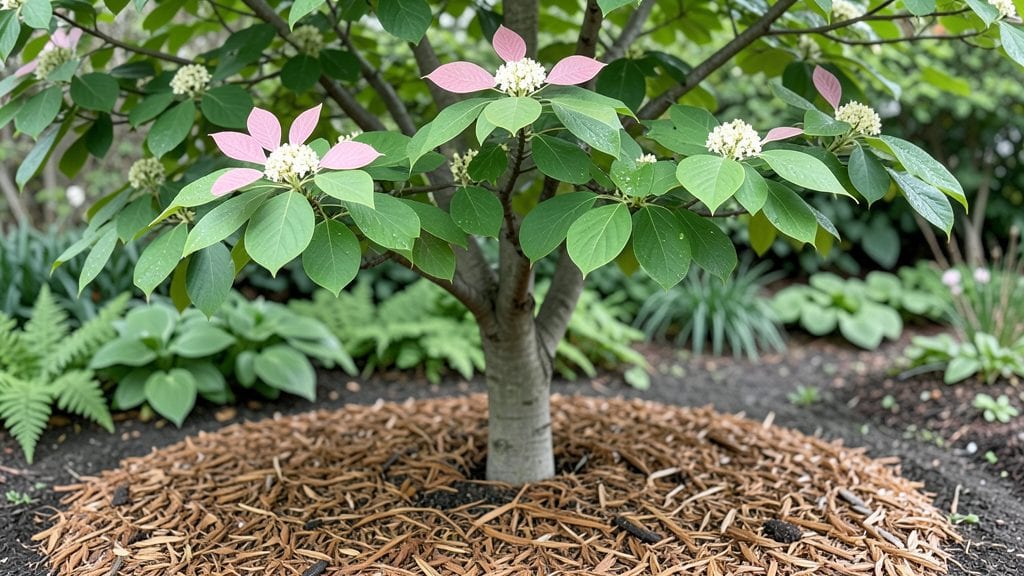
The right mulch for dogwood trees keeps roots cool, hydrated, and thriving—especially in those brutal summer months when roots can bake in the sun. I’ve watched my dogwoods go from struggling to showstopping with just the right mulch layer, and it’s not complicated once you know the basics.
The key is choosing the right material, applying it correctly, and avoiding the mistakes that actually harm your tree.
Start with 3-4 inches of organic mulch like shredded bark or wood chips—these break down slowly while locking in moisture. Inorganic options like gravel work too but don’t improve soil over time. The trick is keeping mulch 6 inches away from the trunk to prevent rot and pests.
For young trees, reapply every spring; mature trees need less frequent refreshes. This simple step cuts watering by half and keeps roots from overheating.
You’ll notice the difference immediately: fewer weeds, less watering, and a tree that looks lush even in drought. The mulch acts like a living blanket, protecting roots while feeding the soil over time.
Dogwoods reward this care with vibrant blooms and glossy leaves—proof that a little effort in spring pays off all season long.
Seasonal adjustments matter too. In winter, add a thicker layer to insulate roots from freeze-thaw cycles, but avoid piling mulch too high against the trunk.
And if you’ve ever seen mulch piled right up against a tree, you know why that’s a big no-no—it’s a fast track to rot and disease. Done right, mulching is the easiest way to give your dogwood the long-term care it deserves.
📚 In This Guide
- What you need
- Instructions
- Tips and common mistakes
- Wrapping up and next steps
What you need
- ● Mulch: Organic mulch (recommended): Shredded hardwood mulch (3–4 inches thick, 3–4 cubic feet per 100 sq. ft.)
- ● Pine bark nuggets or straw (2–3 inches thick, 2–3 cubic feet per 100 sq. ft.)
- ● Composted leaves or grass clippings (1–2 inches thick, 1–2 cubic feet per 100 sq. ft.)
- ● Avoid: Fresh wood chips, dyed mulch, or anything with high nitrogen (like grass clippings piled too thick).
- ● Tools: Garden rake or hoe (for spreading mulch evenly)
- ● Garden gloves (to protect your hands 🧤)
- ● Wheelbarrow or tarp (for hauling mulch, 1–2 trips per 100 sq. ft.)
- ● Measuring tape (to mark a 3–4 foot diameter around the tree)
- ○ Optional: Soil tester (to check pH/moisture before mulching)
- ● Prerequisites: Water source (hose or watering can) to pre-moisten the soil
- ○ Weed barrier fabric (optional but helpful for long-term weed suppression)
- ● Clear the area: Remove old mulch, weeds, or grass within 6–12 inches of the tree trunk
Step-by-step guide for mulching dogwood trees
Proper mulching keeps dogwood roots happy and stress-free while locking in moisture for weeks.
Prepare the Mulch Area
Clear away any existing mulch or debris from the base of your dogwood tree, extending out to about 2-3 feet from the trunk. This gives you a clean workspace and prevents old mulch from compacting or harboring pests. Use a rake or hoe to loosen the top inch of soil around the tree’s dripline—this helps roots breathe and absorb water more efficiently.
I like to create a slight depression around the trunk first. A gentle slope toward the tree helps direct water toward the roots instead of pooling around the base. This small adjustment makes all the difference in preventing root rot, which dogwoods are particularly sensitive to. Keep the area free of grass or weeds too—they compete for moisture and nutrients your tree needs.
Apply Mulch in the Right Thickness
Spread a 3-inch layer of mulch evenly over the prepared area, starting from the dripline and working outward. Use a high-quality, organic mulch like shredded bark or wood chips—these break down slowly and improve soil structure over time. Avoid piling mulch directly against the trunk; leave a 2-3 inch gap to prevent moisture buildup and potential rot.
I always rake the mulch gently after spreading to ensure an even thickness. Uneven layers can create dry spots or waterlogged areas, both of which stress dogwood roots. For newly planted trees, extend the mulch slightly wider—up to 4 feet—to protect the vulnerable root system during the first critical growing season. This extra care pays off in stronger, healthier growth.
Maintain the Mulch Ring
Check the mulch every 3-4 months to ensure it hasn’t settled below 2 inches—top it up as needed to maintain that 3-inch layer. Over time, organic mulch breaks down and loses its insulating properties, so regular maintenance keeps moisture retention consistent. After heavy rains, fluff the mulch with a rake to prevent compaction, which can suffocate roots.
Here’s the thing—dogwoods thrive when their roots stay consistently moist but never soggy. If you notice the mulch pulling away from the soil or forming gaps, add a thin layer of fresh mulch to restore coverage. In hot climates, I even add a second layer of mulch in summer to shield roots from extreme heat. The goal is to mimic the natural forest floor environment where dogwoods evolved.
Refresh and Adjust Seasonally
In early spring, before new growth appears, refresh the mulch by adding a 1-inch top layer of fresh material. This replenishes nutrients and ensures the mulch continues to regulate soil temperature. In fall, after leaves have dropped, spread a slightly thicker layer—about 3-4 inches—to protect roots during winter dormancy. Dogwoods are sensitive to temperature fluctuations, so this extra insulation helps them survive harsh winters.
Watch for signs of trouble, like mold or fungal growth on the mulch surface. If you see this, remove the affected mulch and replace it with fresh material. I also keep an eye on how quickly the mulch decomposes—if it breaks down faster than expected, it might be too fine, and I switch to a coarser texture next time. The right mulch should last 1-2 years before needing a full refresh.
Tips & tricks for perfect mulching of dogwood trees
Here’s what I’ve learned after years of keeping dogwoods thriving—these little details make all the difference between a healthy tree and one struggling with stress.
Mulch Type Matters: While shredded bark or wood chips are ideal, avoid pine bark or mulches with high resin content—they can acidify the soil over time, which dogwoods dislike. I’ve found cedar mulch works beautifully too, as it naturally repels pests while breaking down slowly. Just make sure it’s labeled as "organic" to avoid synthetic materials that don’t decompose properly.
The Right Thickness is Critical: That 3-inch layer from Step 2 isn’t just a suggestion—it’s the sweet spot for moisture retention without suffocating roots. Too thin, and you’ll lose moisture; too thick, and you risk rot. For newly planted trees, I always extend the mulch to 4 feet wide during the first year, creating a protective shield for those delicate roots. This extra coverage gives young trees the best chance to establish themselves.
Seasonal Adjustments Save Trees: In spring, that 1-inch top layer refreshes nutrients and regulates temperature perfectly. But in fall, I actually increase to 3-4 inches—this extra insulation is what helps dogwoods survive harsh winters. The key is adjusting thickness based on your climate: hotter areas need more mulch in summer, colder areas need more in winter. It’s all about mimicking nature’s protective forest floor.
Troubleshooting Common Issues: If you see mold or fungal growth on your mulch, don’t panic—just remove the affected layer and replace it with fresh material. I’ve also noticed that mulch breaking down too quickly often means it was too fine to begin with. For long-lasting coverage, look for mulch labeled as "coarse" or "medium" texture—it’ll last that full 1-2 years before needing refresh.
Pro Tips for Mulch For Dogwood Trees
- Here’s what I’ve learned after years of keeping dogwoods thriving—these little details make all the difference between a healthy tree and one struggling with stress.
- Mulch Type Matters: While shredded bark or wood chips are ideal, avoid pine bark or mulches with high resin content—they can acidify the soil over time, which dogwoods dislike.
- The Right Thickness is Critical: That 3-inch layer from Step 2 isn’t just a suggestion—it’s the sweet spot for moisture retention without suffocating roots.
Frequently asked questions
Got questions about mulching your dogwood trees?
Here are answers to the most common ones—so you can keep your tree thriving without the guesswork!
What’s the best mulch type for dogwood trees?
Organic mulches like shredded bark, wood chips, or pine straw work best—they retain moisture, improve soil, and break down slowly. Avoid dyed mulches or thick layers of fresh wood chips, which can mat or harm roots. Aim for 2–4 inches of mulch, keeping it 3–6 inches away from the trunk to prevent rot.
When is the best time to apply mulch?
Apply mulch in early spring or fall when soil is workable but not frozen. Avoid mulching in summer heat (it can smother roots) or winter (it may insulate pests). For newly planted dogwoods, mulch immediately after planting to protect roots during establishment.
Why is my dogwood tree’s bark peeling or discolored near the mulch?
This could signal mulch volcanoes (piling mulch against the trunk) or fungal issues like bark rot. Fix it: Rake mulch away from the trunk (3–6 inches out) and check for wet, spongy bark. If rot is present, trim affected areas and apply fungicide if needed.
Can I use mulch in extreme climates—hot/dry or cold?
Yes! In hot/dry areas, use 3–4 inches of mulch to lock in moisture. In cold climates, add a thicker layer (4+ inches) in winter, but avoid suffocating roots. For sandy soil, mix mulch with compost to boost water retention.
How often should I refresh or replace mulch?
Top up mulch annually (spring or fall) to maintain a 2–4 inch layer. If it breaks down quickly (like pine straw), replace it fully every 1–2 years. Avoid over-mulching, which can compact soil and block oxygen to roots.
Wrapping up and next steps
Choosing the right mulch for your dogwood trees isn’t just about aesthetics—it’s a lifeline for their roots.
Whether you opt for organic materials like shredded bark or pine straw, or inorganic options such as rubber mulch, the key is to prioritize moisture retention, weed suppression, and a balanced pH. Your dogwood will thrive with just a little extra care!
Now that you’re armed with knowledge, it’s time to roll up your sleeves! 🌱 Start by assessing your tree’s needs, gather your supplies, and apply mulch with confidence. Ready to transform your yard? Check out our step-by-step guide to get started today!