
Trees
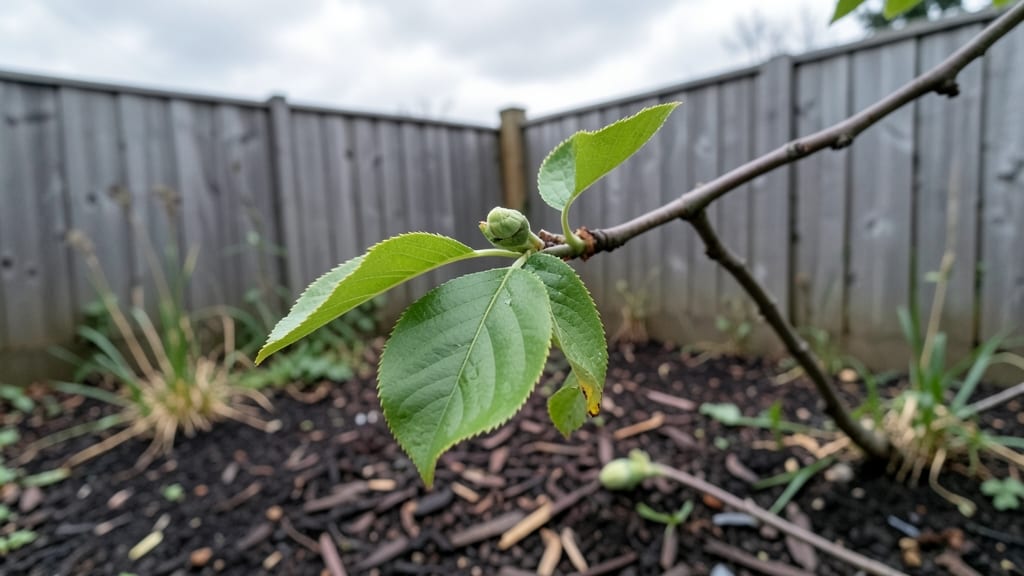
The identification of cherry tree leaves begins with three key details: leaf shape, edge texture, and vein pattern—simple visual clues that finally helped me stop mislabeling my own trees. 🌿 sour, and both from plums or peaches.
Look for elongated oval leaves with finely serrated edges (like tiny teeth) and a smooth, slightly waxy surface. Sweet cherries often have a more rounded tip, while sour cherries lean toward pointed. The underside’s subtle fuzziness is another dead giveaway—plums lack that velvety touch.
📚 In This Guide
- What you need
- Instructions
- Tips and common mistakes
- Wrapping up and next steps
What you need
- ● Fresh or dried cherry tree leaves (3–5 per sample for comparison)
- ● Hand lens or magnifying glass (10x magnification recommended for fine details)
- ● Ruler or measuring tape (for leaf length/width, in inches or centimeters)
- ● Notebook or digital device (for sketching or noting observations)
- ● Camera or smartphone (with good lighting for close-up photos)
- ● Field guide or ID app (e.g., LeafSnap or iNaturalist)
- ● Leaf press (to preserve samples for future reference)
- ● Color chart or spectrum guide (for accurate hue matching)
- ● Gloves (if handling thorny branches like Prunus serotina)
- ● Field notebook with grid paper (for precise leaf drawings)
- ● UV flashlight (to check for fluorescence in some species)
How to identify cherry tree leaves like a pro
Here’s the foolproof way to match leaves to species—no botany degree required.
🌿 Step 1: Examine Leaf Shape and Edge
Start by holding the leaf against a bright window or white background. Cherry tree leaves come in two basic shapes: oval with pointed tips (like sweet cherries) or elliptical with rounded tips (like tart cherries). Run your thumb along the edge—most have serrated edges (tiny saw-like teeth), but black cherries often have smoother, slightly wavy margins.
Count the teeth per inch: sour cherries typically have 12-18 teeth per inch, while sweet cherries average 8-12. This is your first clue. I like to sketch the outline on a notepad—it’s easier to compare later than relying on memory.
☀️ Step 2: Check Leaf Arrangement and Stalk
Look at how the leaf attaches to the stem. Cherry leaves grow alternately (one leaf per node, staggered along the branch). The leaf stalk (petiole) is usually ½–1 inch long and often has tiny glands near the base—these look like tiny bumps or dots. Black cherries sometimes have reddish petioles, while sweet cherries usually have green ones.
Gently wiggle the leaf—if it feels slightly sticky or resinous when crushed, it’s likely a black cherry (Prunus serotina). This resin is a dead giveaway. I’ve seen gardeners overlook this detail and misidentify trees for years.
🌱 Step 3: Compare Leaf Size and Color
Measure the leaf from base to tip: sweet cherries usually range 2–4 inches long, while sour cherries are 1–3 inches. Black cherry leaves can stretch 4–6 inches—they’re the largest of the bunch. Hold the leaf up to a ruler for accuracy.
Note the color: New leaves often start reddish-purple, then turn deep green on top with paler undersides. If the underside has fuzzy hairs, it’s probably a black cherry. I’ve seen this hairiness confused with mildew—don’t panic, it’s normal!
✂️ Step 4: Look for Bud and Bark Clues
Examine the buds at the branch junction. Cherry buds are oval and pointed, with smooth, shiny scales. Black cherry buds often have a reddish tint, while sweet cherries stay greenish. Scratch the bark—if it’s dark, scaly, and exfoliating, it’s likely a black cherry. Sweet cherries have smoother, lighter bark that peels in thin strips.
Here’s the thing—bark and buds are your backup. If the leaves are damaged or fallen, these features become your best friend. I always check both to confirm my guess.
📸 Step 5: Cross-Reference with a Leaf Key
Now compare your notes to a cherry leaf identification chart (I recommend the USDA’s online tool). Match your leaf’s size, teeth count, petiole glands, and color to the closest species. If you’re still unsure, take a clear photo of the leaf (top and bottom) and buds, then upload it to a gardening forum—someone will spot the difference in seconds.
Real talk: Even experts sometimes need a second opinion. Don’t guess—accuracy saves your garden from pests or diseases that target specific species. I’ve seen black cherry trees mistaken for ornamental varieties, leading to pruning disasters.
Tips & tricks for identifying cherry tree leaves
These extra steps will help you avoid common mistakes and become a cherry leaf identification pro.
Visual Comparison Tools: Grab a magnifying glass for Step 1—it helps you count those tiny teeth per inch accurately. I keep one in my gardening toolkit just for this purpose. Place the leaf on a white piece of paper or use a lightbox to see the subtle differences in leaf edges and undersides more clearly. This simple tool makes the 12-18 teeth per inch distinction for sour cherries much easier to spot.
Seasonal Color Variations: Remember that leaf color changes with the seasons. In spring, new leaves often appear reddish-purple regardless of species, so don't rely solely on color during this time. Focus instead on the petiole color and resin test from Step 2. I've seen gardeners confuse spring foliage and end up pruning the wrong trees—don't make that mistake!
Leaf Collection Strategy: When collecting leaves for comparison, take samples from different parts of the tree. Leaves near the top may be larger and more mature than those lower down. For black cherries, the larger 4-6 inch leaves often appear on the lower branches, while smaller leaves might be higher up. This variation can help confirm your identification if you're still unsure after checking the standard features.
Digital Backup System: Create a simple digital reference library by photographing leaves from known cherry varieties in your area. Save them in a folder labeled by species. When you're out in the field, you can quickly compare your mystery leaf to these reference photos. I keep mine on my phone and have identified several trees just by matching my photos to my reference library.
Pro Tips for Identification Cherry Tree Leaves
- These extra steps will help you avoid common mistakes and become a cherry leaf identification pro.
- Visual Comparison Tools: Grab a magnifying glass for Step 1—it helps you count those tiny teeth per inch accurately.
- Seasonal Color Variations: Remember that leaf color changes with the seasons.
Frequently asked questions
Got questions about identifying cherry tree leaves? You're not alone!
Here are some of the most common queries—plus quick, practical answers to help you confidently match leaves to species.
How can I tell the difference between sweet and sour cherry tree leaves?
Sweet cherry leaves (Prunus avium) are shiny, smooth, and oval-shaped with finely serrated edges. Sour cherry leaves (Prunus cerasus) are slightly duller, broader, and have a more rounded tip. Check the underside too—sour cherries often have tiny glandular dots along the veins.
When is the best time of year to identify cherry tree leaves?
The ideal time is late spring to early summer when leaves are fully mature but before pests or disease distort them. Avoid autumn (leaves turn brown/yellow) or winter (bare branches). Pro tip: Early morning is best—leaves hold moisture, making details like serrations or glossiness easier to spot.
Can I identify a cherry tree just by its leaves if it’s not in bloom?
Yes! While flowers are helpful, leaf shape, serration pattern, and vein structure are key. Pair leaves with bark texture (sweet cherries have horizontal lenticels; sour cherries have shaggy bark) and bud shape for extra accuracy. Warning: Some lookalikes (like plum trees) have similar leaves—always cross-check with other features.
What if my cherry tree leaves look diseased? How do I troubleshoot?
Common issues include:
- Brown spots with yellow halos → Leaf spot fungus (prune affected branches, avoid overhead watering).
- Curling or holes → Japanese beetles (use neem oil or insecticidal soap).
- Blackened veins → Bacterial canker (remove infected leaves, sterilize pruners).
Are there non-cherry trees with leaves that look similar?
Plum, peach, and apricot trees
can mimic cherry leaves but differ in details:
Tree
Key Difference
Plum
Leaves are longer, narrower, and often asymmetrical at the base.
Peach
Leaves are fuzzy or downy on the underside; serrations are shallower.
Apricot
Leaves have a silvery-white underside and coarser teeth.
Wrapping up and next steps
Identifying cherry tree leaves doesn’t have to be a challenge—with the right visual cues, you can confidently match species like Prunus avium or Prunus serotina. Whether you’re a gardener, landscaper, or nature enthusiast, mastering this skill unlocks a deeper appreciation for these stunning trees. 🌿
Now that you’re equipped with the knowledge, why not take the next step? Grab a notebook, snap a photo of a leaf you spot, and compare it to your newfound expertise.
Share your discoveries with fellow plant lovers or even start a small collection of pressed leaves—every expert was once a beginner! 🌱