Pruning
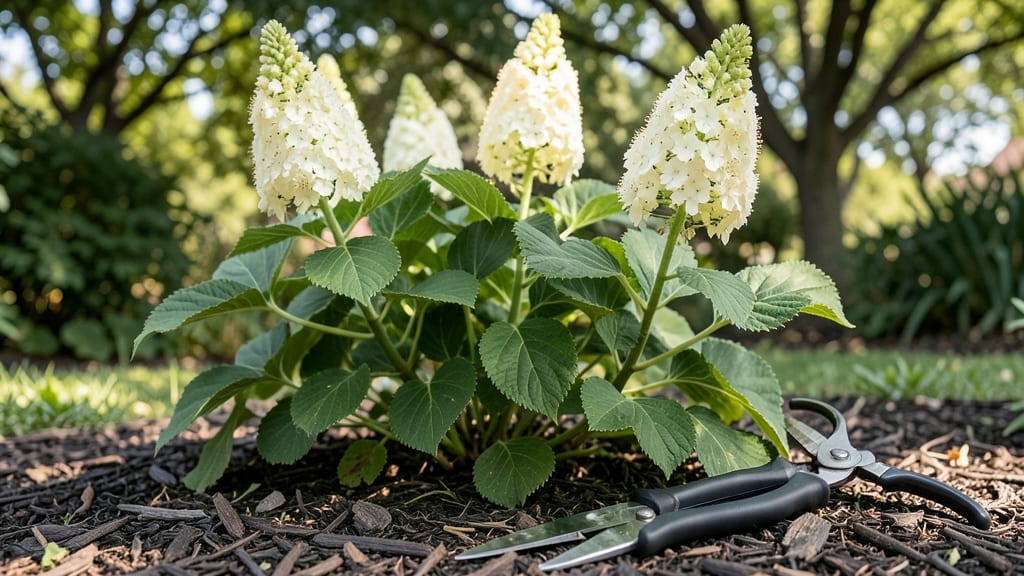
Your hydrangea tree maintenance starts with knowing when to prune—because cutting at the wrong time turns lush blooms into bare branches. ✨ I’ve watched Pacific Northwest hydrangeas go from vibrant to sad after just one wrong snip, and the fix is simpler than you’d think.
The key is timing: late winter or early spring for most varieties, but never after June if you want next year’s flowers.
Most people overcomplicate it with complicated tools or schedules, but you really only need sharp pruners, a ladder (for taller trees), and gloves to protect your hands from thorns.
The real secret? Pruning just the dead or crossing branches—no need to hack away at healthy wood. This keeps your tree strong while encouraging those signature clusters of blooms.
By following this approach, you’ll end up with a tree that’s denser, healthier, and covered in blooms from summer through fall. The Pacific Northwest’s damp climate means you’ll also avoid common issues like powdery mildew if you keep the center open for airflow.
Just remember: patience pays off—hydrangeas reward careful maintenance with years of stunning displays.
Whether you’re dealing with a young sapling or a mature tree, the same principles apply. The biggest mistake? Waiting until summer to prune. Let’s get your hydrangea tree thriving all year—starting with the right cuts at the right time.
📚 In This Guide
- What you need
- Instructions
- Tips and common mistakes
- Wrapping up and next steps
What you need
- ● Pruning shears – Bypass pruners (sharp, 5-7" blades) for clean cuts on small branches.
- ● Loppers – 8-10" bypass loppers for thicker stems (up to 1.5" diameter).
- ● Pruning saw – For branches thicker than 2" (avoid bolt cuts!).
- ● Garden gloves – Heavy-duty, cut-resistant gloves (PNW thorns aren’t joking!).
- ● Disinfectant (70% isopropyl alcohol or bleach solution) – 1 part bleach to 9 parts water to sterilize tools between cuts.
- ● Rake or leaf blower – For clearing debris post-prune (hydrangeas shed a lot).
- ○ Pruning sealant (optional) – For large cuts to prevent disease (e.g., Tanglefoot Tree Wound Pruning Sealer).
- ● Safety gear – Safety glasses (if dealing with large branches) and sturdy shoes.
- ● Extension pole – 6-8 ft telescoping pole with saw/pruner attachment for high branches.
- ● Garden twine or zip ties – For temporary support if training young trees.
- ○ Mulch (optional) – 2-3" of organic mulch (cedar or pine) to retain moisture and suppress weeds.
- ● Weather check – Prune on a dry, overcast day (PNW rain + fresh cuts = fungal risks!).
Instructions for year-round hydrangea tree Care
This is the seasonal rhythm I follow to keep my hydrangea trees thriving in the Pacific Northwest’s damp, mild climate.
⏰ Step 1: Late Winter Pruning (January-February)
Wait until late winter when the tree is fully dormant but before new growth begins—typically mid-to-late February in our zone. This timing prevents shocking the plant with early warmth. I remove all dead, diseased, or crossing branches first, cutting back to the nearest outward-facing bud or lateral branch.
For shaping, I make cuts just above a leaf node or bud that faces outward—this ensures new growth will fill the canopy properly. Use clean, sharp pruners to avoid tearing the bark. After pruning, I apply a thin layer of pruning sealant only on cuts larger than ½ inch in diameter to prevent disease entry.
☀️ Step 2: Spring Growth Monitoring (March-May)
Once new growth appears in spring, I switch to light maintenance pruning. Remove any suckers (vigorous shoots growing from the base or roots) immediately—they drain energy from the main tree. I also trim back any overcrowded branches to improve airflow, which reduces fungal risks like powdery mildew.
Watch for new flower buds forming in late spring. These look like small, swollen growths at the tips of branches. Avoid pruning after mid-June—any cuts made after this will remove next year’s blooms. If you see leggy growth, it’s a sign of insufficient light or overwatering.
✂️ Step 3: Summer Light Pruning (June-August)
During summer, I focus on deadheading spent blooms to encourage a second flush of flowers. Use clean pruners to cut just above the first set of healthy leaves below the bloom. This redirects the plant’s energy toward new growth rather than seed production.
If branches look overgrown or crowded, I thin them out by removing 10-20% of the total volume to maintain an open canopy. This prevents heavy blooms from weighing down branches in winter. Water deeply after pruning to help the tree recover, especially if summer heat arrives early.
🌿 Step 4: Fall Cleanup (September-November)
In fall, I remove all dead or diseased leaves and branches to reduce overwintering pests. Prune lightly to shape the tree but avoid heavy cuts—this gives the plant time to harden off before winter. I also check for sap-sucking insects like aphids and treat with neem oil if needed.
Mulch the base of the tree with 2-3 inches of organic mulch (like shredded bark) to insulate roots. Keep mulch 6 inches away from the trunk to prevent rot. This step is critical in our rainy climate—it protects roots from temperature swings and retains moisture.
❄️ Step 5: Winter Protection (December-February)
If heavy snow or ice is forecasted, I gently brush accumulated snow from branches to prevent breakage. For young trees, I wrap the trunk with burlap or tree wrap to protect against winter sunscald, which can damage bark in our mild but variable winters.
Monitor for dormant pests like scale or spider mites, which can hide in bark crevices. A quick inspection with a 10x magnifying lens catches early signs. If you see webbing or sticky residue, treat with horticultural oil in early spring before buds break.
Tips & tricks for perfect hydrangea tree maintenance
These seasoned strategies will help you maintain a thriving hydrangea tree through every stage of growth in the Pacific Northwest's unique climate.
Timing is Everything: In Step 1, when pruning in mid-to-late February, check for the first signs of bud swell—this is your cue that dormancy is ending. If you prune too early, you risk damaging new growth before it's ready, while waiting too long can stress the tree. I always do a quick bark scratch test: gently scrape a small area of bark—if it's green underneath, new growth is imminent and it's time to prune.
Cutting Technique Matters: For all pruning steps, make clean cuts at a 45-degree angle just above an outward-facing bud or leaf node. This angled cut helps water run off rather than pool on the cut surface. I use a sharp bypass pruner for branches up to ½ inch in diameter and a pruning saw for thicker branches. Always sterilize your tools with rubbing alcohol between cuts to prevent spreading disease.
Seasonal Adjustments: In Step 3, when deadheading summer blooms, I recommend doing this on a dry morning when the flowers are fully open. This timing reduces stress on the plant and makes the cuts cleaner. For the 10-20% thinning of overgrown branches, I start with the oldest branches first—this encourages new growth from the center of the tree where light can penetrate.
Climate-Specific Care: The Pacific Northwest's damp conditions mean we need to be extra vigilant about fungal diseases. After any pruning, I always apply a thin layer of copper fungicide to all cuts larger than ¼ inch as a preventive measure. In Step 4, when mulching, I use cedar chips specifically because they naturally repel pests while maintaining excellent moisture retention—critical for our rainy season.
Pro Tips for Hydrangea Tree Maintenance
- These seasoned strategies will help you maintain a thriving hydrangea tree through every stage of growth in the Pacific Northwest's unique climate.
- Timing is Everything: In Step 1, when pruning in mid-to-late February, check for the first signs of bud swell—this is your cue that dormancy is ending.
- Cutting Technique Matters: For all pruning steps, make clean cuts at a 45-degree angle just above an outward-facing bud or leaf node.
Frequently asked questions
Got questions about keeping your hydrangea tree thriving?
Here are answers to the most common concerns—from pruning timing to troubleshooting—so you can maintain a stunning Hydrangea paniculata all year round in the Pacific Northwest’s climate.
When is the best time to prune a hydrangea tree?
Prune your hydrangea tree in late winter or early spring (February–March) before new growth begins. This timing ensures you remove dead wood while preserving next year’s blooms. Avoid pruning in fall, as it can stimulate tender growth that may not survive PNW winters. Pro tip: If you missed the window, a light trim in early summer (after flowering) is better than none at all!
Can I prune a hydrangea tree in summer?
Yes, but minimize heavy pruning during summer. If you must trim, do so after the tree finishes flowering (July–August) to avoid cutting off next year’s blooms. Focus on shaping or removing only dead or diseased branches. Summer pruning can stress the tree, so keep it light unless addressing specific issues.
How much can I trim a hydrangea tree?
For mature trees, you can safely remove up to 1/3 of the canopy in one season, but avoid drastic cuts. For rejuvenation, prune back old wood to 6–12 inches above the ground in late winter—this encourages vigorous new growth. Warning: Over-pruning can reduce flowering; aim for gradual shaping over 2–3 years.
Why are my hydrangea tree leaves turning yellow or brown?
Yellowing leaves often signal overwatering, nutrient deficiency, or fungal issues. Check soil moisture (PNW’s damp climate can cause root rot) and ensure well-draining soil. Brown edges may indicate underwatering or pests like spider mites. Treat with neem oil or adjust watering—hydrangeas prefer consistently moist (not soggy) soil. Act fast: Remove severely affected leaves to prevent spread.
Do hydrangea trees need winter protection in the PNW?
Most Hydrangea paniculata varieties are hardy to USDA Zone 3, but young trees or newly pruned branches may benefit from light mulching (3–4 inches) around the base and wrapping with burlap if temps drop below 10°F. Avoid heavy mulch piles, which can suffocate roots. PNW’s mild winters usually mean minimal intervention—just clear snow gently from branches to prevent breakage.
What’s a good alternative if my hydrangea tree isn’t thriving?
If maintenance feels overwhelming, consider dwarf hydrangeas (like ‘Little Lime’ or ‘Endless Summer’) or other PNW-friendly shrubs like Oakleaf Hydrangea (H. quercifolia) or Viburnum. These require less aggressive pruning and still deliver stunning blooms. For a tree-like option, try Fothergilla or Cotoneaster—both are low-maintenance and drought-tolerant once established.
Wrapping up and next steps
Caring for your hydrangea tree in the Pacific Northwest doesn’t have to feel overwhelming—just follow the seasonal rhythm of pruning and maintenance, and you’ll be rewarded with stunning blooms year after year! 🌿 By staying consistent with trimming, protecting against pests, and feeding the soil, you’re not just keeping your tree healthy—you’re creating a thriving centerpiece for your garden.
Ready to take the next step? Grab your pruners, mark your calendar for late winter or early spring, and give your hydrangea the love it deserves!