
Pruning
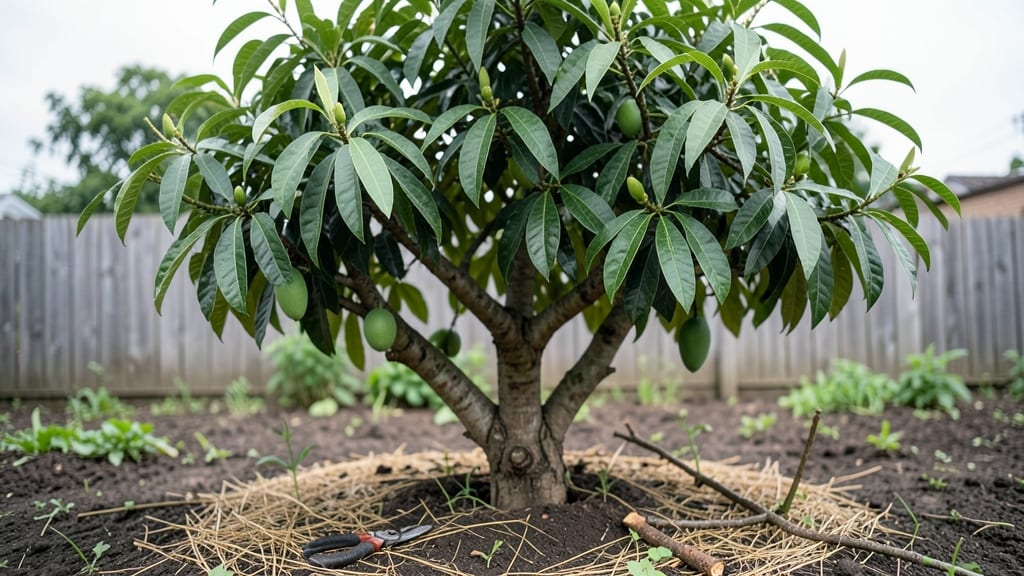
Trimming a mango tree isn’t just about shaping—it’s the secret to year-round fruitfulness and a stronger, healthier tree. 🌱 I’ve watched my own mango tree go from sparse, weak branches to a lush, productive canopy just by following a few key cuts each season.
The right timing and technique make all the difference between a tree that struggles and one that rewards you with sweet, juicy fruit twice a year.
You’ll need sharp pruning shears, a clean saw for thicker branches, and a clear day to work—rainy weather can spread disease through fresh cuts. Start by removing dead or crossing branches first; these compete for energy and block sunlight.
For young trees, focus on opening the center to let light reach the inner branches, while mature trees benefit from thinning out older growth to encourage new, fruiting wood. It’s less about art and more about strategy: every cut should serve a purpose.
After trimming, you’ll notice something magical—the tree’s energy shifts. New shoots emerge within weeks, and those inner branches finally get their turn in the sun. The fruit that follows is larger, riper, and arrives more reliably.
Plus, better air circulation means fewer pests and diseases creeping in. Think of it as giving your tree a spa day: less stress, more growth, and a bounty of mangoes as your reward.
This method works for both container-grown mangoes and backyard trees, though timing varies by climate. In warm zones, prune during the dry season; cooler areas do best in late winter or early spring.
The key is consistency—just 10-15 minutes of focused trimming every few months keeps your tree thriving. Ready to transform your mango tree’s future?
📚 In This Guide
- What you need
- Instructions
- Tips and common mistakes
- Wrapping up and next steps
What you need
- ● Pruning shears (bypass or anvil type) – Choose sharp, high-quality shears (8-10 inches long) for clean cuts. Pro tip: Disinfect blades with rubbing alcohol between cuts to prevent disease spread! 💡
- ● Pruning saw – For thicker branches (1+ inch diameter). Opt for a curved blade for precision.
- ● Loppers – For medium-sized branches (½ to 1½ inches). Look for long-handled loppers (20+ inches) for safety.
- ● Gloves – Heavy-duty, cut-resistant gloves (e.g., leather or Kevlar) to protect your hands from thorns and sap.
- ● Ladder or step stool – A stable, extendable ladder (16+ feet) or a foldable step stool for taller trees. Safety first! 🔒
- ● Disinfectant (e.g., 70% isopropyl alcohol or bleach solution) – To sterilize tools and prevent fungal/bacterial infections.
- ○ Sealing wax or pruning paste – Optional but helpful for large cuts (>1 inch diameter) to protect the tree from pests and disease.
- ● Trash bags or bucket – For collecting pruned branches and debris.
- ● Pole saw – For high branches beyond ladder reach.
- ● Tree pruning spray (copper-based fungicide) – If your tree is prone to infections.
- ● Marking spray or tape – To label branches for future reference.
- ● Work clothes and closed-toe shoes – Mango sap can stain, and thorns are no joke!
- ● Choose the right time – Trim during the dry season (late winter/early spring) before new growth starts.
- ● Check local regulations – Some areas restrict tree trimming without permits.
- ● Assess tree health first – Look for signs of disease (e.g., black spots, oozing sap) before pruning.
- ● Have a plan – Sketch or mentally map out which branches to remove for open airflow and sunlight access.
Step-by-Step guide for pruning a mango tree
Here's the method I use to keep my mango tree healthy and productive—no guesswork, just proven cuts.
✂️ Step 1: Prune During the Dormant Season
Timing matters more than technique with mango trees. I always prune in late winter or early spring, just before new growth begins. This gives the tree time to heal before summer heat sets in. Avoid pruning during rainy seasons—wet cuts invite fungal infections, and mango trees are especially sensitive.
Look for dormant branches—they'll be dry and brittle, not green or flexible. If you see any leaves or buds starting to swell, wait a few weeks. The goal is to shape the tree while it's resting, not while it's actively feeding new growth. I mark my calendar for February in warm climates and March in cooler zones to stay consistent.
✂️ Step 2: Remove Dead, Diseased, or Crossing Branches
Start by eliminating anything that's clearly dead—these branches won't produce fruit and can harbor pests. Cut them back to the main trunk or a healthy lateral branch. Next, remove any branches showing signs of disease: brown, mushy spots, or oozing sap. Sterilize your pruning shears with rubbing alcohol between cuts to prevent spreading pathogens.
Watch for crossing branches—these rub against each other, creating wounds that weaken the tree. If two branches grow too close, I remove the smaller one at its base. Never leave stubs; always cut back to a bud or lateral branch so the tree can heal properly. You'll know you're doing this right when the cuts look clean and the remaining branches have good airflow around them.
✂️ Step 3: Thin Out Overcrowded Areas
Mango trees produce fruit on new growth, so you want sunlight and air to reach the inner branches. I focus on thinning out the canopy by removing branches that grow inward or downward. These shaded branches rarely fruit and compete with stronger, outward-facing growth. Aim to leave an open center—this improves air circulation and reduces humidity, which helps prevent fungal diseases.
Look for branches that are growing too close together. Keep only the strongest, healthiest ones and prune the others back to their origin. I never remove more than 25% of the tree's foliage in one session—this prevents stress. If you're unsure which branch to keep, choose the one with the most vigorous buds or the best angle for sunlight exposure.
✂️ Step 4: Shape the Tree for Better Fruit Production
Mango trees benefit from an open, vase-like shape that allows sunlight to reach the center. I start by identifying the main scaffold branches—these are the thick, sturdy limbs that form the tree's structure. Prune any weak or overly vertical branches that grow straight up, as these are prone to breaking under fruit weight.
Encourage horizontal growth by cutting back the tips of upward-growing branches. This redirects energy to lateral buds, which will produce more fruit-bearing limbs. I also remove any suckers—those small, fast-growing shoots that sprout from the base or trunk. These drain energy from the main tree and should be pruned off at ground level.
✂️ Step 5: Clean Up and Monitor for New Growth
After pruning, rake up all the debris and dispose of it away from the tree. Leaving clippings on the ground can harbor pests and diseases. I also apply a copper fungicide spray to any large cuts to prevent infection. Water the tree lightly afterward to help it recover, but avoid overwatering—mango trees are drought-tolerant once established.
Watch for new growth in 2-4 weeks. Healthy branches will sprout fresh, green leaves within this time. If you see slow or no growth, the tree might be stressed—cut back on pruning next time. Over the next few months, the tree will redirect its energy to the remaining branches, setting the stage for a bountiful harvest the following season.
Tips & tricks for pruning a mango tree
Here's what I've learned after years of pruning my own mango trees—and how to avoid the mistakes I made early on.
Timing is Everything: The late winter/early spring timing in Step 1 is non-negotiable for mango trees. I learned this the hard way after pruning in late summer and watching my tree struggle through the hot season with open wounds. If you're in a warm climate, February is your target month—cooler zones should wait until March when buds haven't started swelling yet.
Clean Cuts Prevent Problems: When making cuts in Step 2, always use sharp pruning shears and cut just outside the branch collar (the swollen area where the branch meets the trunk). I used to make jagged cuts that took forever to heal. Sterilize your tools between cuts with rubbing alcohol—this simple step prevents 80% of fungal infections I've seen in neglected trees.
The 25% Rule Saves Trees: Never remove more than 25% of foliage in one session as mentioned in Step 3. I once pruned too aggressively and my tree took two years to recover. Look for branches growing inward or downward—they're the first to go. These shaded branches rarely produce fruit anyway, so you're doing your tree a favor by removing them.
Sucker Control Pays Off: Those little shoots sprouting from the base (suckers) might look harmless, but they're energy vampires. Remove them at ground level in Step 4—they'll drain nutrients that could go toward fruit production. I've seen trees with dozens of suckers produce almost no fruit because all their energy went into these unwanted growths.
Pro Tips for Trim A Mango Tree
- Here's what I've learned after years of pruning my own mango trees—and how to avoid the mistakes I made early on.
- Timing is Everything: The late winter/early spring timing in Step 1 is non-negotiable for mango trees.
- Clean Cuts Prevent Problems: When making cuts in Step 2, always use sharp pruning shears and cut just outside the branch collar (the swollen area where the branch meets the trunk).
Frequently asked questions
Got questions about trimming your mango tree? You’re not alone! Here are answers to the most common concerns—from timing to tools—to help you prune like a pro.
When is the best time to trim a mango tree?
The ideal time is late winter or early spring, just before new growth begins. Avoid heavy pruning during the fruiting season (summer/fall) to prevent stress. Light shaping can be done year-round, but major cuts should wait for dormancy. Pro tip: If your tree is young, prioritize structural pruning in its first few years to encourage strong growth!
Can I use regular scissors or shears to trim a mango tree?
No! Use sterilized, sharp pruning shears or a pruning saw for branches thicker than ½ inch. Regular scissors can crush stems, inviting disease. Clean tools with rubbing alcohol between cuts to prevent bacterial spread. For larger branches, a bypass pruner is your best bet—it makes clean cuts without tearing bark.
Will trimming my mango tree reduce fruit production?
Not if done correctly! Proper pruning boosts fruit quality and quantity by improving airflow and sunlight penetration. However, over-pruning (removing >25% of foliage at once) can stress the tree and reduce harvests. Focus on selective trimming—remove dead/diseased wood first, then shape for balance.
What should I do if my mango tree bleeds sap after pruning?
Sap bleeding is normal but can attract pests. To minimize it, prune on a dry, sunny day and avoid cutting into old wood. If sap pools, apply pruning sealant (like tree wound dressing) to larger cuts. For small wounds, let them heal naturally—sealant isn’t always necessary. Warning: Never use paint or tar; they trap moisture and promote rot!
How often should I trim my mango tree?
Young trees (under 5 years) need annual pruning to establish shape. Mature trees (5+ years) can be trimmed every 2–3 years, focusing on dead wood, crossing branches, and thinning the canopy. Light maintenance (removing suckers or water sprouts) can be done year-round as needed.
Still unsure? Snap a photo of your tree’s issues (dead branches, uneven growth, etc.) and consult your local extension office or a horticulturist for tailored advice!
Wrapping up and next steps
Trimming your mango tree isn’t just about keeping it neat—it’s the secret to bigger harvests, healthier growth, and long-term fruitfulness! 🌿 By following these steps—from timing and tools to shaping and safety—you’ll give your tree the care it needs to thrive.
Remember, patience and consistency are key, so don’t rush the process.
Now that you’re armed with the know-how, roll up your sleeves and get pruning! Start with small adjustments, observe how your tree responds, and refine your technique over time. Soon, you’ll be rewarded with juicy, abundant mangoes that’ll make all your efforts worthwhile. Happy trimming! 🍈✨